The book is laid out for the paper chosen above, and the print dialog will follow it,
so pick the paper here rather than there. Turn background graphics on
so the cover photograph prints, and leave margins at their default. The page numbers
and the chapter running heads are drawn by the browser into the page margins, so they
exist only on paper: check the print preview rather than this screen for them, and turn
Headers and footers off there so Chrome's own furniture does not crowd
them out. Chrome and Edge print them, Safari and Firefox print the same book without
them.
new build
Paper Jet 14 Build UK
Paper Jet 14
Ben Stevenson · 2026
A build log
Paper Jet 14 Build UK
Paper Jet 14
kept by Ben Stevenson
2026
The boat
Paper Jet 14
Designer
Dudley Dix
Plans from
Dudley Dix Yacht Design
Length overall
13′ 5″ (4.1 m)
Beam
5′ 4″ (1.63 m)
Hull
plywood
Construction
stitch and glue
Started
1 May 2026
Built by
Ben Stevenson
First boat, single garage and garden, at weekends and evenings only
What it took
By the numbers
92
Hours at the boat
5.6 months
From first day to last
7
Days written up
97
Photographs
549
Words written
The work
Contents
01Rig & Spars
May 2026 · 92h
Chapter 01
Rig & Spars
Mast, boom, standing and running rigging, sails.
7 days92 hoursfrom May 2026
1 May 2026Rig & Spars24 h
Spars begin
Started with spar construction due to kit lead time and outdoor availability. Generally went well. I changed the 2mm radii reduction to 3mm for the mast joiner. I changed the lower mast section to be round until after the gooseneck. I would not use roving as a wrap but twill weave instead for the sprit. If I were to start over, Id add a core to the short top mast for a gennaker block (might fill with epoxy foam or make another short top mast). Instructions are very clear but leave a little to work with for ingenuity. Having a planer would make the spars far easier than just a table saw and thicknesser.
Continuation of photo backlog for this build with mast construction, scarfing, tube fitment for hardware, rebate for mast tube joiner, Epoxy work and sanding. Lots of sanding....
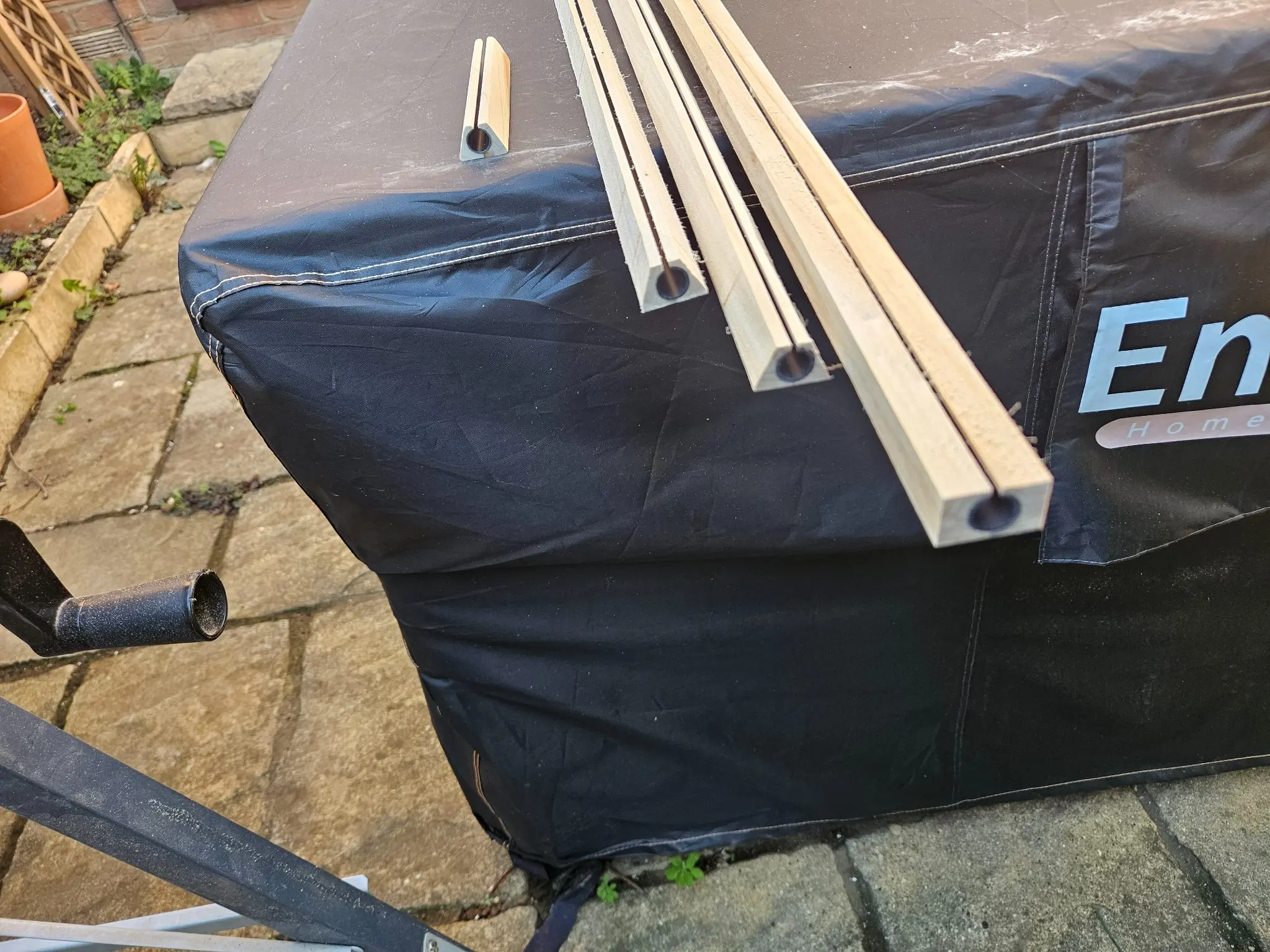
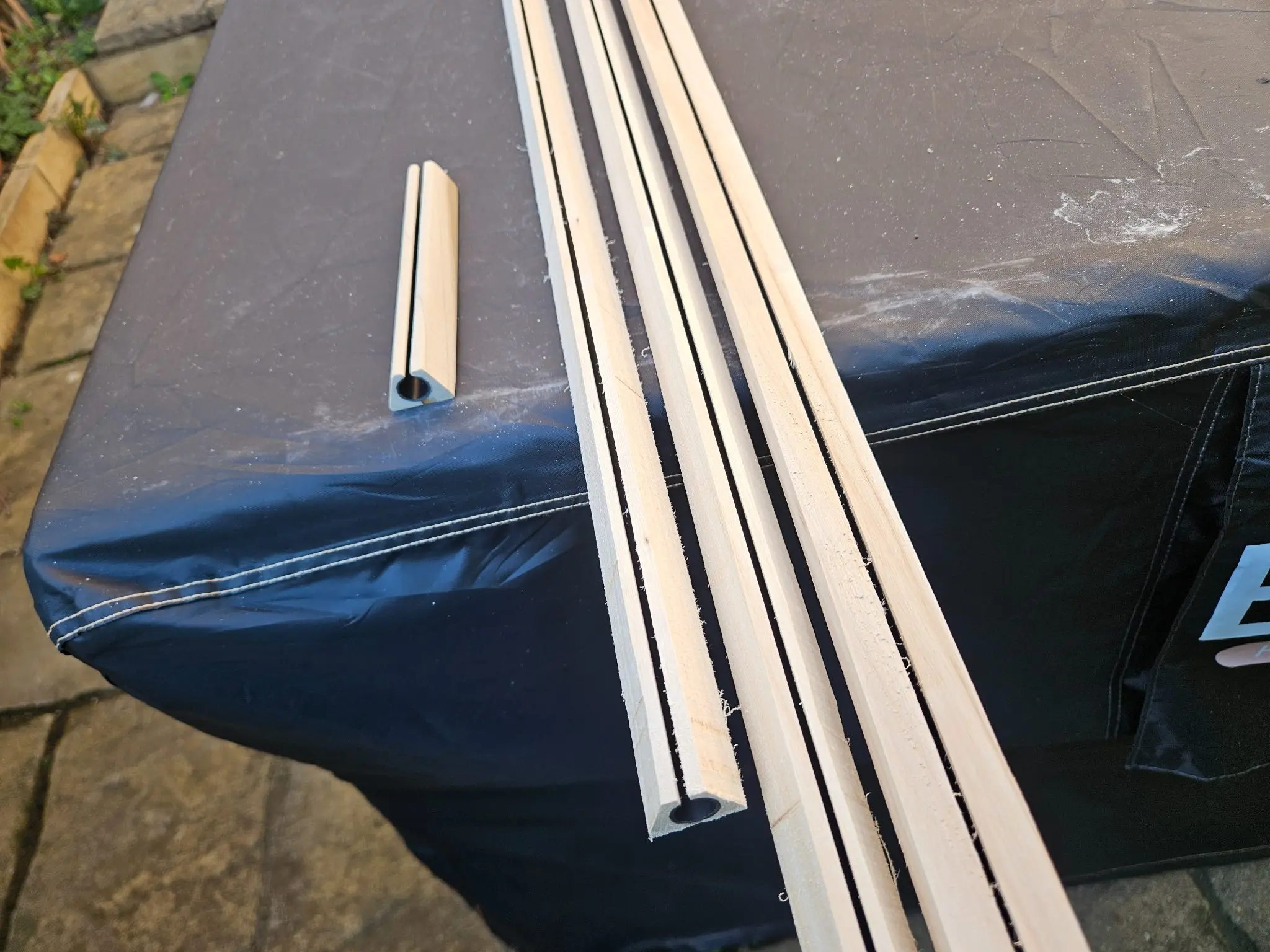
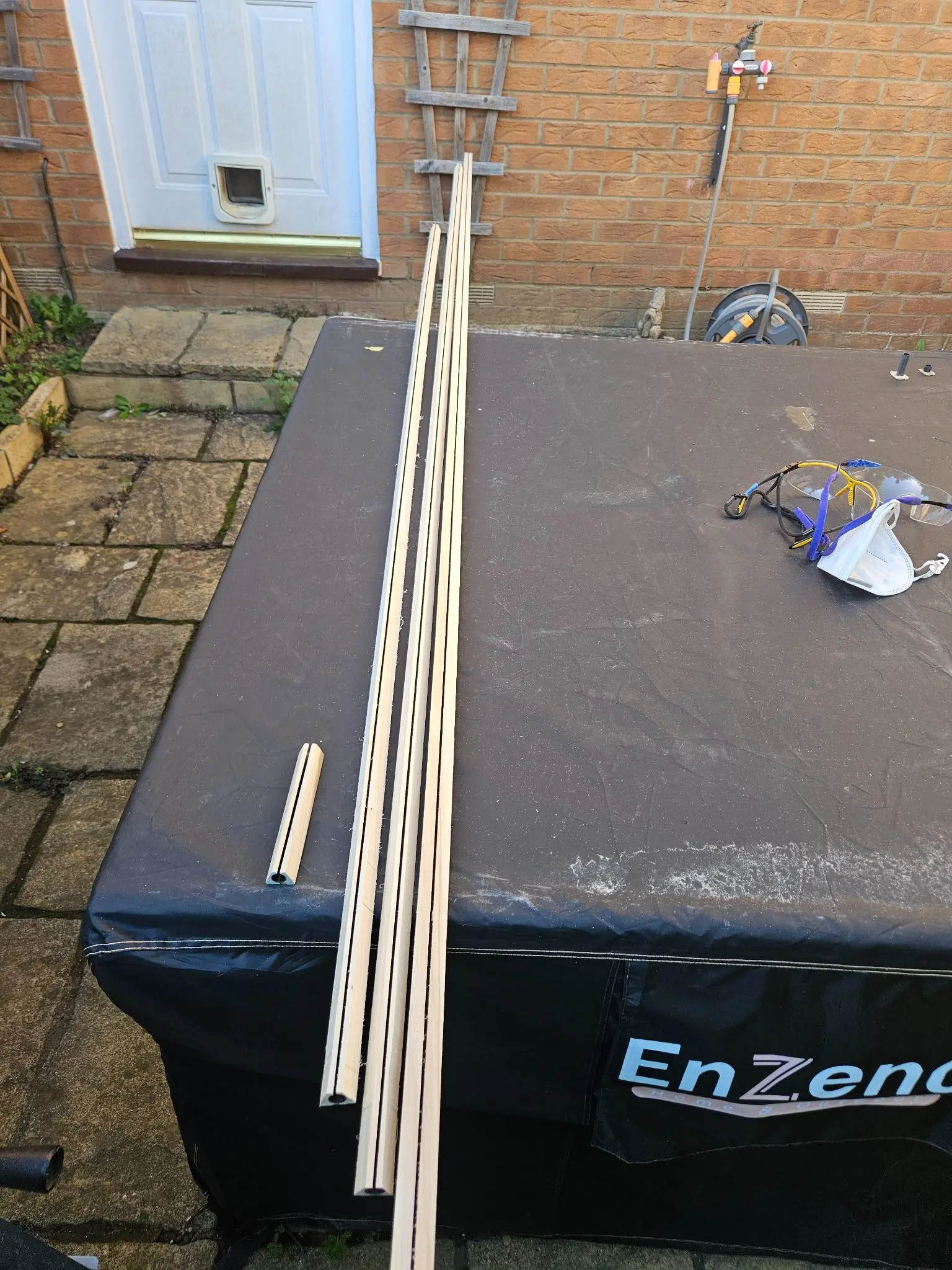
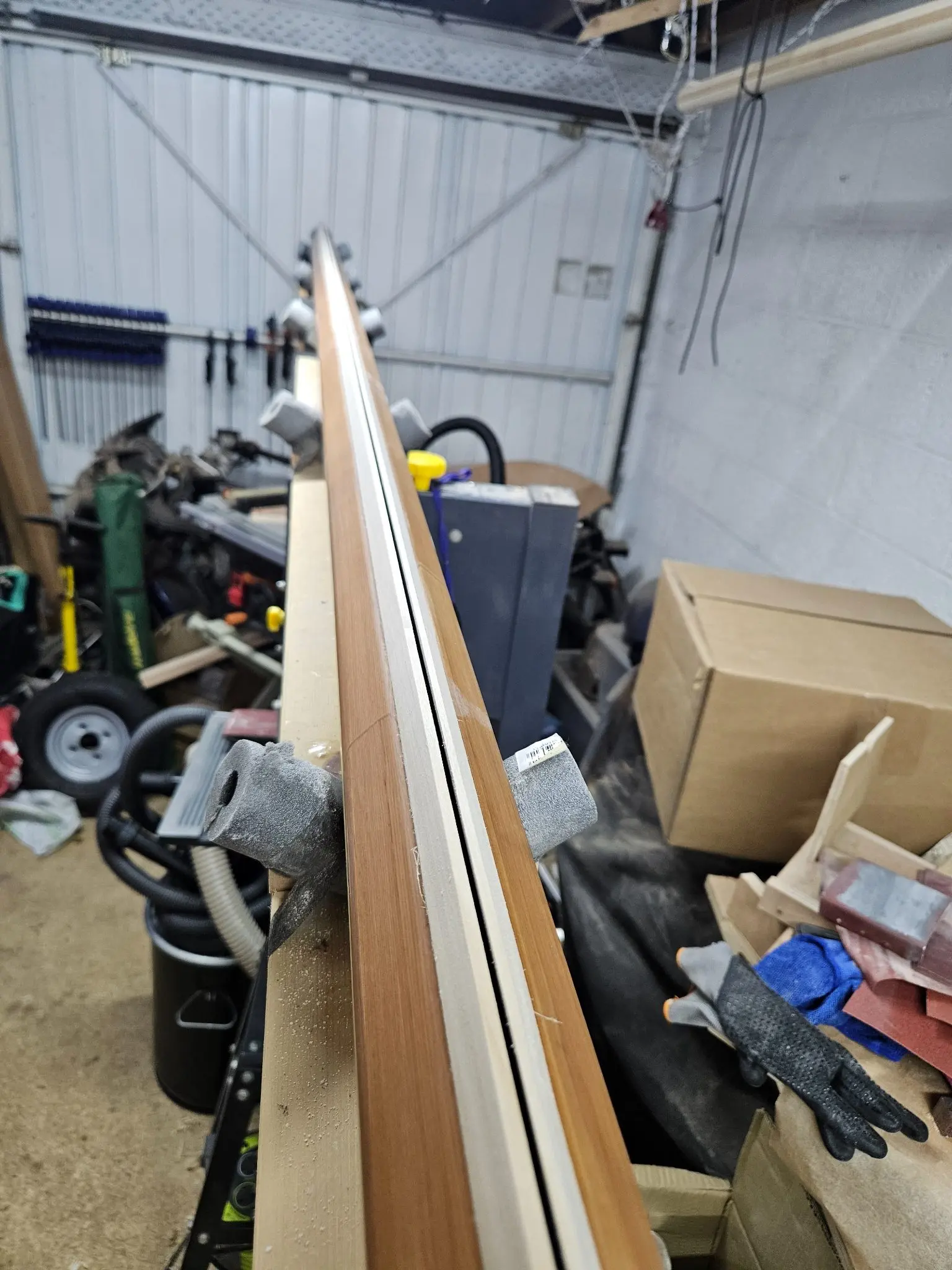
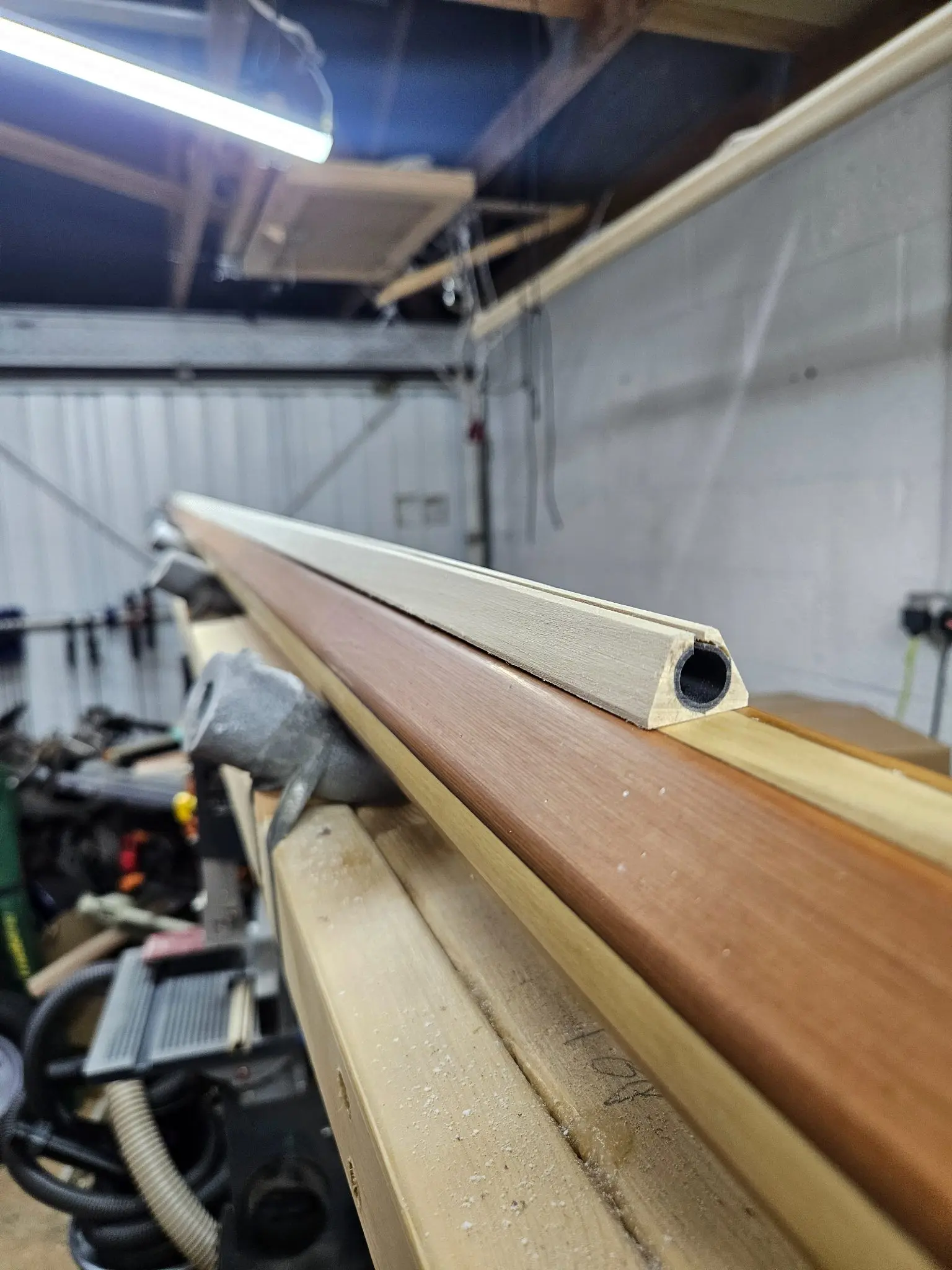
Continuation of backlog from spar construction photos. I would not use roving to wrap the bowsprit but a lighter twill weave instead. It's almost transparent but not quite. The mast joiner that I made in above photos ended up too large by several mm and the masking tape stuck to the inside. I specified a mainsail for Selden series 2 sail track (7mm Dia bolt rope) which subsequently became hard to source. >6 week lead time and around £30/m. So I made sames of PVC tube inside profiled Poplar. Shown is 10mmID which is slightly large but easier to source than 9mmID (75m min order quantity). I was nervous of the bare PVC tube idea as another blog I read split the tube on first outing. Having made samples in 8mm, 9mm and 10mm ID. I would suggest bolt rope dia +2mm as an ideal starting point.
I made another mast joiner as the original was very sloppy (too large). I made a separate madrel from some spare pine and wrapped around it to 10" length then cut it down to 8" post cure. The ID profile is much better than the original and the ends did not taper due to the rebate step. I would use less material in future as there was a lot of post cure sanding. I'd probably start with really light (160g) glass twill to get the profile snug and let it part cure before applying approximately 2m of 200g carbon twill. Followed by 300mm of 160g glass twill or finishing cloth. Leave rear face down to set as the run off needed sanding round afterwards.
Photo 1 Photo 2 Photo 3
11 Sep 2026Rig & Spars6 h
Mast joining tube finishing work
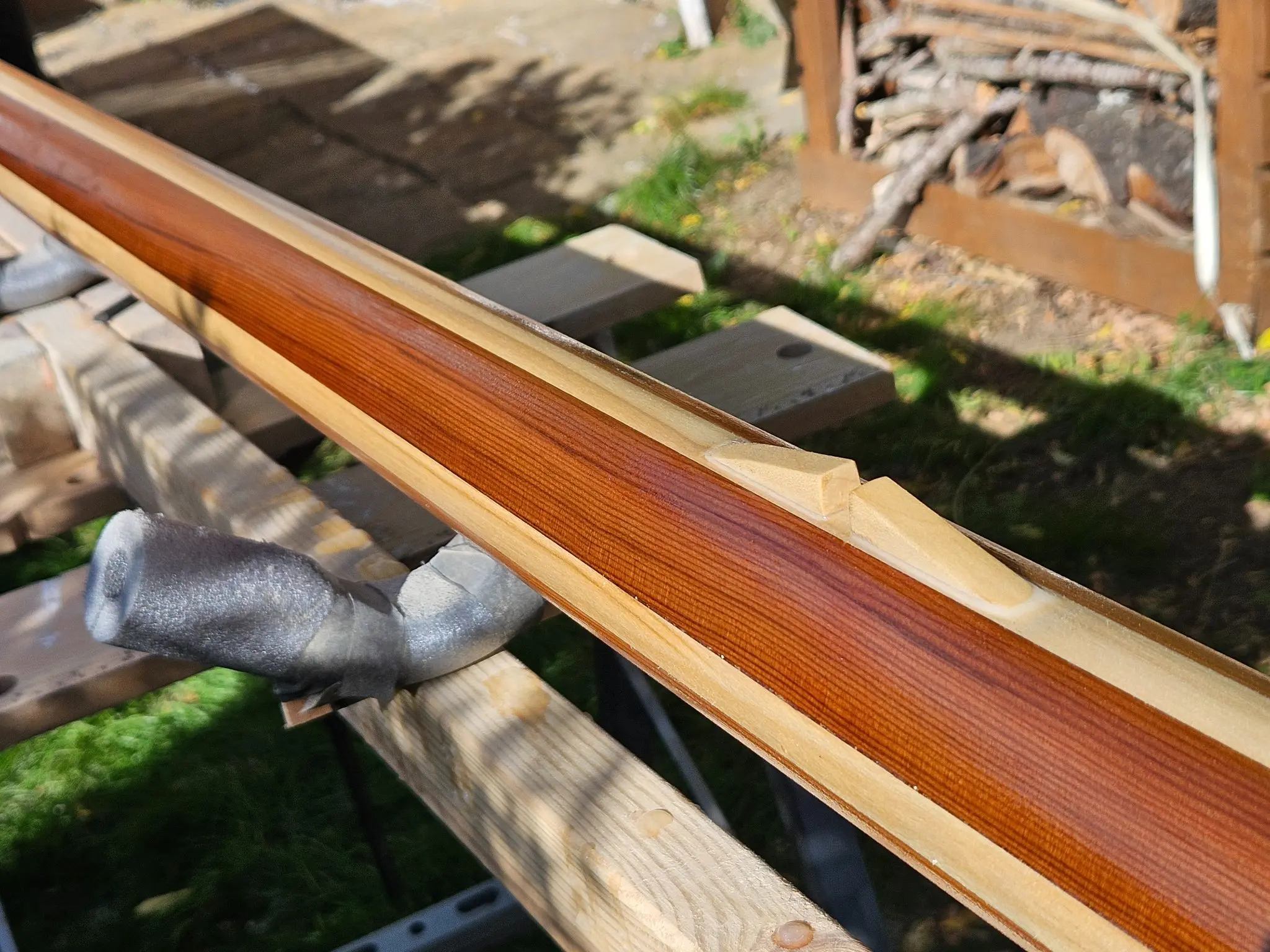
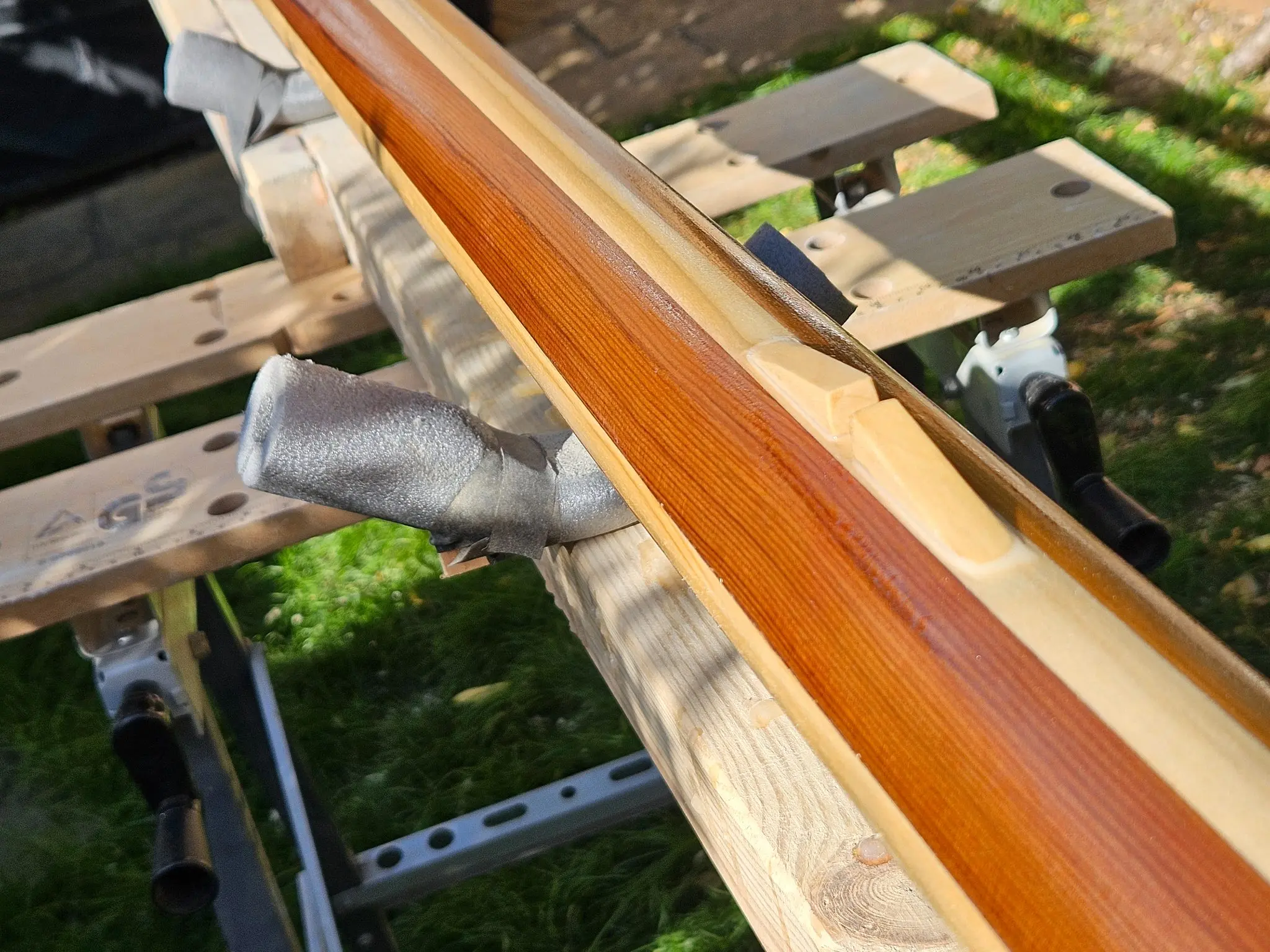
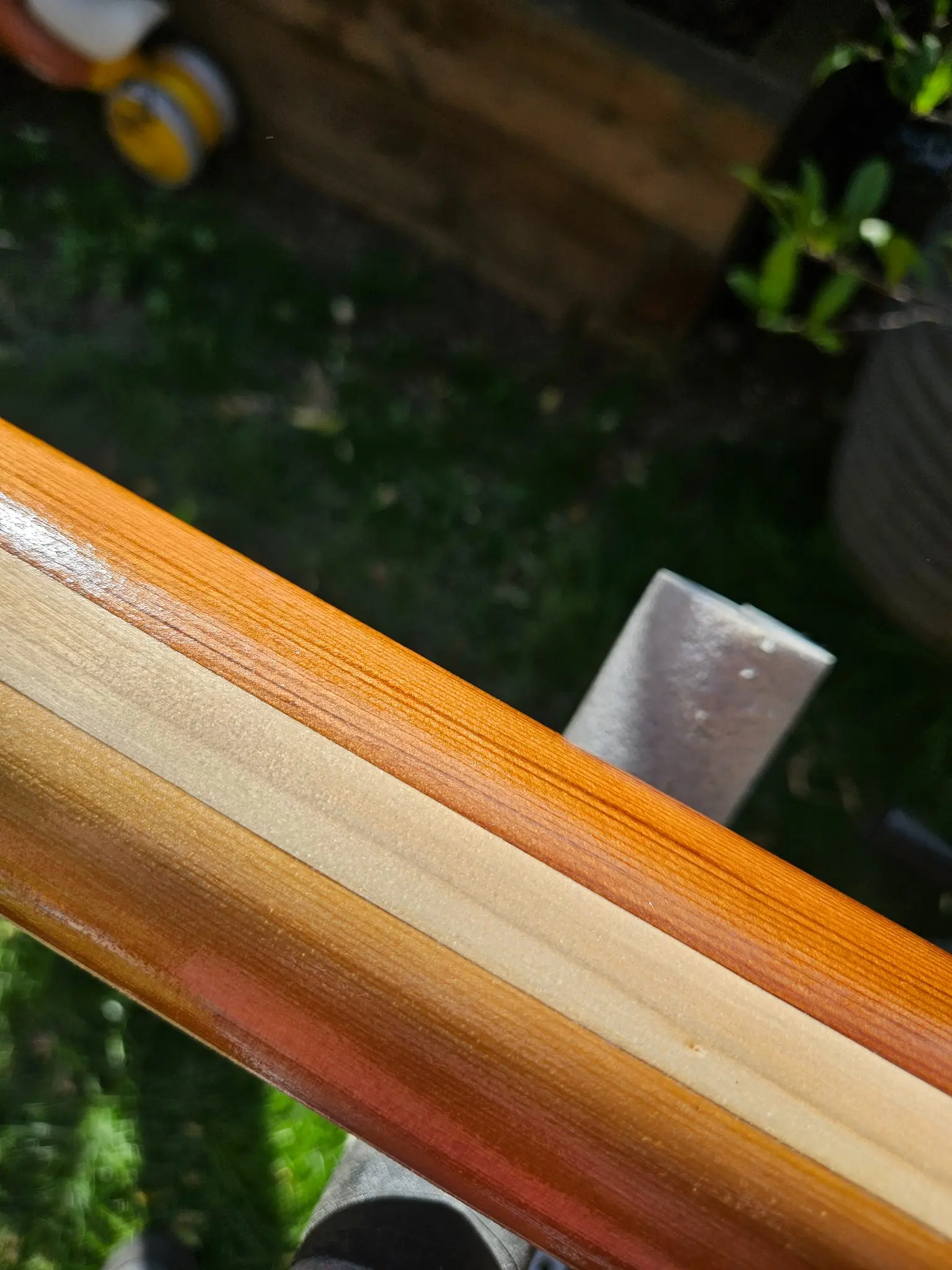
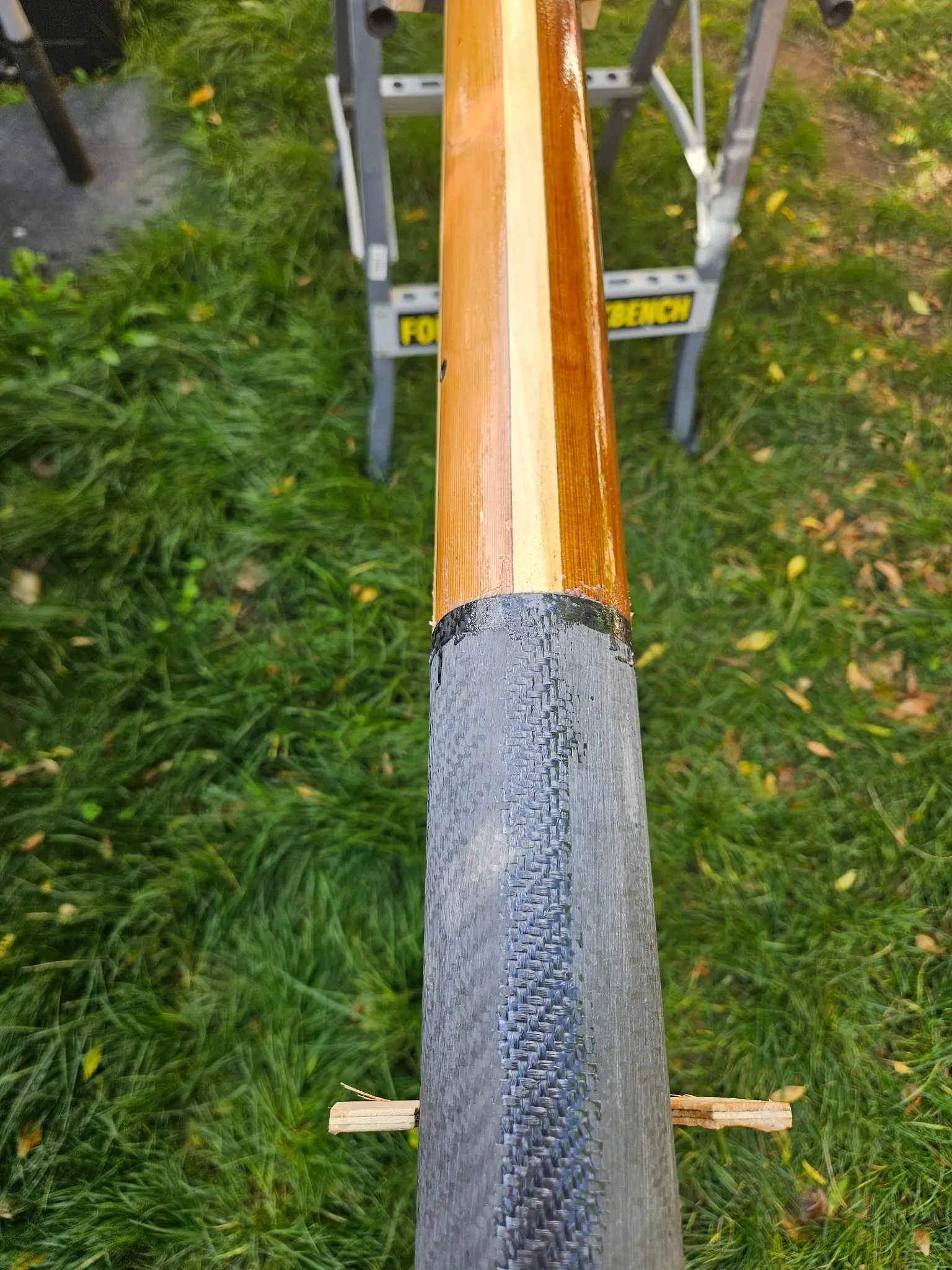
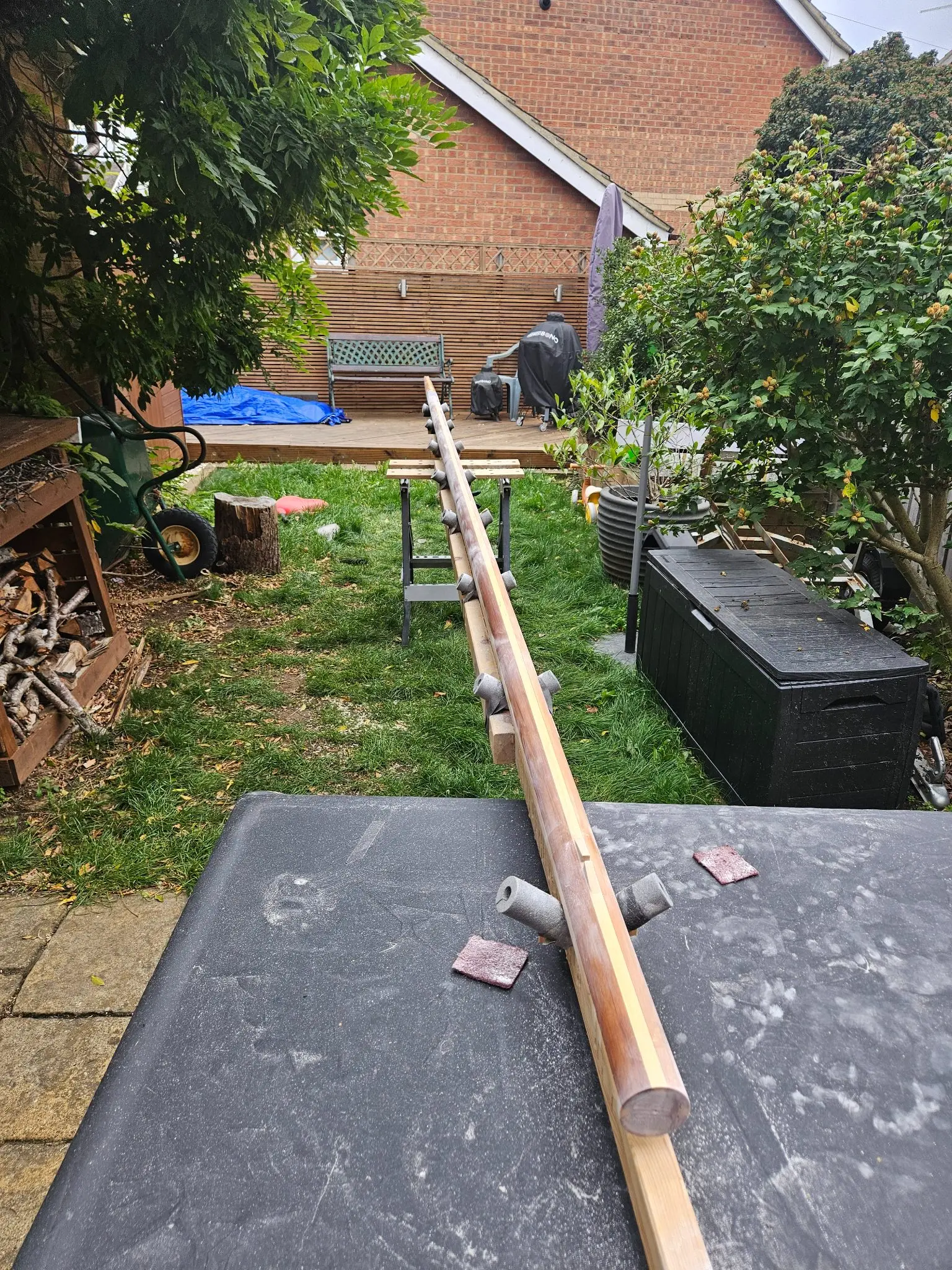
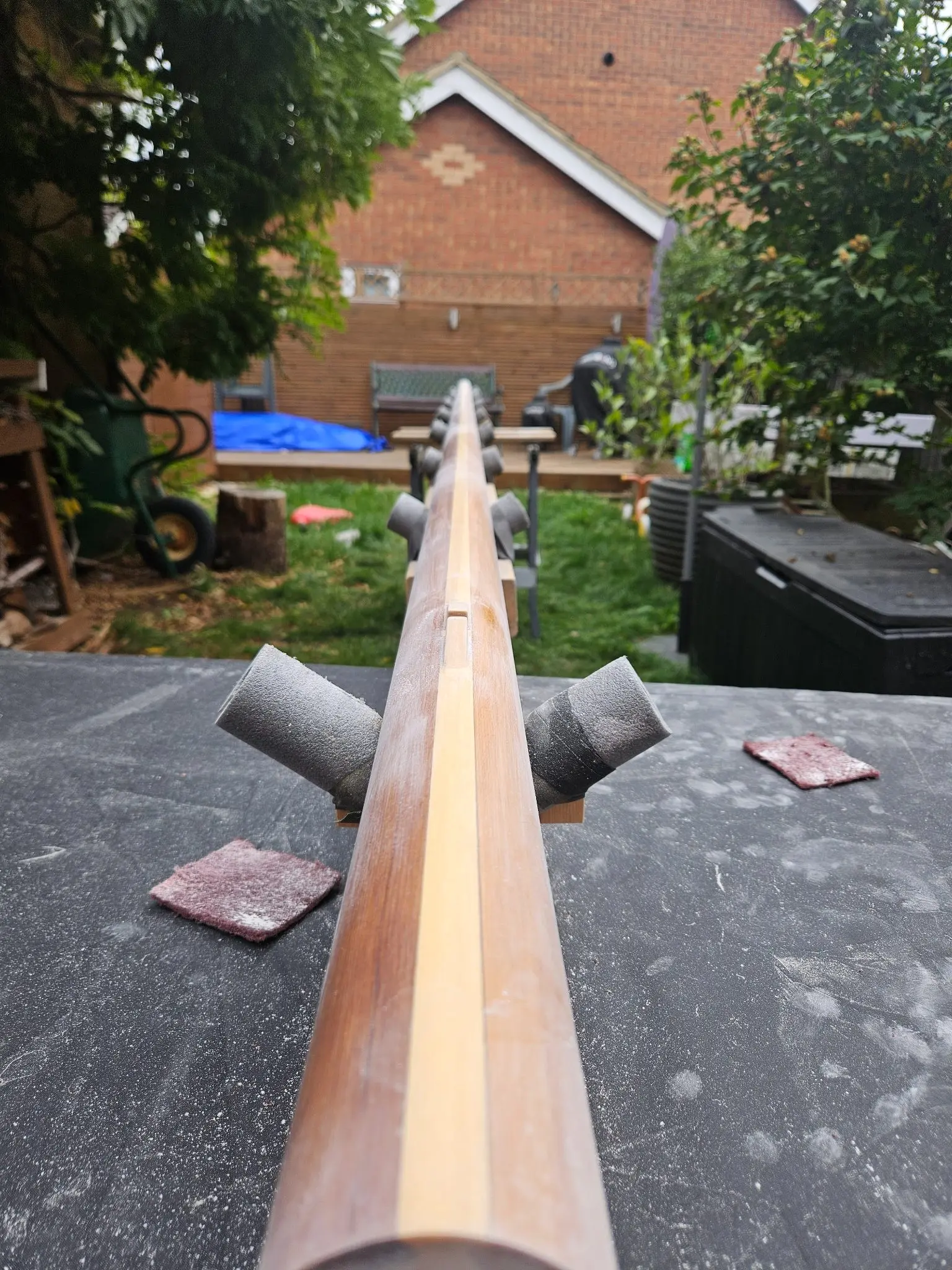
Mast rebate trimming to fit new joining tube. Followed by joining tube sanding to match mast profile. I would first epoxy coat the main mast before sanding the carbon tube as the black dust was hard to remove from bare wood.
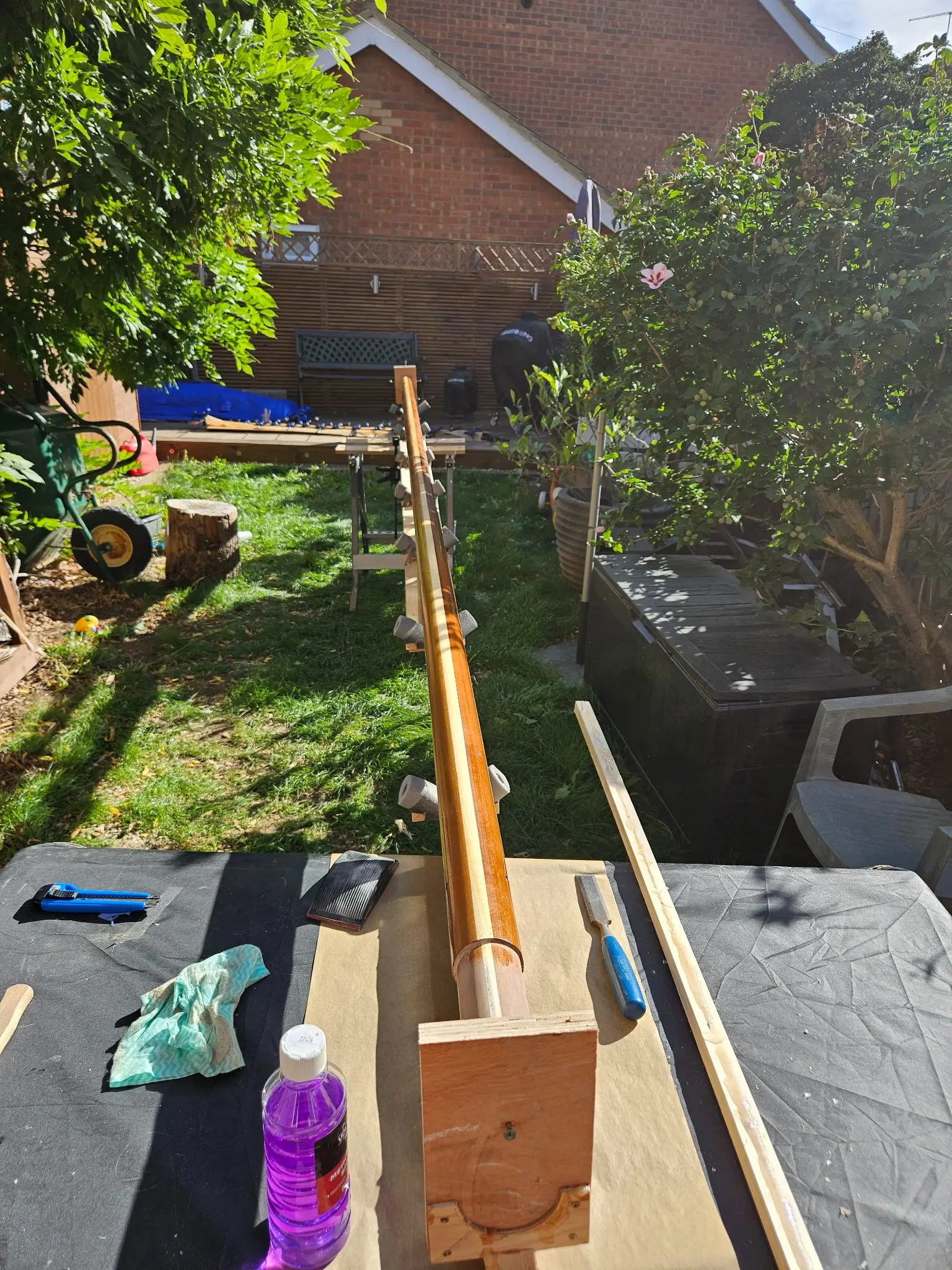
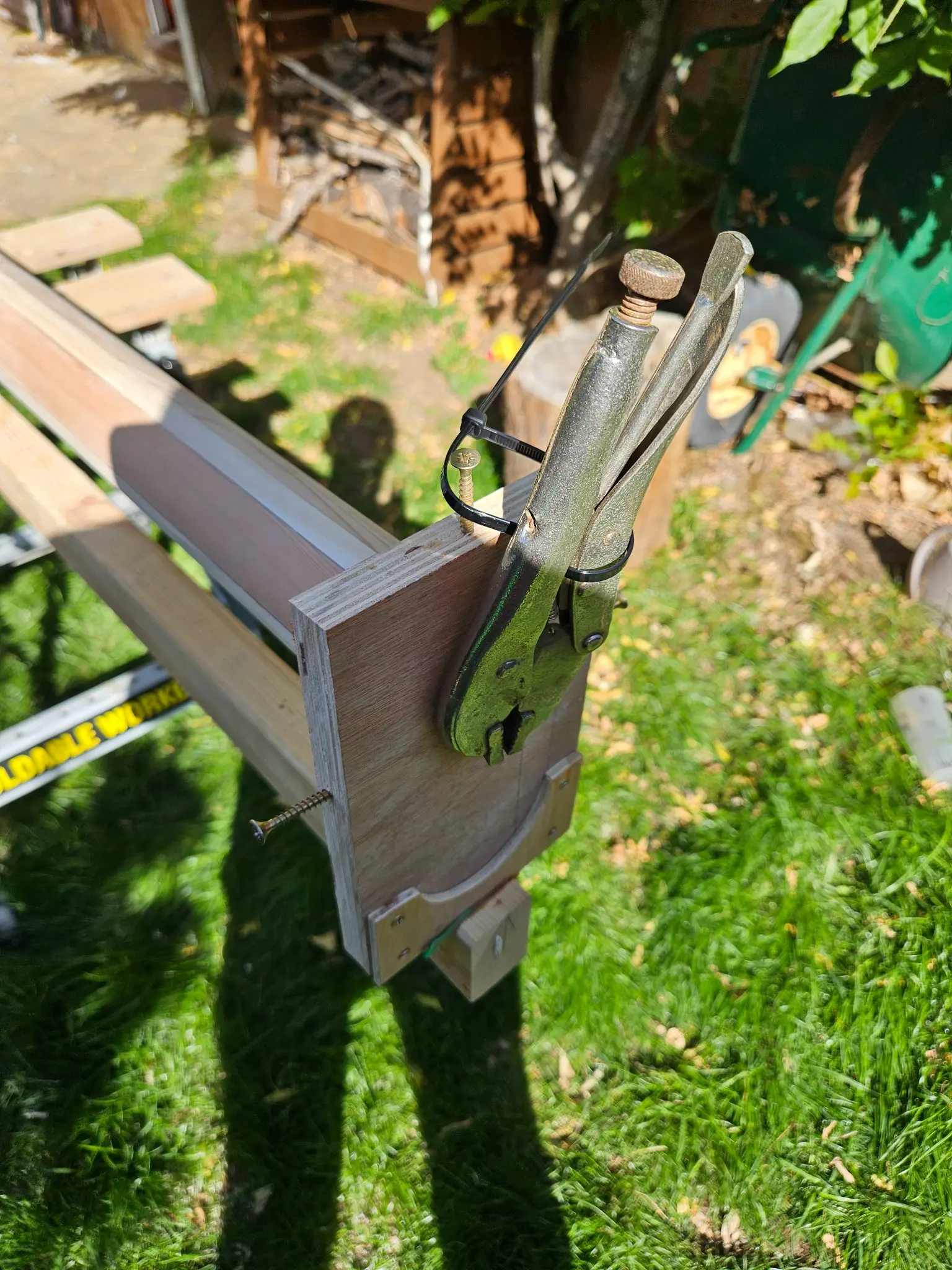
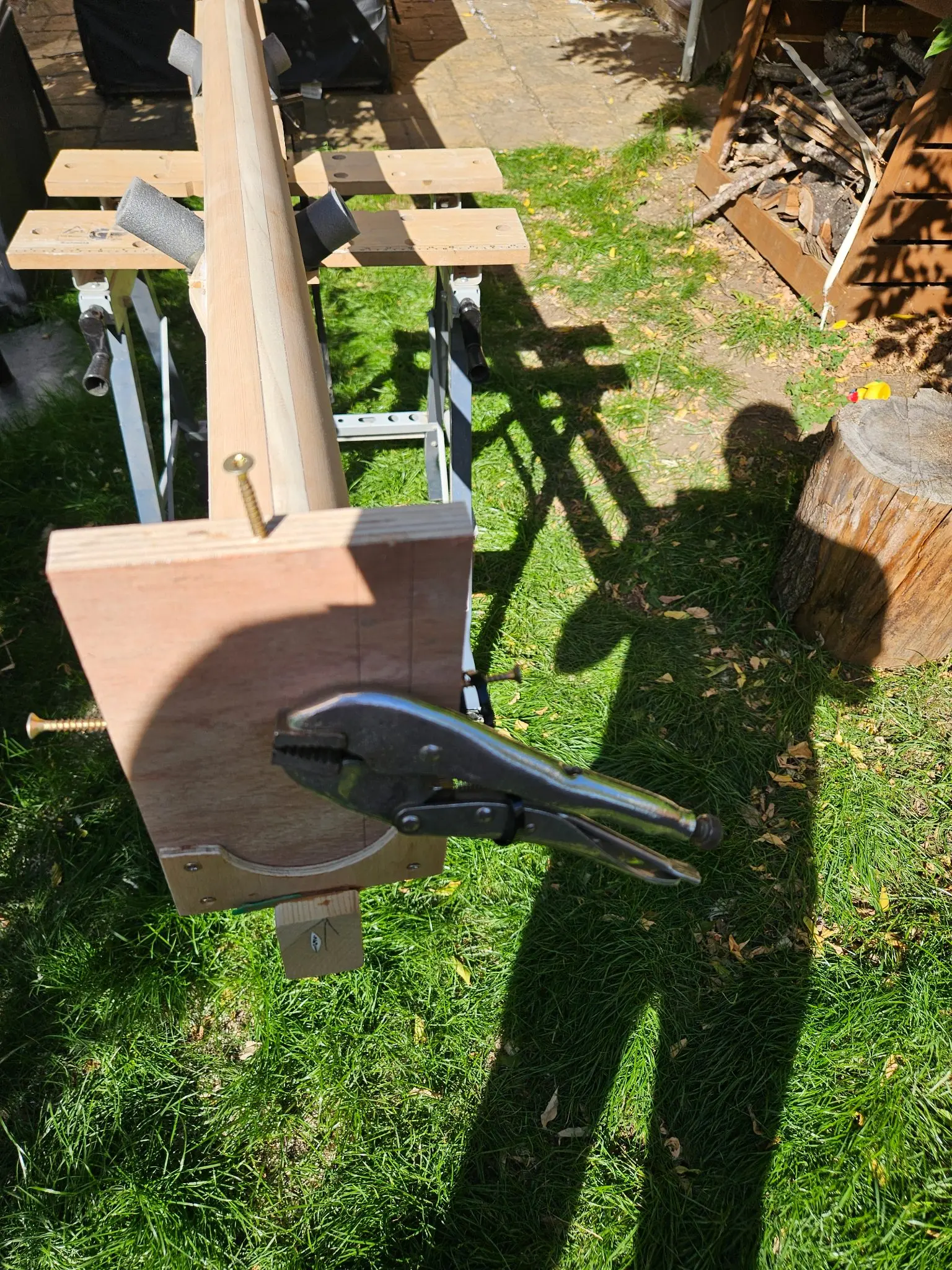
Set up the mast cradle for epoxy coating with a simple 90° positional adjustment. First coat applied to seal the surfaces. Currently missing the through hole at the base of the mast for retention pin. I'll add that later. I intend to glue the joiner tube on and epoxy coat the mast and tube together for a good finish. Sail track will be finished independently and bonded on afterwards.
Photo 1 Photo 2 Photo 3 Photo 4 Photo 5 Photo 6
17 Oct 2026Rig & Spars6 h
Mast epoxy and sail track
Mast joiner glued on and sanded flush. Lots of mast sanding. Finished making up the sail track lengths. Just need a scarf for the main section and trimming for the top masts.