Northeaster Dory · step
Fillets & Taping
Epoxy fillets, taped seams, structural joints.
Phase 4: Tack Welding
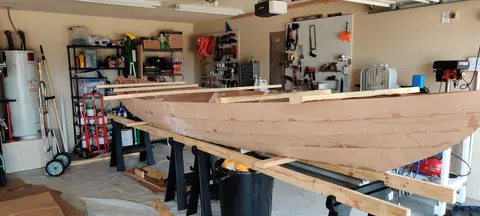
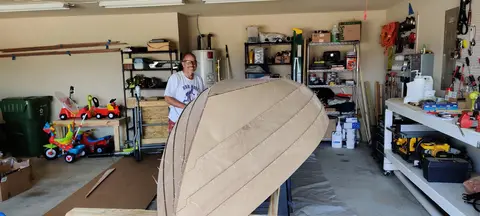
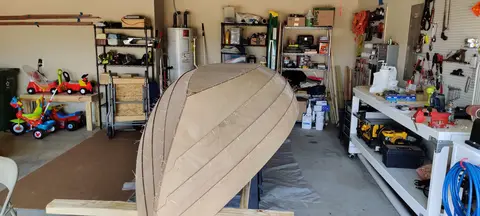
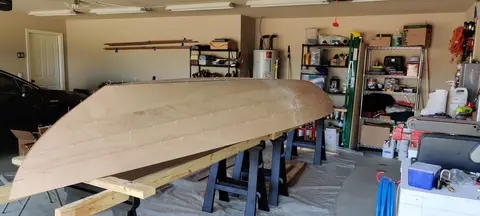
This next step is what I'd call a tack weld. Again, you'll need a helper, because you have to flip the boat upside down.
Before you start epoxying anything, look at the hull from multiple angles and make sure it's on a good level surface. If it's not level, it'll be much harder to fix once you start gluing, though you can still adjust it as long as you haven't fully glued it yet.
Once the boat is flipped over, you're basically mixing up epoxy and putting small blobs of it between all of the metal seams on the outside of the hull. This gives it enough streng...
Phase 6: Filleting the Seams
After you finish tack welding and remove all the stitches, the next step is filleting. On the bottom panel, where it connects to each of the bulkheads, and along the bottom and side panels, you need to run a fillet: a small bead of epoxy mixed with wood flour that creates a smooth, rounded surface.
Fiberglass only adheres well to surfaces that are relatively smooth. If you have an abrupt angle, the cloth won't adhere correctly. See the close-up photo for what the fillets should look like.
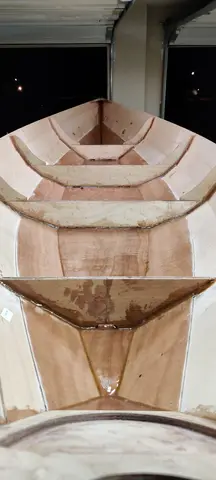
Fillets, fillets, fillets and at the end of the day a bit of glassing. Working without a helper takes plenty of time. The fillets are not finished jet and I worked from 12 to 6pm and after supper from 8 to 11 pm. Finally I glued the rails.
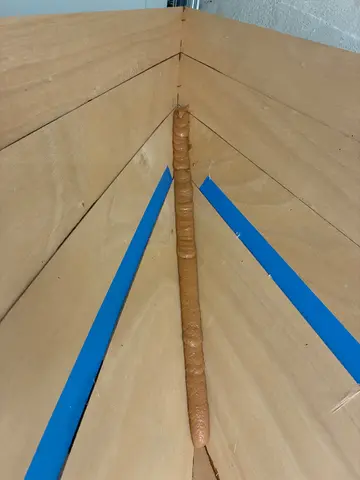
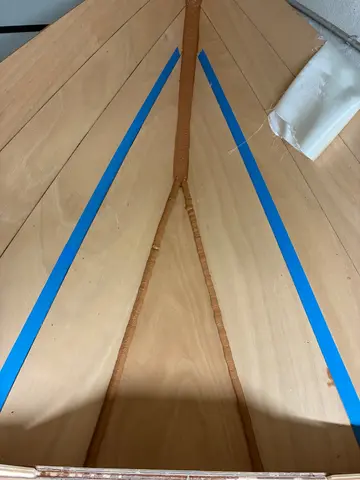
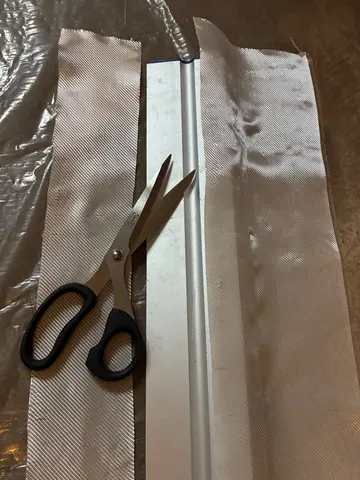
Fatal mistake today! When I was about to do one of the last fillets I took hardener instead of epoxy and vice versa. Yep, it did not cure. Don’t know how this could happen. Every batch before I took so much care choosing the right container but finally it happened, I screwed it up. A bad day for boat building!