Retro-Log: Year 1 (July 2020 – December 2020)
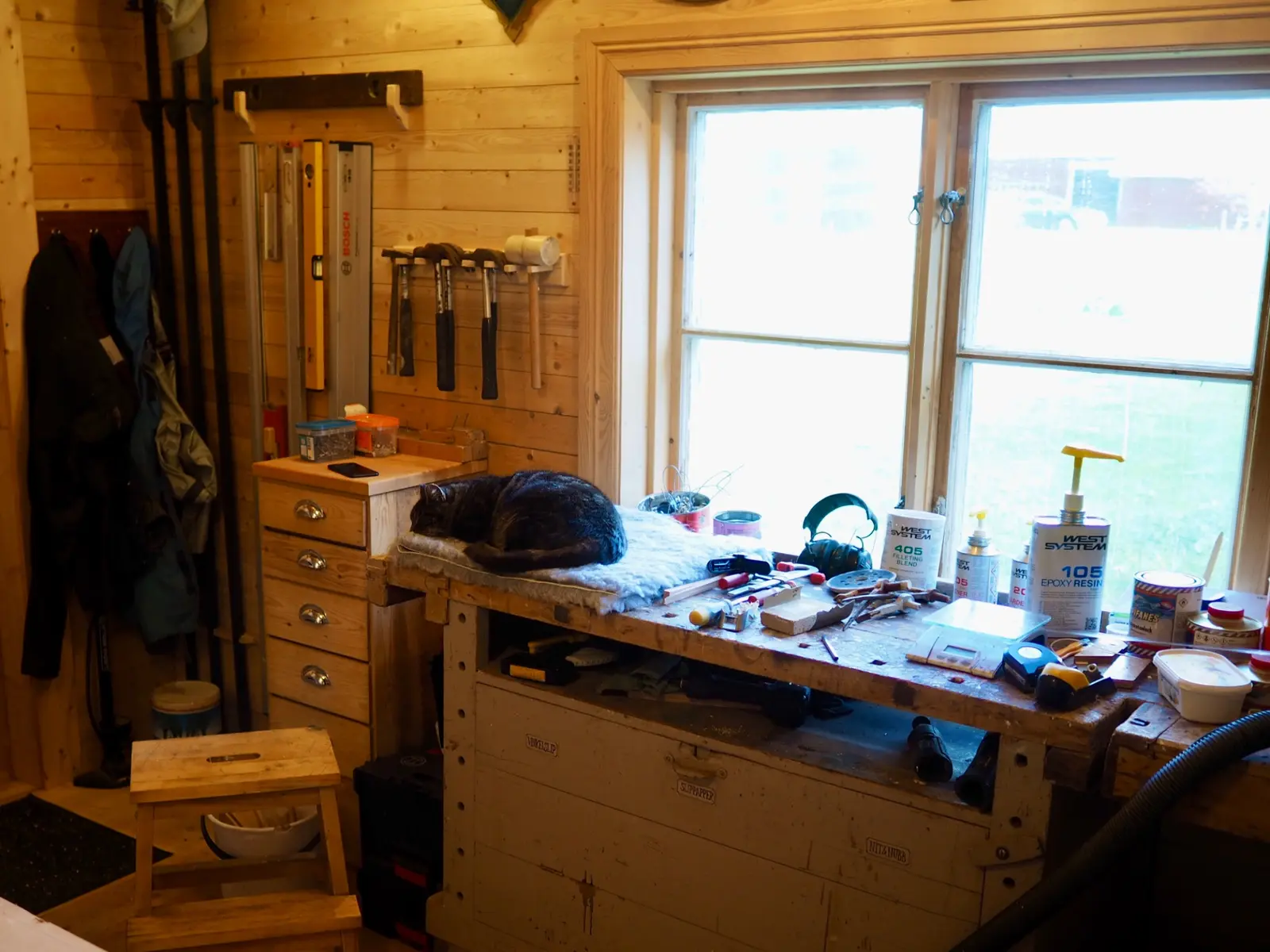
Organizing the Shop
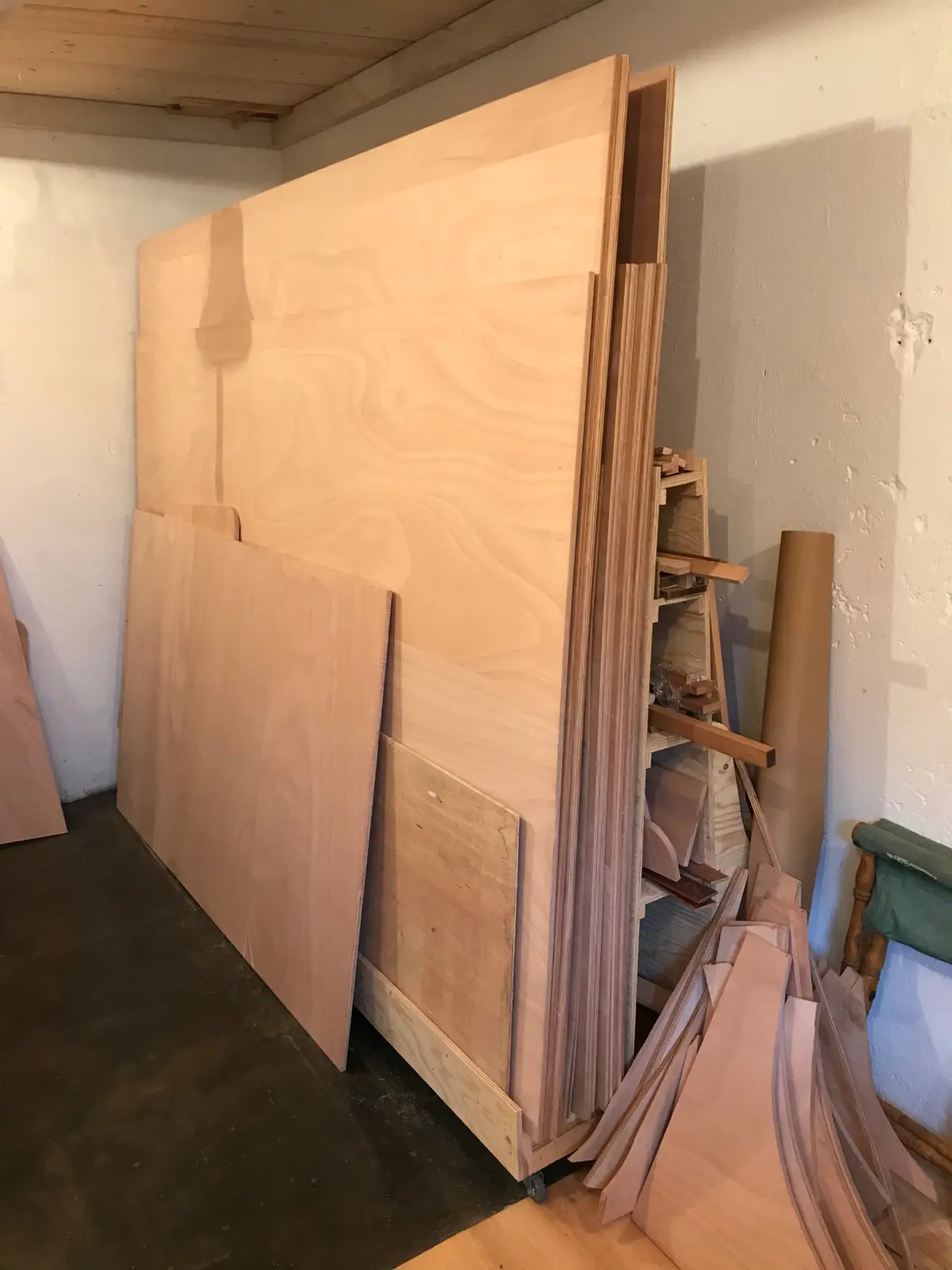
Before cutting any mahogany, the workshop needed structure. In a small heated shop, raw materials crowd you out quickly. Marine plywood sheets and mahogany take up significant floor space. If they get damp or warp, the material is ruined.
I built solid, dry storage racks specifically for the plywood and sorted scrap wood from day one. It kept the floor clear and saved hours of shifting material around later.
Cost of Wood
The journey started in July 2020 with ordering the core materials: marine plywood and mahogany.
The cost was a financial shock. Timber and quality plywood prices have risen sharply. Living in the northern part of Sweden, shipping costs are high, so I tried to do a bulk order which ended up on almost 5 000 EUR. There is no room for careless mistakes when cutting into wood at these prices 🙂
Scaffolding, bulkheads, and stringers
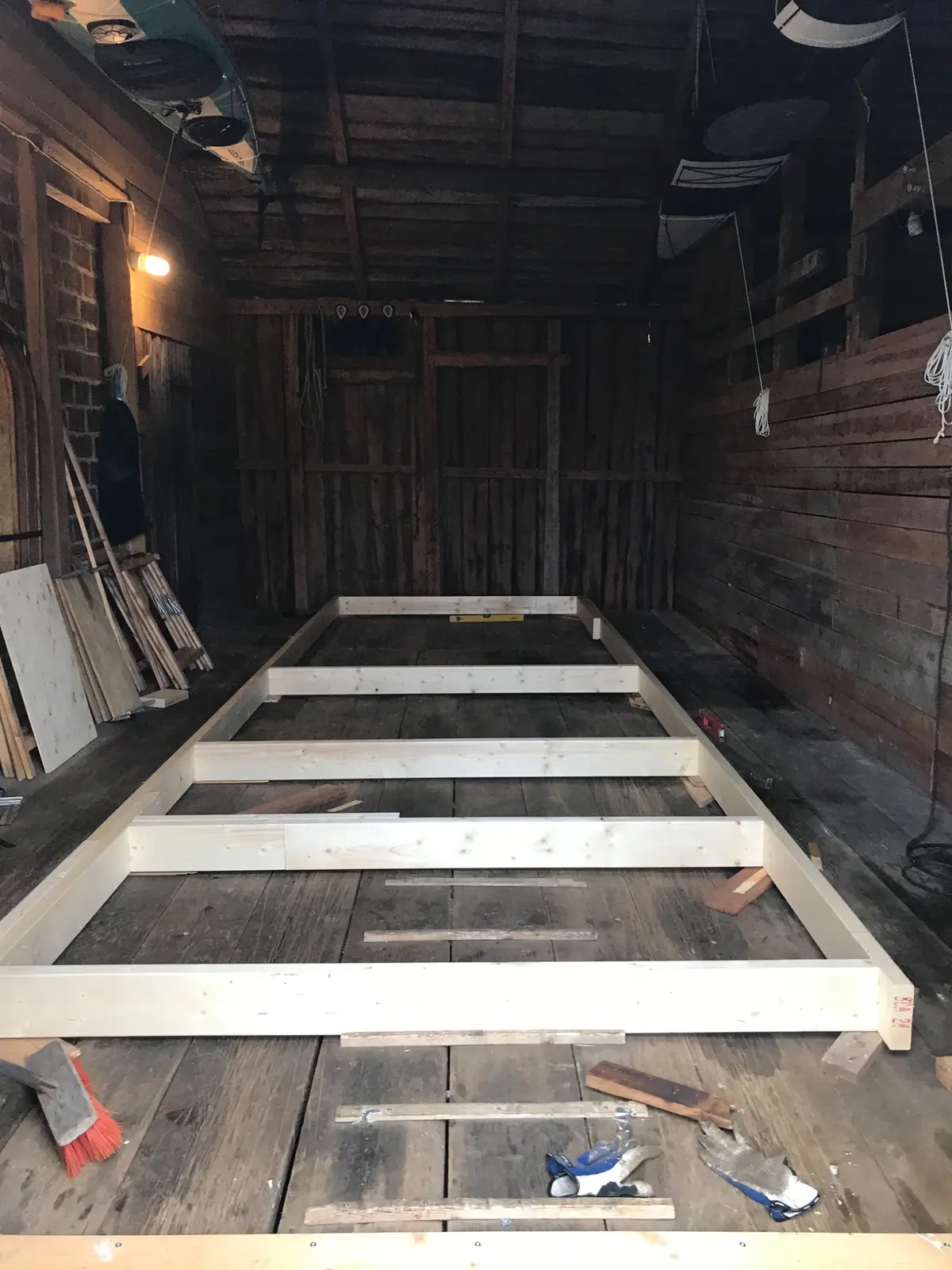
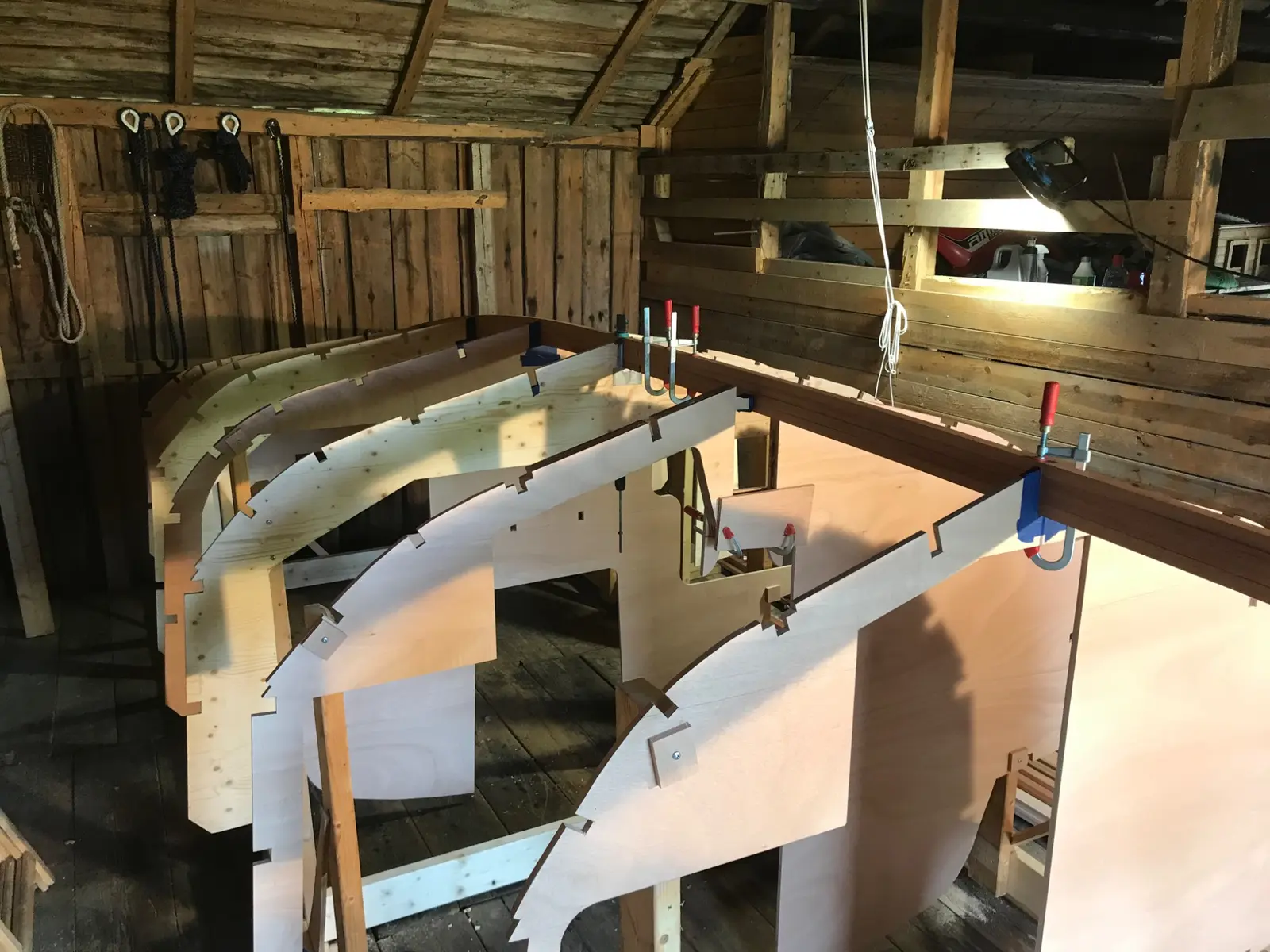
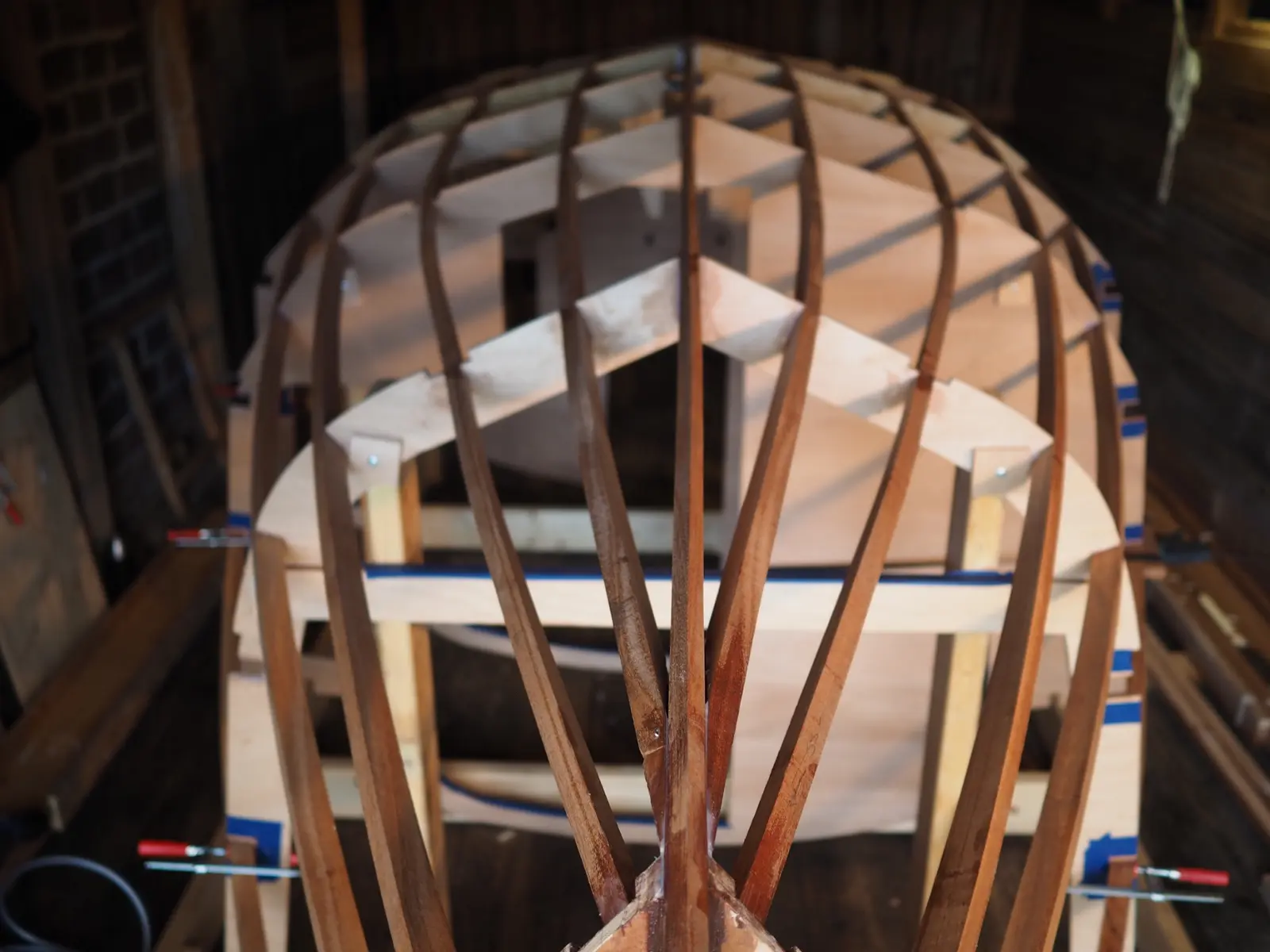
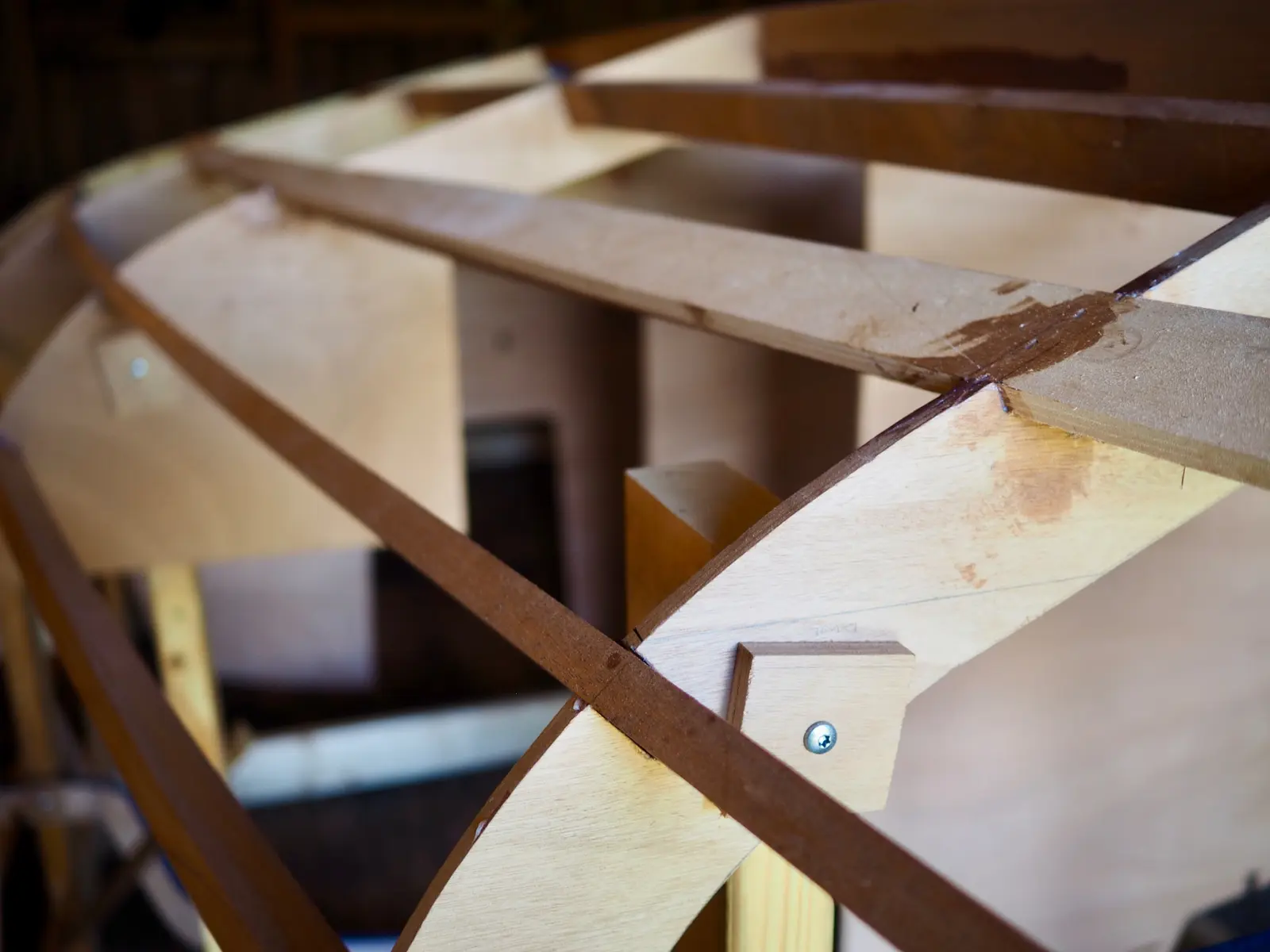
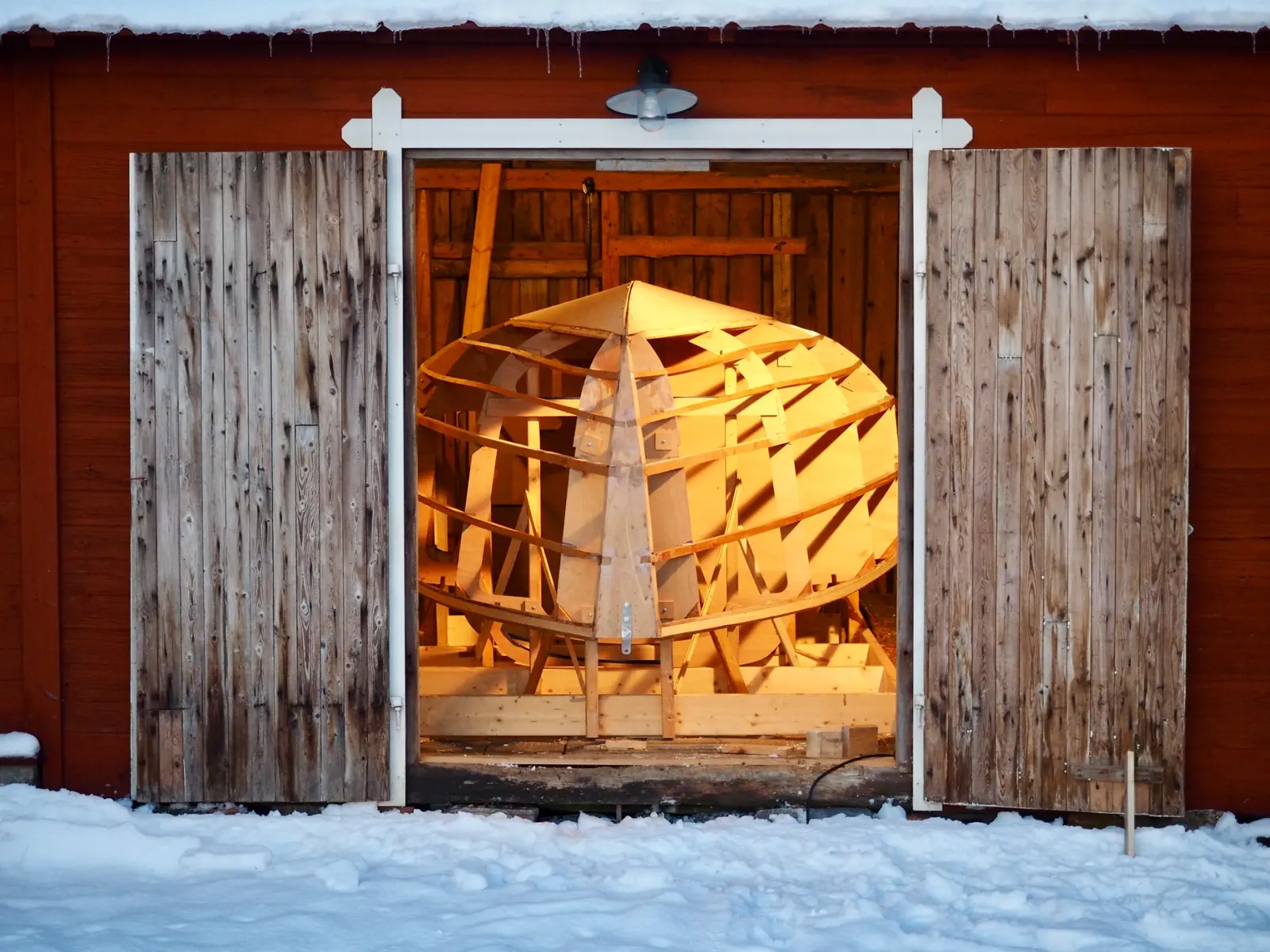
I constructed the sturdy assembly scaffold—the strongback—to hold the geometry of the boat. Next was lofting, cutting out the plywood bulkheads, and aligning them on the frame.
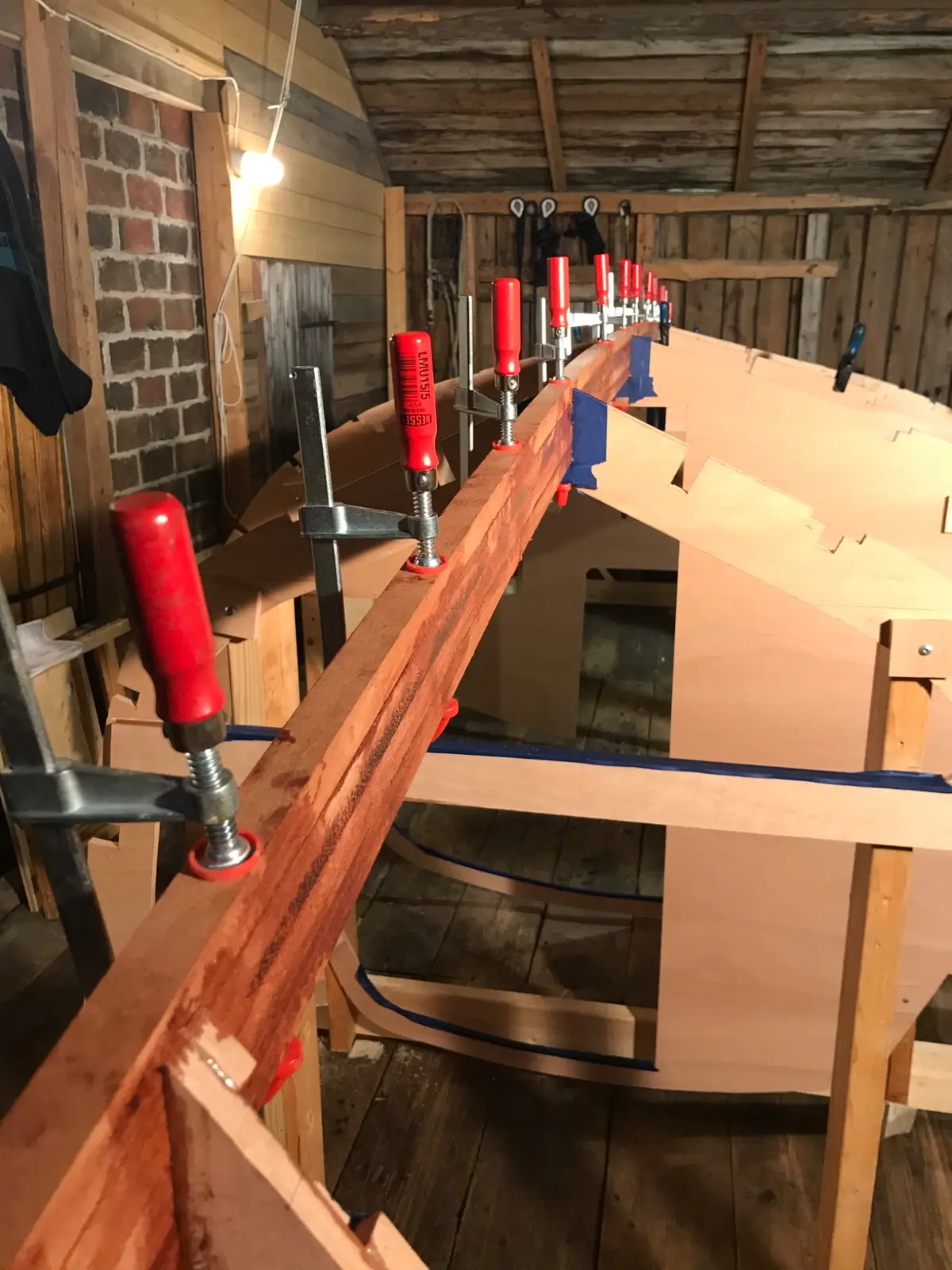
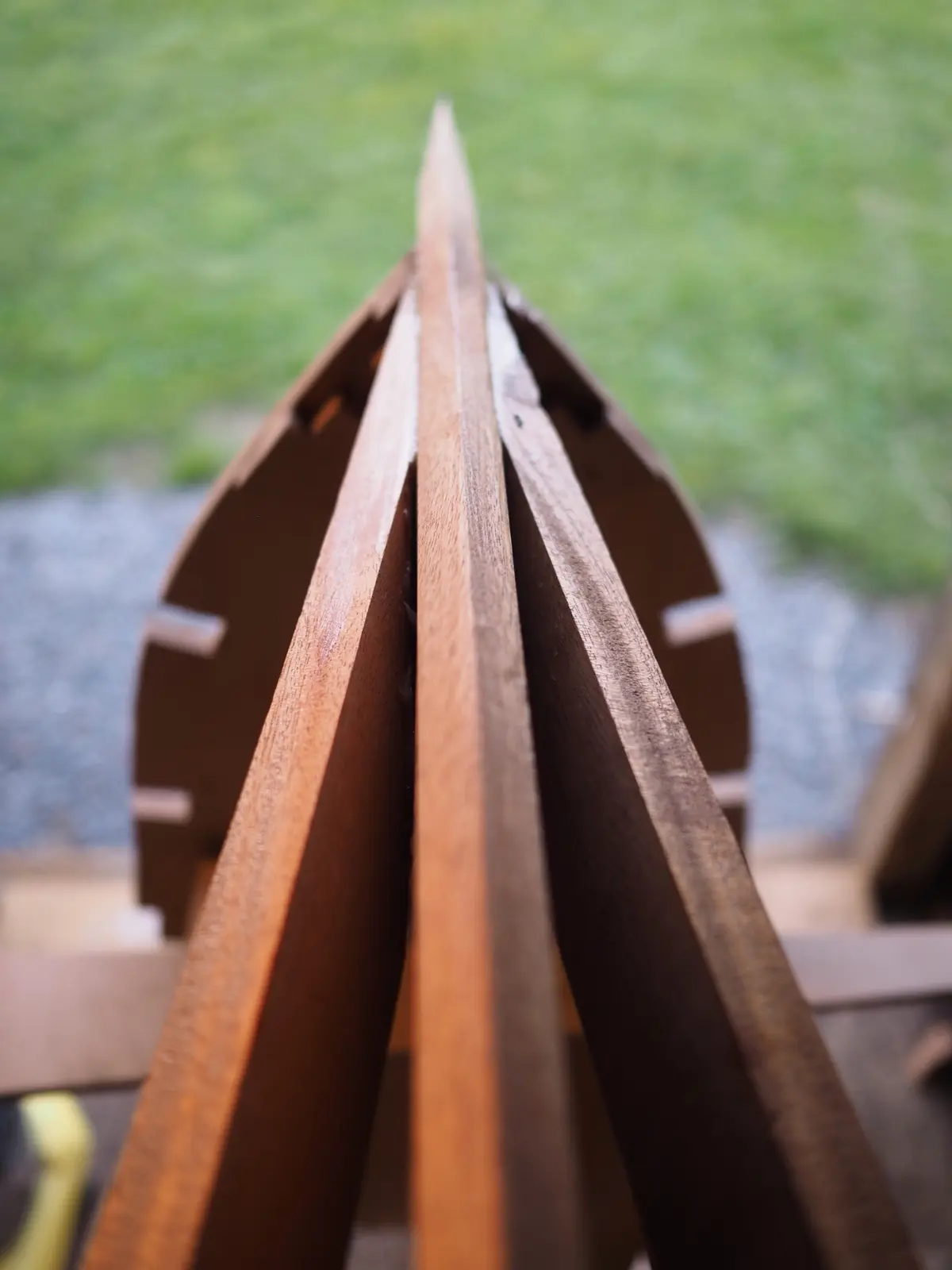
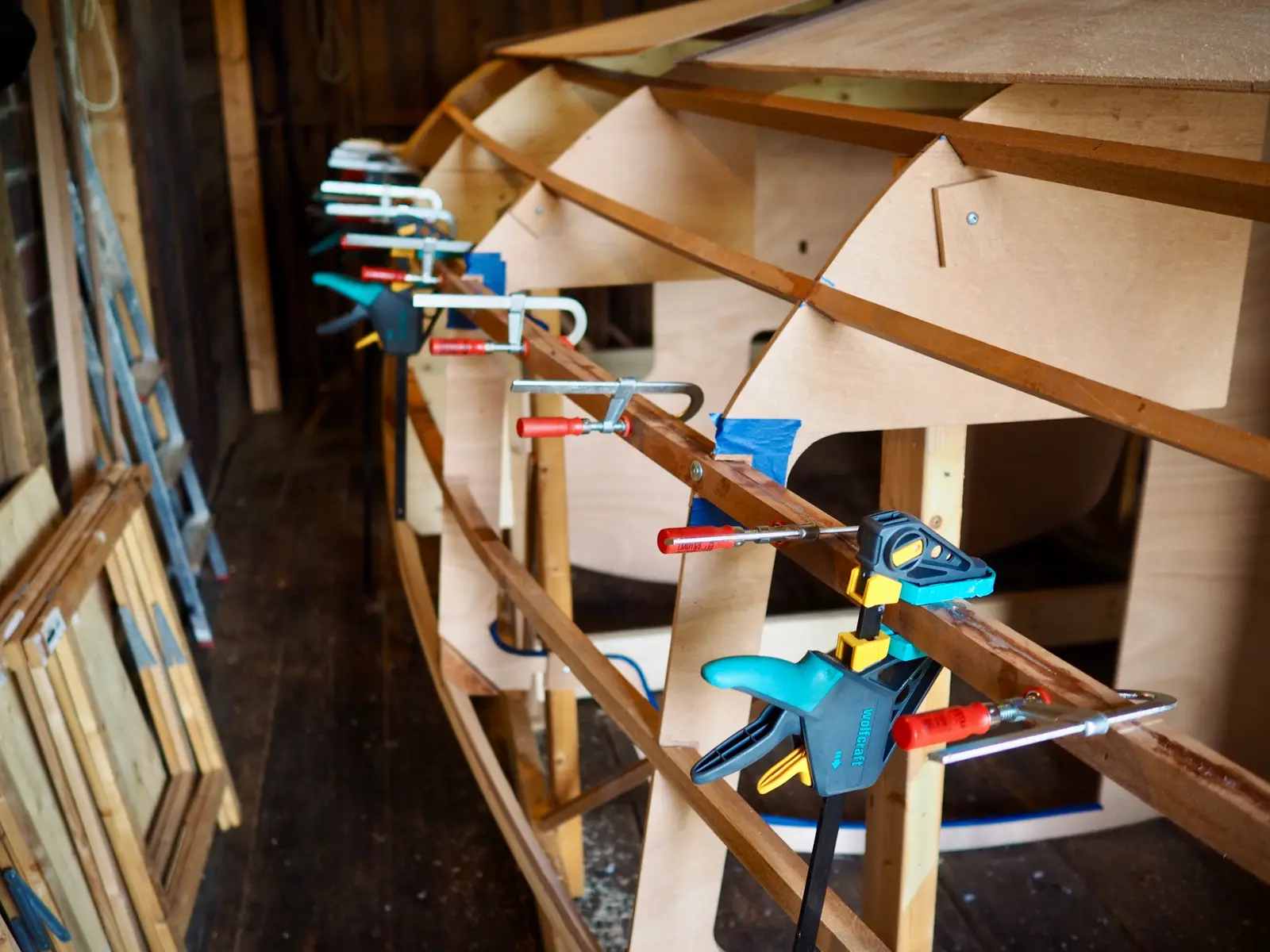
Once the bulkheads were secured, I ran the longitudinal stringers along the hull. This is where the wood began to resist.
Stainless metalwork
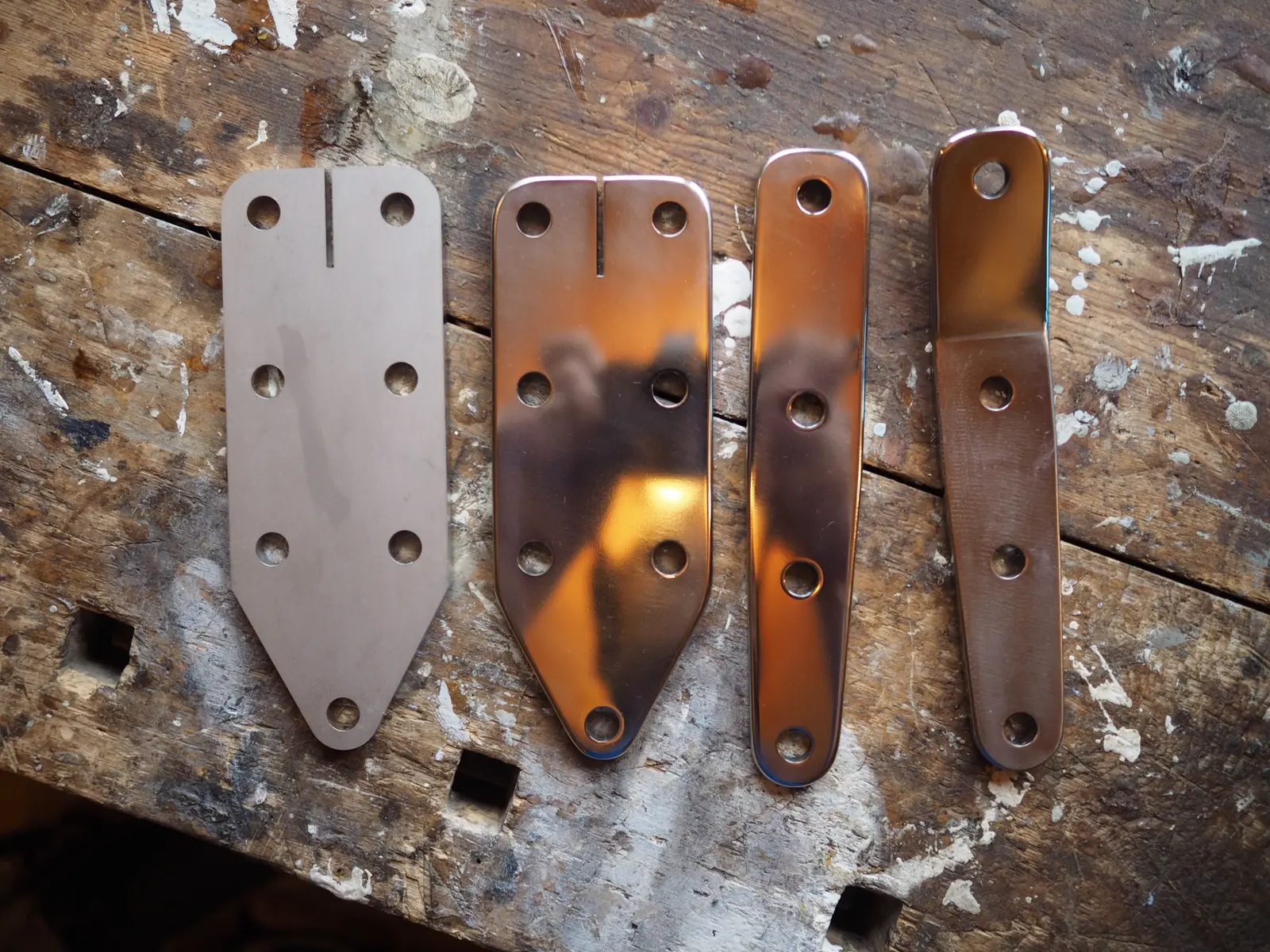
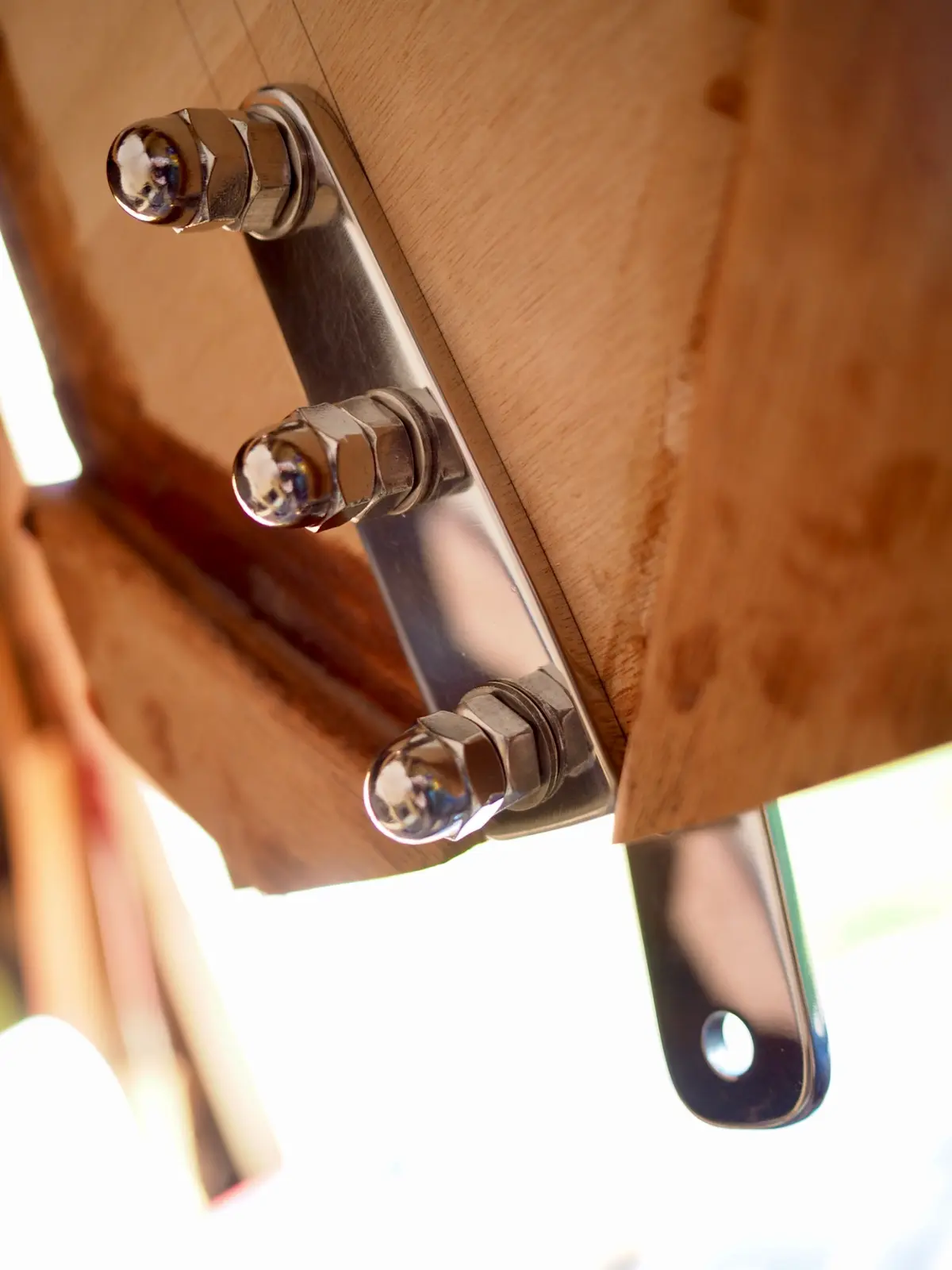
I needed several stainless steel parts early on. Sourcing them locally turned out to be straightforward.
I sent the CAD files to a local metal workshop. They laser-cut the pieces accurately and at a reasonable cost. The parts arrived raw and dull, but an angle grinder and polishing pads turned them into marine-grade stainless steel. It required patience but was easy to do.
Learnings of Year One
1. The Snapped Mahogany
The chine stringers are thick, 30×40 mm solid mahogany. When attempting to bend one of these large, solid pieces around the tight curve of the hull, the tension grew too high. There was a sharp crack, and it snapped right in two.
It was a frustrating, expensive mistake. I should have split the dimension in two and laminated it from two separate 30×20 mm pieces, gluing them together with epoxy directly on the hull. Brute force does not work against mahogany; lamination does.
Additionally, I realized too late that I should have run the router along the inside edges of the stringers before_installation. Cleaning up the edges facing the interior of the hull is far more difficult now that they are glued in place.
2. The Creeping Bulkhead (Bulkhead No. 3)
Bulkhead number 3 is one of the largest structural frames in the boat. Because it serves as the walkthrough to the forward section, it has a large opening cut out of the middle, leaving only a relatively narrow plywood edge.
When I clamped and forced the heavy stringers into place, the immense pressure slowly deformed and pushed that weak bulkhead edge out of alignment. Because everything was under tension and covered in clamps, the slight shift went unnoticed.
I didn't discover this error until 18 months later when we turned the hull right-side up. To fix it, I had to take a saw, physically cut the bulkhead free from the stringers, force it back into its proper geometric position, and epoxy-glue it back into place.
Year summary
134 hours of work, Plans: 500 EUR, Wood: 5000 EUR, Epoxy: 300 EUR Year total: 5900 EUR