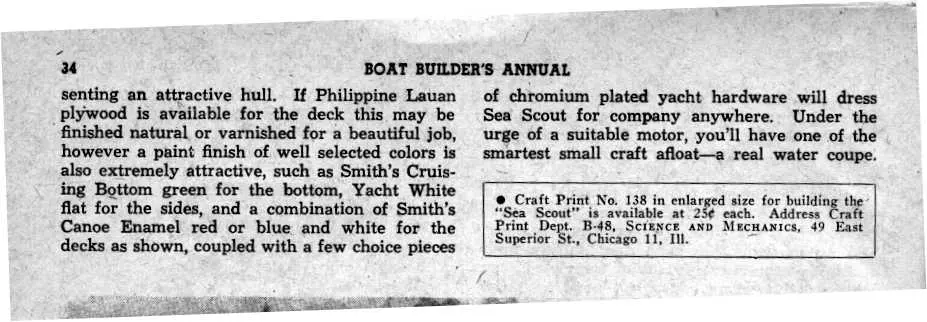
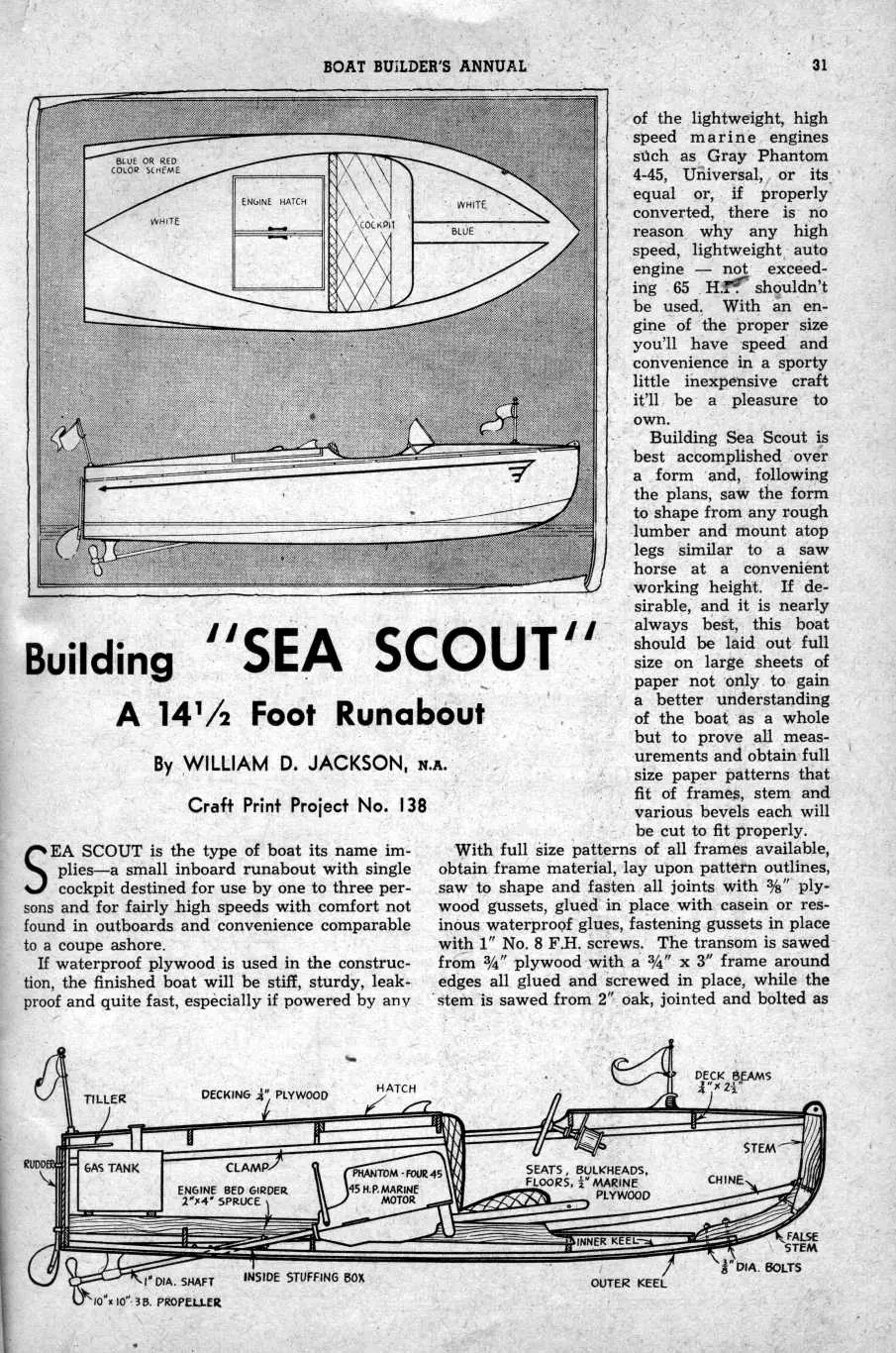
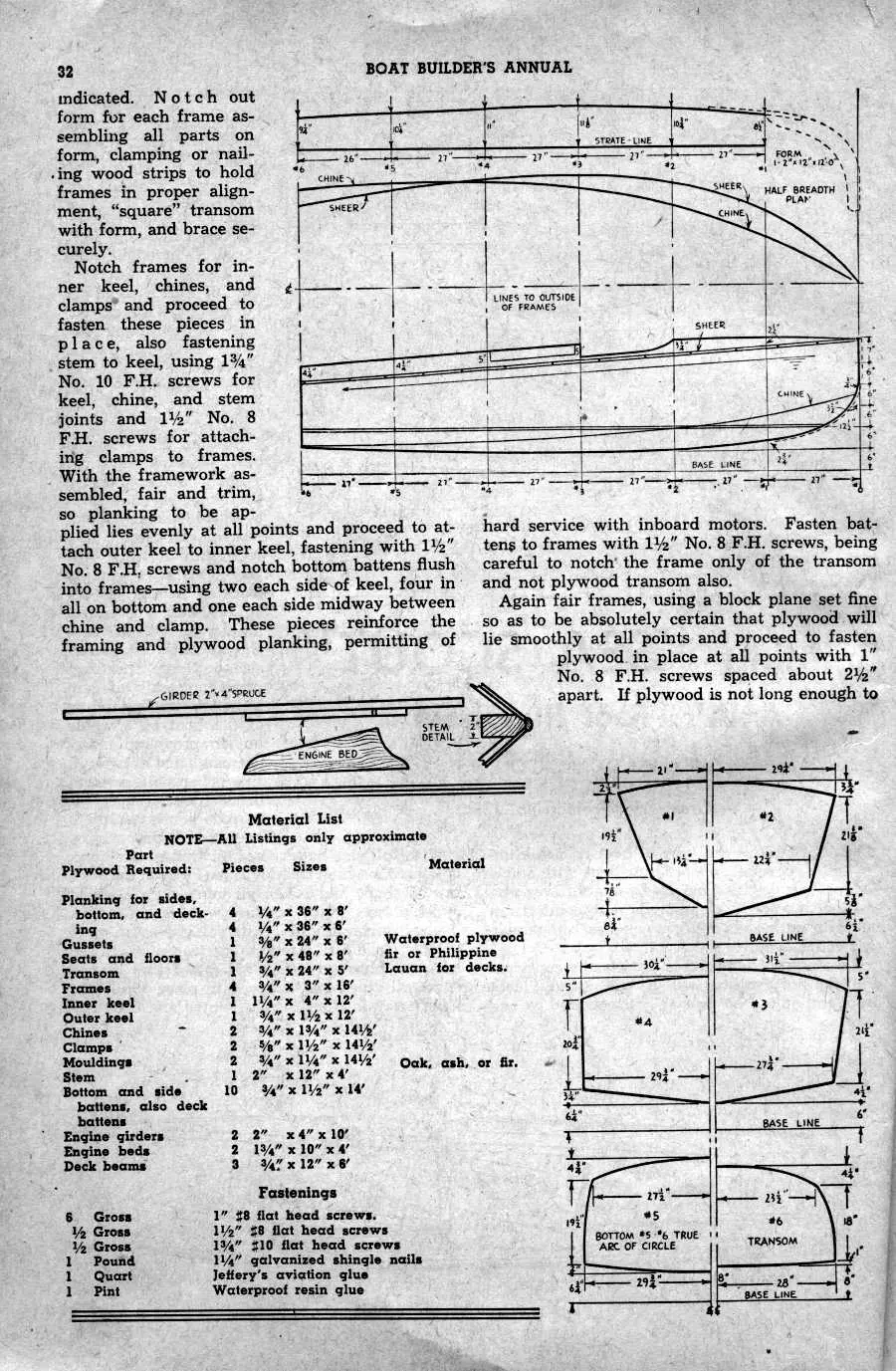
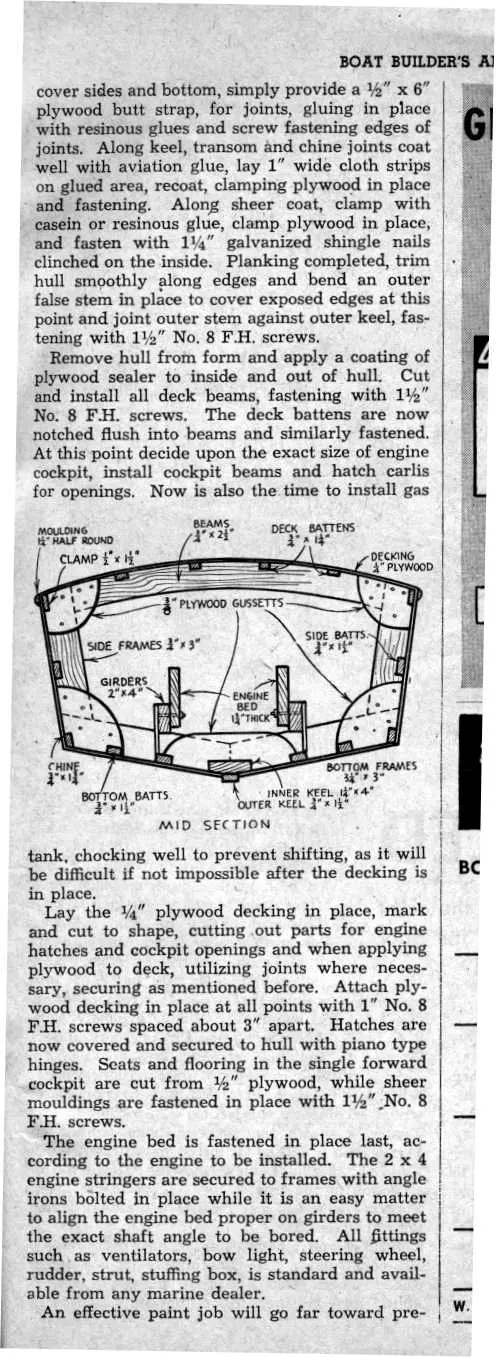
The Beginning: the Sea Scout sketch.
I had intended to build a second electric-powered SUP board for my wife so we could spend time together. Then, by chance, I saw a photo of a mini-boat; at first, I just laughed at the idea. But the boat concept struck me as more appealing than having two SUPs: we could converse intimately (our river is crowded with dozens of boards in the summer), I could install a better sound system than the one I’d had on my SUP, I wouldn't have to worry about keeping my clothes dry, and an electric trolling motor is far quieter than a SUP turbine (that faint whirring noise is quite unpleasant when you're out in nature). Additional perks: you can hang a champagne bucket on the side, fly a flag, and the captain can clench a pipe between his teeth. Phase two: I looked for photos to figure out exactly what kind of boat design I wanted. It had to be beautiful. I realized I wanted a deck with strip planking, a raked transom, and rounded aft quarters. These were the hallmarks of a "beautiful boat" to me.
Next, I started looking for plans. Mini-boats are rare, and there are very few plans available for them—especially for models under eight feet long. After spending a few hours searching, I figured I could simply scale down a larger boat design. So, I began looking for sketches and plans for a "beautiful boat."
That’s how I found the sketch for the Sea Scout. All I had to go on was a magazine article. I needed to determine the boat's final dimensions. I knew the length should be around 230 centimeters, with a width of 80–90 centimeters. To figure out if these dimensions would accommodate two adults, I took measurements of myself and my wife. We sat on the sofa and stretched out our legs, simulating the seating position inside a boat. I measured the length of my outstretched legs to determine the seat positions and the width of my feet to gauge the width of the bow frame. Shoulder and hip measurements were particularly important for ensuring a comfortable seating position; these dimensions dictate the boat's width at its midsection. Preliminary measurements suggested there was a good chance the boat would fit inside a minivan. The next step was to see what the result would look like if I scaled the actual boat down to my target length of 230 cm. I converted the frame profiles from the blueprints into a 3D model (using Moi3D), as many of the figures in the scans were barely legible. I then adjusted the frames to the desired width of 90 cm, spaced them evenly along the 230 cm length, and generated the hull surfaces. The resulting shape looked like a truly beautiful boat.
I didn't know the exact gunwale height yet; determining that requires calculating the boat's displacement. I will write about that later.