Sail or power for your first wooden boat build?
Why the choice is less about how you use the boat than what you build after the hull
Most people choosing a first boat to build think they are choosing between sailing and motoring. They are, but that is the smaller half of the decision. The bigger half is what you are signing up to build, because a sailboat and a powerboat share a hull and then go off in completely different directions.
The short version: the hull is roughly the same job either way. What differs is the second project bolted onto it. On a sailboat that is the rig. On a powerboat it is the engine and everything that joins it to the water. Pick the one you would enjoy building, not just the one you would enjoy using.
What the choice actually decides
A sailboat build is a hull plus a rig: mast, boom, often a bowsprit, a centreboard or keel, a rudder, and all the fittings and rope that make them work together. A powerboat build is a hull plus propulsion: an outboard on a transom, or an inboard engine with a shaft, strut, rudder, fuel system, exhaust and controls.
That second project is where the hours, the money and the skills diverge. A sailboat asks for more woodwork and more fiddly hardware. An inboard powerboat asks for mechanical work that has very little to do with boatbuilding at all.
The hull itself is closer than people expect. On the numbers page, which only uses hours written down by builders while they worked, power builds and sail builds come out almost level per foot of boat, at 3.9 and 3.8 hours respectively at the time of writing. Most of those logs are still under way and the sample is small, so treat that as an early reading rather than a rule. But it points the right way: a plywood hull is a plywood hull.
What a sailboat adds: the rig is its own build
The Paper Jet 14 from Dudley Dix is a good example of how much of a sailboat is not hull. It is a 13 foot 5 inch stitch and glue plywood dinghy, built in 4mm ply throughout, with a hull weight of about 100 pounds. Dix designed it primarily as a training boat, with one hull that takes three rigs, from a free-standing una rig of 77 square feet up to a trapeze sloop with an asymmetric spinnaker on a retractable bowsprit. It won an Outstanding Innovation award at the WoodenBoat Show in 2007.
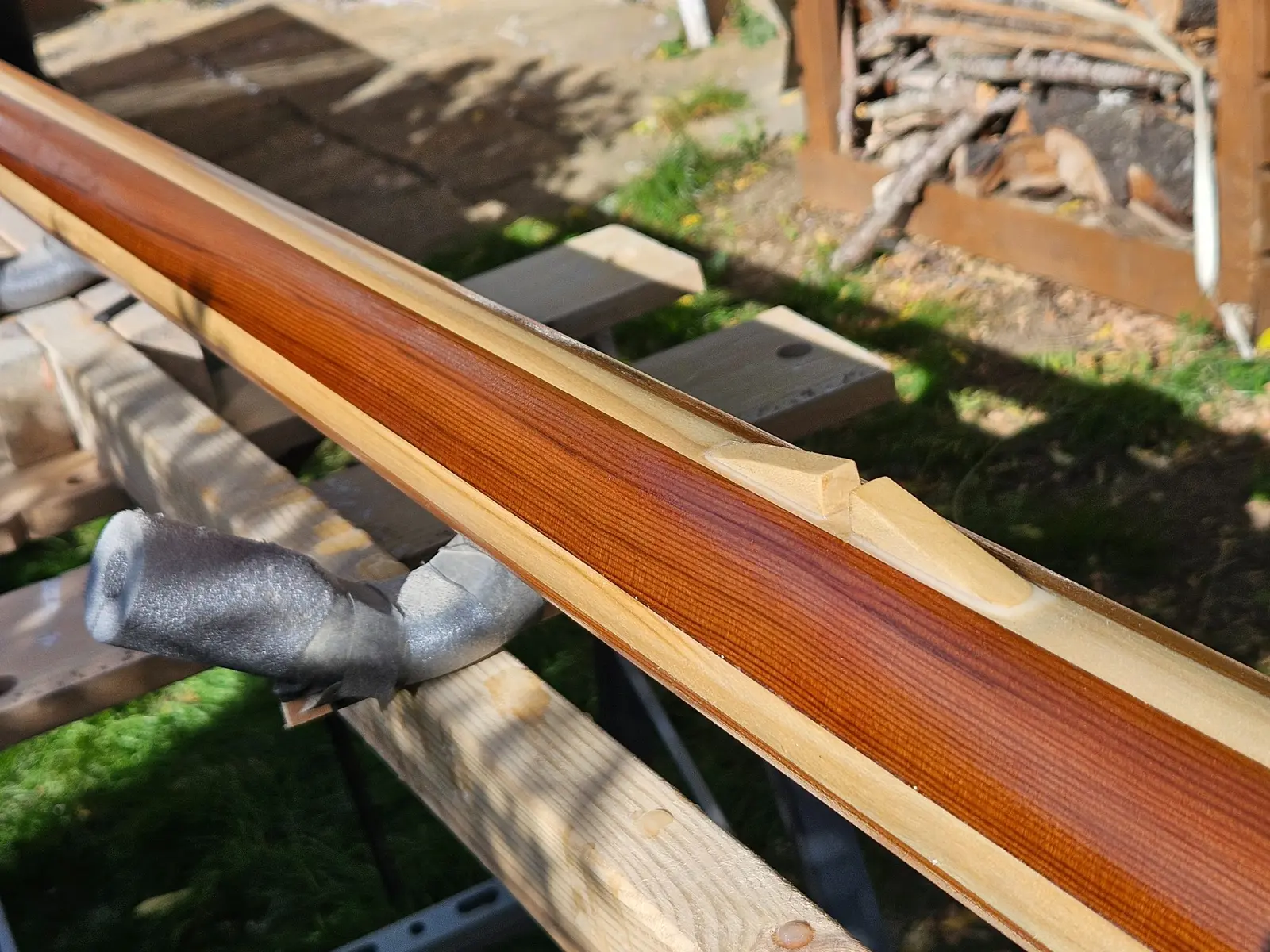
Ben Stevenson is building one in the UK, in a single garage and garden, evenings and weekends, and it is his first boat. His log is worth reading for one reason in particular: every hour so far has gone into the spars. He started there because of kit lead times, and he has logged 86 hours on mast sections, scarfs, a carbon joining tube and epoxy coating. On a powerboat, none of that work exists.
This is the pattern across the site. Rig and spar work is the single largest step by median hours on the numbers page, ahead of fairing and sanding, although only a couple of builders have logged it so far. A mast is long, has to be straight, has to taper correctly and has to carry real load. It is proper woodworking, and a lot of builders find it the most satisfying part of the boat.
The larger the sailboat, the more that second project grows. Philippe's Didi 26 and Andrew's Eland 36, both Dudley Dix designs on this site, carry ballast, standing rigging and cabin joinery that a 14 foot dinghy never needs. A cruising sailboat is not a sensible first build for most people, however good the plans are.
What a powerboat adds: the engine is the second project
A small powerboat with an outboard is the simplest boat there is to finish. You build the hull, reinforce the transom as the plans tell you, bolt the motor on and go. If the design suits an outboard and your aim is to be on the water, that is hard to beat.
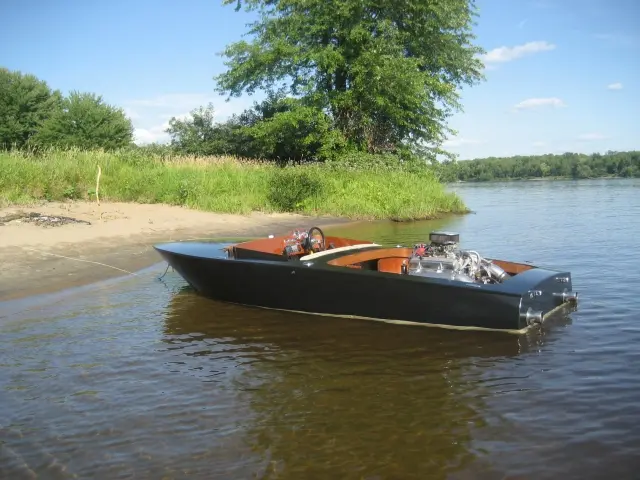
An inboard is a different animal, and the Glen-L Hot Rod shows exactly how different. Glen-L describe it as a 16 foot 6 inch speed and ski boat with a 6 foot 11 inch beam, a vee bottom hard chine hull developed for sheet plywood, and a hull weight of about 600 pounds. It takes an inboard of under 800 pounds driving through a vee drive, and it has been raced with a string of successes. They also say plainly that it is not a rough water boat.
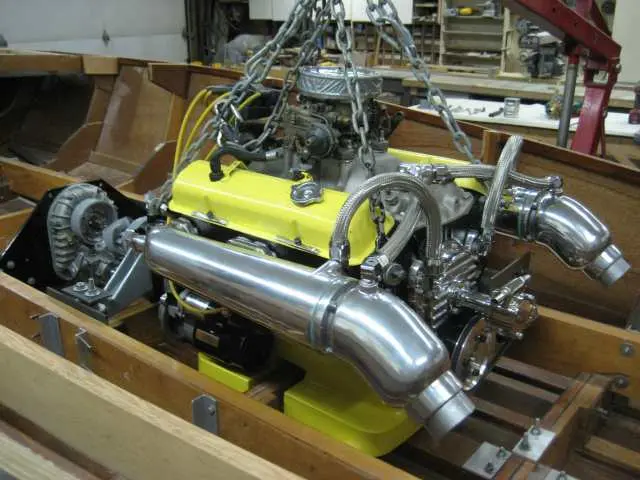
Paul Kane's Hot Rod log is the showcase on this post, and it is a masterclass in the second project. Before the bottom went on, the shaft hole was drilled and a strut set up with a spacer to allow for the thickness of the glass that would follow. Fibreglass tubes went in for the shaft and the rudder port. Then came the engine: a custom oil pan that dropped it three and a half inches and raised oil capacity from four quarts to twelve, a rebuilt vee drive, machined steering parts, fuel tank cradles, gauges and exhaust. After the first twelve hours on the water the engine came out again to be rebuilt for sustained high revs.
None of that is carpentry. It is machining, welding, plumbing, wiring and engine building. If you enjoy that, an inboard is a wonderful thing to build. If you do not, it is years of work you did not want.
How to choose, in order
- Decide how you will use it. Sailing, rowing, fishing, skiing, or going fast. Be honest about the water you have nearby, because a boat like the Hot Rod wants flat water and a dinghy wants wind.
- Decide which second project you want. Rig or engine. This matters more than which one you would rather ride in, because you will spend far longer building it than you think.
- Keep the second project small on a first boat. An outboard, or a simple una rig on a dinghy, lets you finish. A cruising sailboat's rigging or an inboard V8 can double the build.
- Check the per-foot hours, not the brochure. Look at the designs on this site for boats like the one you want, then compare the real hours builders logged against the designer's estimate.
- Read one finished log of each kind. A powerboat log and a sailboat log side by side will tell you more about which work you want than any advice article, including this one.
The part that is the same either way
Whichever way you go, the boat gets finished by people who keep going through the middle, and the middle is the same on both. Fairing, sanding, glassing and painting a plywood hull take as long under a mast as they do under an engine.
Paul's log runs from cutting frame templates to trips to the Glen-L builders' gathering in Tennessee years after launch, and Ben's has so far covered a mast and a bowsprit. Both are useful precisely because they wrote it down as they went. Pick the second project you will enjoy, then start a build log before you cut anything. The first few entries are the ones you will be glad of later.