Your boat build log ends as a book you can hold
From log to book: what the Make a book button turns a finished build into, and how to print yours
Most build logs end the same way. The boat gets launched, the posts stop, and the whole record slowly sinks down a forum or a feed until nobody, including you, can read it in order any more.
Mine ended as a book. I built a Northeaster Dory over the summer of 2020 and logged it as I went, and when it was done I pressed one button and got the whole build back as a book: cover, chapters, photographs, hours, what it cost, and a last page for the day she floated. I made a 90 second video of it if you'd rather see it than read about it.
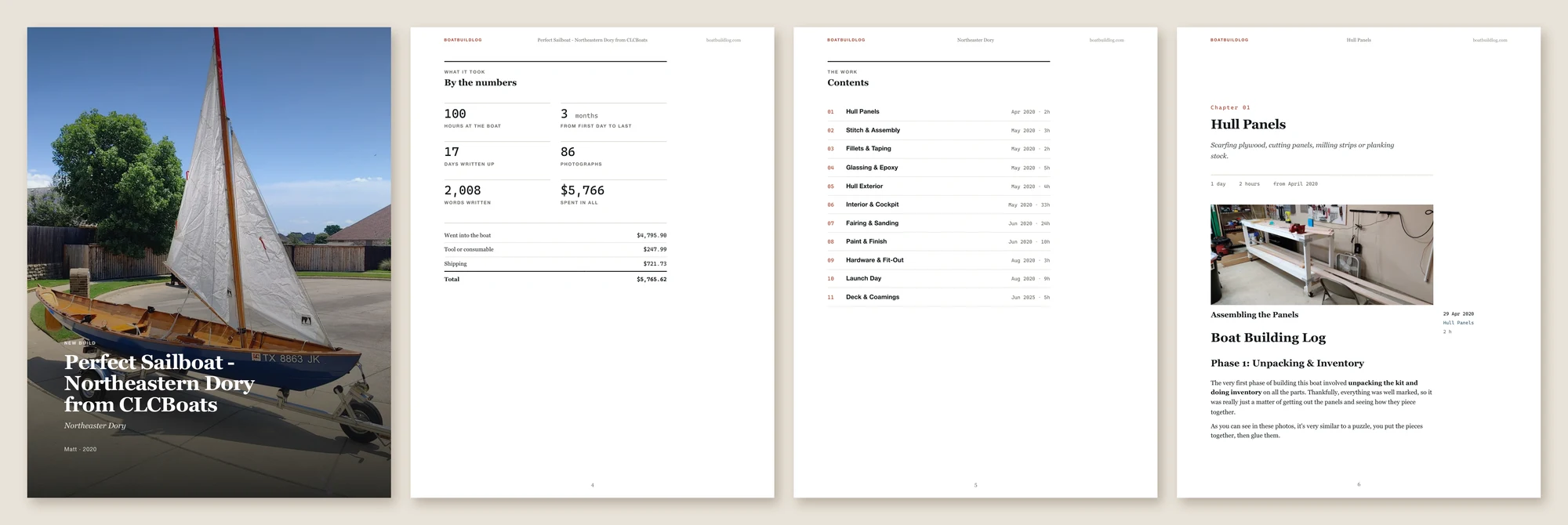
This post is about that book: what's in it, why it's the real end product of keeping a log, and how to make your own.
What the book is
The book is your build log laid out for paper. Every log on this site has a Make a book button. It takes every entry and photograph you've written, in the order it happened, and sets them as a proper book you can save as a PDF and print.
It isn't a printout of the web page. It has the parts a book has:
- A cover with your best photograph, and a title page.
- The specification: the design, the designer, length, beam, construction, and when you started and launched.
- By the numbers: hours at the boat, months from first day to last, days written up, photographs, words written and money spent.
- A contents page with one chapter per stage of the build, each showing when it started and how many hours it took.
- The log itself, entry by entry, with each chapter opening on its own page.
- What it cost, broken down into the boat, tools and consumables, and shipping.
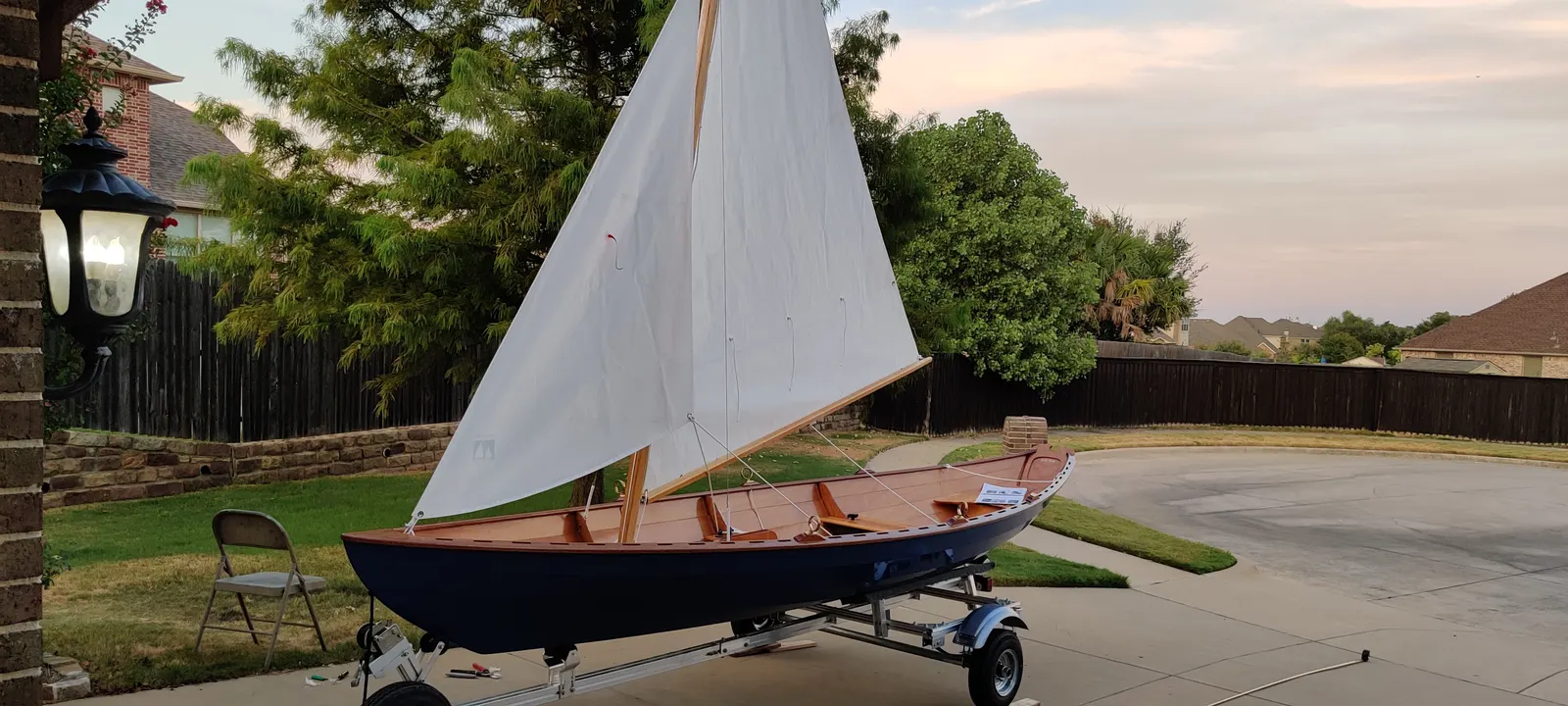
- If the boat got wet, a closing page called "She floated", with the launch date and the last photograph in the log, which is very often the boat in the water.
There's one more page that only some books get. Where at least three builds of the same design have logged their hours here, the numbers page shows yours against theirs. A median of two would read as authority and isn't, so it waits until there are enough.
What mine came out as
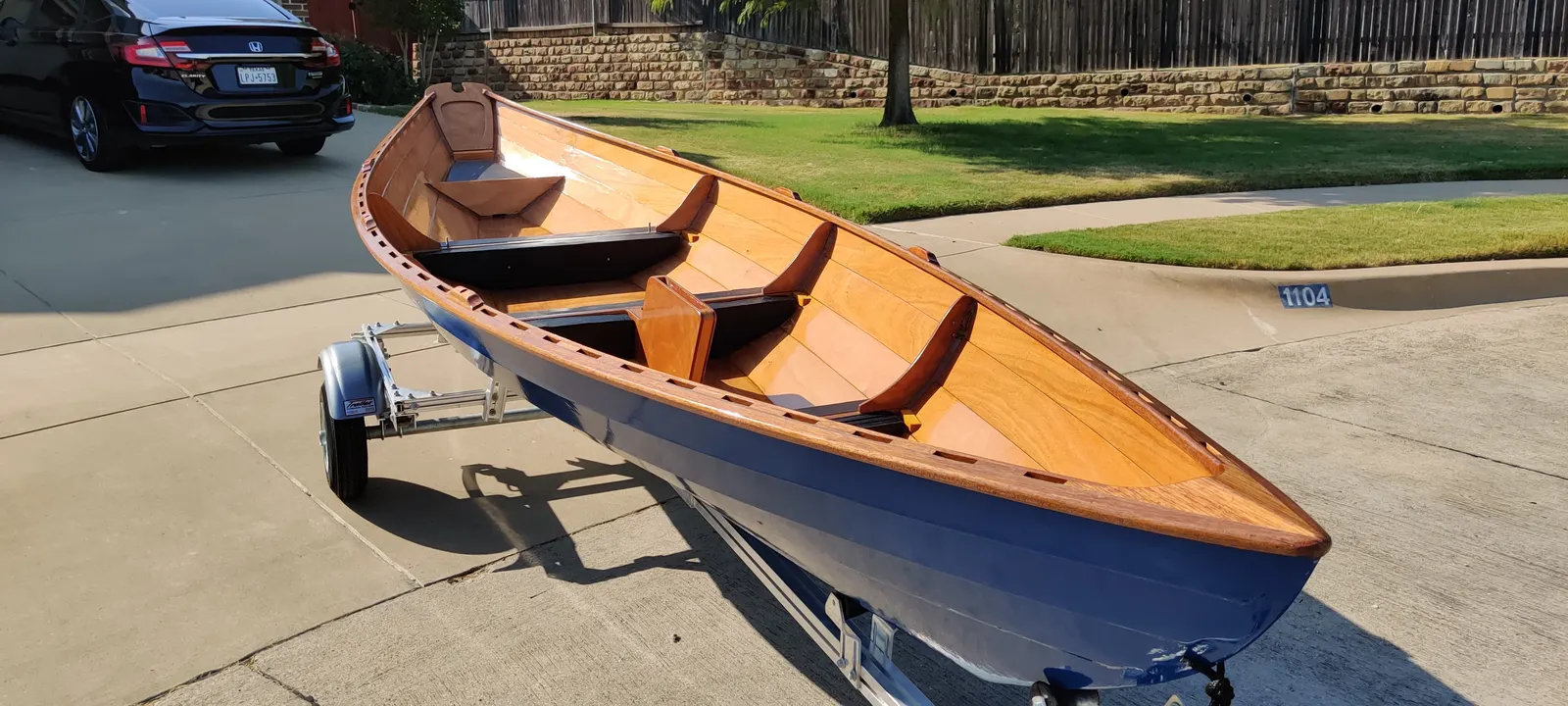
The Northeaster Dory is a 17 foot rowing and sailing dory from Chesapeake Light Craft, drawn by John C. Harris. I built mine from the kit, with the sloop rig, between 15 April and 28 July 2020. The log wasn't long. Here's what the book's numbers page made of it:
- 100 hours at the boat
- 3 months from the first day to the last
- 17 days written up
- 86 photographs
- 2,008 words
- $5,766 spent in all, of which $4,795.90 went into the boat, $247.99 into tools and consumables, and $721.73 into shipping
Those are the numbers people actually ask about, and none of them come from memory. Shipping alone came to about an eighth of the total, which is the kind of thing you only find out by writing it down.
The contents page was the other surprise. The book split the build into eleven chapters, and the two biggest aren't the glamorous ones. Interior and cockpit work took 33 hours. Fairing and sanding took 24. Stitching the hull together, the part everyone photographs, took 3. You don't get that picture from memory. You only get it from a log that was written down at the time.
Why the book is the real end product
A log is useful while you're building. You read back what you decided, you find the photo of how a part went in before you covered it up, and other people building the same boat find you. All of that is worth doing.
But the book is the thing that lasts. It doesn't care whether this site, or any site, is still running in ten years. It sits on a shelf. You can hand it to your kids, to the friend who helped you flip the hull, or to whoever buys the boat from you one day, and it shows them exactly how she was built. I wrote more about why that matters in will your build log still be there in ten years.
Knowing the book is coming changes how you log, for the better:
- Log the hours and the costs. They become the numbers page and the "What it cost" page. Skip them and those pages come out thin.
- Pick a stage for each entry. The stages become the chapters. A log with every entry filed under the right stage reads like a book. One without reads like a diary.
- Take a photo every session, even a dull one. A chapter with no pictures is a wall of text, and the last photograph you post becomes the closing page.
- Write for a reader. Two sentences on what you did and why is plenty. In five years you'll be the reader, and you won't remember.
- Log the launch. Put a launch date on the build and the book gets its last page.
How to make yours, step by step
- Open your build log and press Make a book. It's next to the like button at the top of the log.
- Choose what to include. The specification, the numbers, contents, chapter pages and what it cost are all on by default. Comments are off by default, so turn them on if people left good ones.
- Pick your paper, Letter or A4, on the page itself rather than in the print dialog. The book is laid out for whichever you choose.
- Press Print or save as PDF. In the print dialog, turn background graphics on so the cover photograph prints, and turn headers and footers off so the browser's own clutter stays out of the margins.
- Use Chrome or Edge if you want page numbers and chapter headings in the margins. Safari and Firefox print the same book without them.
- Save it as a PDF, then print it at home or take the file to a local print shop to have it bound.
Start the log, get the book
None of this needs anything clever at the end. It needs a log kept from the first day, with a photo and a line or two each time you work on the boat. The book takes care of itself.
So if you're about to start, start a build log before you cut anything. The unpacking and the first glue-up feel too boring to write down. In the book, they're the first chapter.