Black G/flex resin seams
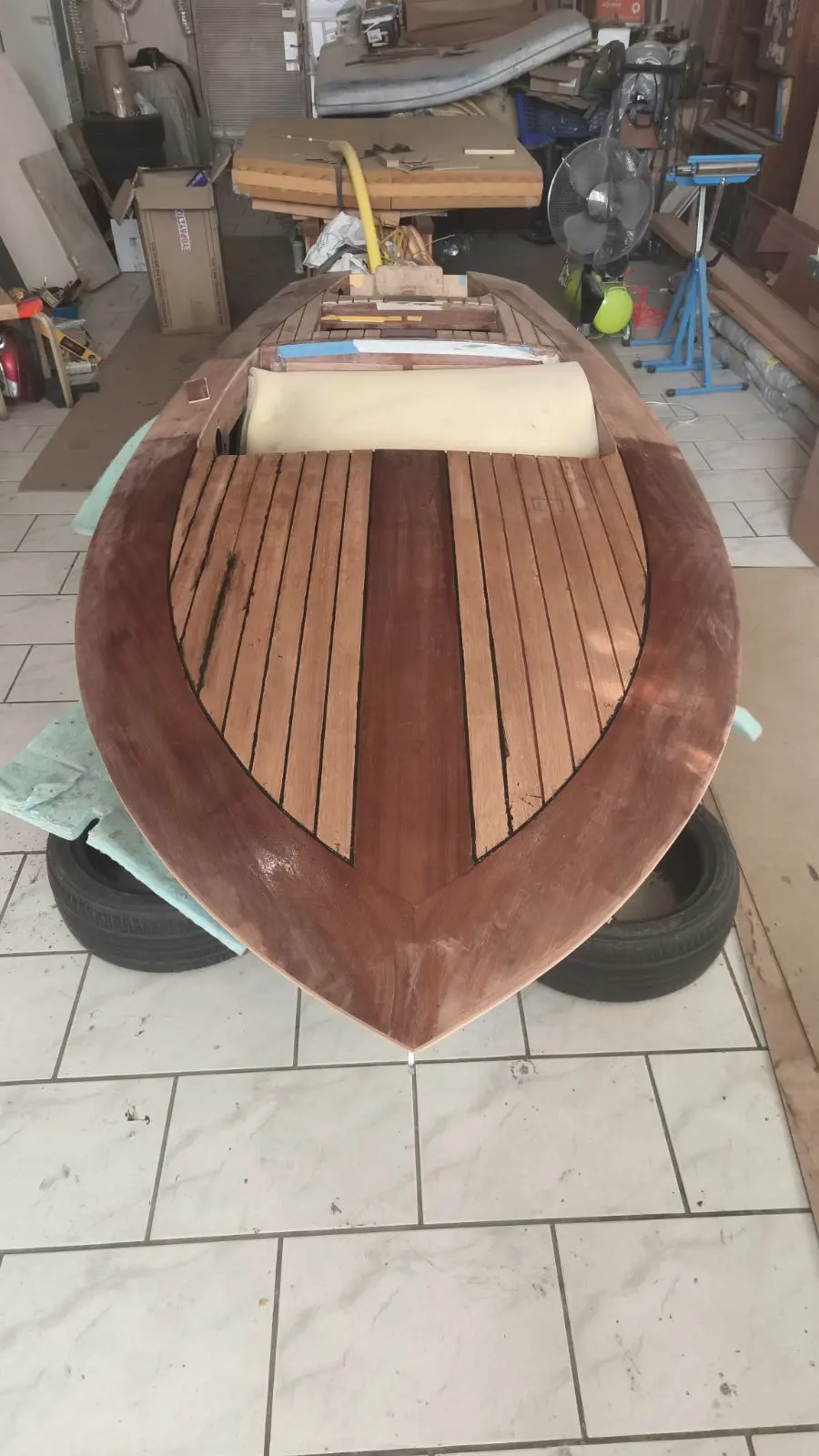
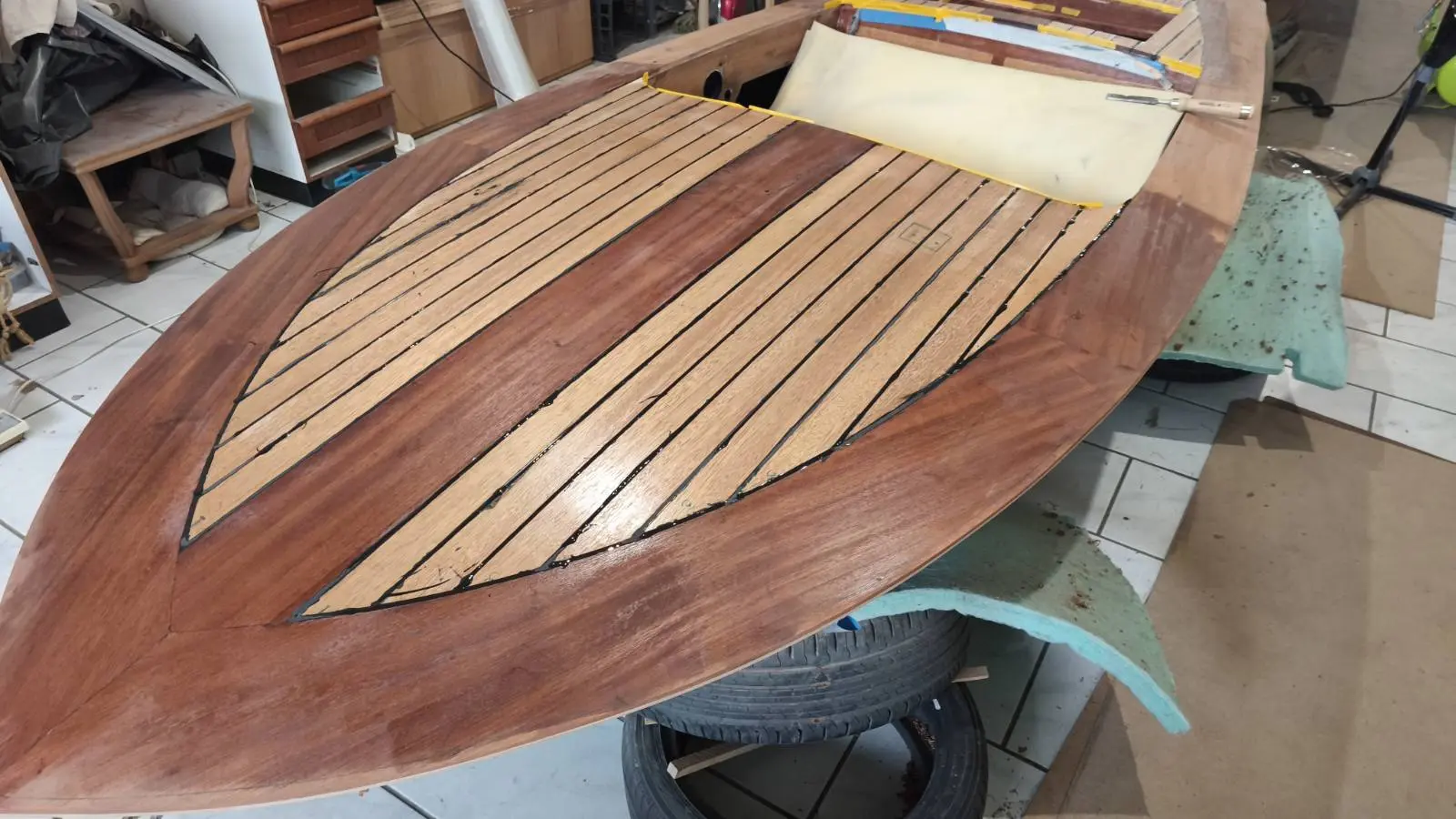
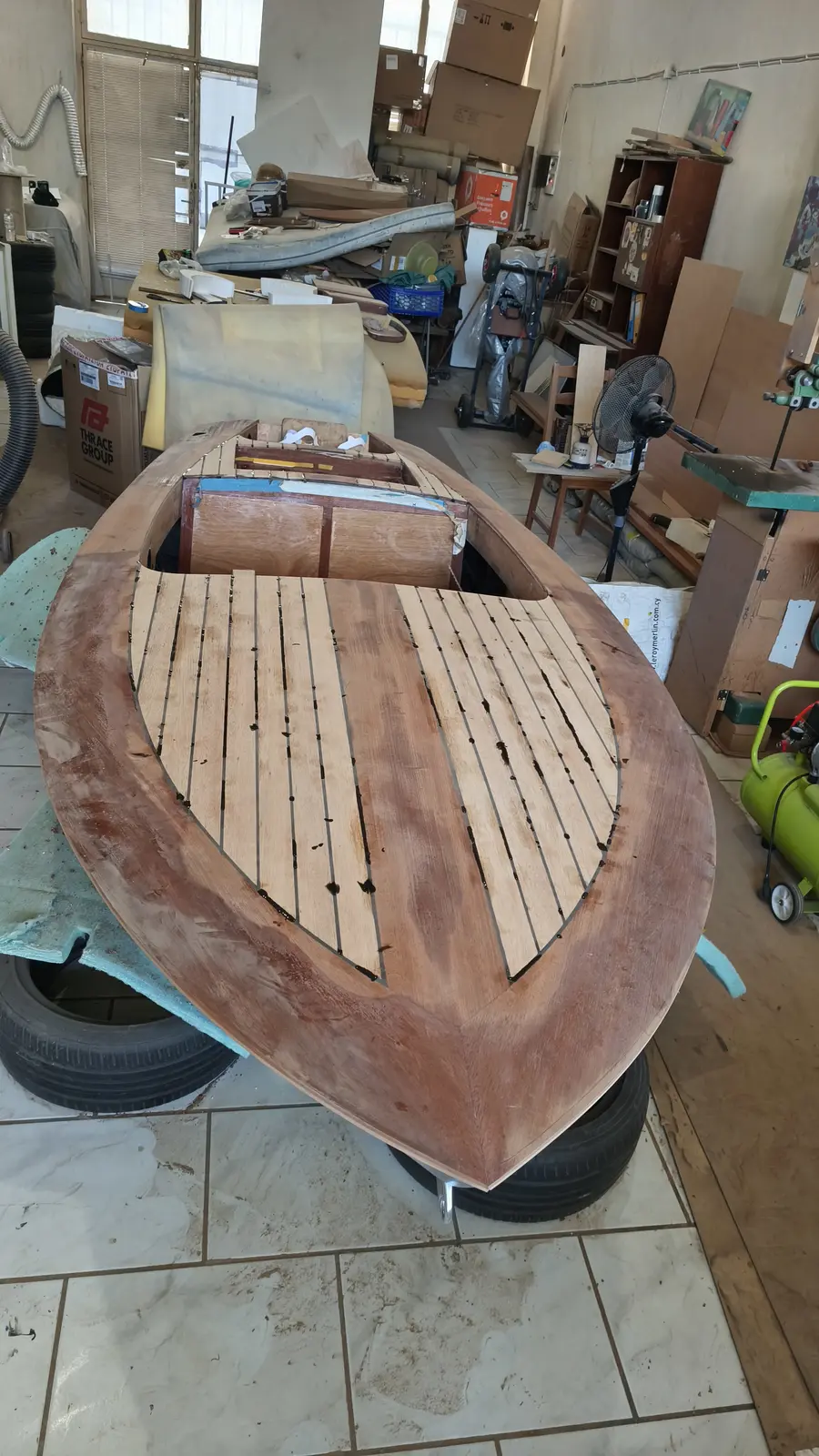
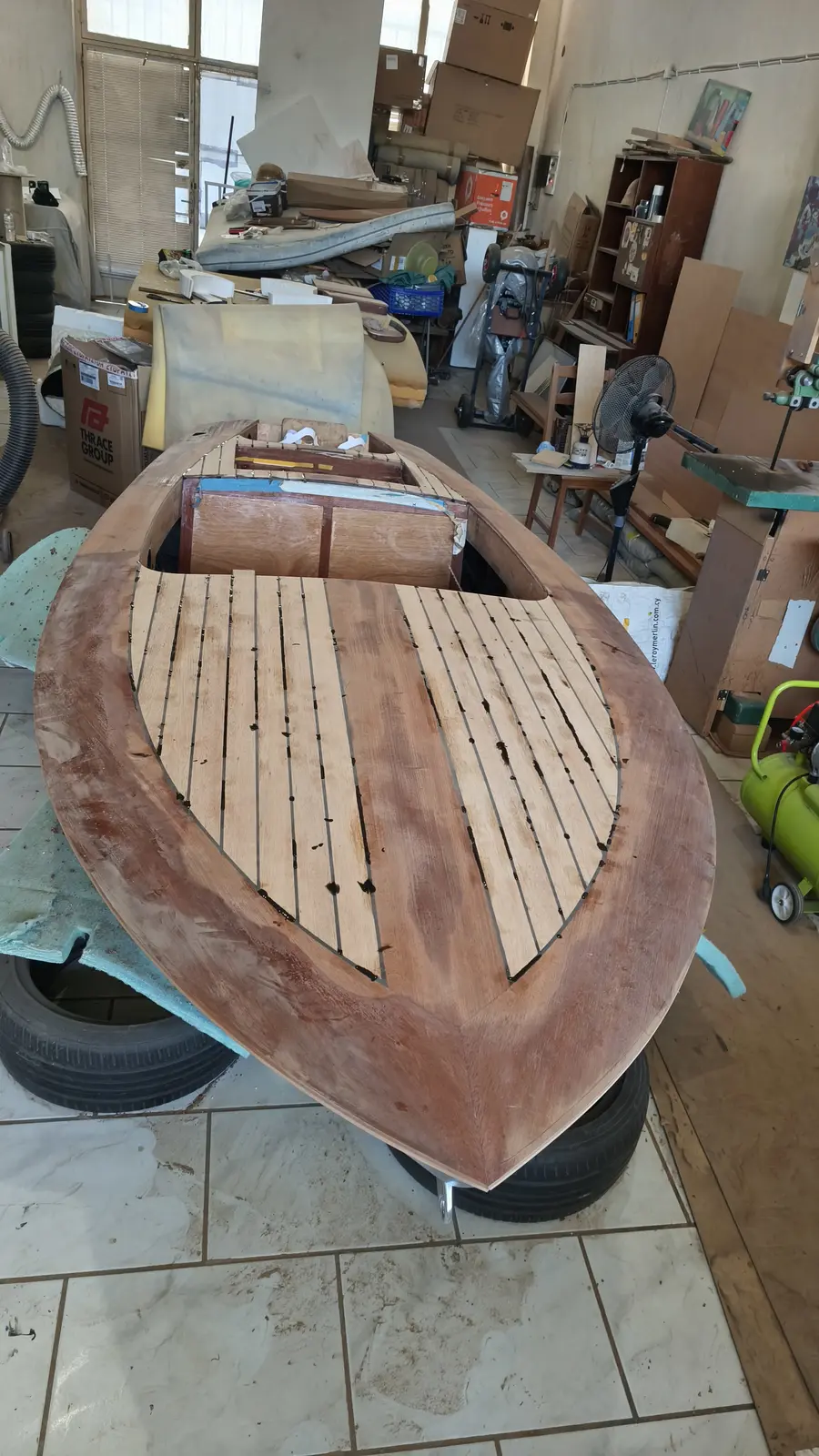
The next job is filling the gaps between the thin strips.
And this is where the headache started...
We had the following options:
-
Fill with West System 105-206 epoxy resin with pigment.
-
Fill with strips of wood.
-
Fill with a solid plastic.
-
Fill with a special sealant (Sikaflex, for example).
-
Fill with a flexible epoxy with pigment.
The first 4 options all have their problems.
I spoke to a wooden boatbuilder who also works with resins, and to a lot of people on American forums.
-
The resin will be rigid while the timber is flexible. With expansion and contraction the timber could split or distort. The positive is that the resin and the varnish will have no problem over it.
-
Wood strips will have almost the same stiffness and will follow the expansion and contraction of the other timber. Probably more difficult, because I would have to cut them and shape them at the joints. Resin and varnish would go on without a problem here too. The problem is that it would be harder to get them black, which is what I had in mind. I have two options. Either the dark mahogany, which would probably look nice apart from where it meets the dark strip (the first gap and the perimeter would have to be black), or all black. I still have no idea what pigment to use, or how, so that it does not run into the strips either side.
-
The boatbuilder I spoke to told me he had used PTFE in one of his builds in the past and it worked well. PTFE is very heavy though and does not bond well with resin. He says it needs special treatment to bond properly. I read that PVC bonds very well (perhaps that is what he meant). The positive is that they are flexible and will follow expansion and contraction. I do not know how it will work with resin over the top. I would have to do some tests. Probably resin should not go over it.
-
Exactly the same as 3 for the special sealants. What is recommended is that it goes on after the resin. It definitely needs testing.
-
There is a special resin that is flexible. It is called G/flex, it is West System, and it is of course extremely expensive. With that I have no issues with expansion and contraction and I can put resin over the top of it. And pigment in it too, of course.
That is the way I went.
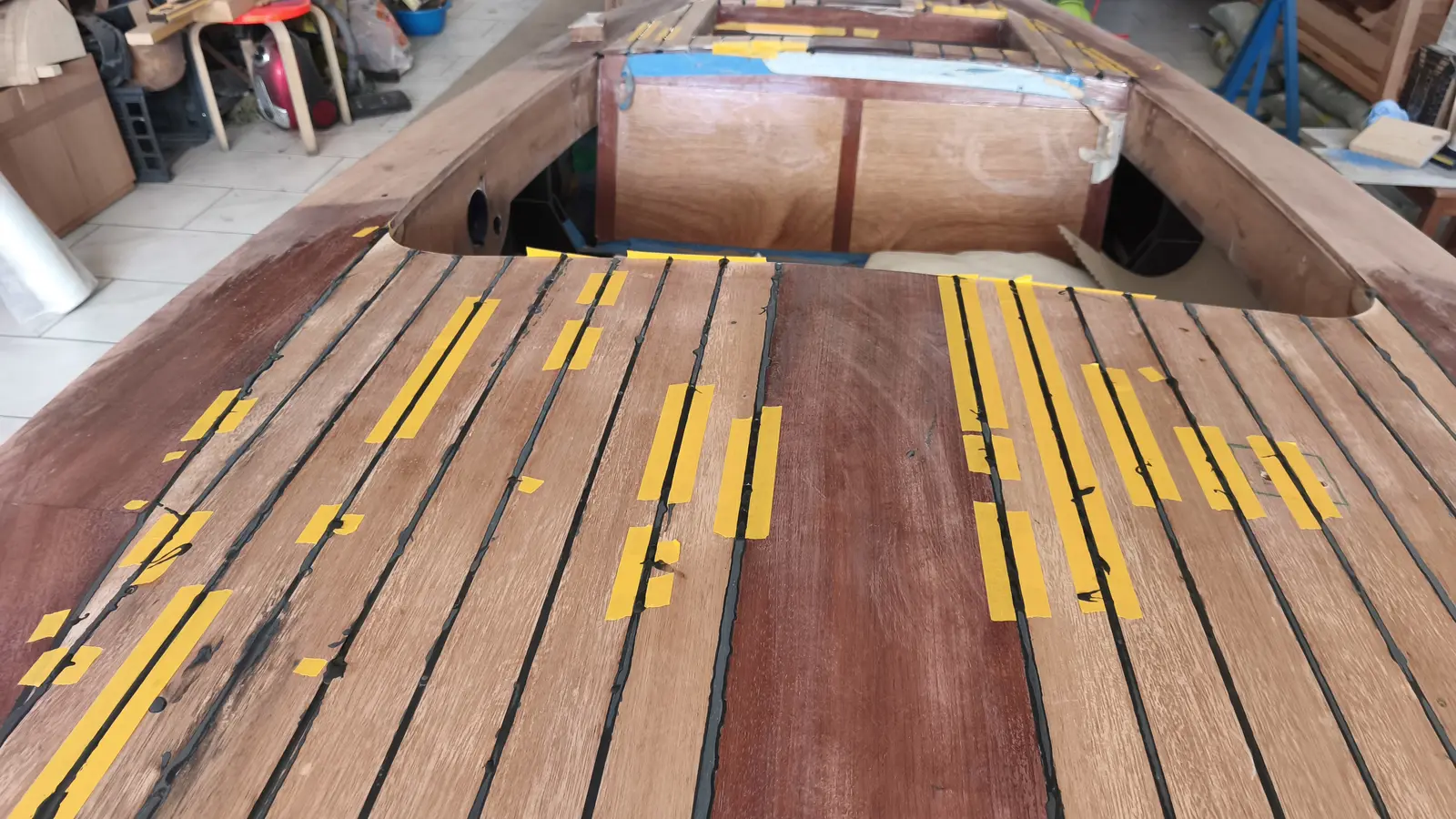
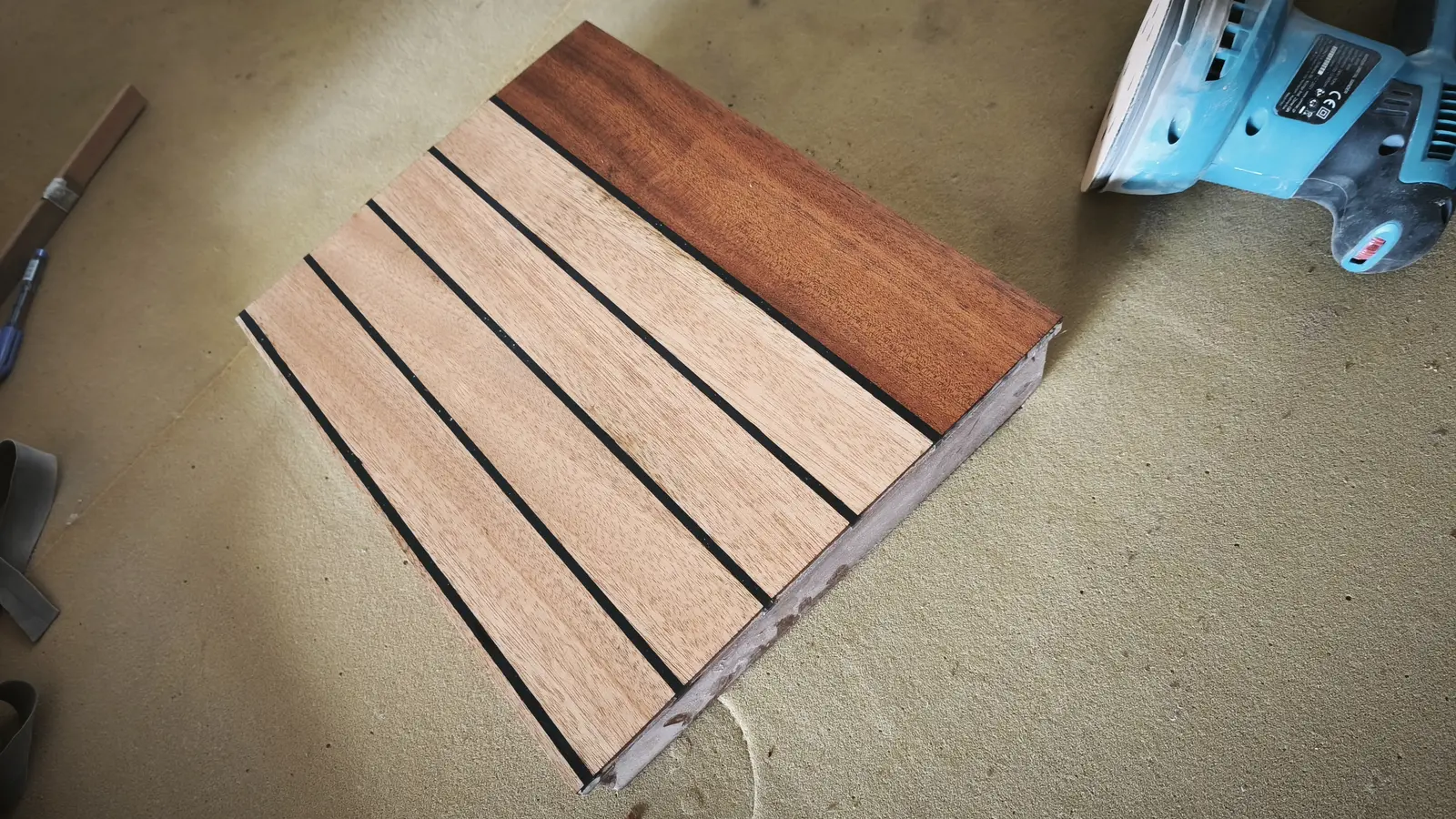
Five millimetres wide and seven deep. Whatever material I used, I would have waterproofed with plain resin. Even if I had used the flexible ones.
And now, with the flexible resin, what I did was put on two coats of the ordinary resin I use with a brush (West System 105-206). And so the wood would not soak up the expensive resin and I would need more of it (it is sold by the kilo and I was worried I would need a second one, as I am probably marginal).
First the boat was cleaned with lukewarm water, soap and a Scotch-Brite pad to remove the amine blush.
Then it dried and was sanded. Having cleaned it again I wiped it with acetone so it was ready for the G/flex.
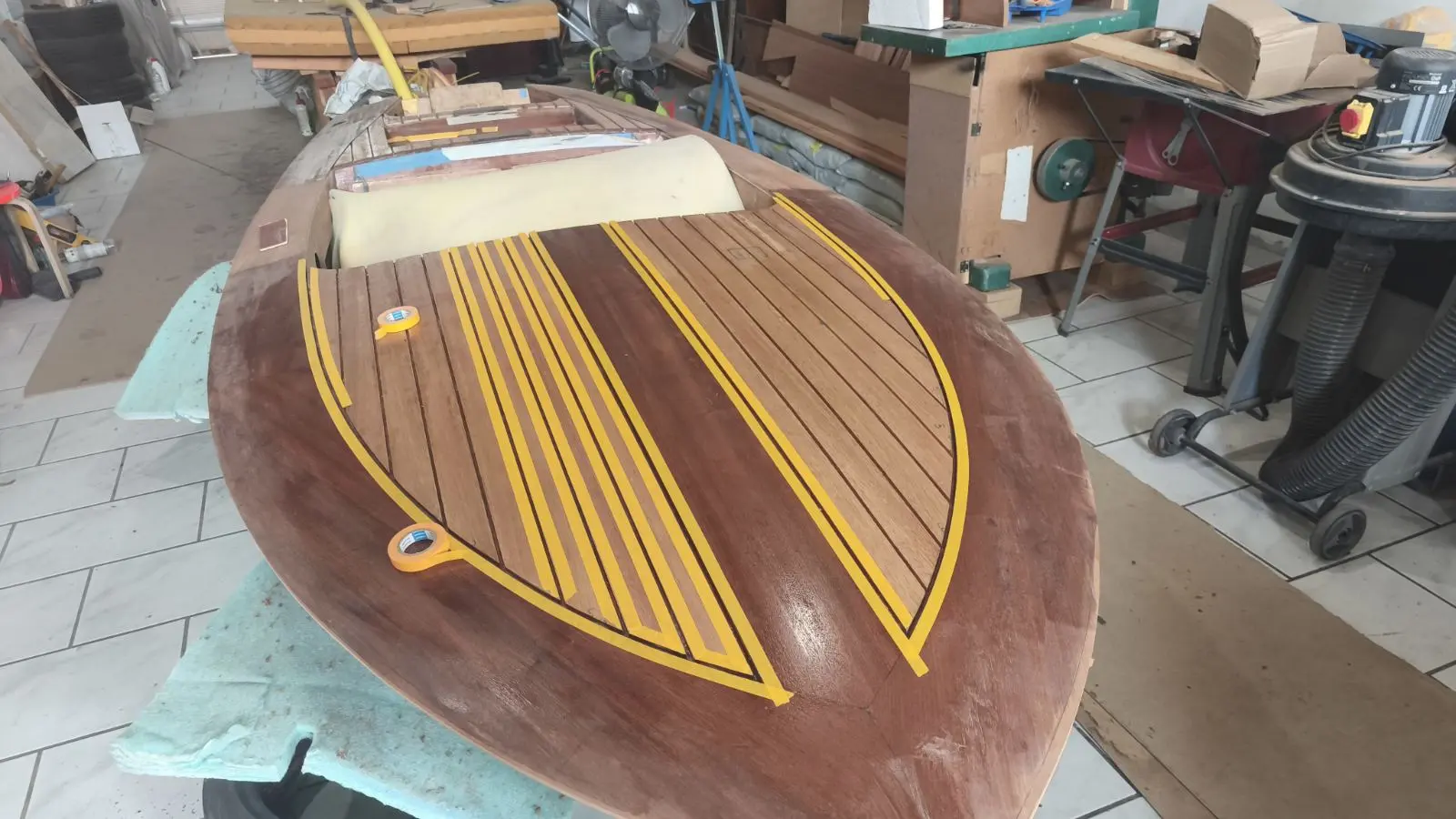
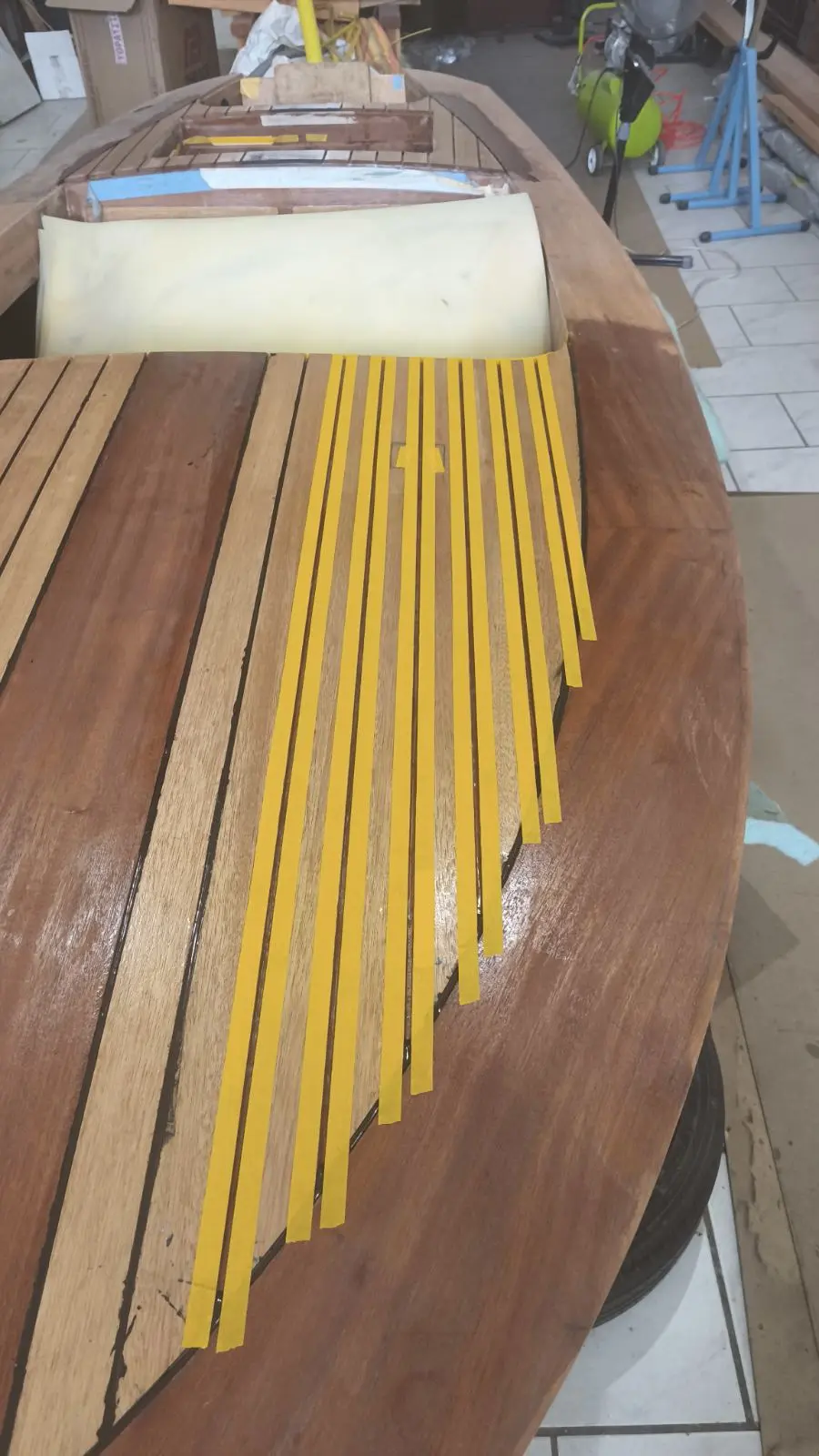
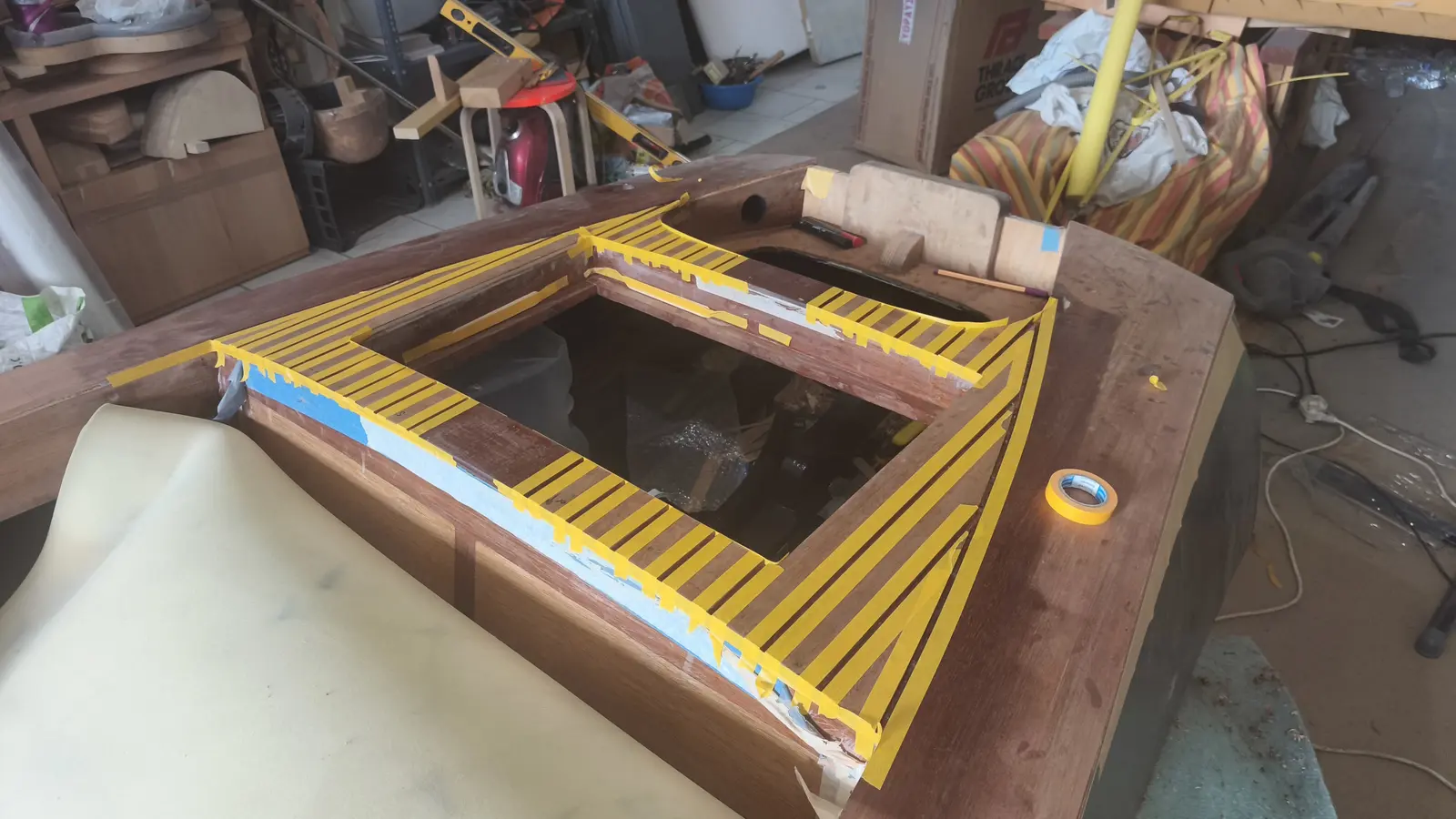
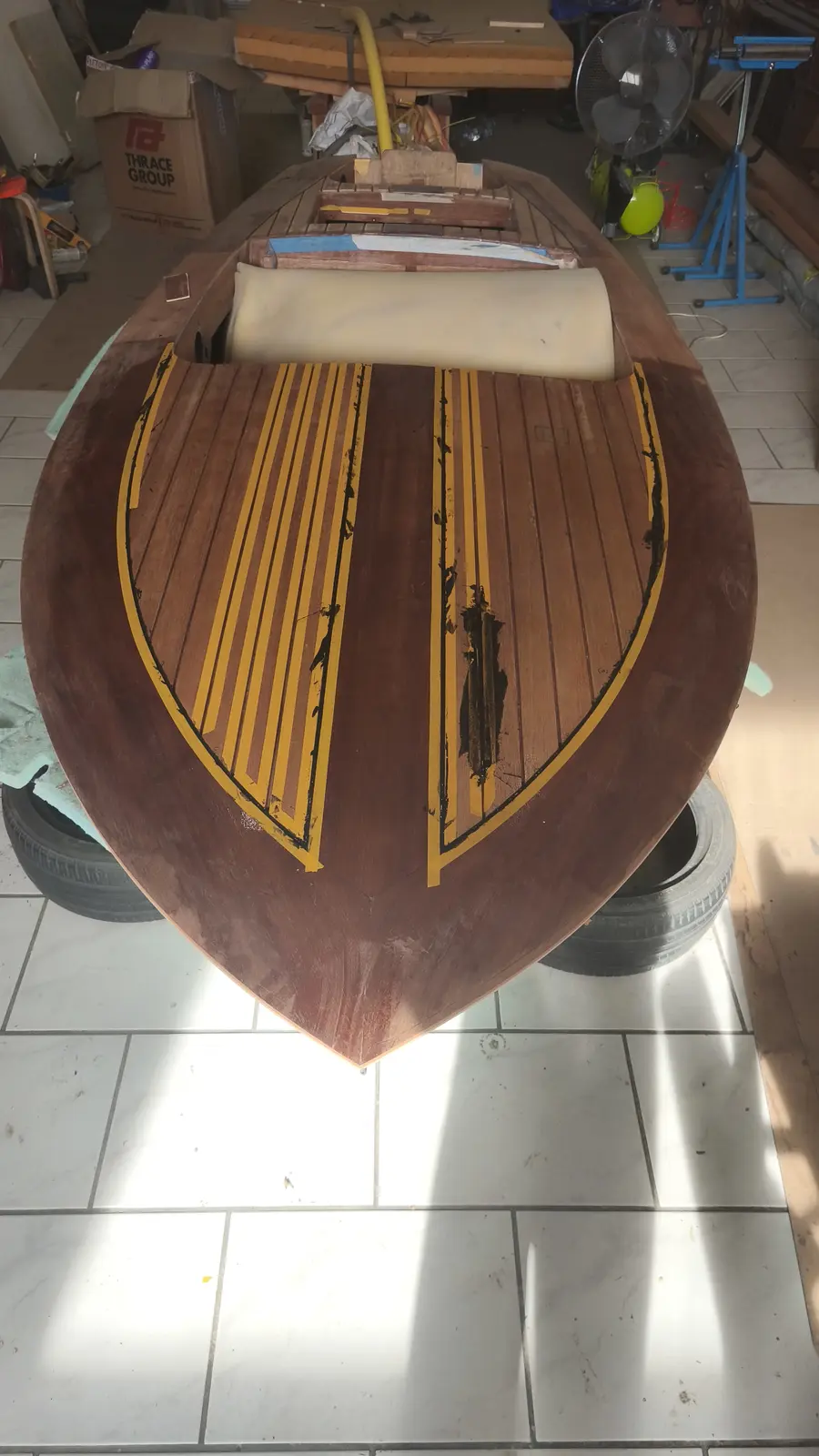
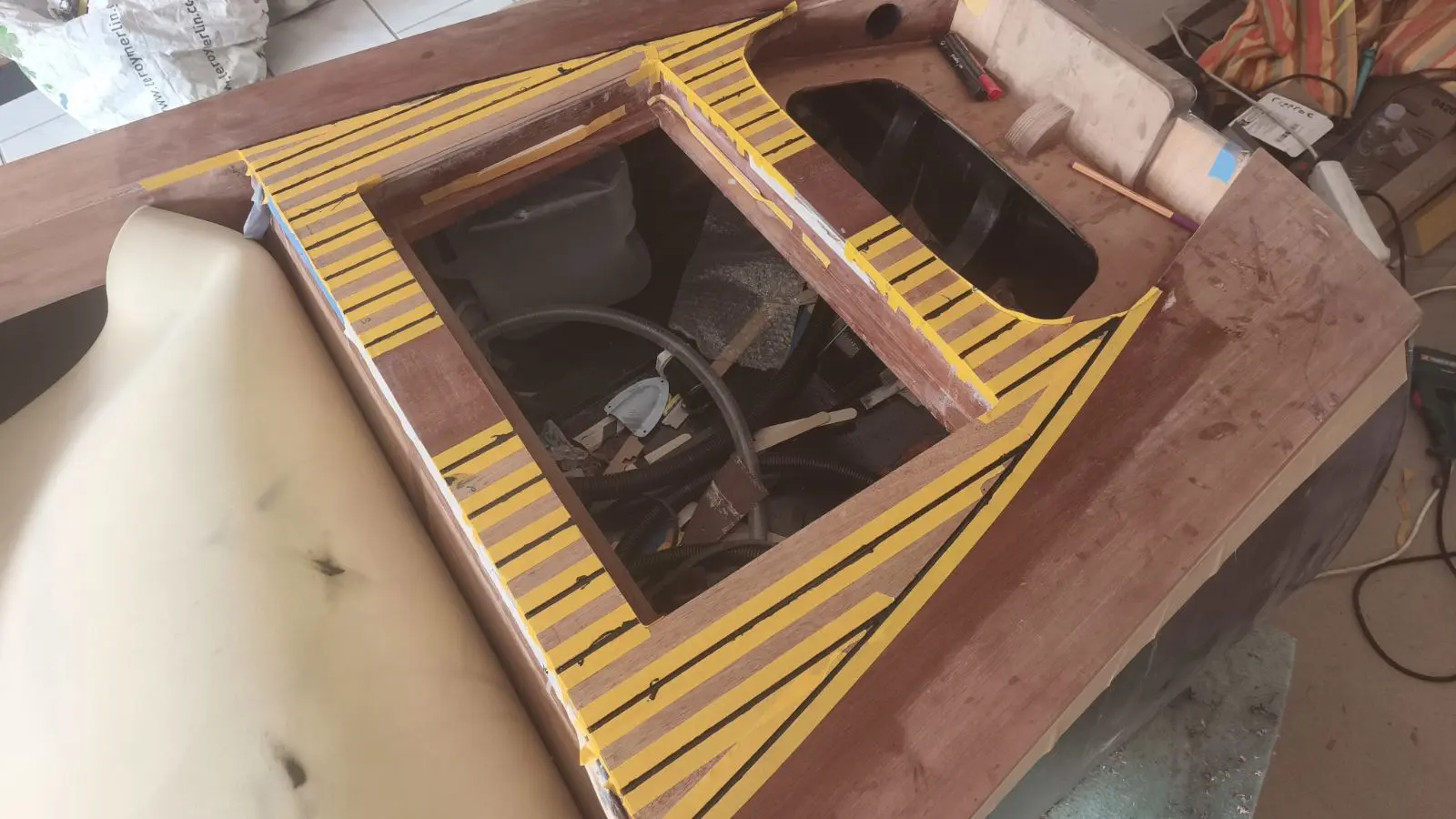
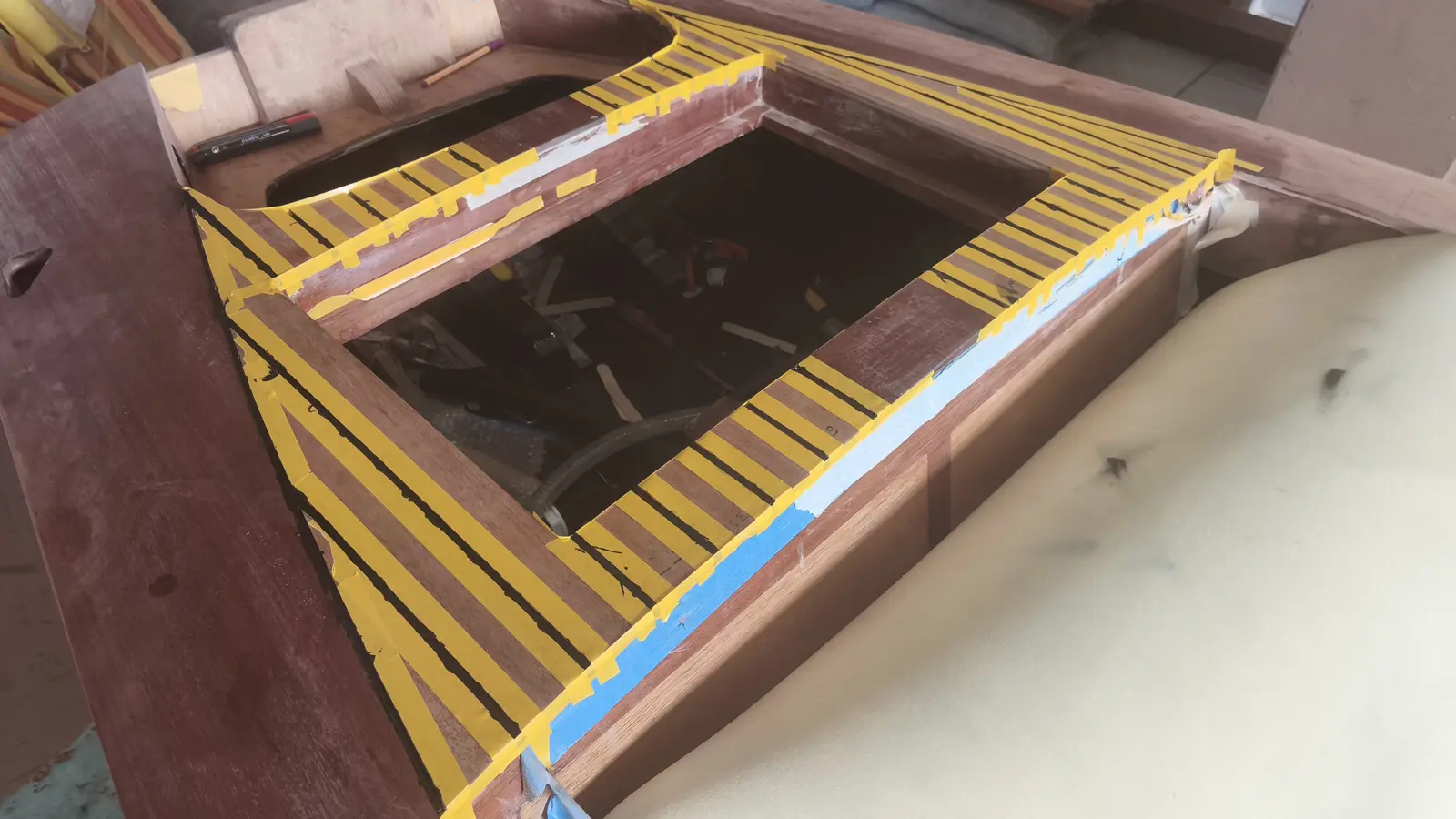
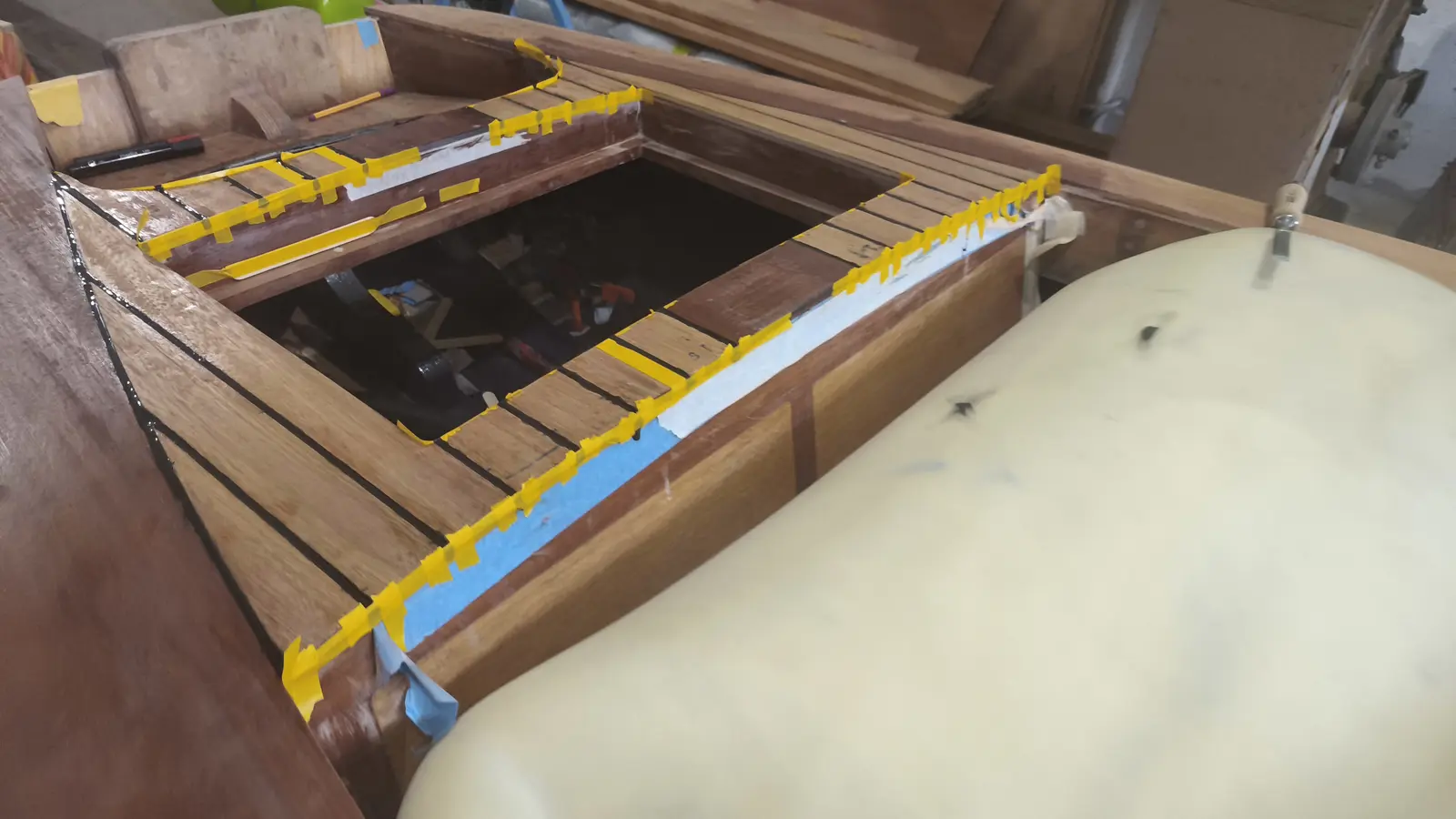
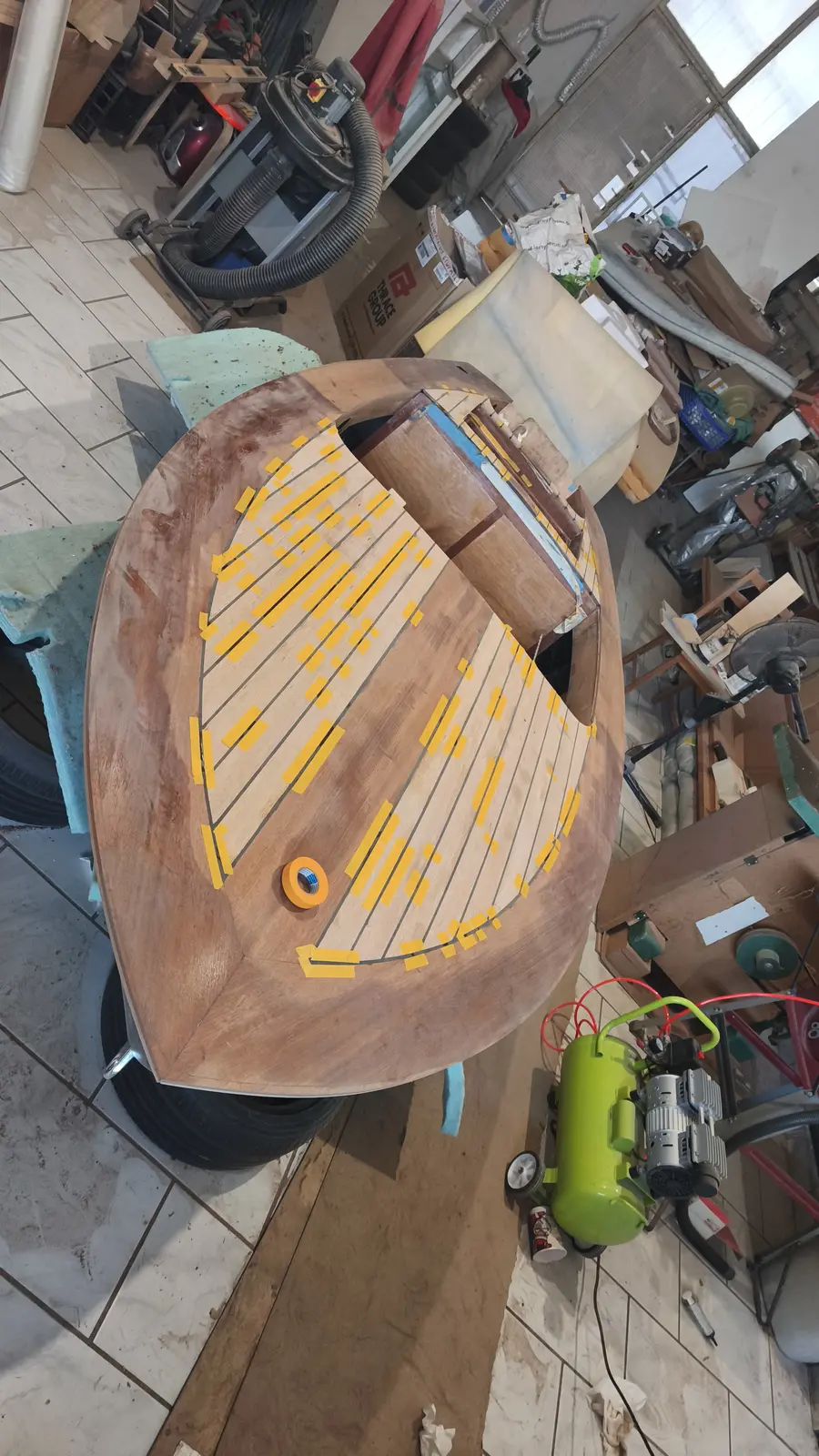
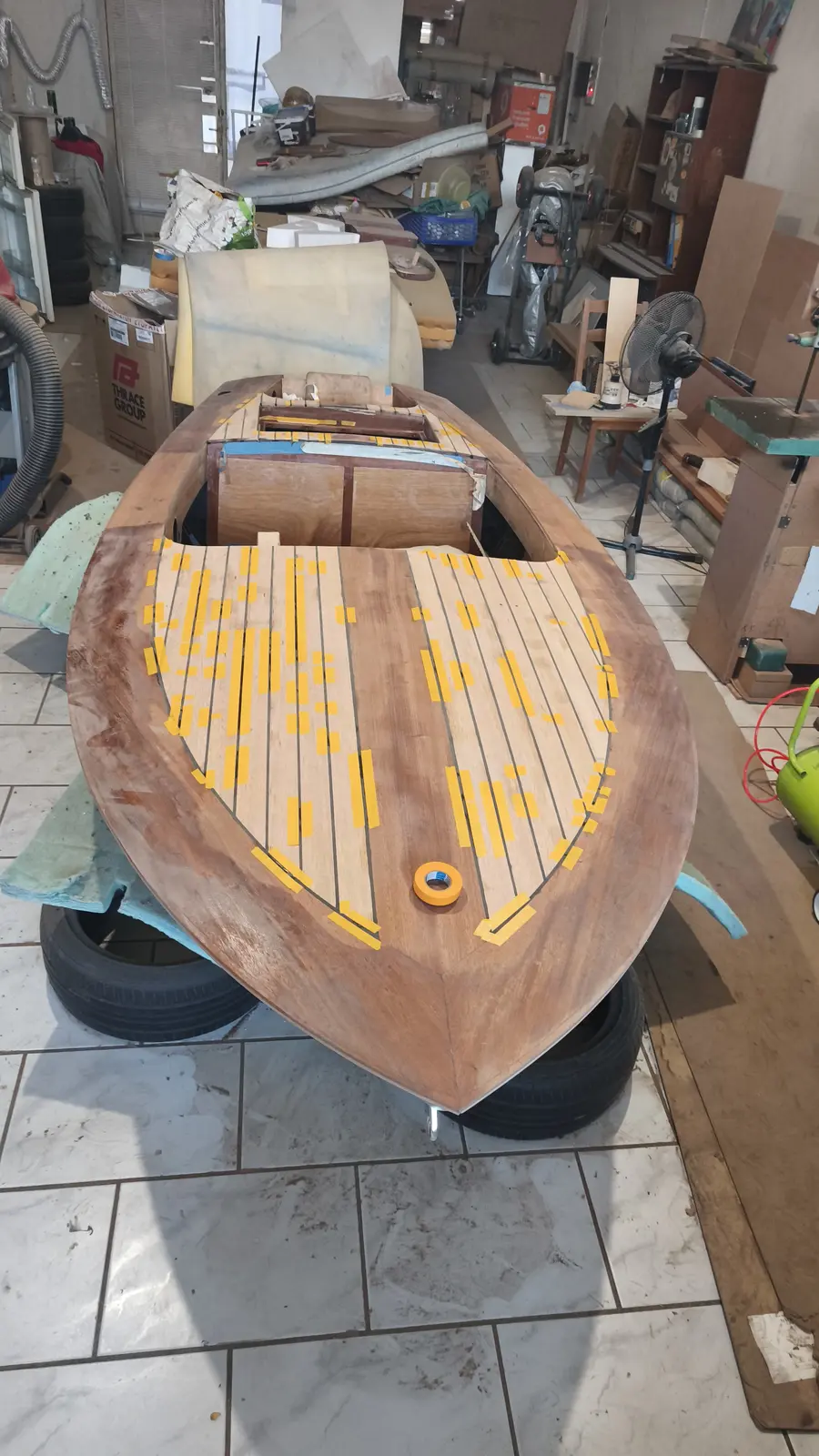
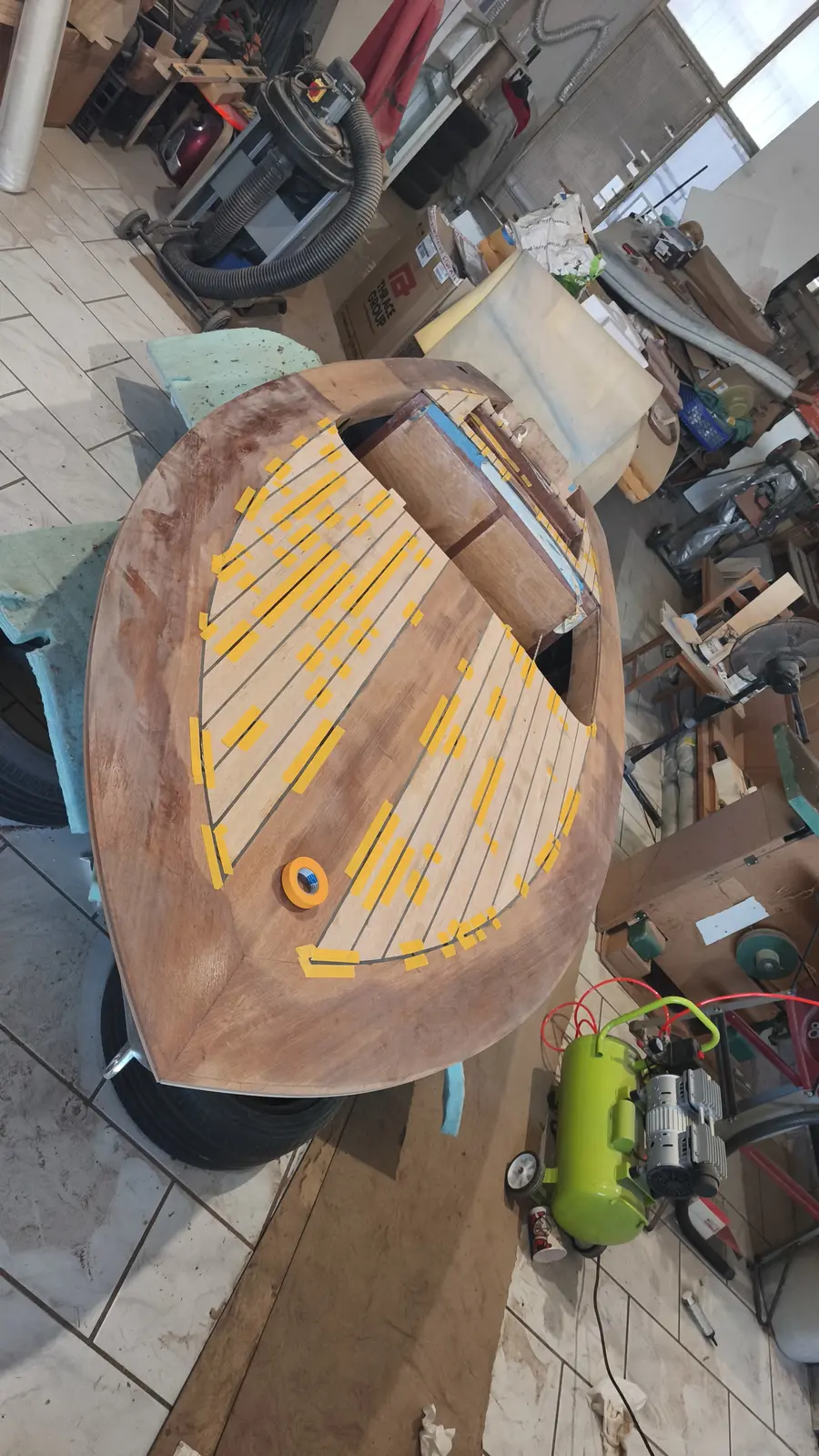
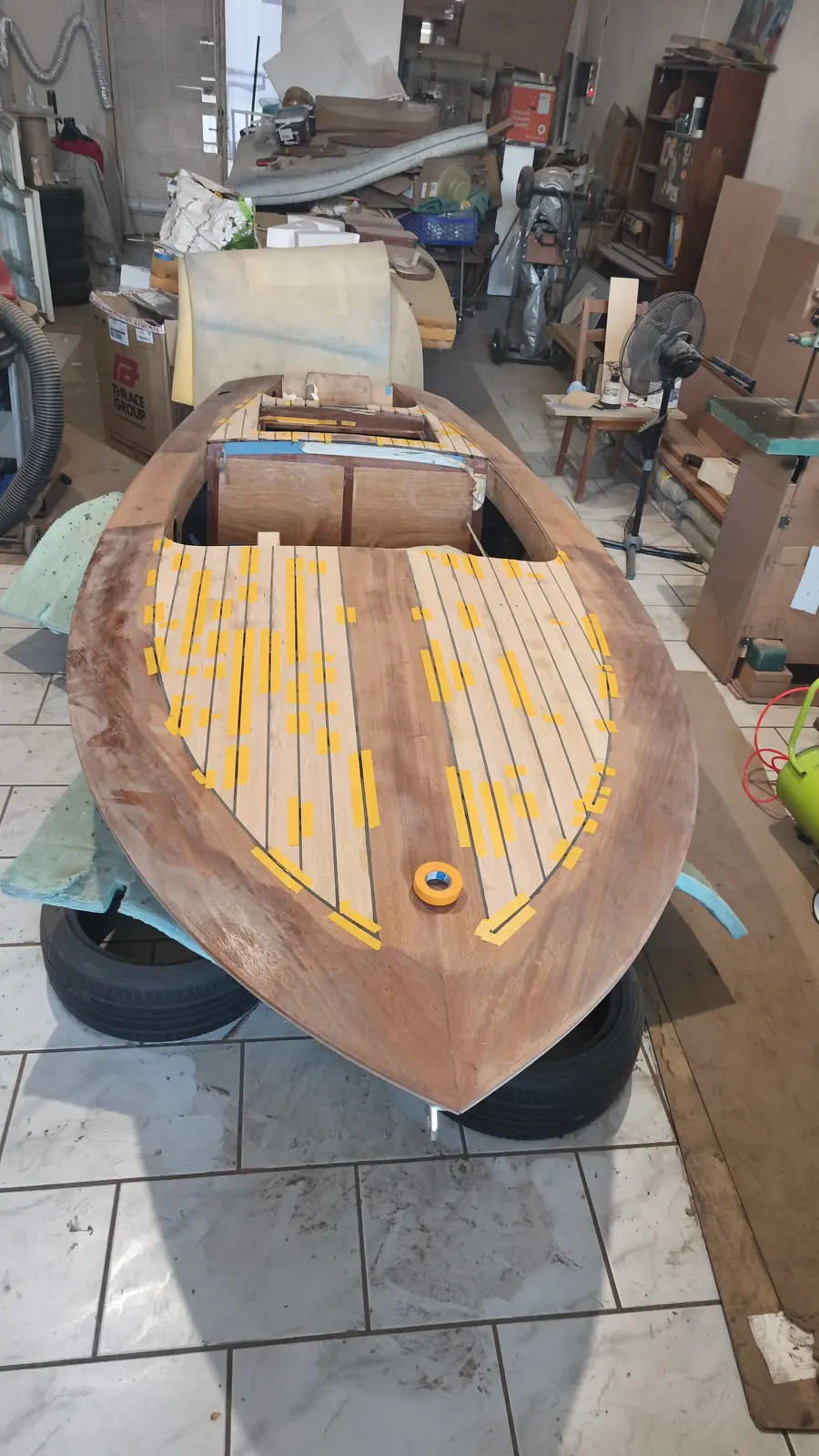
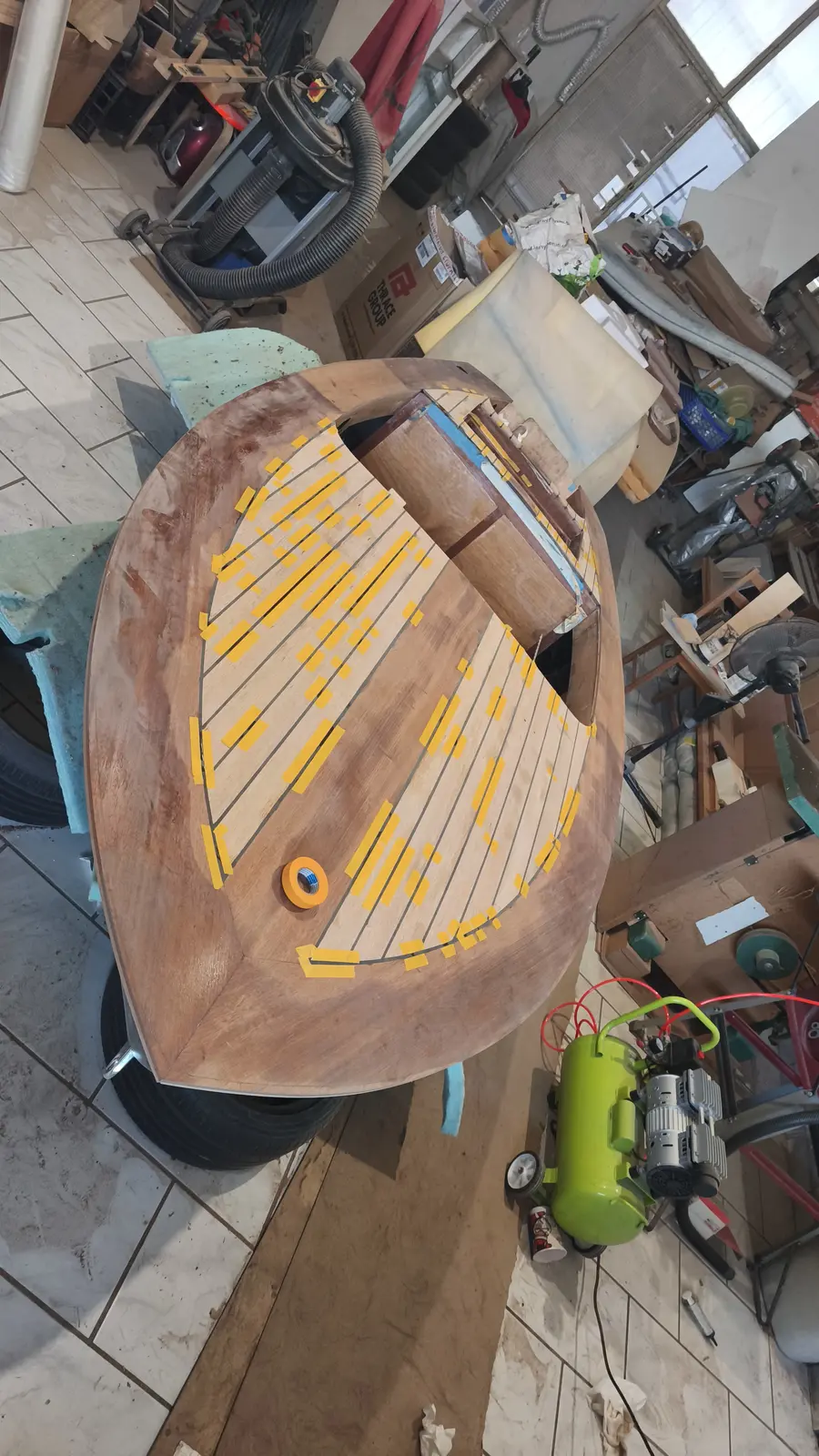
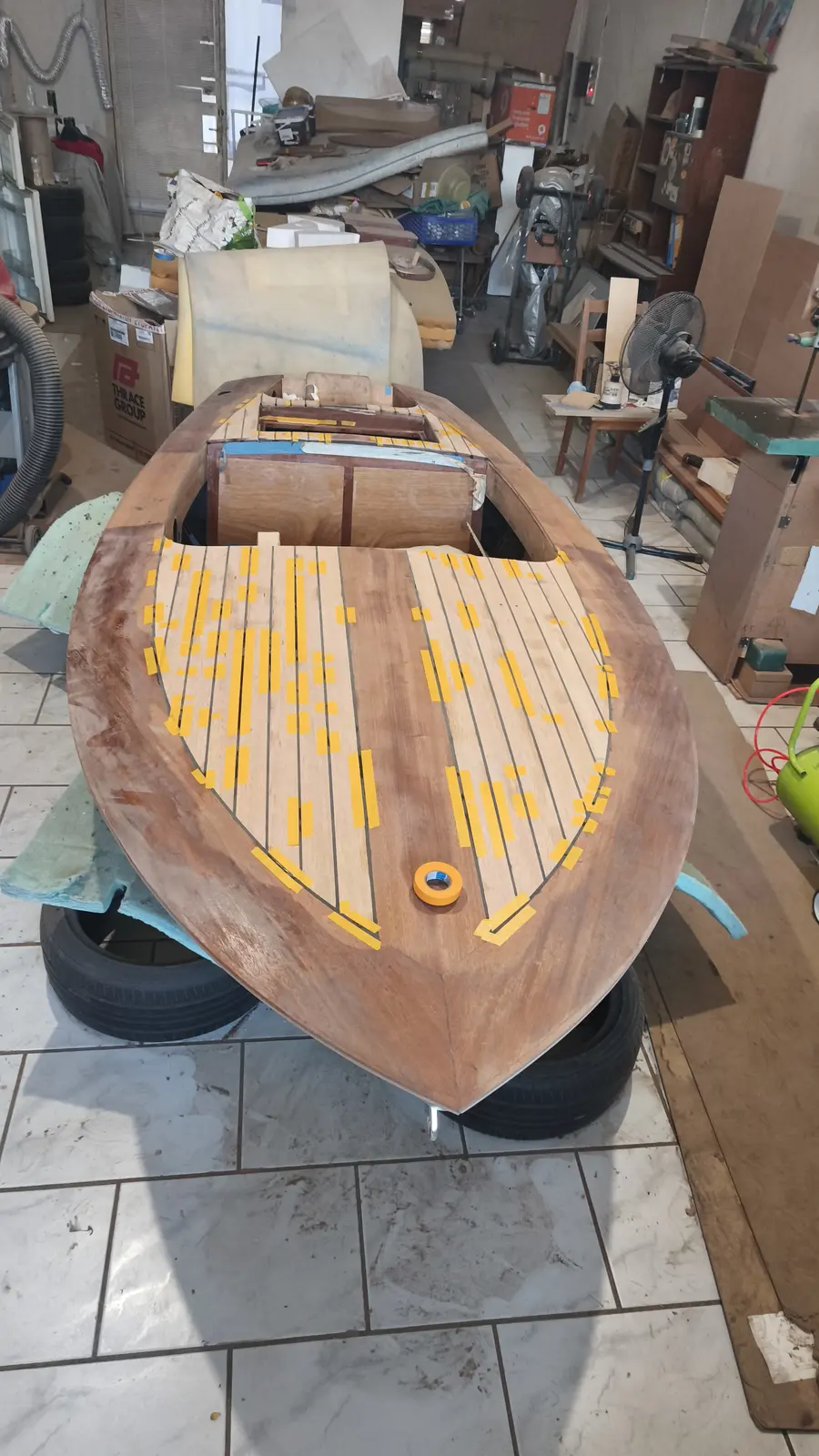
The boat was masked up so it would not get dirty, although it will be sanded anyway to remove the 106 resin I have put on for protection. At one point I got fed up and did not mask, and it went black very easily...
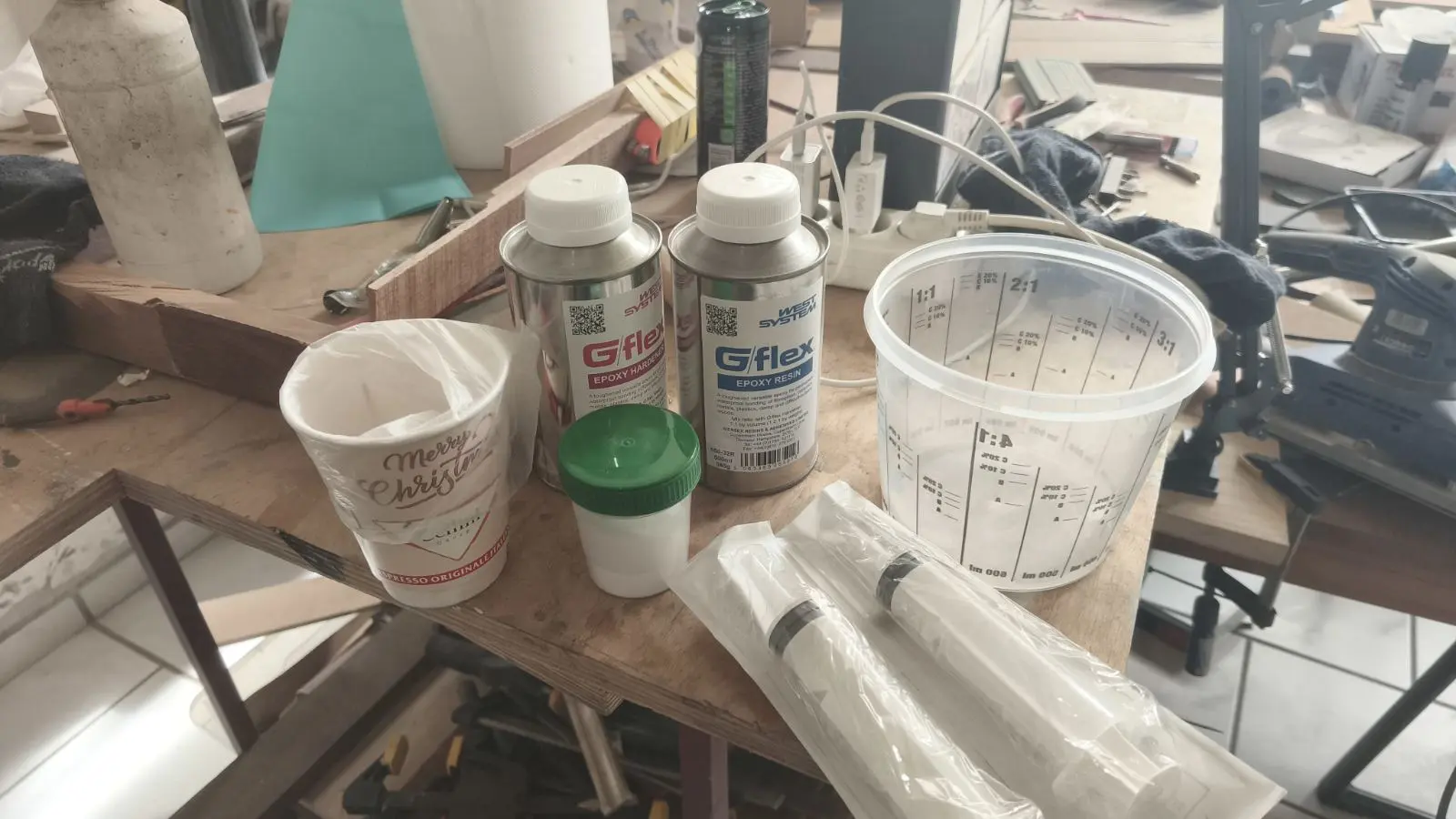
The G/flex mix I used was 60 ml of resin, 60 ml of hardener, 4 g of West System black pigment and 60 ml of glass bubbles.
In tests I did on the proportions I saw at first that I could have used three times as much glass bubbles and made the mix much lighter and much thicker.
The resin on its own is like honey. With the 60 ml it got thicker still but stayed liquid. It only just dripped off the stick.
With three times the amount, which I tested, it went like peanut butter. I liked the result, but I read that at high temperatures it might let me down in future.
Both in the test and in the application on the boat, the resin went into a piping bag.
I made up that mix 5 times (5 x 60 + 10 ml from the test = 310 ml out of the 500 ml in each tin).
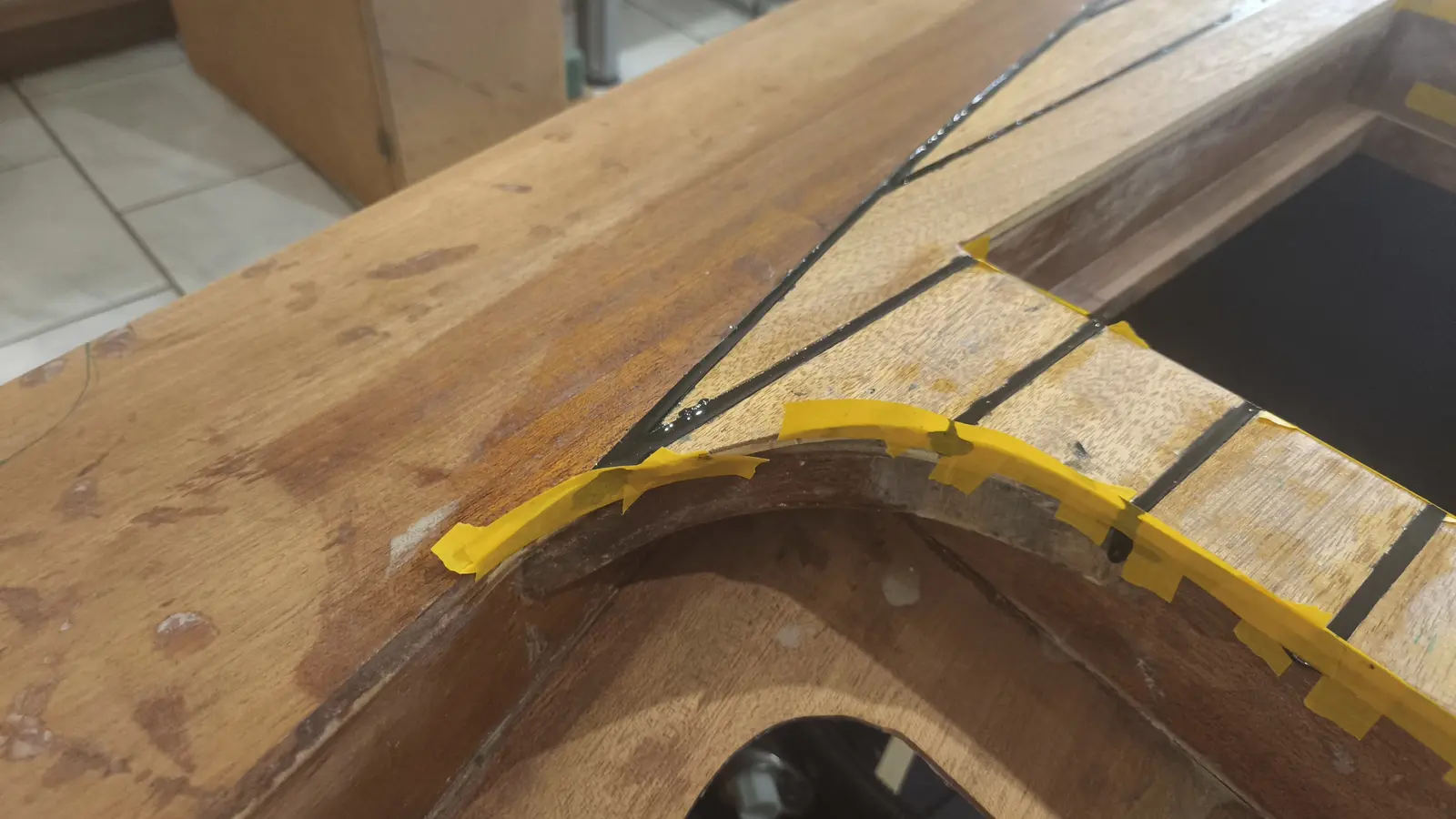
What I found is that the resin shrank a little and needed a second coat, which it got. Where the timber ends I used masking tape to hold it in. That definitely needs a lot of work and perhaps I should have made it a bit thicker.
The worst thing I have done so far. Five hours bent over, ready for physiotherapy. And 5 hours squeezing the piping bag, I could not feel my fingers.
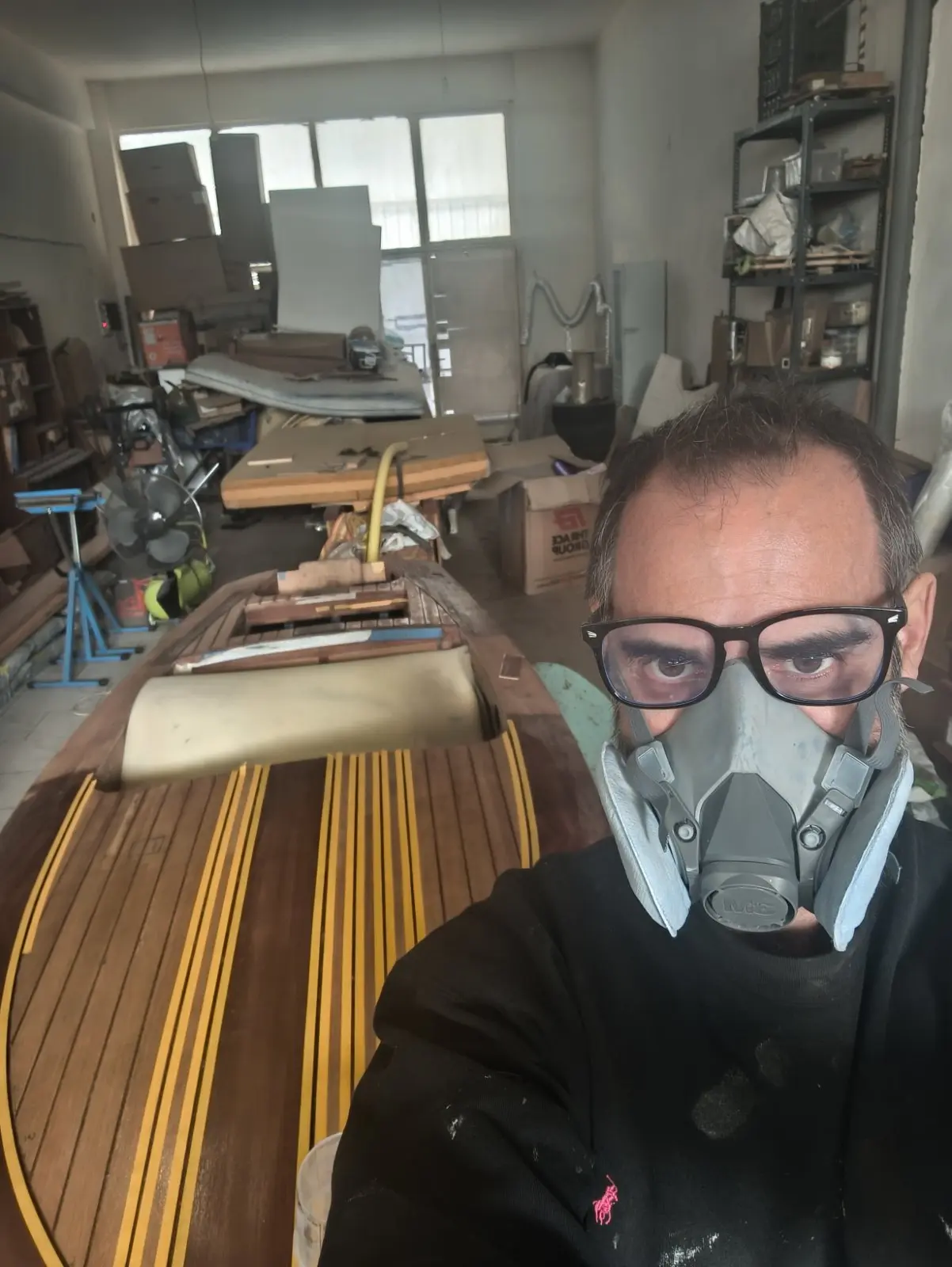
A mask is essential when mixing, as the glass bubbles are the lightest and finest material there is. The moment you touch it, it clouds the air. Long-sightedness and a mask do not go together very well.
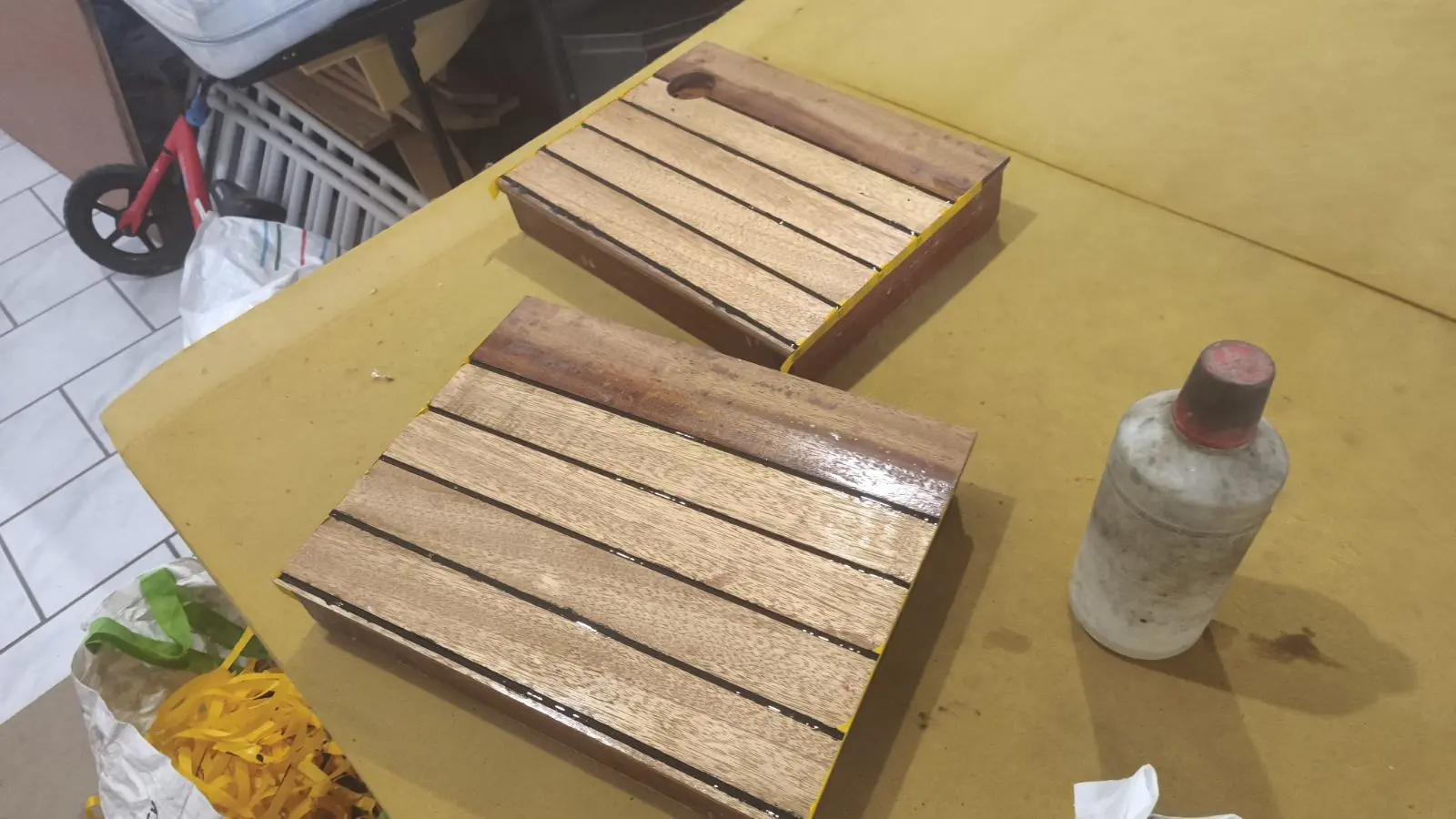
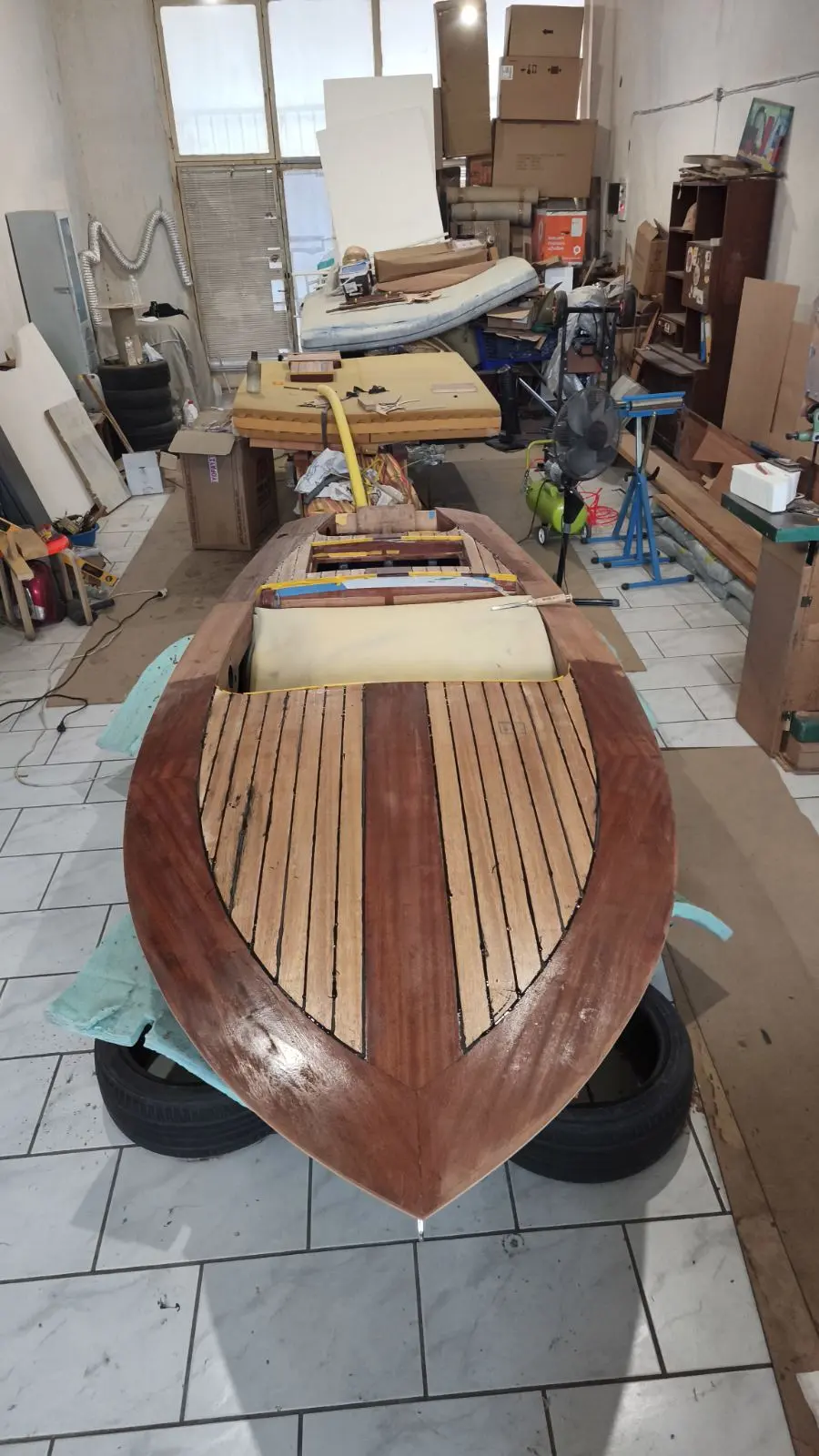
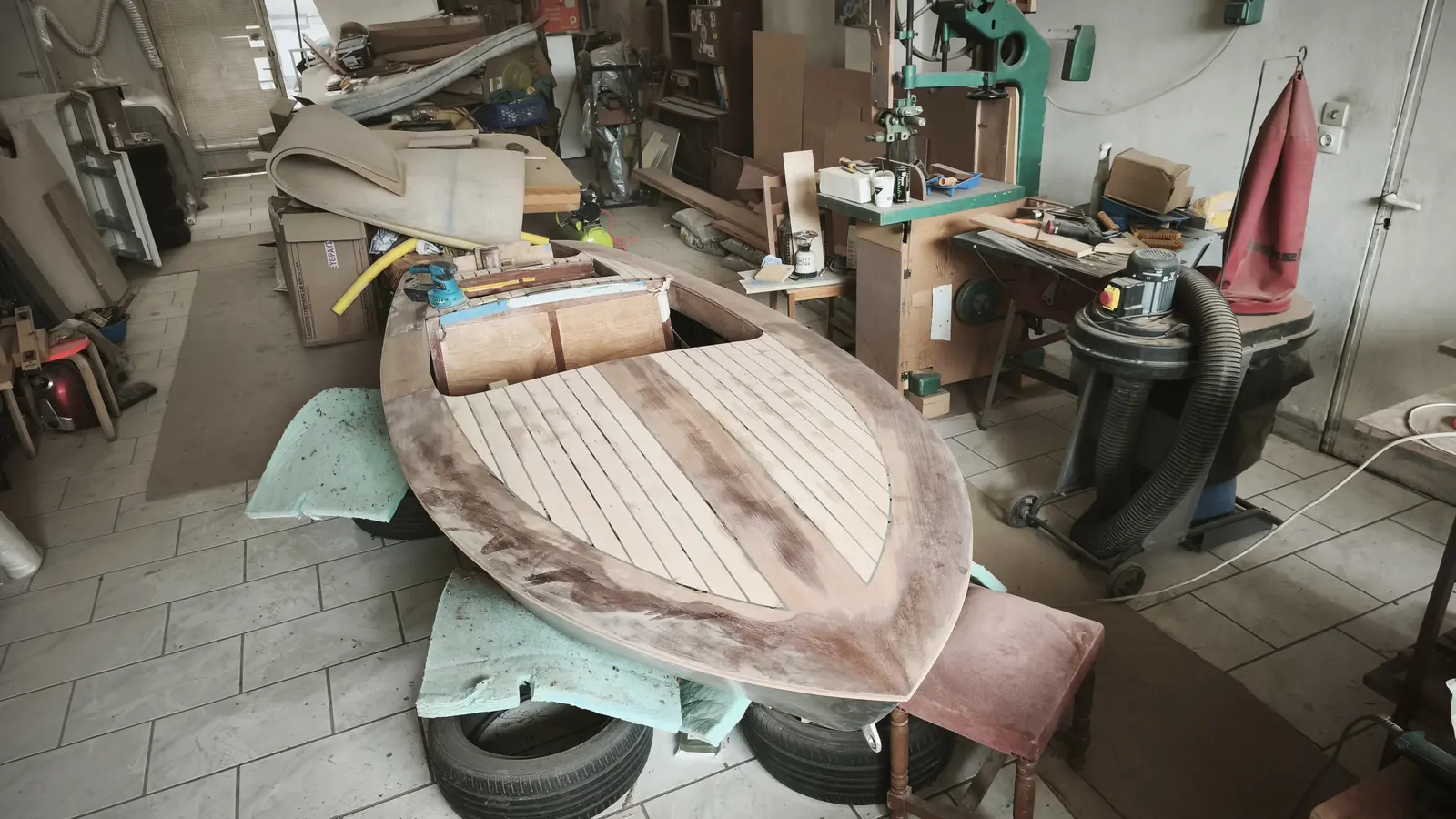
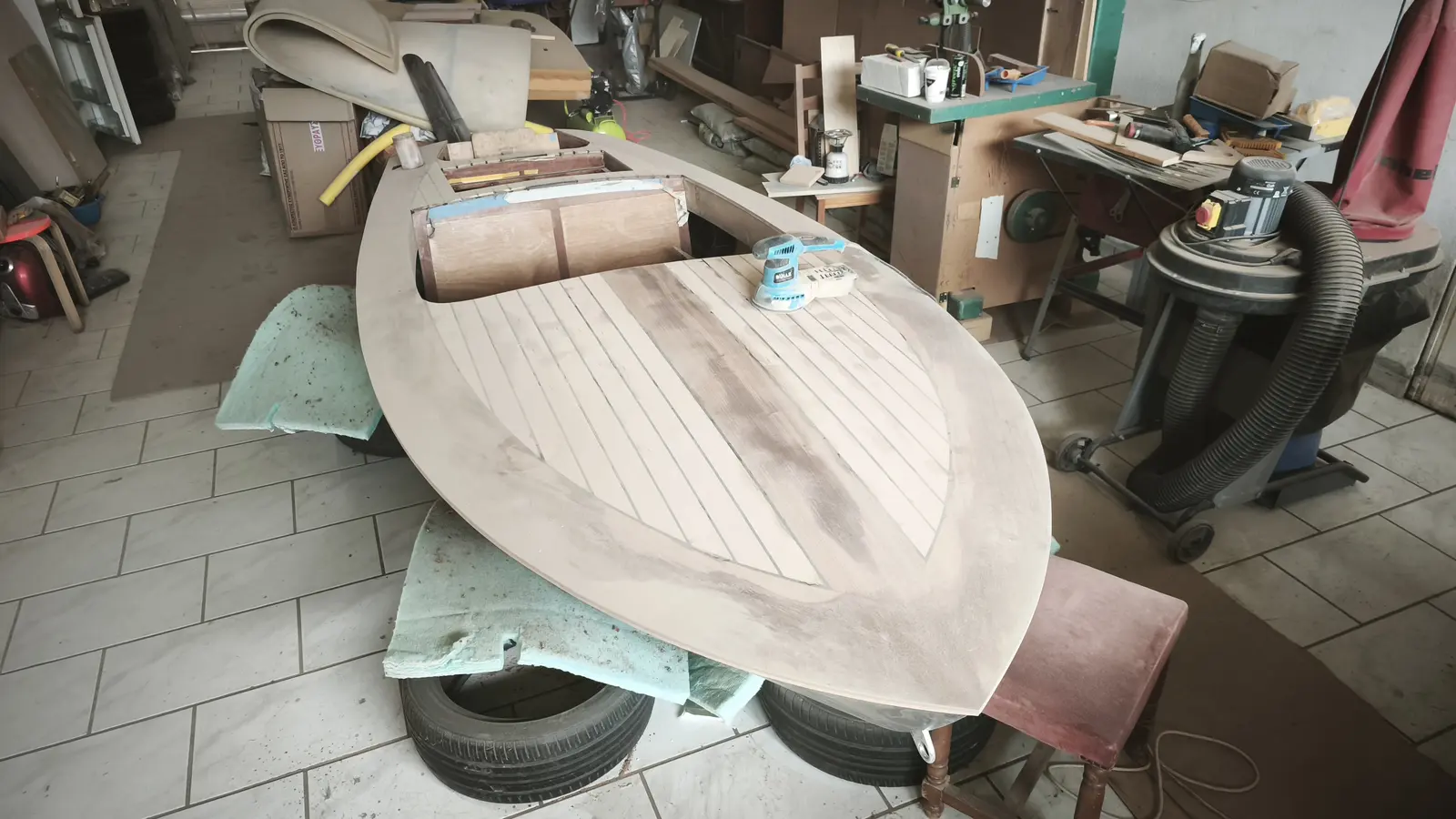
Some photographs of the process.
A third coat in certain places.
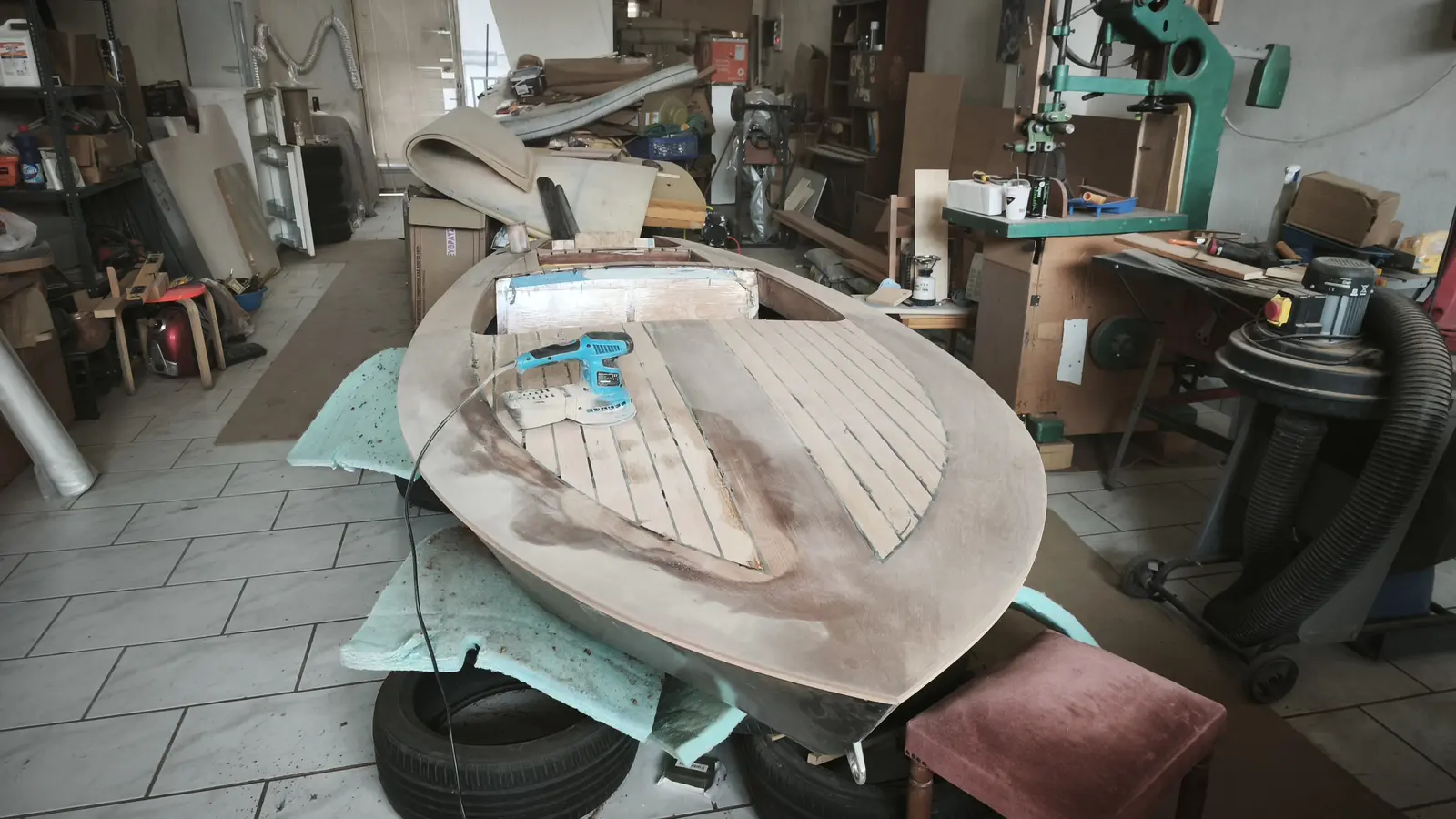
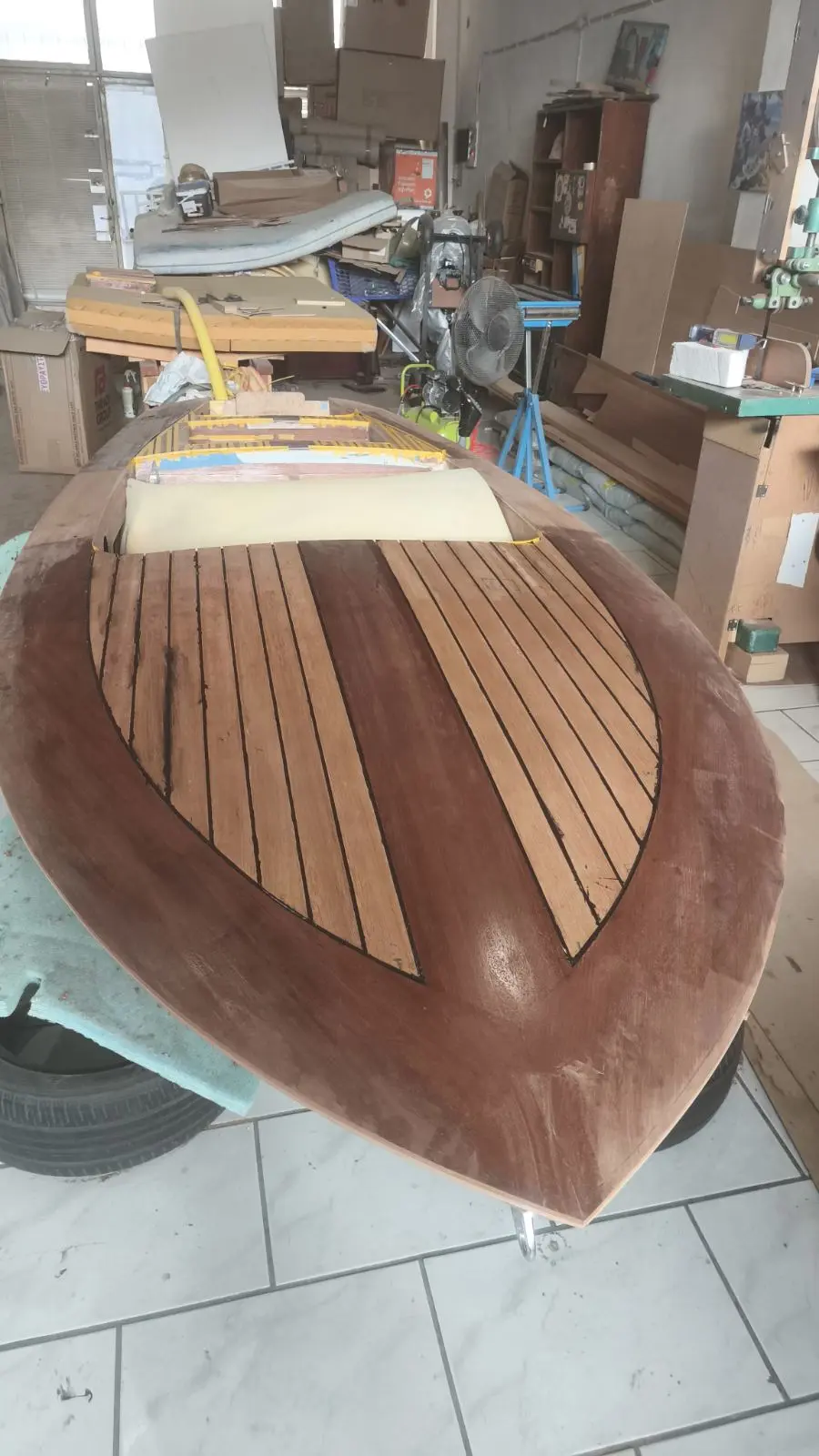
Then I decided to sand the deck to see what result I had. I saw that in places it needs another coat of resin (a fourth). I will sand again at the end, as there will be plenty of other places needing sanding.