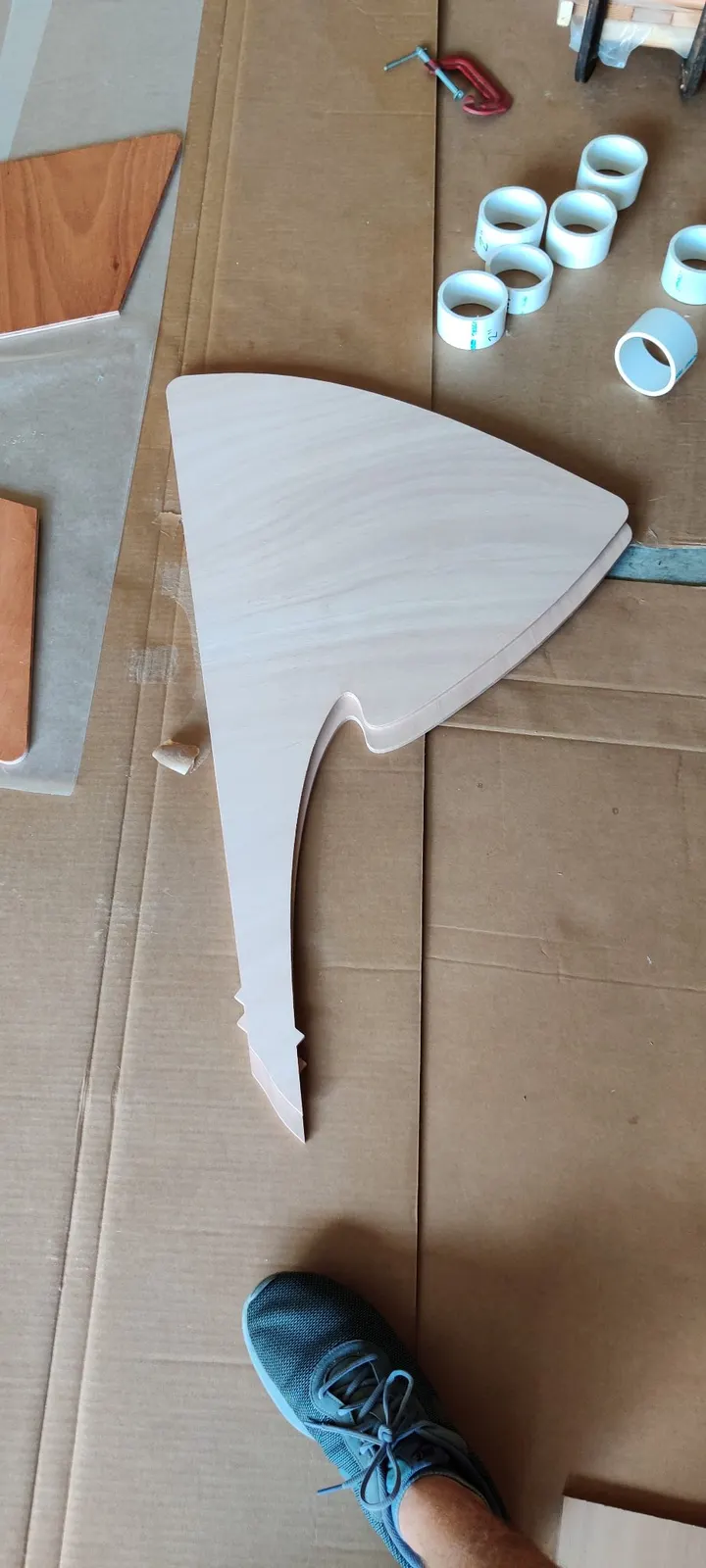
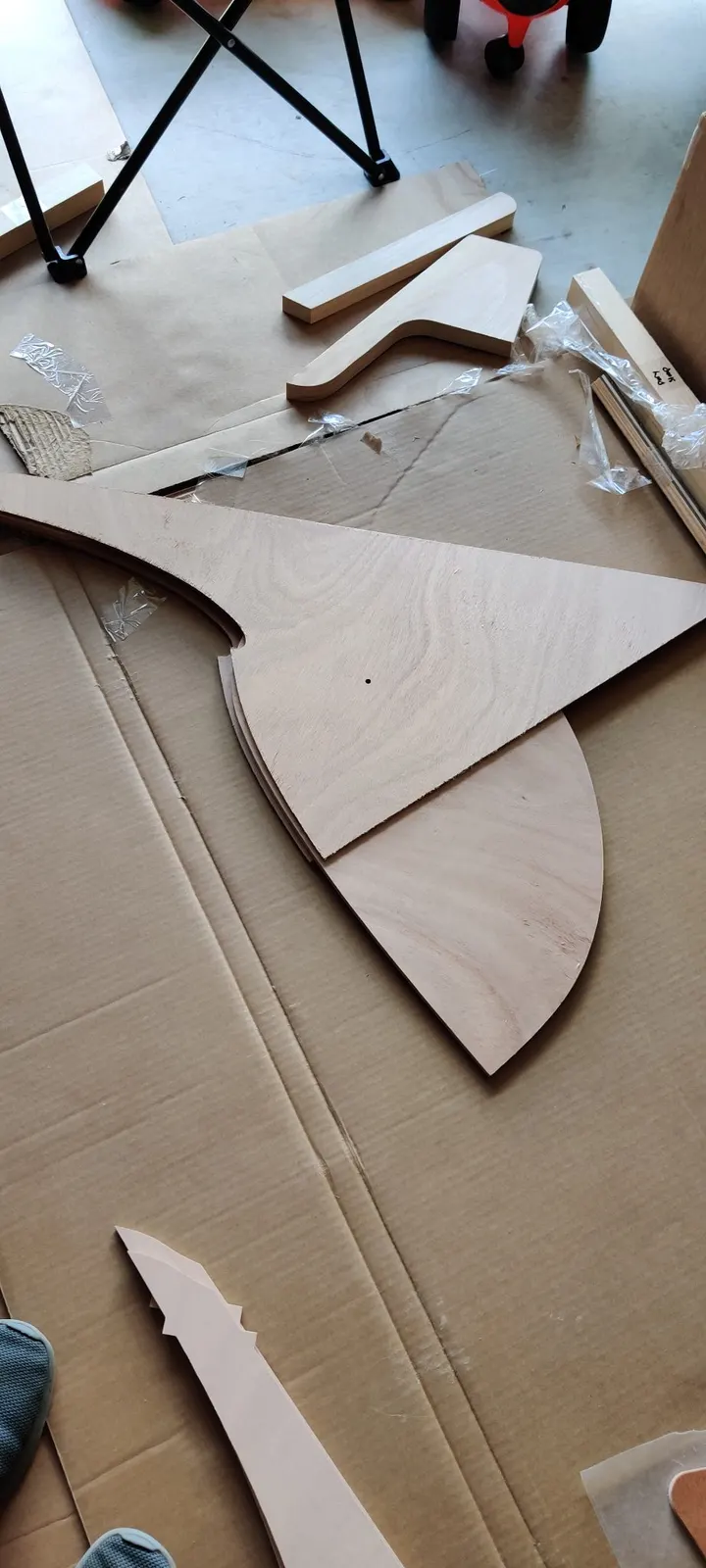
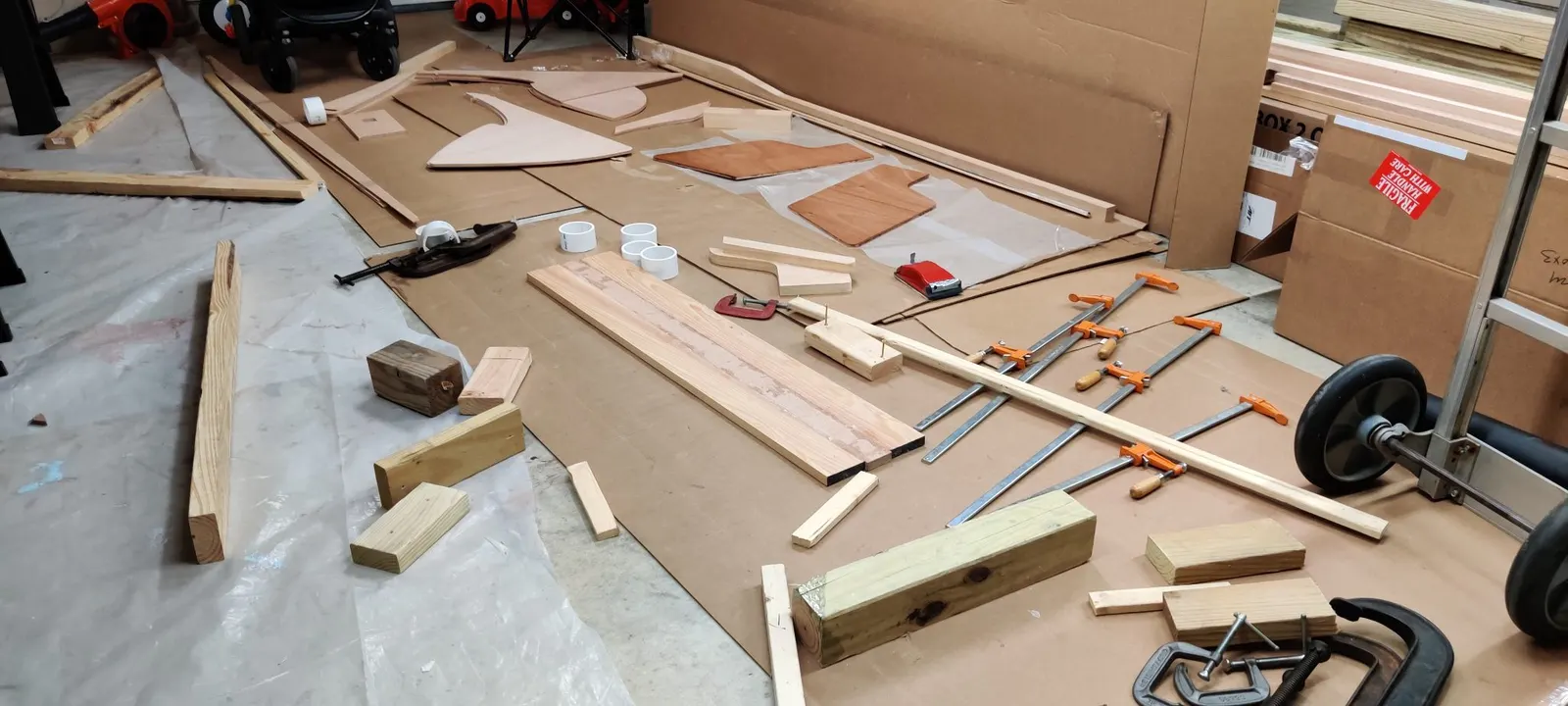
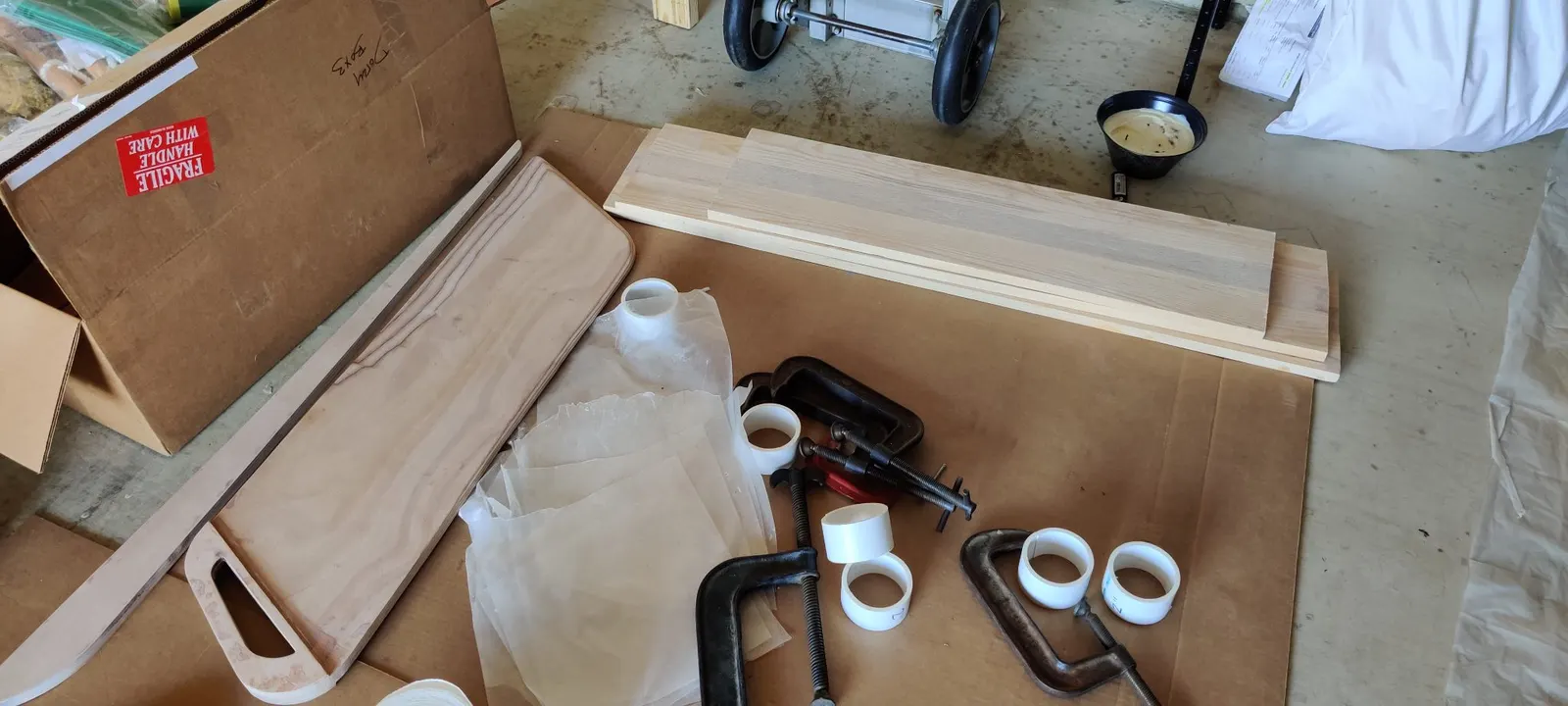
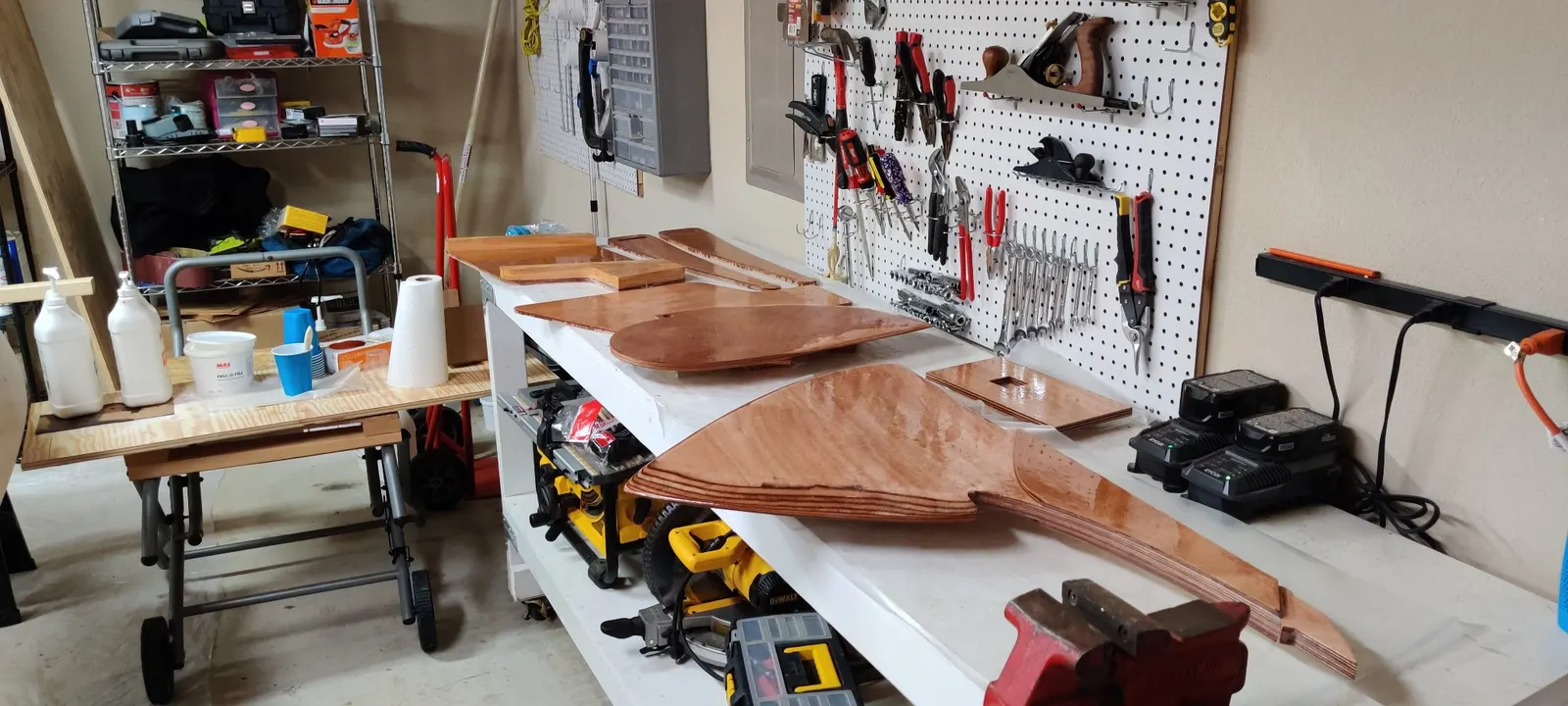
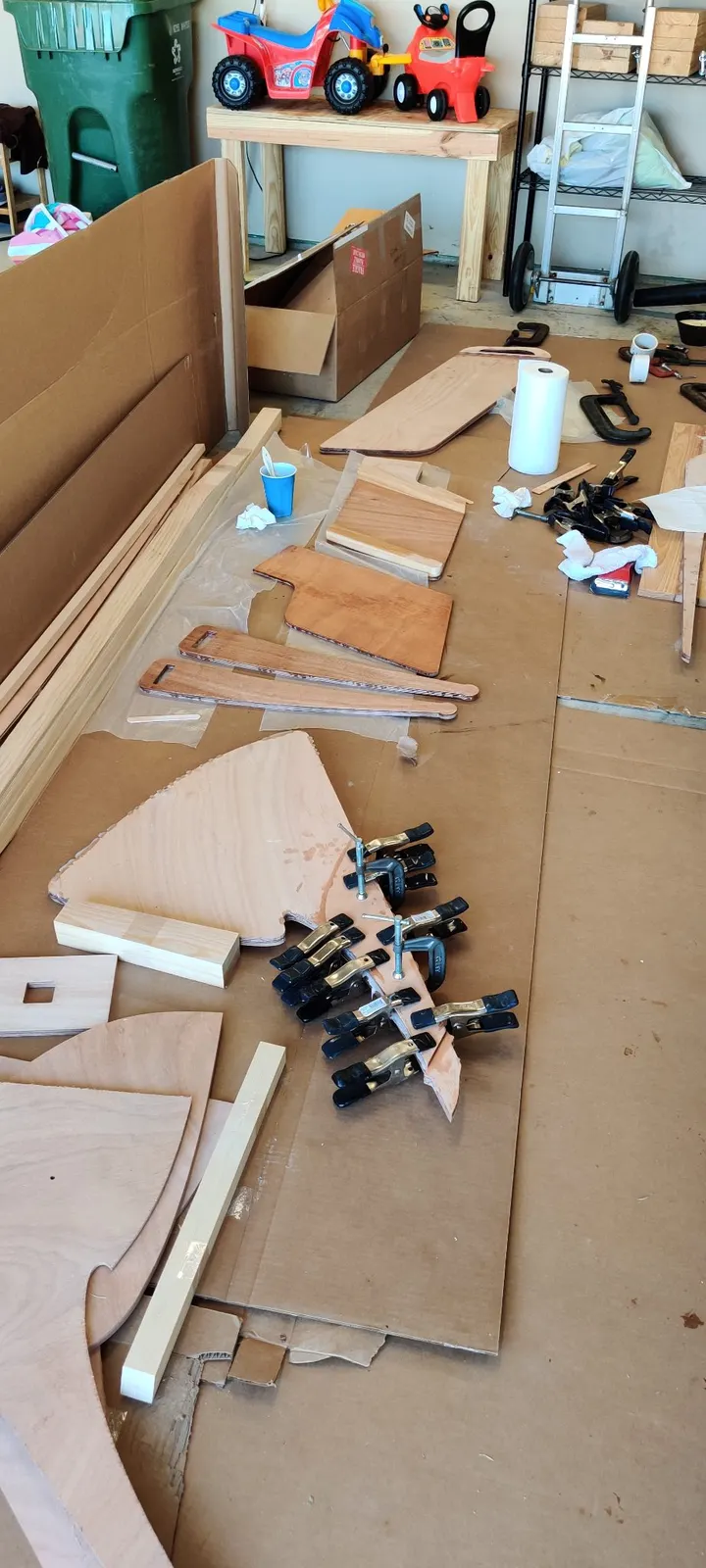
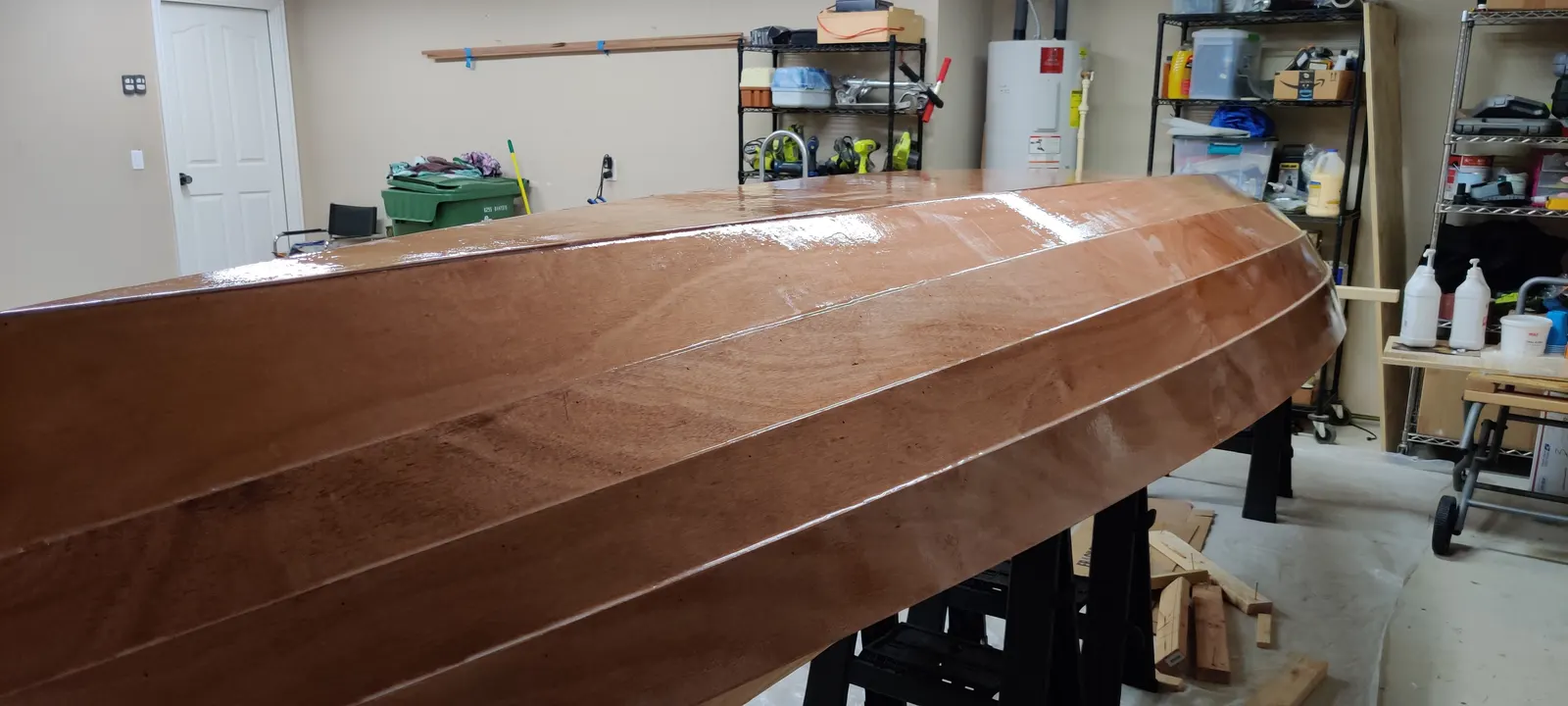
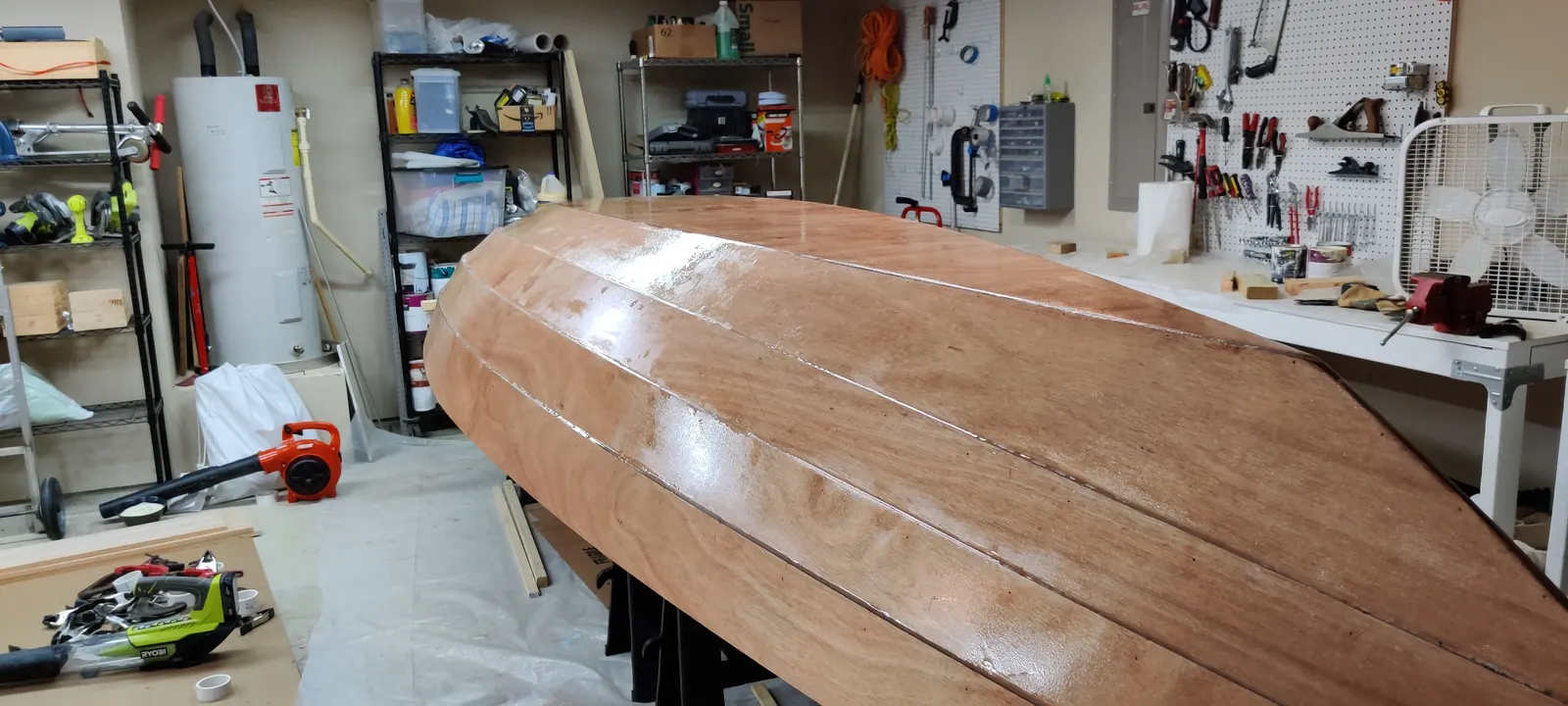
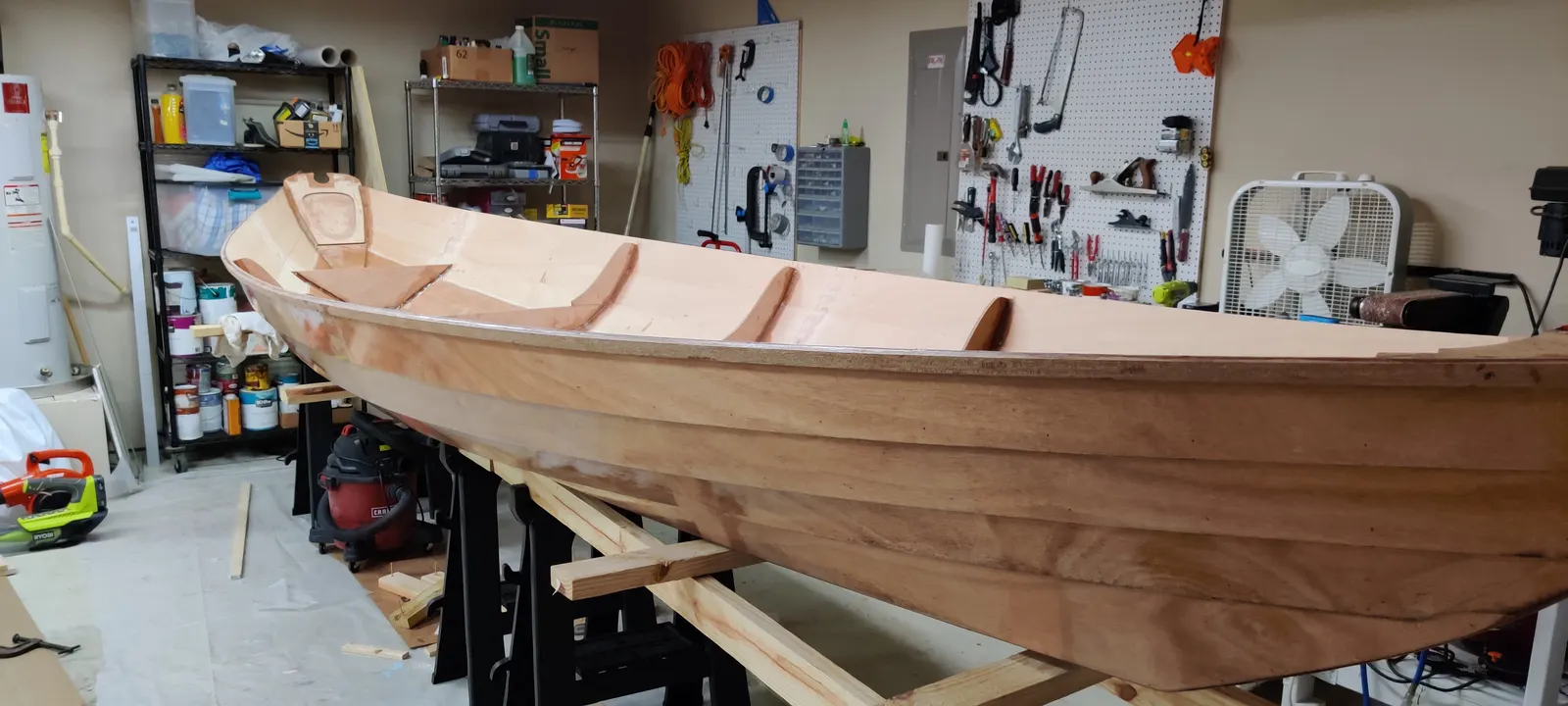
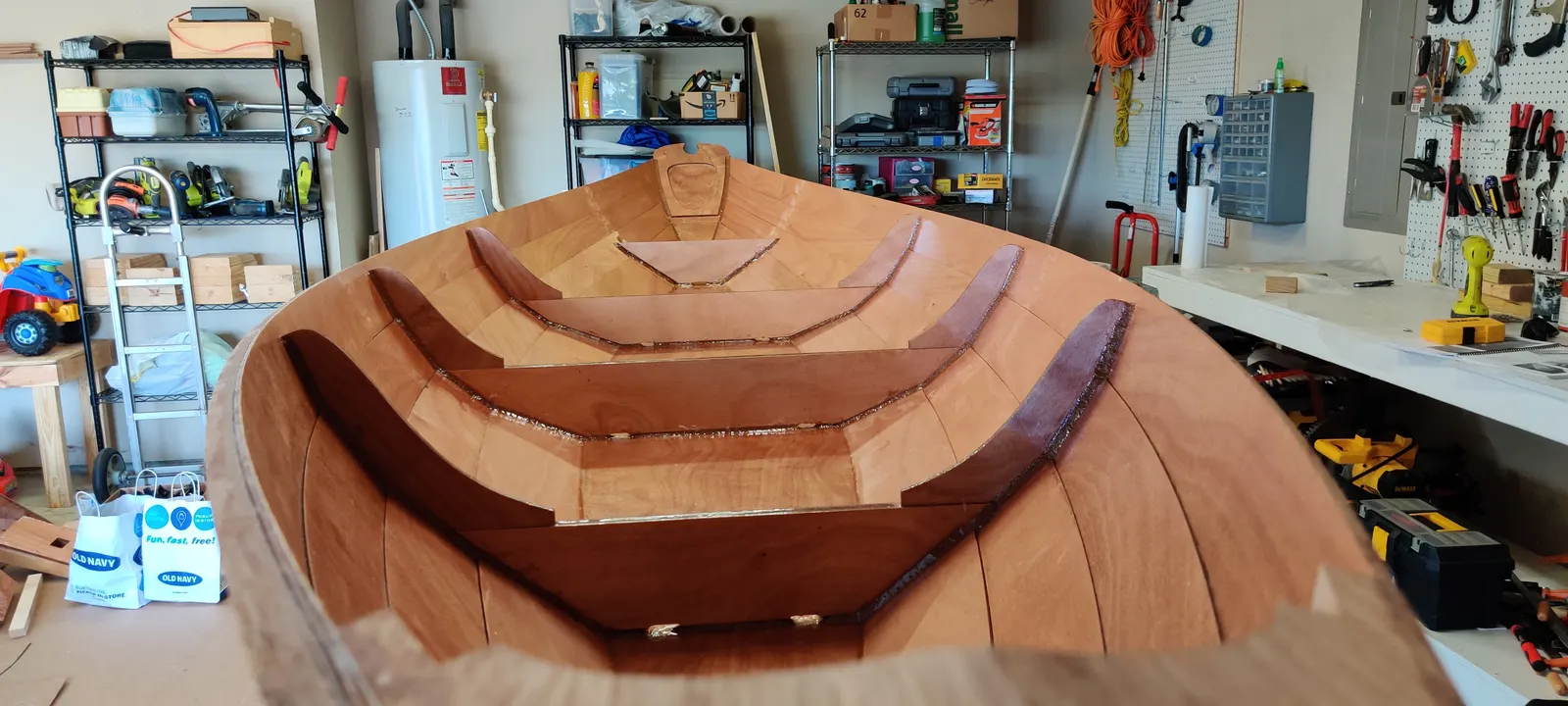
While the boat was curing, I used the downtime to start on the rudder. I also bought a flip-up rudder kit, but honestly, I never ended up fully building or using it.
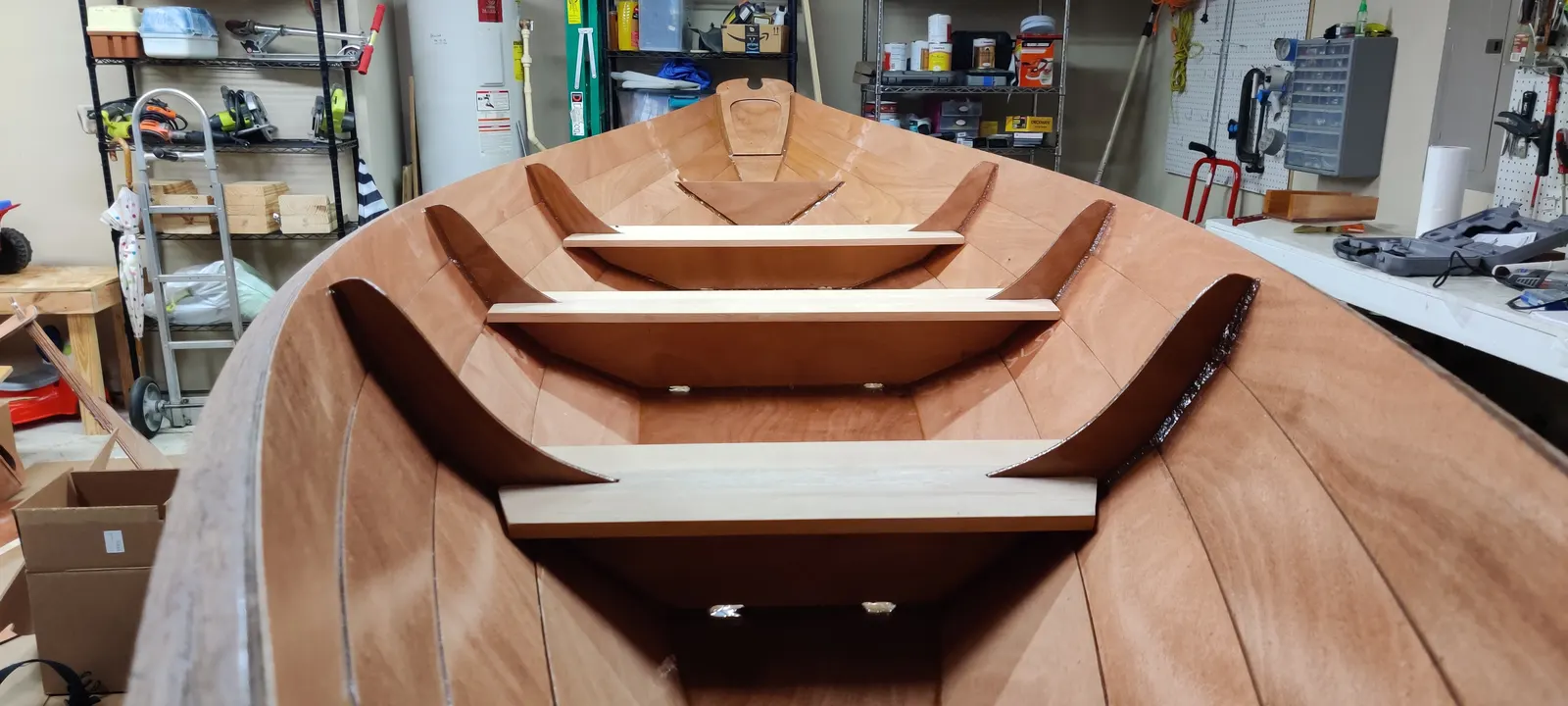
Around the same time, I started building the seats out of lumber. Everything gets epoxied on wax paper and then sanded flat, as you can see in the photos.
A quick note: I'm writing this narration six years after I actually built the boat, and I no longer have the plans since I gave them away when I sold it. So I'm not sure exactly where this falls in the official steps, but here's how I remember it.
The next step is to flip the boat over and start working on the outside. At some point, the plans call for applying epoxy with a filler into the gaps between all of the panels on the exterior. This seals up the outside, makes it watertight, and adds significant strength to the hull.
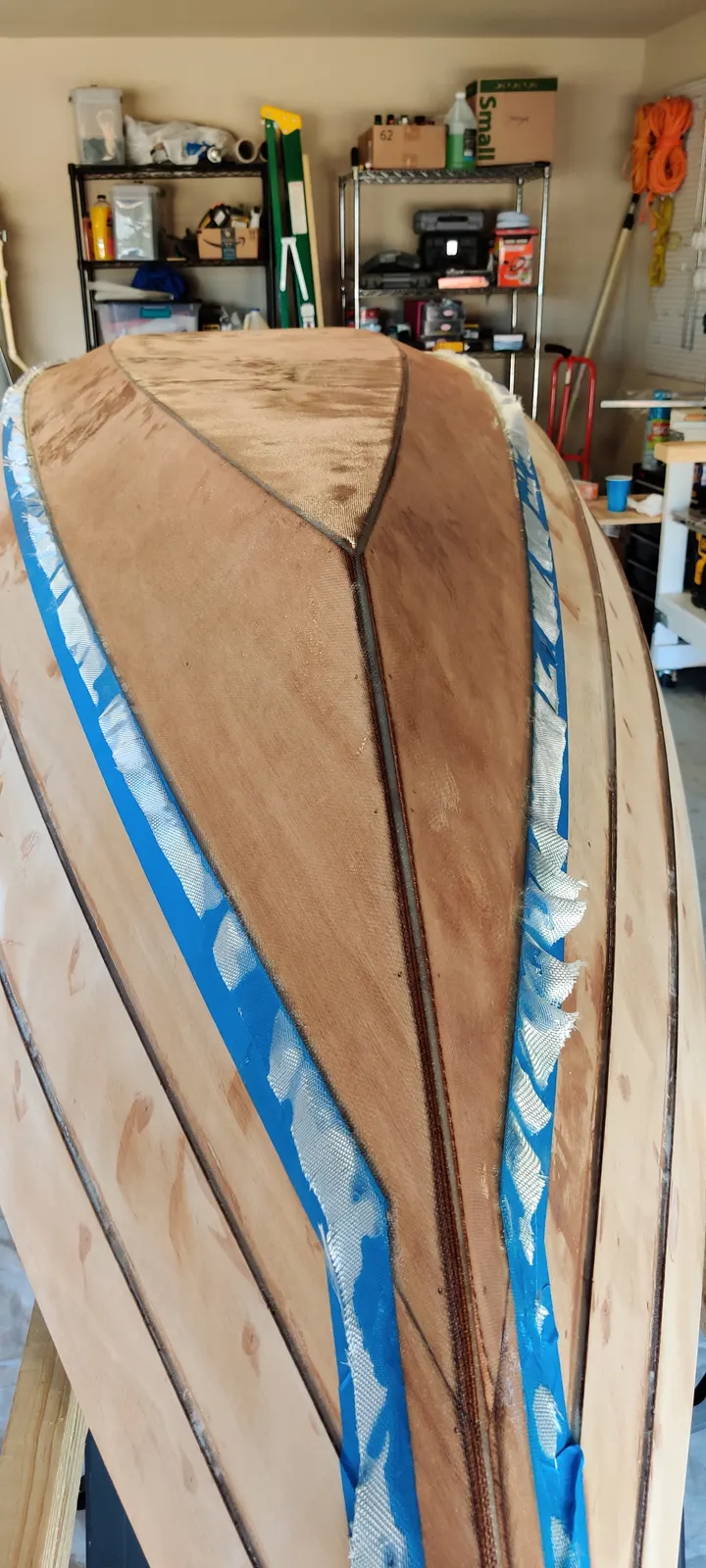
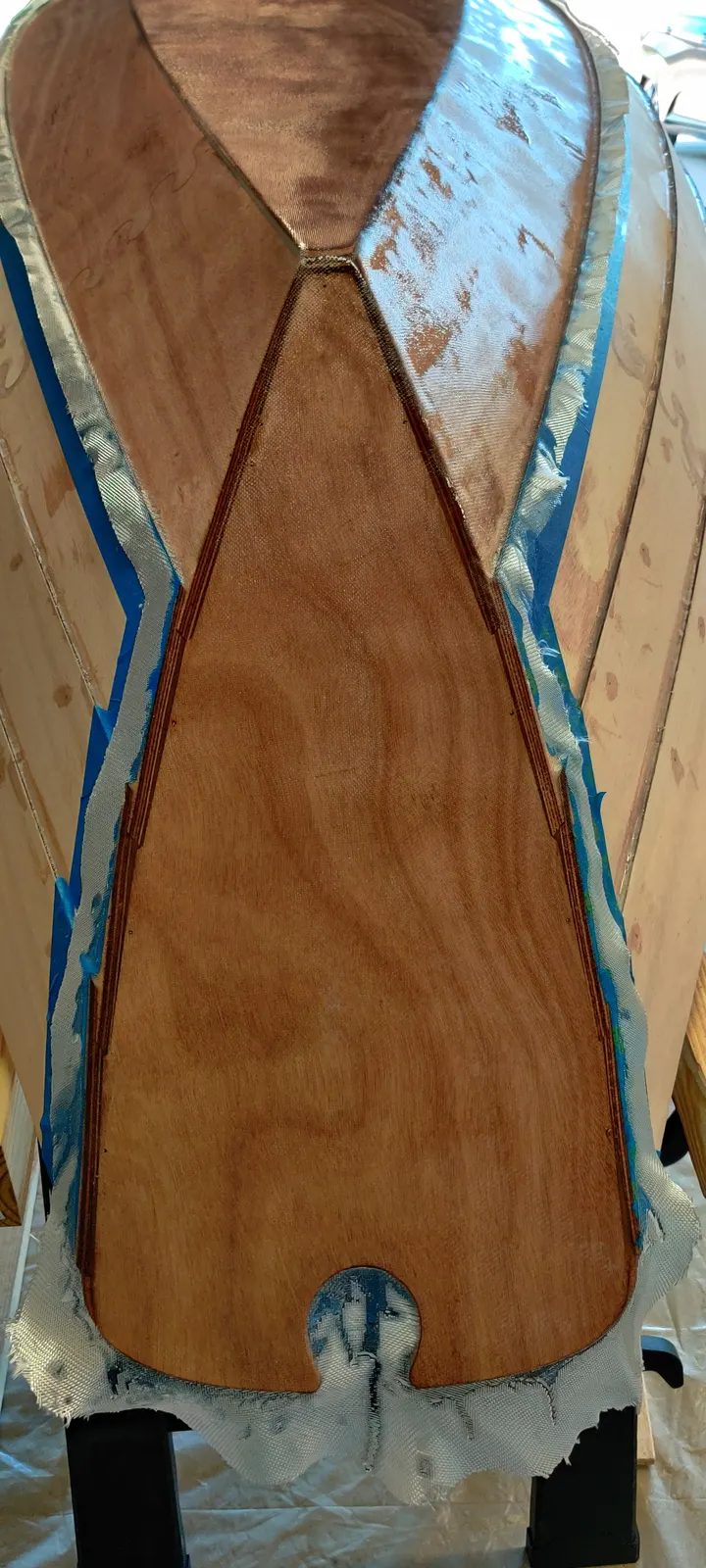
Once that's done, you can move on to fiberglassing the bottom and panel number one. As you can see in the photos, I used blue painter's tape to mask off the areas I didn't want epoxy on, then applied epoxy onto the precut fiberglass.
Lay out the fiberglass on the boat and cut it down to the best of your ability so it sits just over the bottom and side panel. Leave a section for the transom as well, as you can see here.
The next step is epoxying the entire exterior. Only the bottom and the first panel were fiberglassed, but the whole exterior gets a coat of epoxy to protect the wood.
By this point you're an expert with epoxy, so this part is fairly easy. I'd just recommend sticking with less is more and watching for drips. Drips just mean more sanding later.
This section covers a few steps together. I flipped the boat back right side up and epoxied the interior.
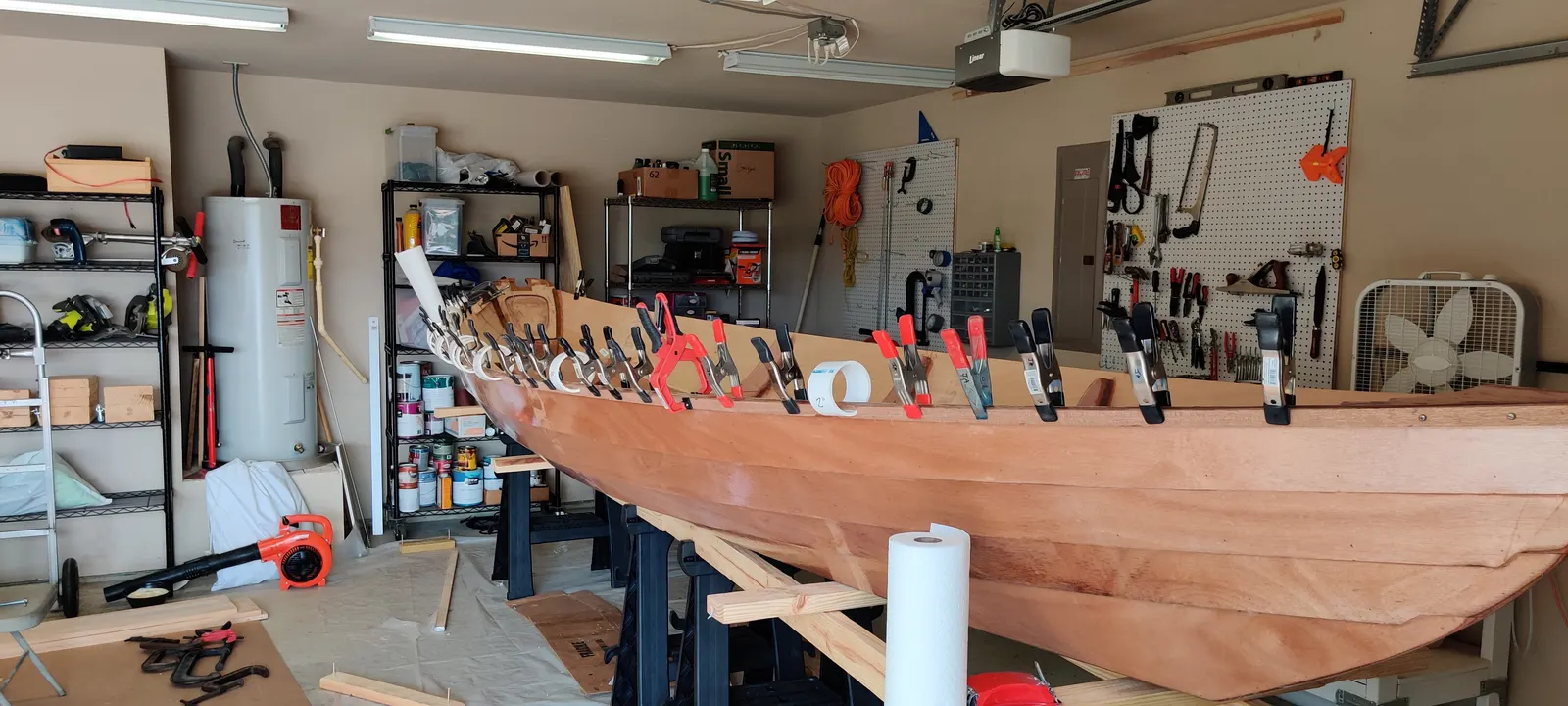
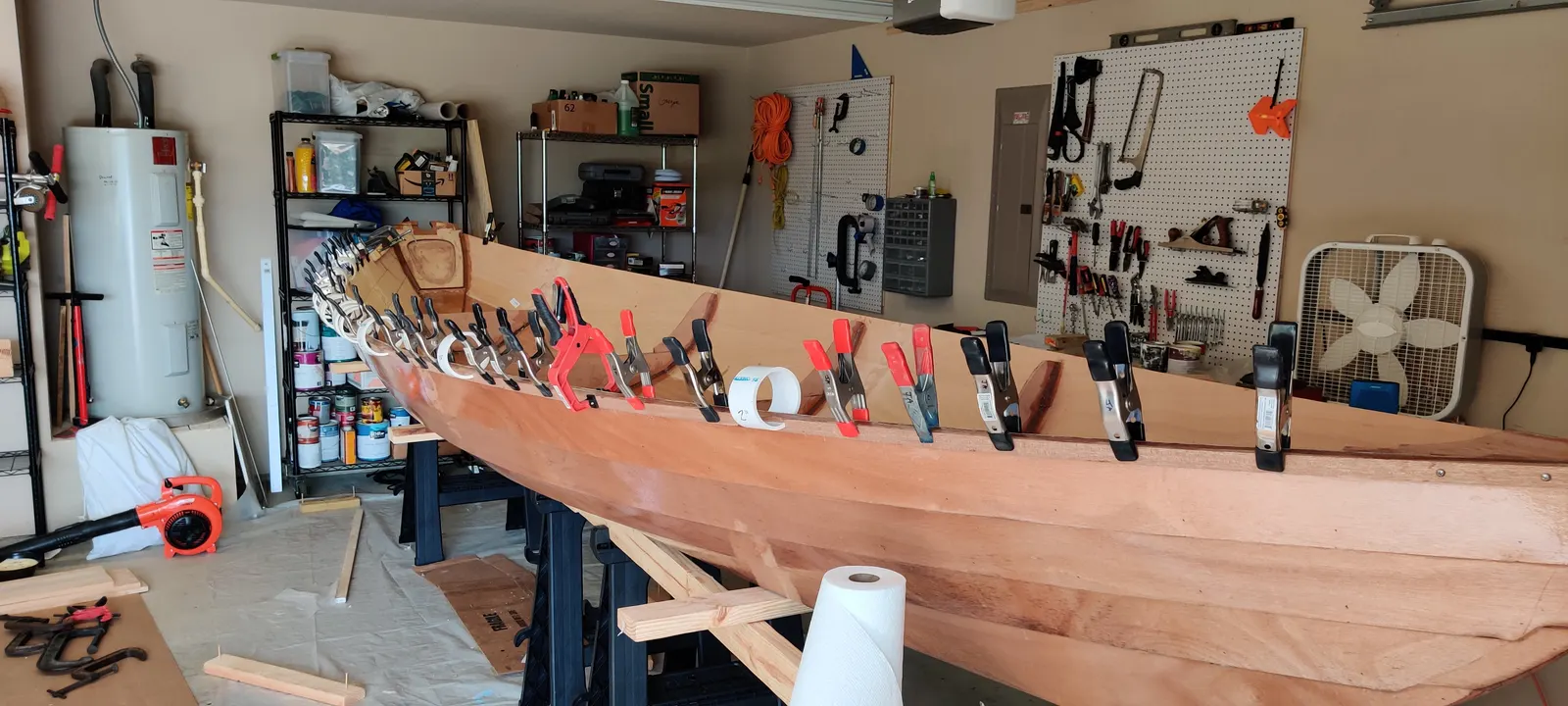
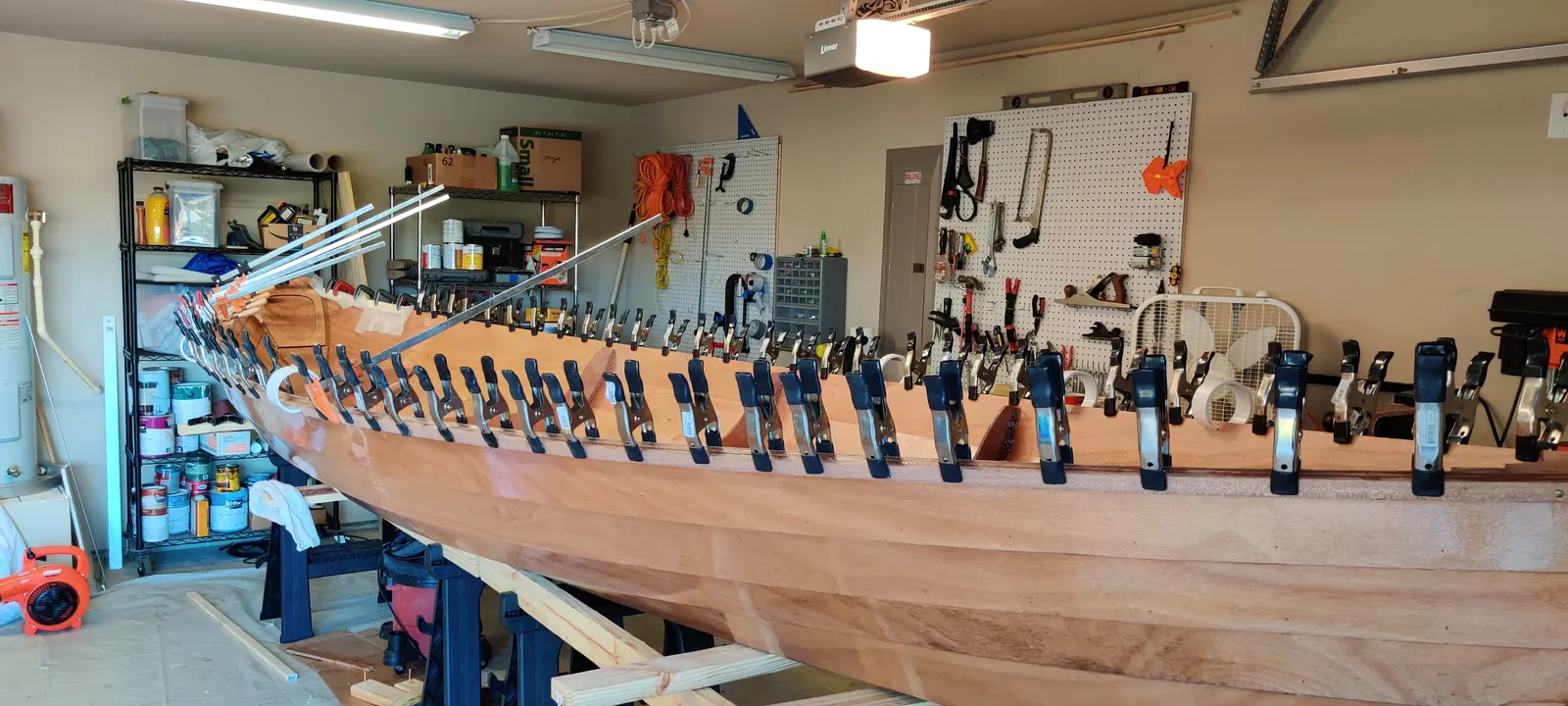
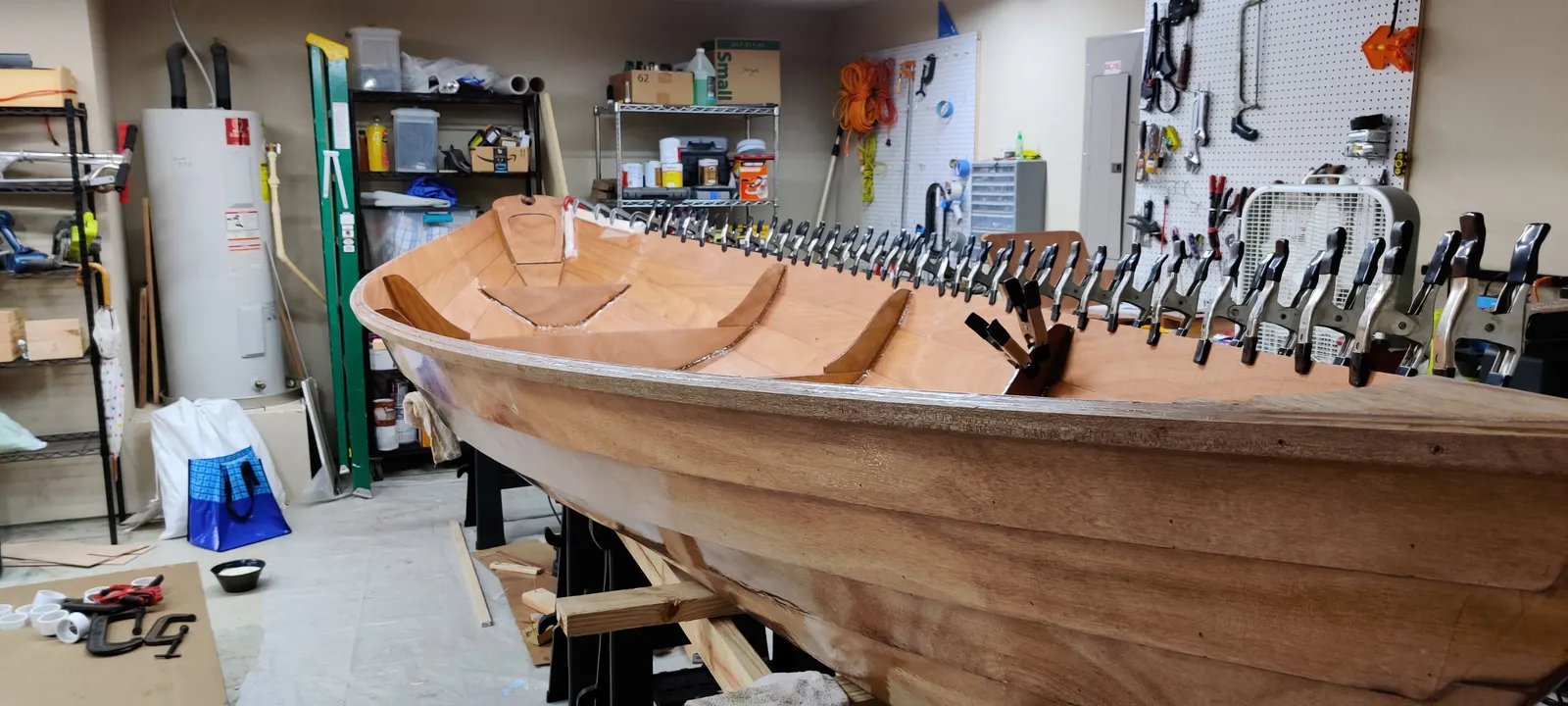
The next step was assembling the gunnels on the outside. I used two smaller strips of lumber instead of one large one, since the strip has to bend over a significant portion of the boat.
As you can see in the photo, if you don't have at least fifty clamps, start collecting them now. What I learned is you can never have enough clamps when building a boat.
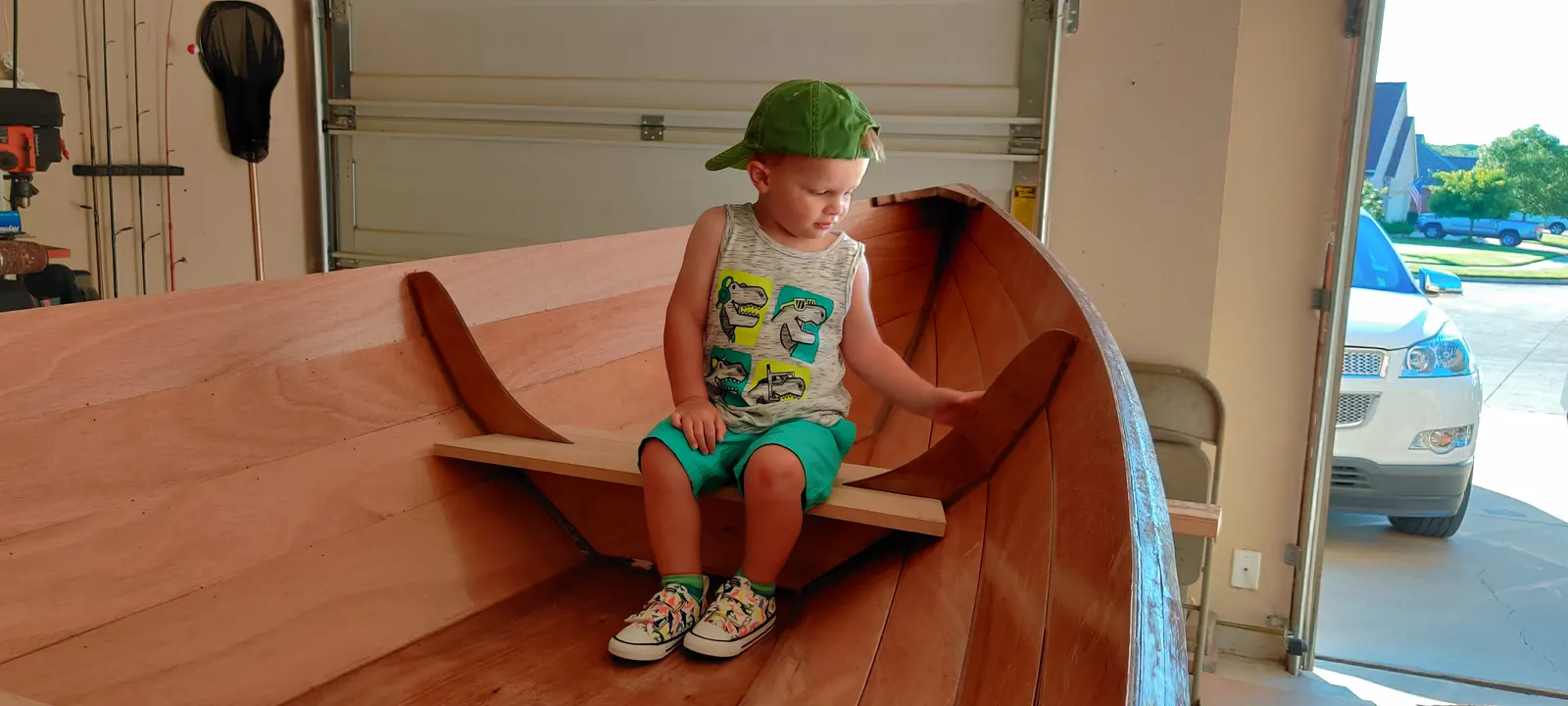
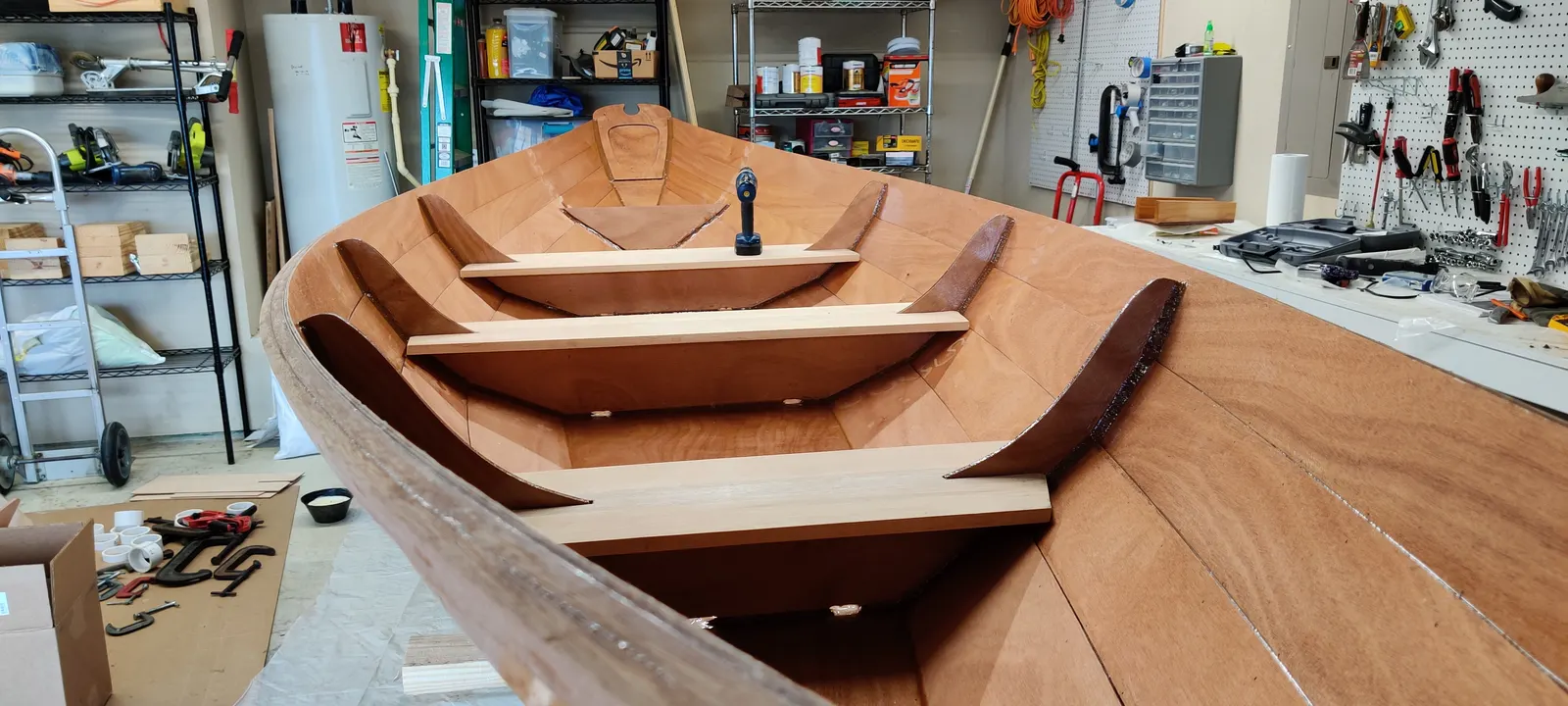
In this next part, I started fitting the seats to make sure everything looked and fit well. As you can see here, all three seats are in, and my son even hopped in the boat to make sure everything was comfortable.
What it cost
$5,765.62
$4,795.90
Into the boat
$247.99
Tools & gear
$721.73
Shipping
Shipping added
14.3%
on top of the goods: the cost most people forget when they price a kit boat.