boatbuildlog

Hot Rod · new build

Launched

Glen-L Hot Rod

Make a book Feed The whole log, 11 entries and every photo, laid out as a book to print, bind and keep.
97
Entries
n/a
Hours
n/a
Written up afterwards
369
Photos
Mar 2004
Started
Hull Panels Link

Since the Bill Of Materials call for a single layer of 1/4" sheeting for the sides, we'll be using 1/4" 5-Ply Meranti ma

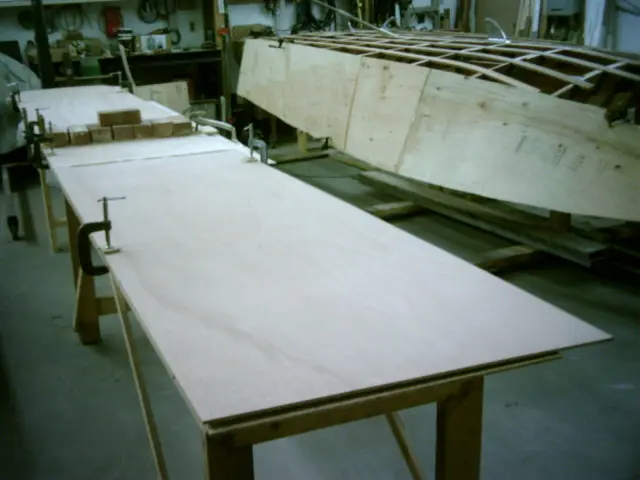
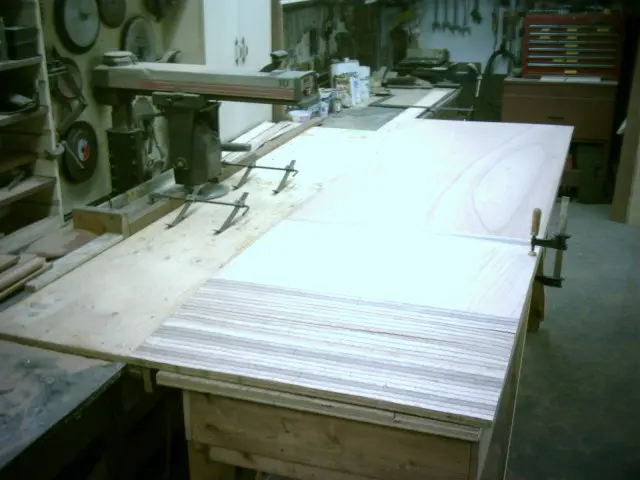
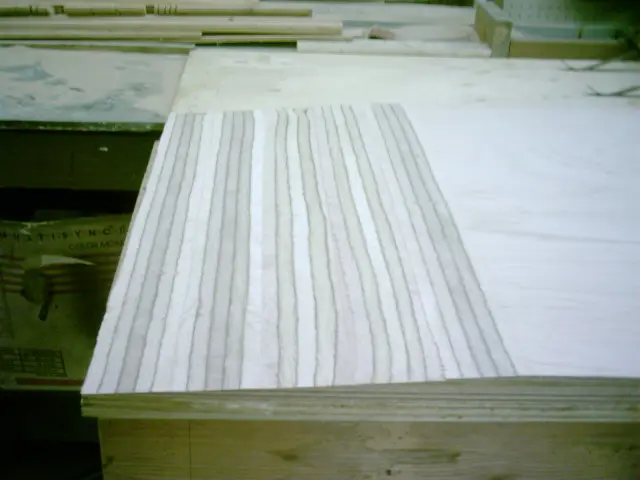
Since the Bill Of Materials call for a single layer of 1/4" sheeting for the sides, we'll be using 1/4" 5-Ply Meranti marine grade plywood. Five sheets were ripped into 31" wide strips and scarfed on the radial arm saw. Click here to see how the saw was set up to make the cut.

Scarfed sheeting was stacked and will be finished with an air file. This will roughen up the joint and provide a better bonding surface for the epoxy.

Hull Panels Link

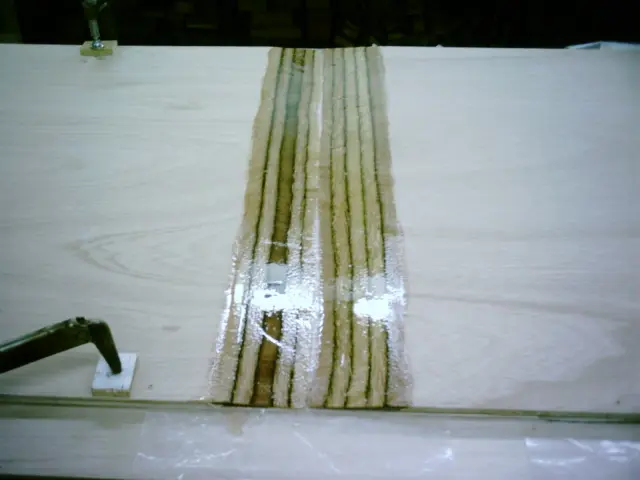
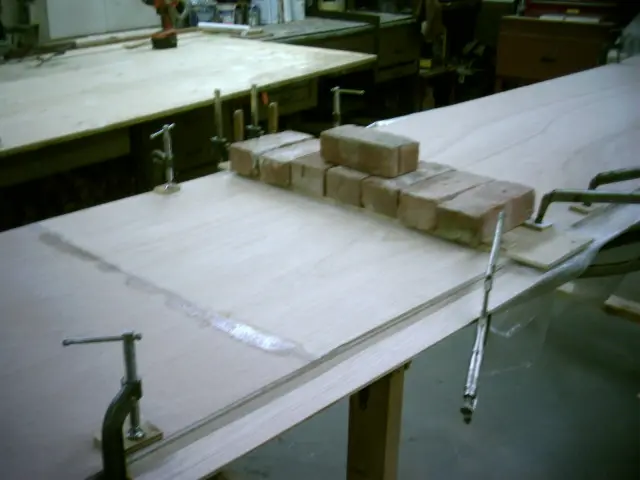
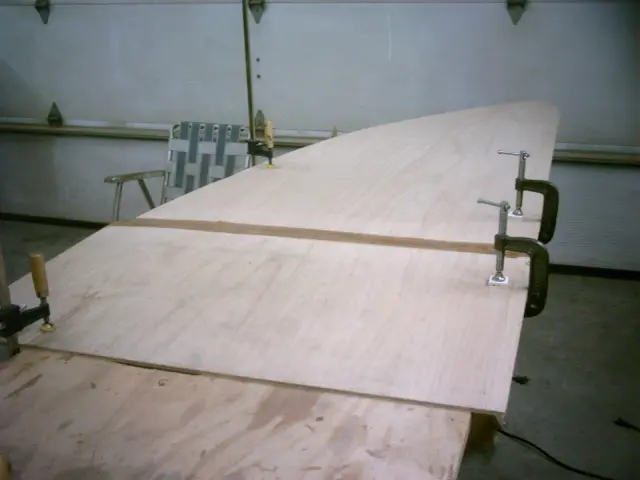
Here's a shot of the last side planking scarf joint being epoxied

Here's a shot of the last side planking scarf joint being epoxied.

Several bricks are used to clamp the joint. Excessive weight will squeeze too much epoxy from the joint and lead to an unsound joint. In the background, we're fitting the douglas fir side planking template to the side of the boat.
Hull Panels Link

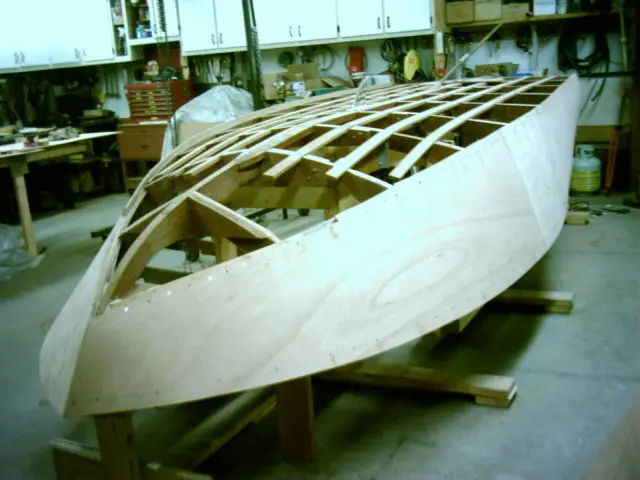
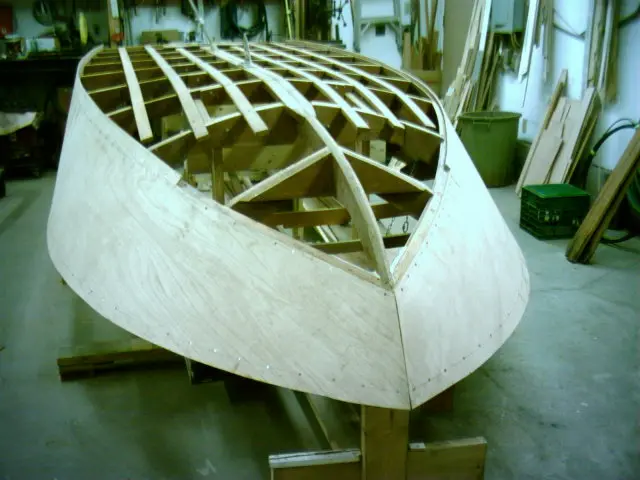
Side planking was fastened with 1" #8 screws spaced 3" apart at the chine and 4" apart at the sheer

Side planking was fastened with 1" #8 screws spaced 3" apart at the chine and 4" apart at the sheer.

Screws will be spaced 2" apart at the stem and transom.

Hull Panels Link

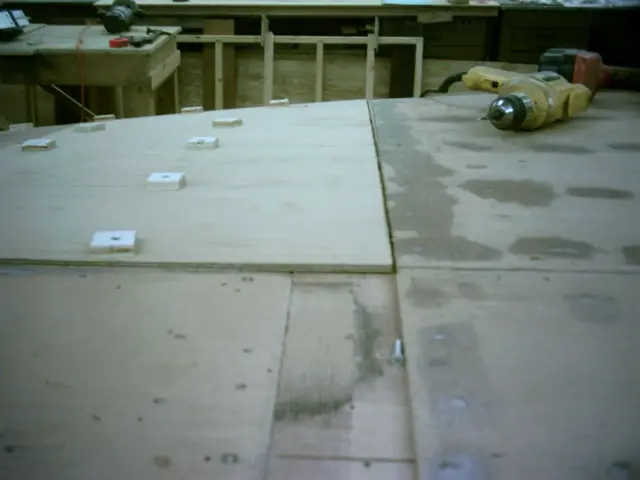
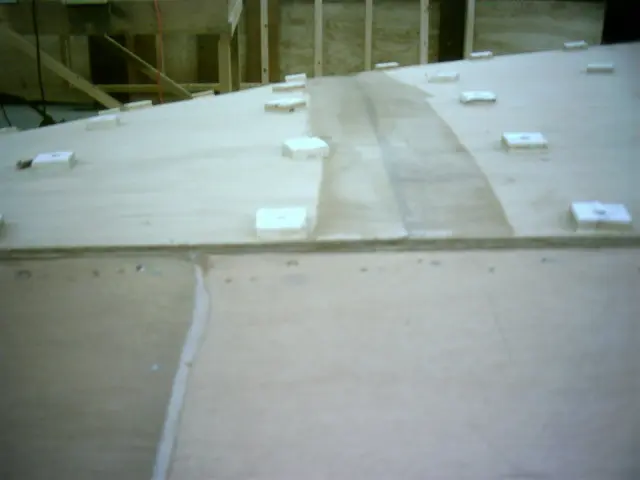
Second bottom panels (1/4" marine grade plywood) were cut, scarfed and epoxied

Second bottom panels (1/4" marine grade plywood) were cut, scarfed and epoxied. Joint was set 6" aft of the first bottom's joint.

Hull Panels Link

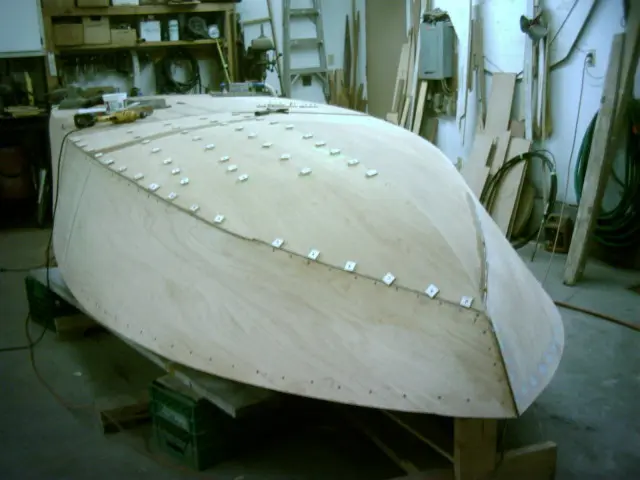
Fitting the port second bottom

Fitting the port second bottom.

Transition point.

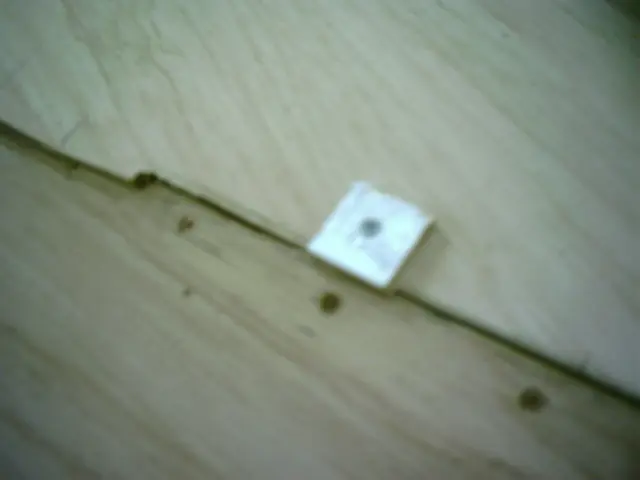
Butt joint detail.

The second bottom's scarf joint is staggered 6" aft of the first bottom's joint.