This section describes how to cast a fiberglass tube which will be used as a lining for the propeller shaft hole.
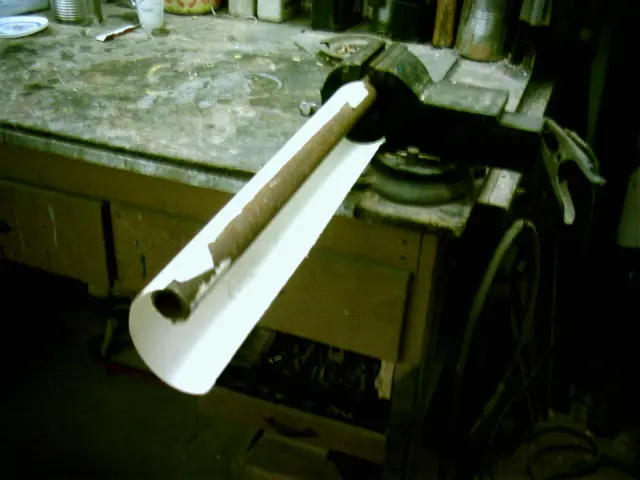
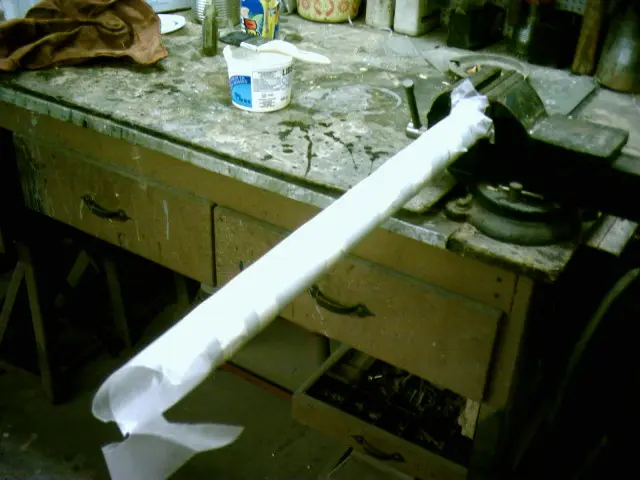
1. A piece of 1" pipe is clamped in the vise. Wrap the pipe with a piece of cardboard sheet...
2. ... until you get the desired inside diameter.
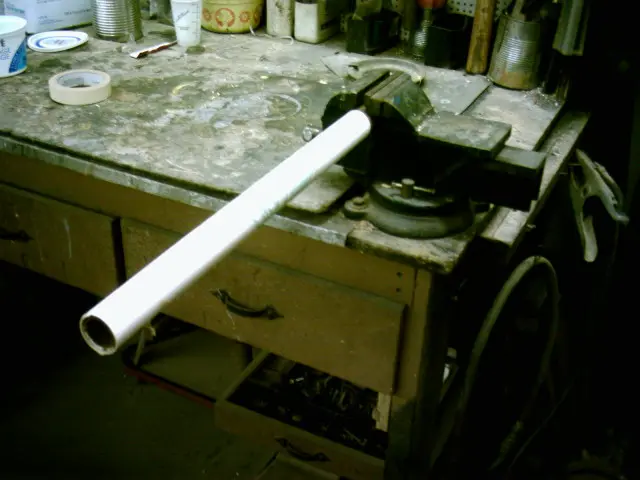
3. Wrap the tube with duct tape.
4. Add a layer of waxed paper.
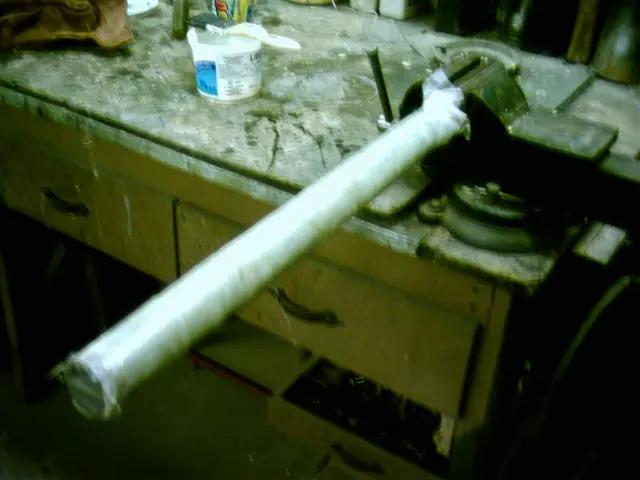
5. Laminate with two layers of fiberglass cloth. When fully wet out, wrap tightly with waxed paper and tape the whole tube to maintain even pressure on the tube.
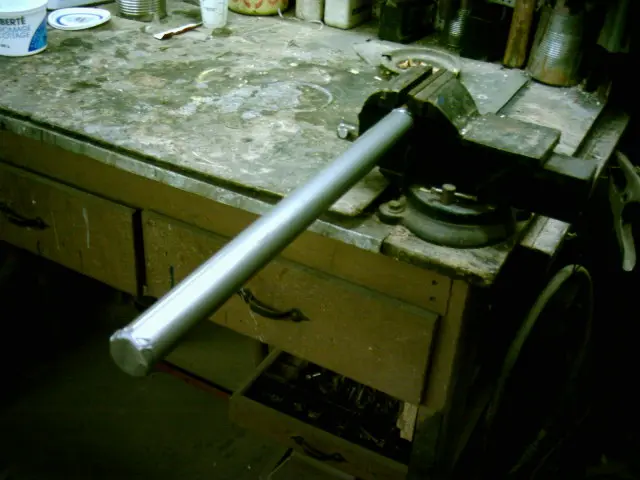
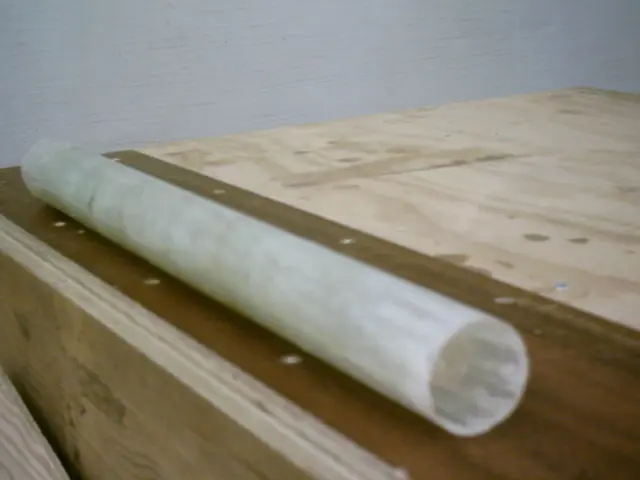
6. The finished tube. Both the inside and outside surfaces are nice and smooth.
The strut was reinstalled and an 8' long piece of 1" round bar was slipped into it
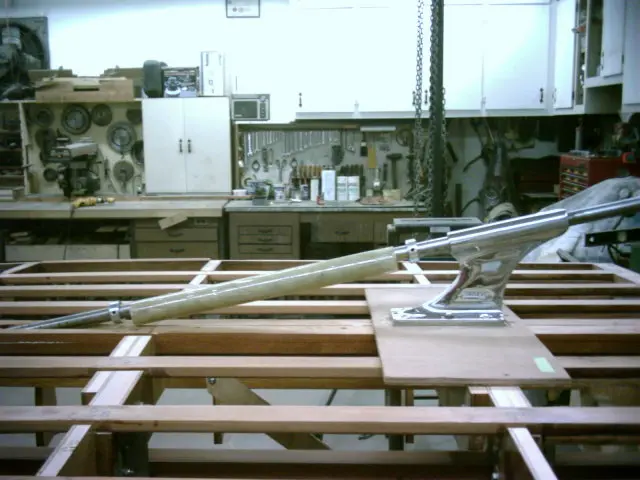
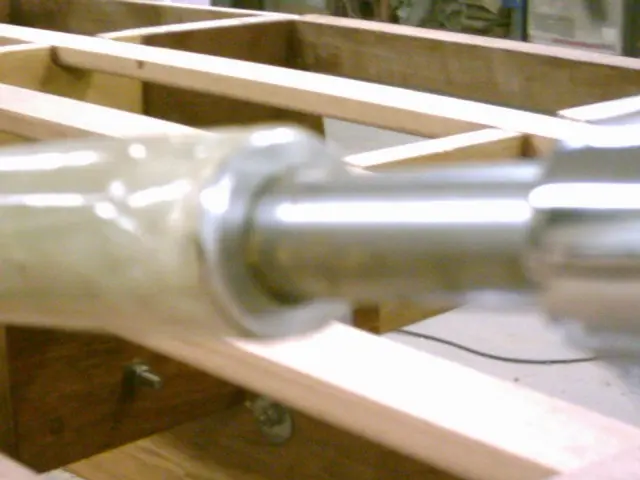
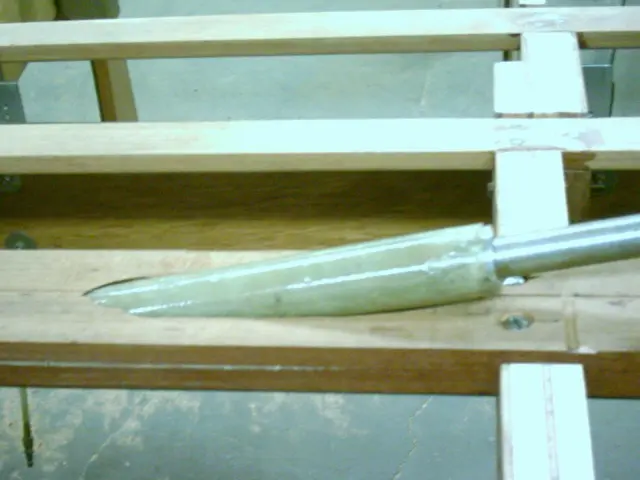
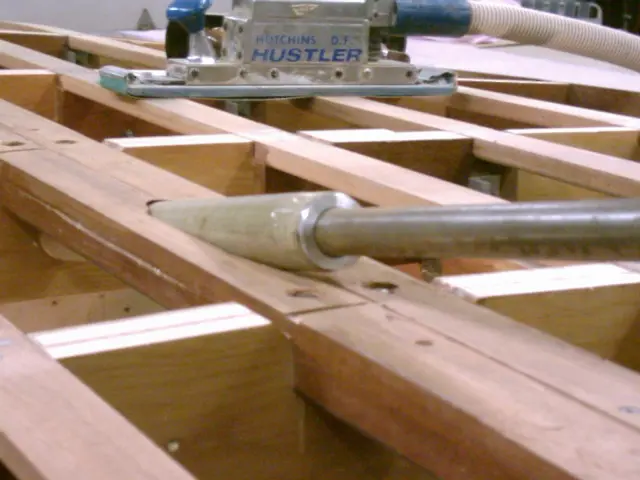
1. The strut was reinstalled and an 8' long piece of 1" round bar was slipped into it. Two 1" ID by 1-5/8" OD bushings and the fiberglass tube were slid onto the shaft.
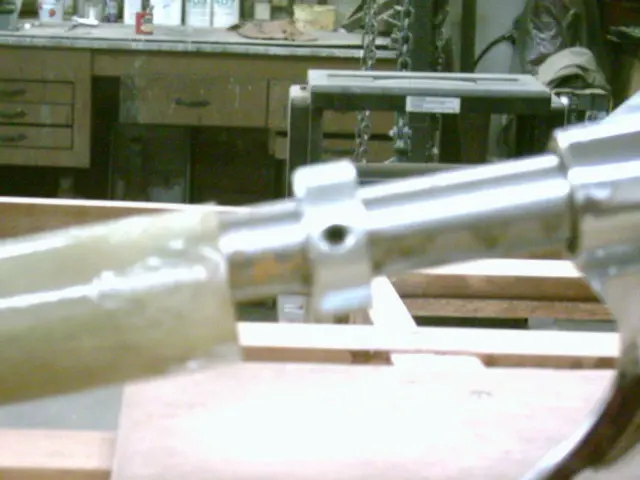
2. Here's a closeup shot of the tube and bushing.
3. The bushings were slid into each end of the tube. This will ensure that the tube is centered on the shaft.
4. The assembly is pushed into the shaft hole. It should be a loose fit. Enough clearance for a coat of thickened epoxy around the tube will be required. If the fit is too tight or if the tube binds in the shaft hole, roll and tape a piece of coarse sandpaper around the tube and rotate it in the shaft hole.
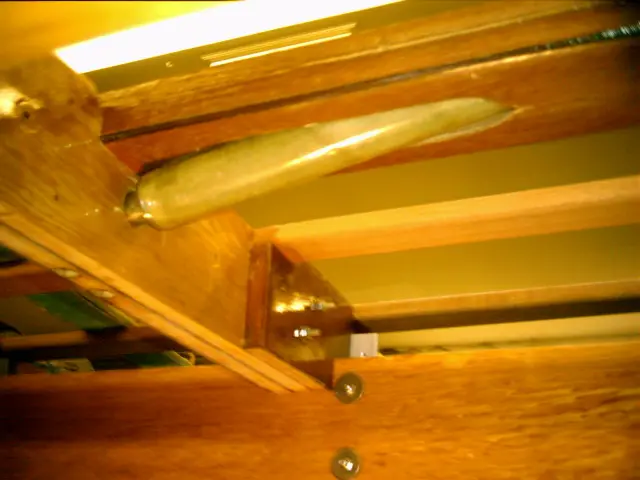
5. Here's the view from inside the boat. The 1" shaft rests in a 1" diameter hole drilled into the frame at a 12 degree angle. You can also see the fiberglass tube bushing.
On Friday night we fiberglassed the starboard bottom
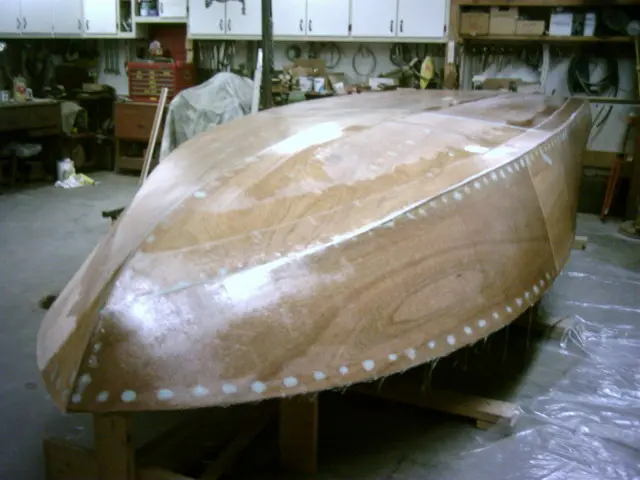
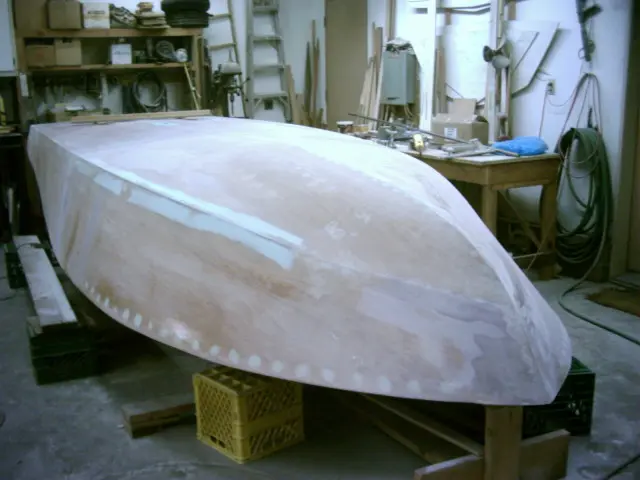
1. On Friday night we fiberglassed the starboard bottom. We feathered the panel edges on Saturday afternoon and applied the port bottom late Saturday night. Starboard side was applied late Sunday night.
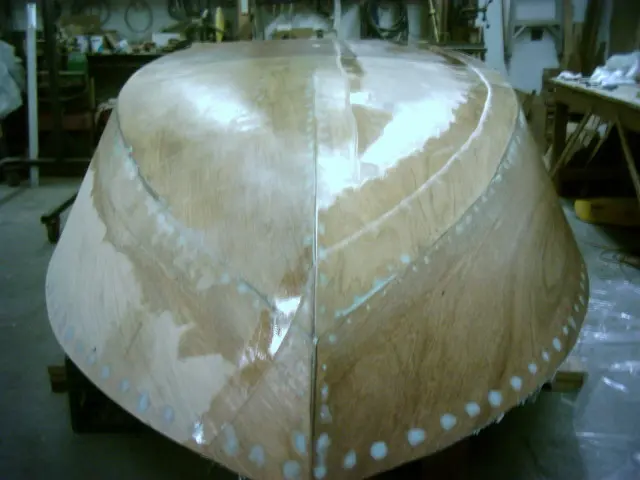
2. Notice the starboard side overlap at the bow. The digital camera is having a rough time rendering smooth, shiny surfaces. Time to upgrade to a better quality unit !!
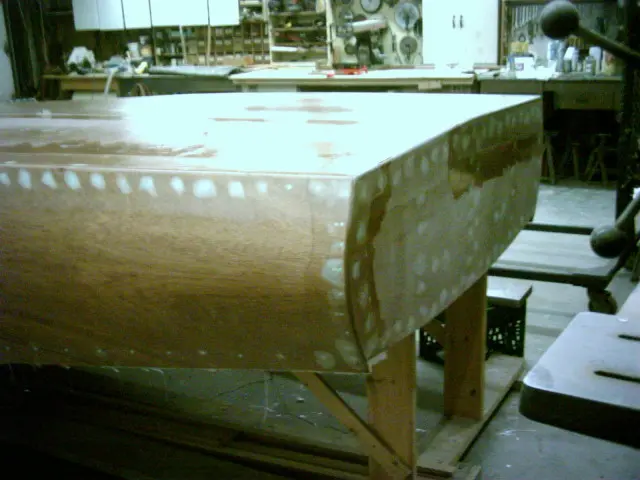
3. Side overlaps the transom.
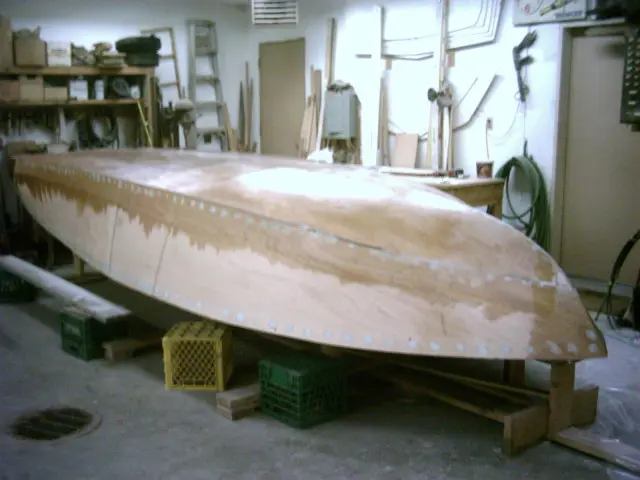
4. Port bottom will have to be feathered before applying the side.
We're applying the fiberglass cloth using the 'dry method'
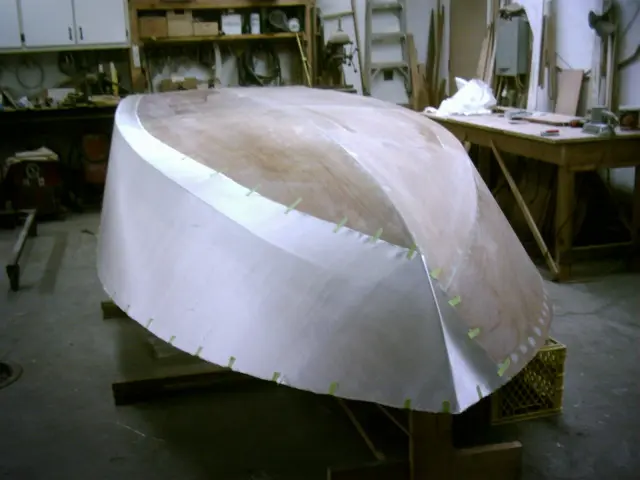
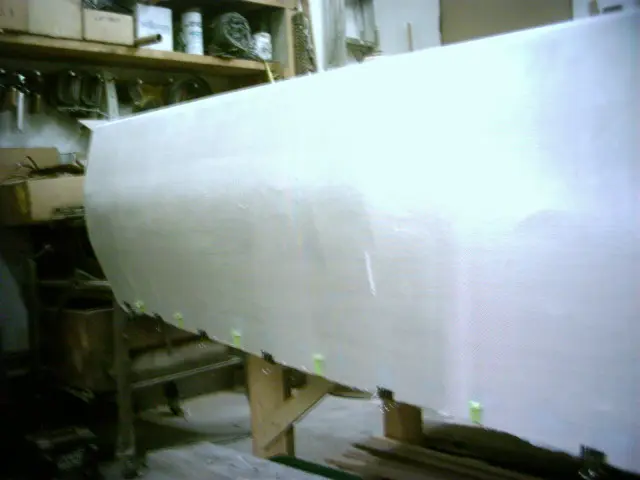
1. We're applying the fiberglass cloth using the 'dry method'. 6.5 oz. cloth is draped over the hull and taped in position. Panel overlap is 5". This allows for sufficient overlap and a 1-1/2" wide strip for feathering.
2. Stretching the cloth diagonally eliminates wrinkles. Spring steel paper clamps and masking tape are removed after the cloth has been saturated with epoxy.