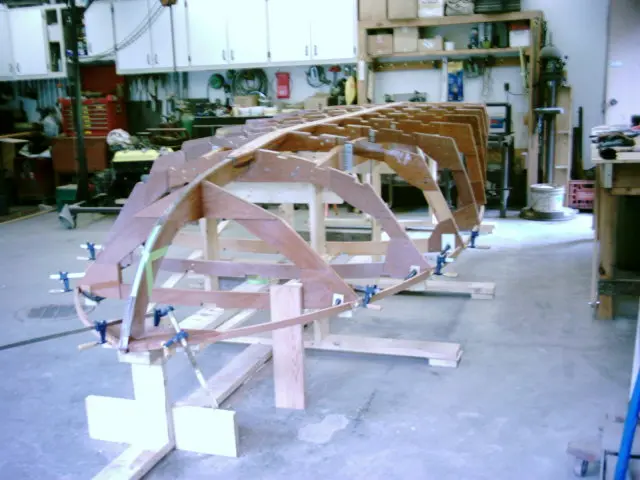
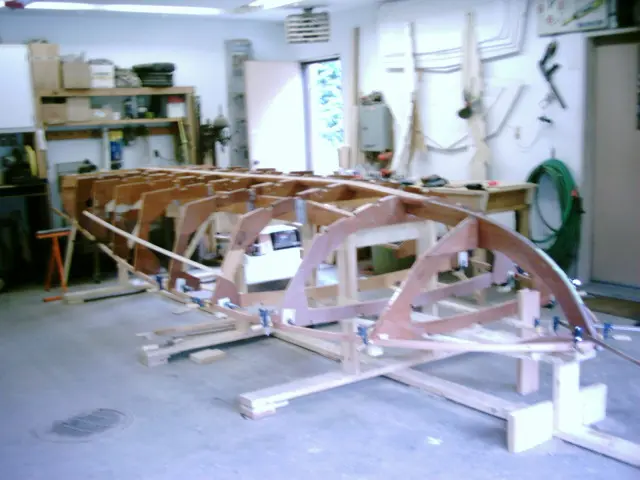
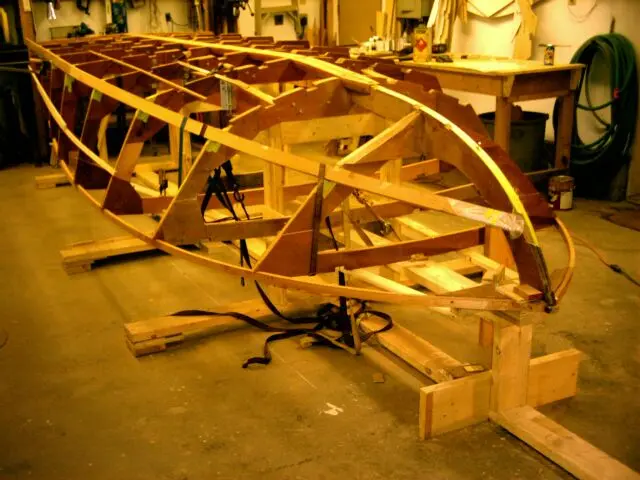
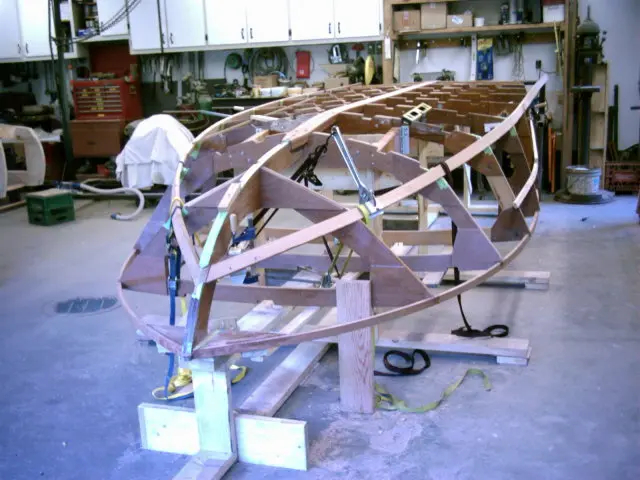
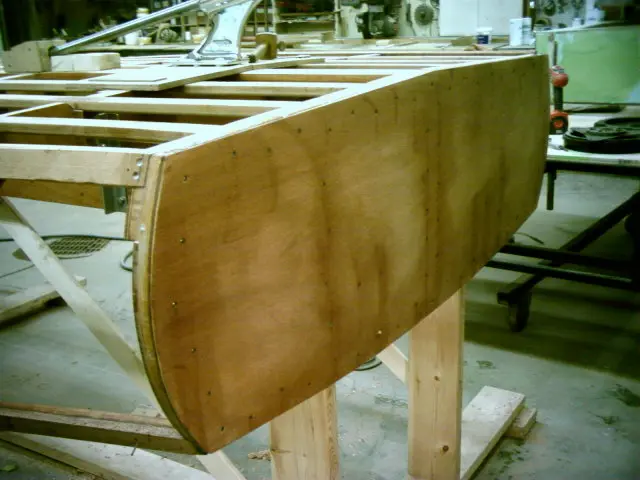
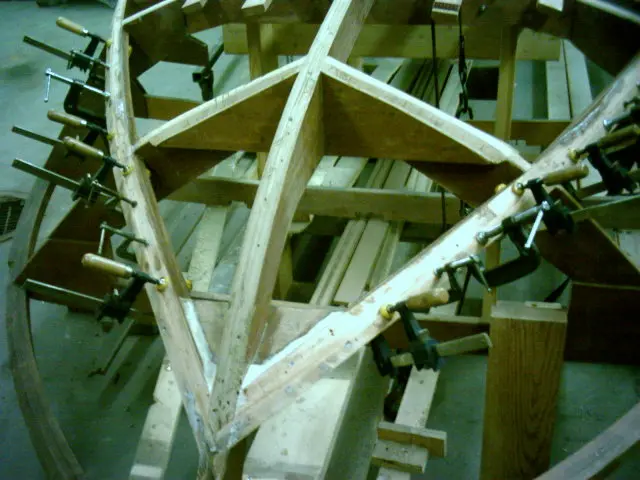
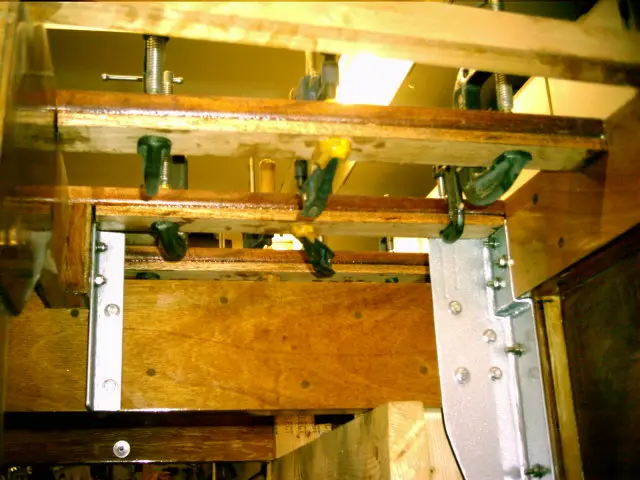
1. Installing the sheer clamps. Two strips of 5/8" x 1-1/4" mahogany will be used per side.
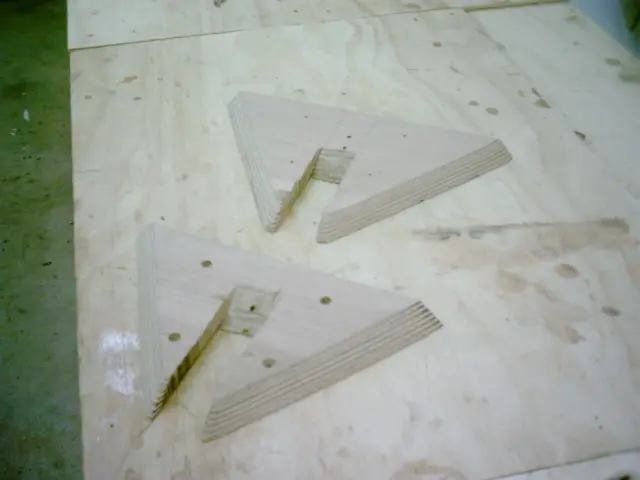
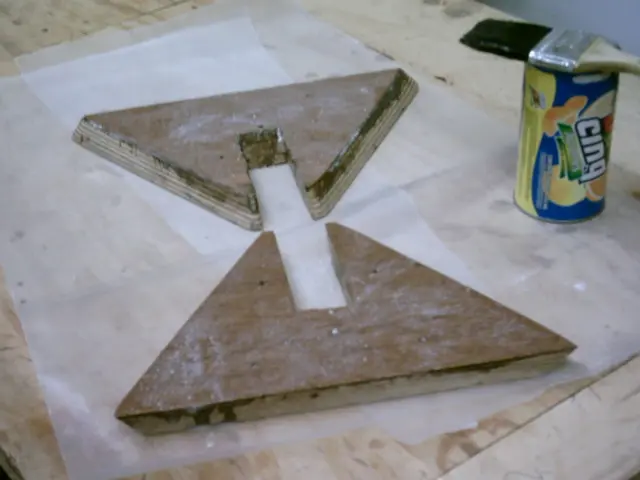
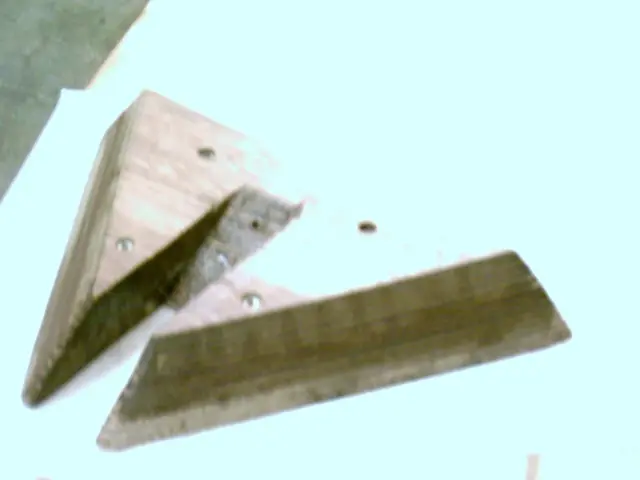
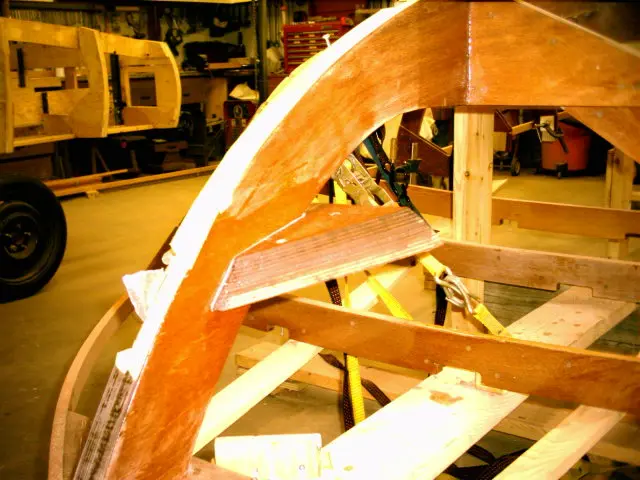
2–3. Although not detailed in the plans, the chine blocking was made from two pieces of 3/4" marine plywood. The sides were bevelled at 30 degrees and a notch was cut to fit around the stem. This is definitely a trial and error project. Much time will be saved when fitting the chine logs to the blocking.
4. Glued...
5. Screwed...
6. Installed.
7. The chine log was wrapped with waxed paper to prevent it from being glued to the blocking.
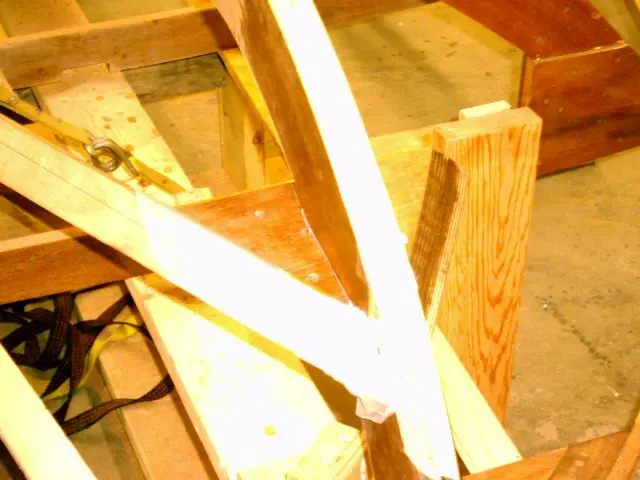
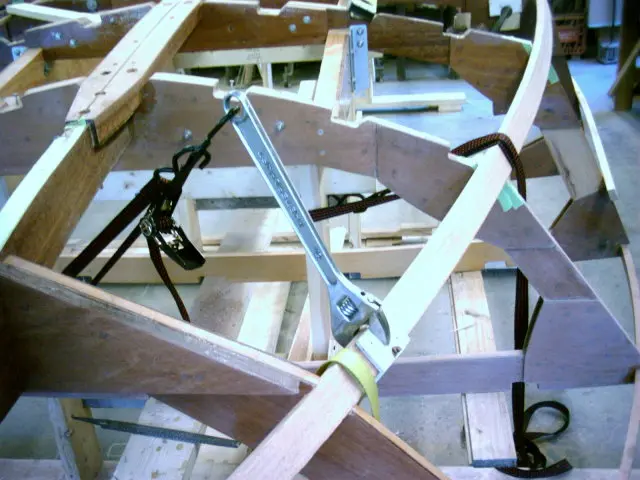
A large crescent wrench and a ratchet strap was used to twist the top of the chine inward towards the keel
1. A large crescent wrench and a ratchet strap was used to twist the top of the chine inward towards the keel. Laying a straightedge from the sheer to the chine will indicate when sufficient twist is attained.
2. The second sheer clamp laminations are yet to be installed.
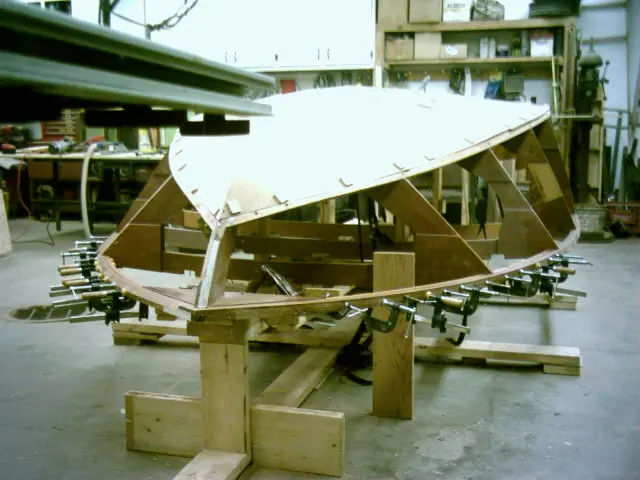
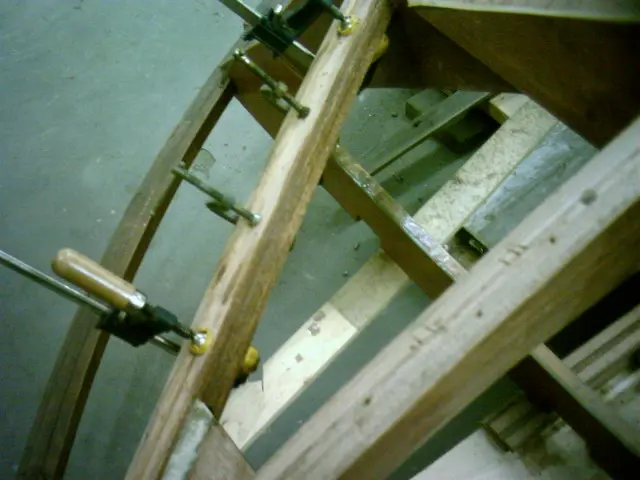
Two layers of 3/8" thick by 2" wide mahogany stock were laminated to the inside chine log surfaces
1–2. Two layers of 3/8" thick by 2" wide mahogany stock were laminated to the inside chine log surfaces. This will restore some strength to the members, lock the frames into position and provide additionnal fastening area for the first plywood bottom screws.
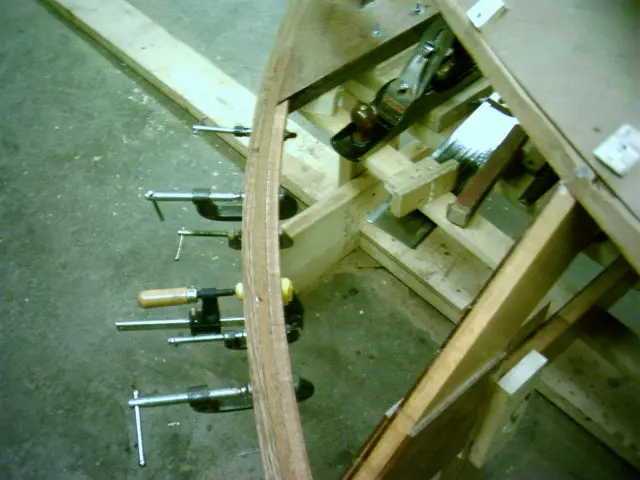
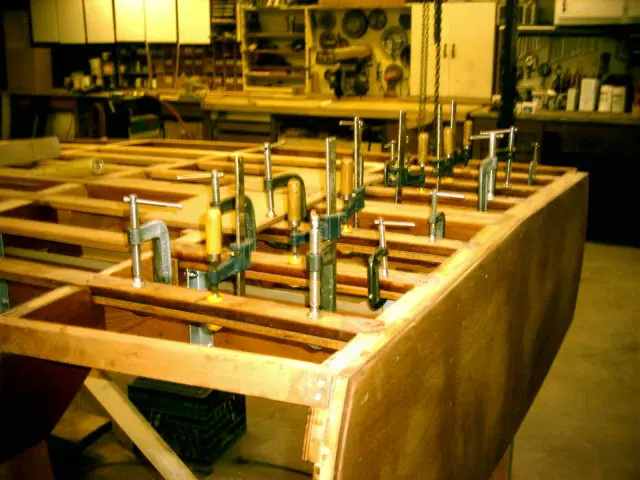
3. A 3/8" thick lamination was added to the rear battens. We'll be cutting 3/8" deep limbers (drainage channels) so additional material must be provided to maintain the batten's integrity.
4. Here's the view from inside the boat.
1234
Nobody else here is logging a Hot Rod yet.
See the boat.