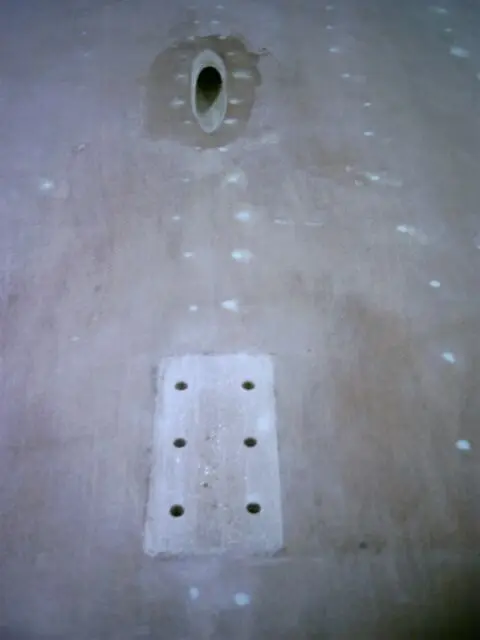
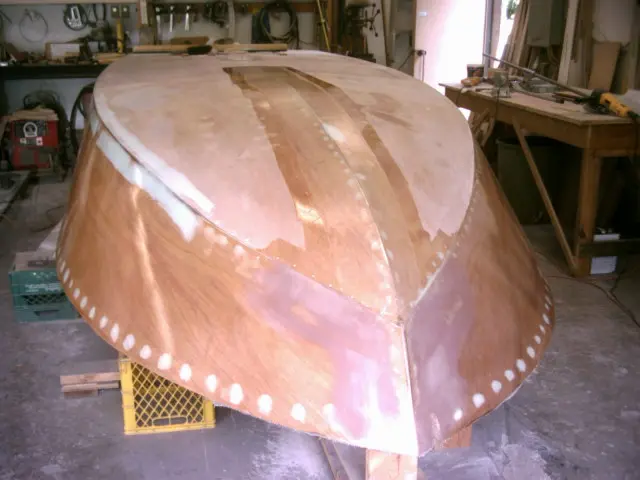
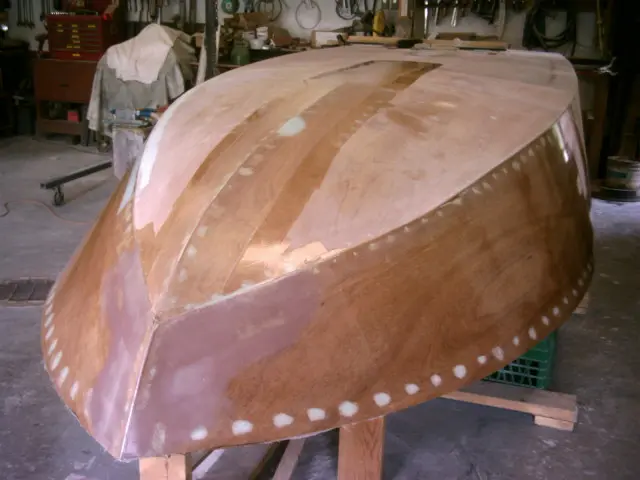
A strut pad was laminated from 3 layers of 1-1/2 ounce fiberglass mat
A strut pad was laminated from 3 layers of 1-1/2 ounce fiberglass mat. The idea is to build up the pad and grind it level so the strut can be bolted to a solid base.
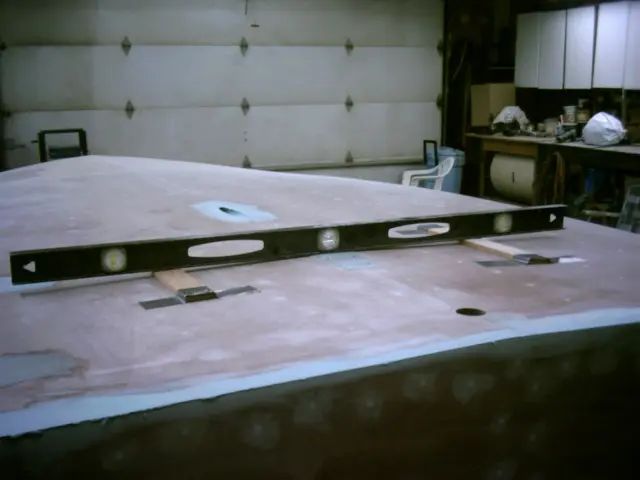
A 4-foot level was laid on the pad and leveled with two hardwood strips laid on the hull. Duck tape was used to hold the strips in place.
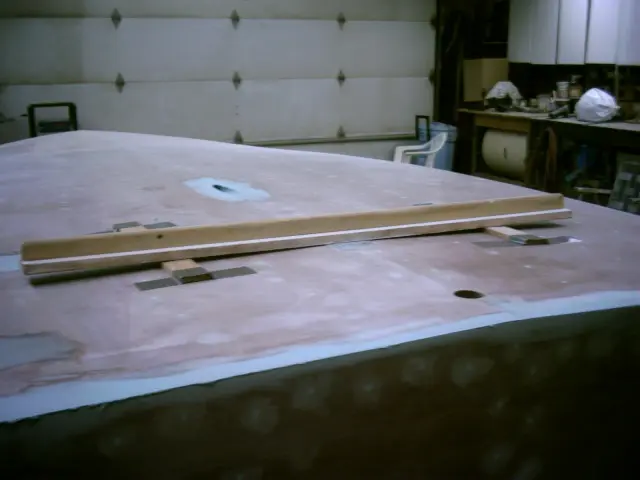
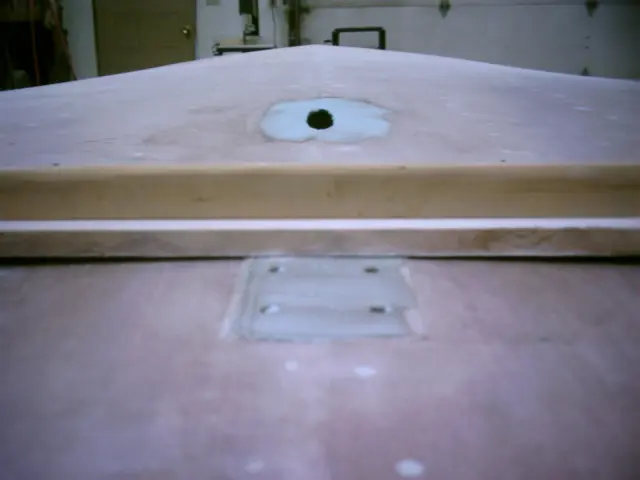
A 4-foot long sanding board was used to level the pad.
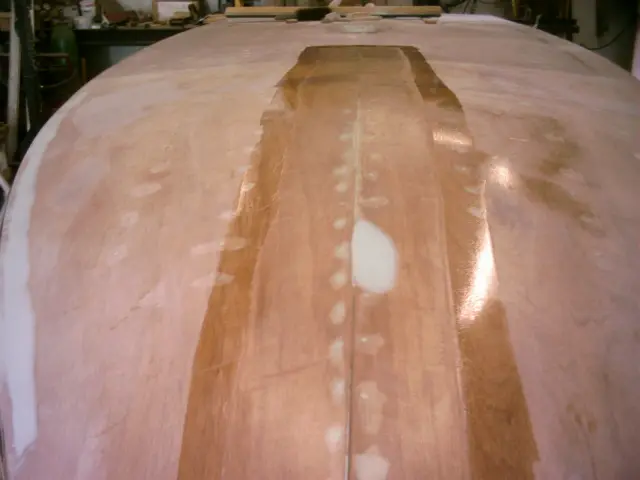
Detail shot.
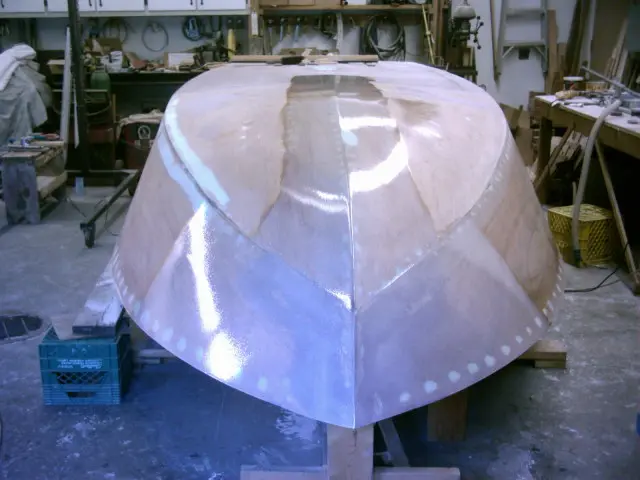
An extra layer of cloth was applied to the keel and the bow area
An extra layer of cloth was applied to the keel and the bow area. If the keel is nicked or abraded, the extra lamination will take the abuse instead of the underlying layer.
Since this is a 'wear' layer, sanding will be restricted to feathering the sides.
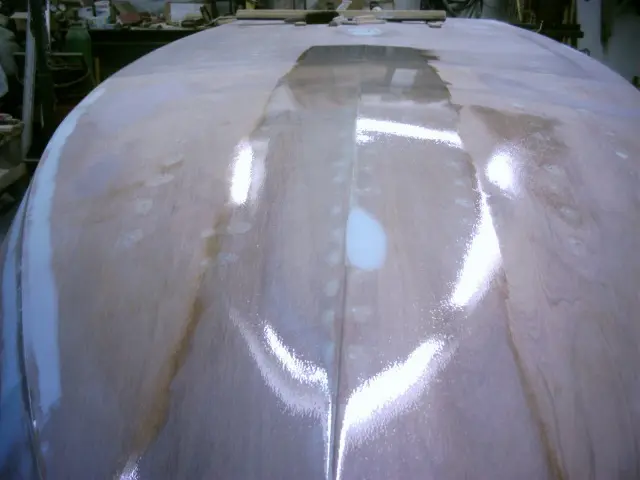
A test batch of white pigmented epoxy was mixed and applied. It would take quite a bit of pigment or several coats of epoxy to produce a truly opaque finish.
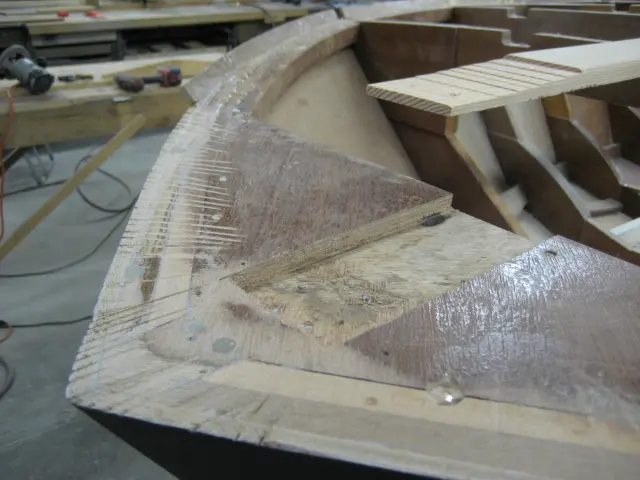
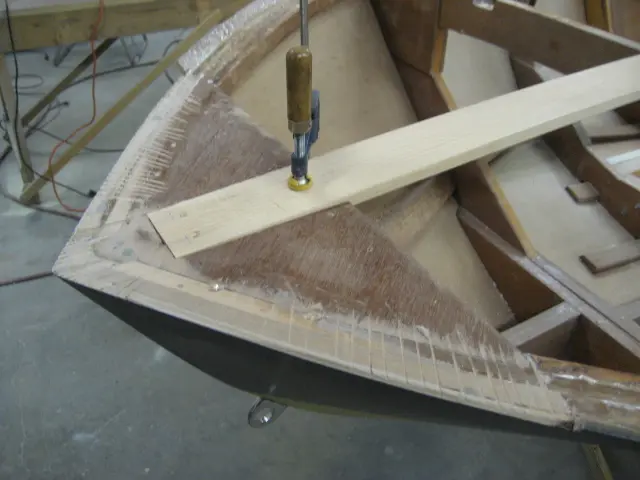
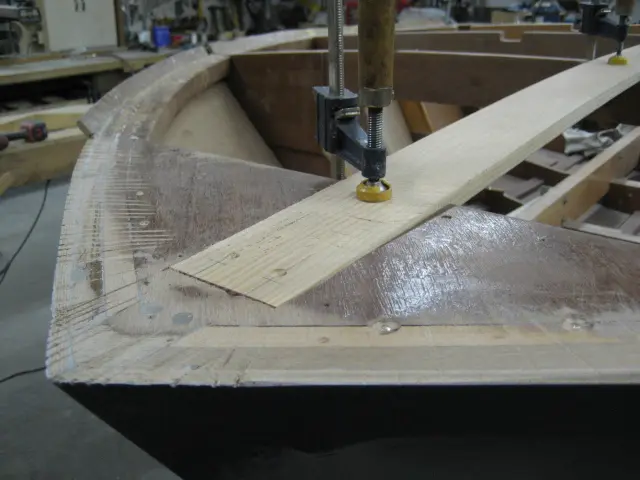
The breasthook was notched to a depth of 3/8"
The breasthook was notched to a depth of 3/8". The strongback was taper-notched from 3/8" at the leading edge to 1/8" at rear.
The tip of the strongback is flush with the breasthook's leading edge.
The sheer can now be faired.
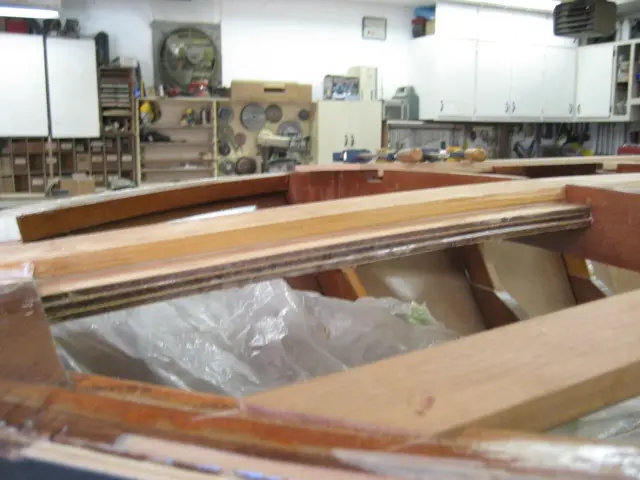
We'll be installing a stainless steel pop-up bow light in the strongback
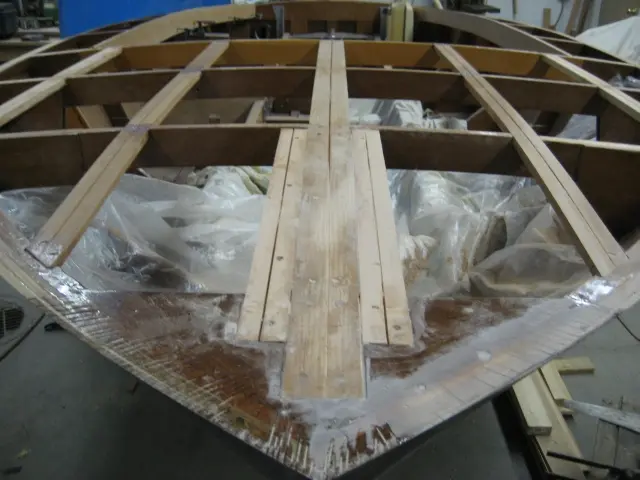
We'll be installing a stainless steel pop-up bow light in the strongback. This will require routing out a rather large hole which will seriously affect the member's integrity. We therefore laminated three pieces of 1/4" 5-ply marine grade plywood to the douglas fir strongback. This will retain it's curved shape.
Two douglas fir 1" x 2"'s were laminated to the plywood strips. A 3/8" dado was cut into the stock and the breasthook was routed to a depth of 3/8" to receive the two pieces.
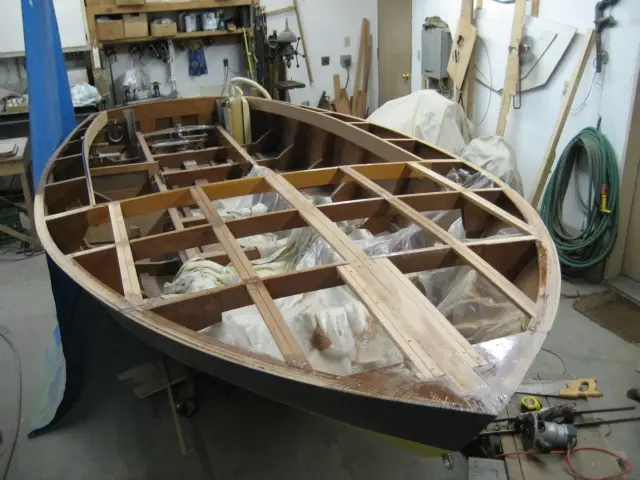
Initial deck fairing completed. Now we'll have to lay out and cut an opening for the pop-up bow light.