boatbuildlog

Hot Rod · new build

Launched

Glen-L Hot Rod

Make a book Feed The whole log, 45 entries and every photo, laid out as a book to print, bind and keep.
260
Entries
n/a
Hours
n/a
Written up afterwards
1203
Photos
Nov 2003
Started
Paint & Finish Link

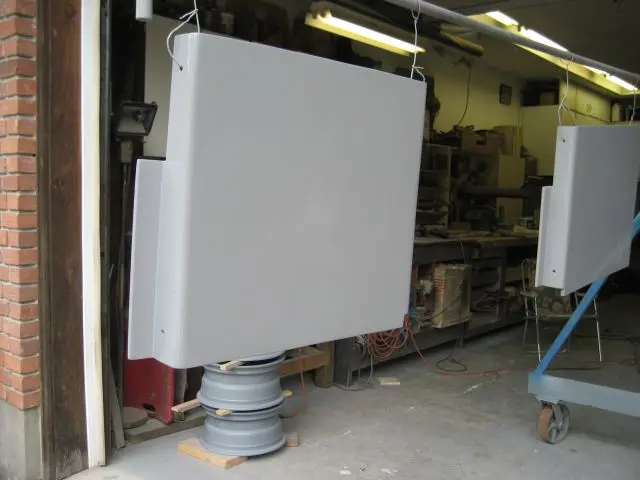
Jump seats and fuel tank: Parts were barrier coated with several rounds of West System epoxy, prepped with Dupont Ur

Parts were barrier coated with several rounds of West System epoxy, prepped with Dupont UroPrime 2K primer surfacer and topcoated with Dupont Imron urethane.

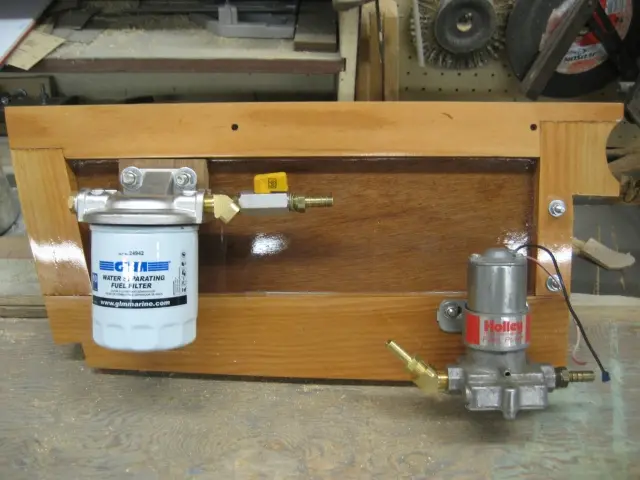
1–2. The electric fuel pump and fuel and water separator filter were fitted to the starboard seat base partition.

1 Hot Rod: Jump seats and fuel tank: Parts were barrier coated with several rounds of West System epoxy, prepped with Dupont Ur
2 Hot Rod: Jump seats and fuel tank: Parts were barrier coated with several rounds of West System epoxy, prepped with Dupont Ur
Paint & Finish Link

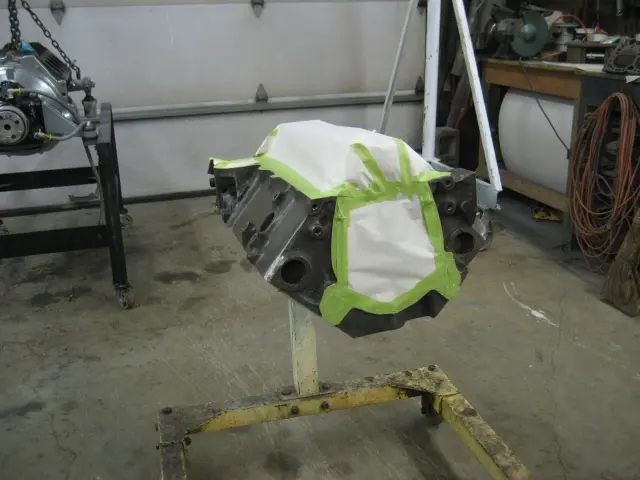
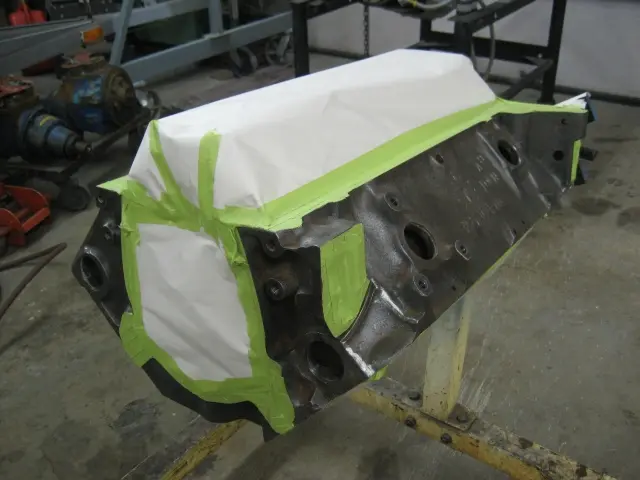
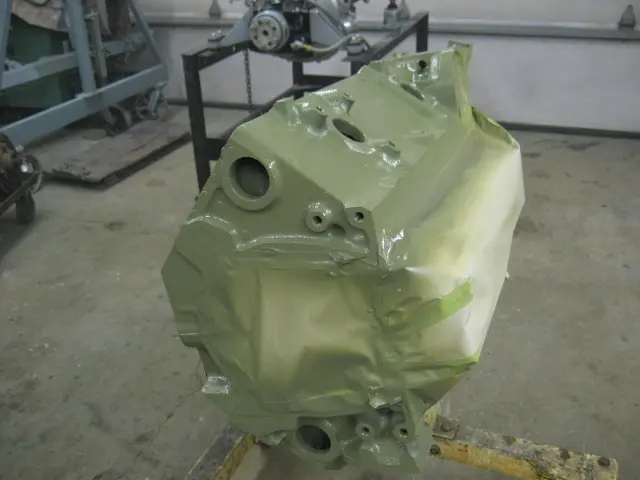
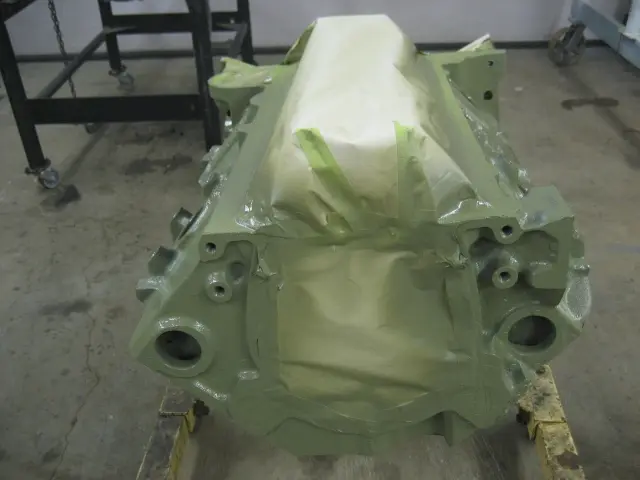
355 engine: Block was stripped to bare metal, prepped and masked to ready it for paint

1. Block was stripped to bare metal, prepped and masked to ready it for paint.

2, 4. Hydraulic roller retrofit The early style non-roller block was upgraded to a hydraulic roller setup by using a Comp Cams hydraulic roller retrofit kit (Comp # 12-417-8, Grind Number XM 270HR). Cam specs are as follows: Gross valve lift:.495 /.503 Duration @.006 tappet lift (Intake/Exhaust): 270° / 276° Duration @.050" lift (Intake/Exhaust): 218° / 224° Lobe separation: 112° Intake Centerline: 110°

3. Block was primed with DuPont 2580CR DTM urethane primer.

1 Hot Rod: 355 engine: Block was stripped to bare metal, prepped and masked to ready it for paint
2 Hot Rod: 355 engine: Block was stripped to bare metal, prepped and masked to ready it for paint
3 Hot Rod: 355 engine: Block was stripped to bare metal, prepped and masked to ready it for paint
4 Hot Rod: 355 engine: Block was stripped to bare metal, prepped and masked to ready it for paint
Paint & Finish Link

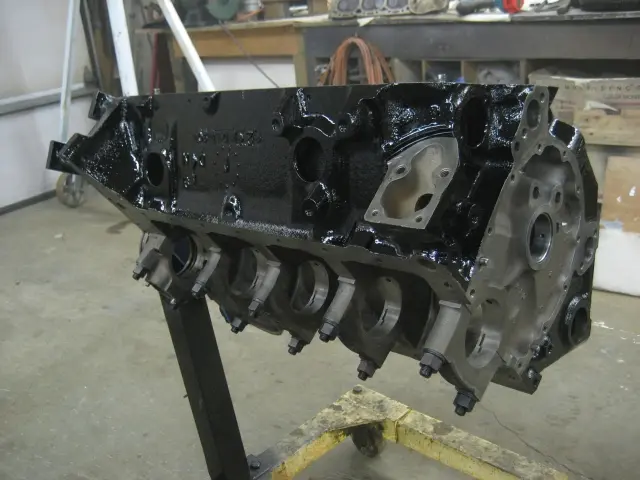
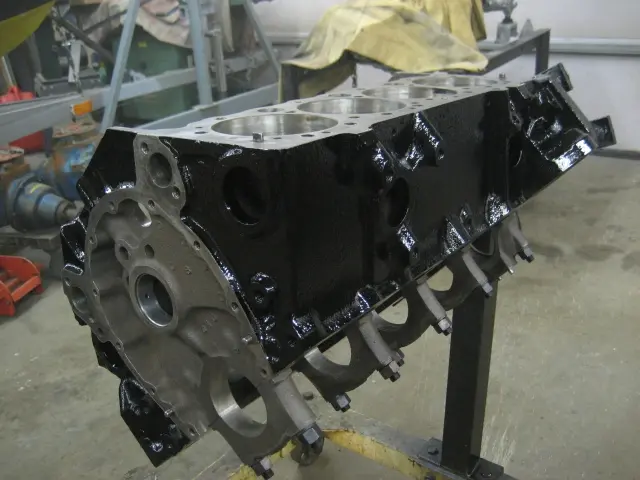
355 engine: Prior to painting, the block was sent out for hot tanking, magnafluxed to check it for cra

1. Prior to painting, the block was sent out for hot tanking, magnafluxed to check it for cracks and fitted with an ARP main stud kit. When switching from main cap bolts to studs, clamping force and tolerances will change. The main bearing caps were installed with the new studs and the block was align honed to restore the clearances.

2. Topcoat is Dupont Imron black urethane.

1 Hot Rod: 355 engine: Prior to painting, the block was sent out for hot tanking, magnafluxed to check it for cra
2 Hot Rod: 355 engine: Prior to painting, the block was sent out for hot tanking, magnafluxed to check it for cra
Paint & Finish Link

355 engine: The bottom portion of our custom built 12 quart oil pan received a coat of truck bed liner

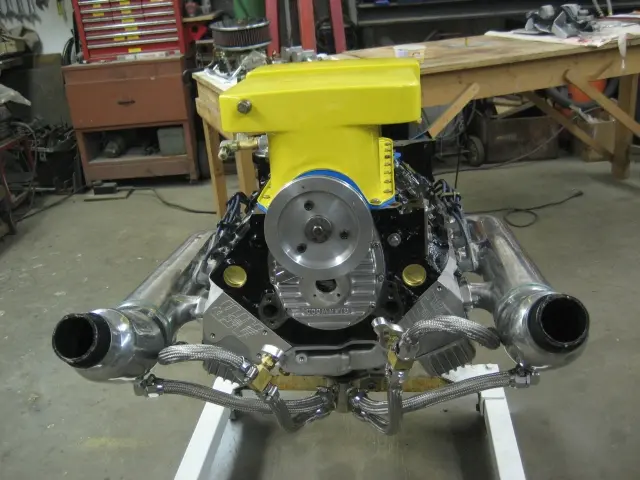
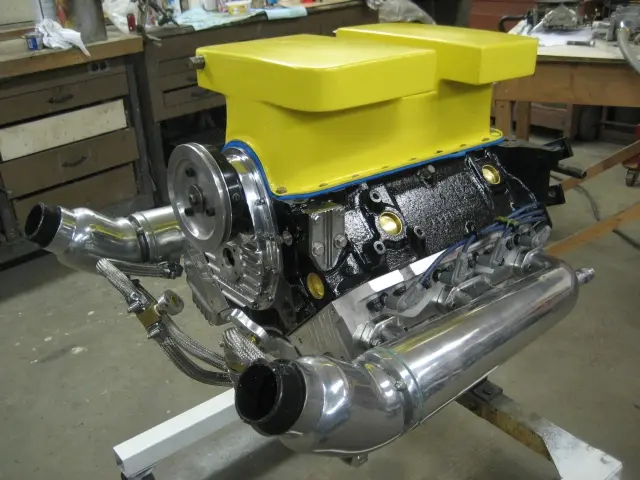
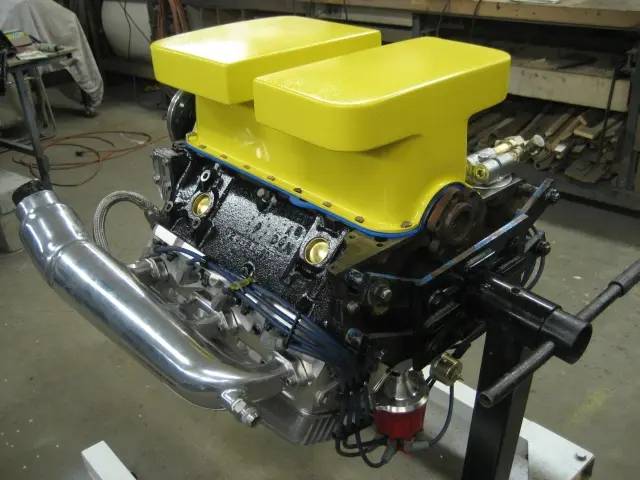
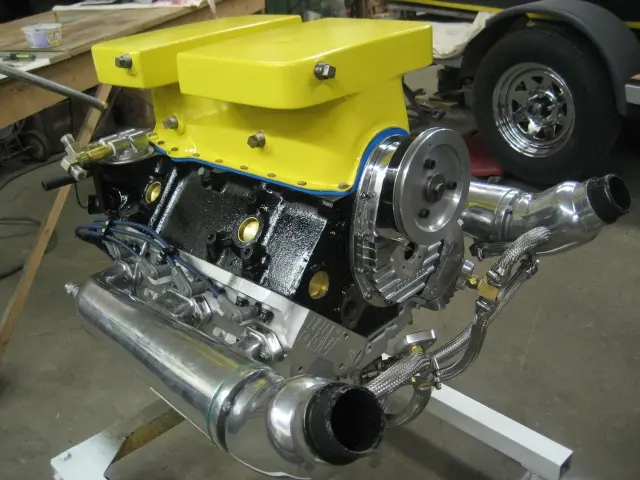
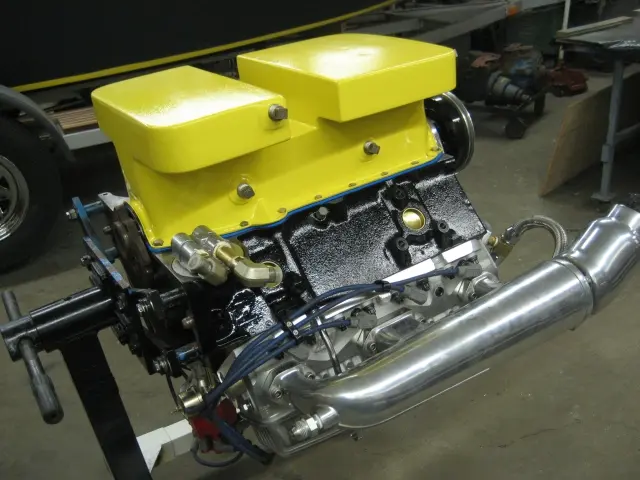
The bottom portion of our custom built 12 quart oil pan received a coat of truck bed liner and was freshened up with a new coat of paint.

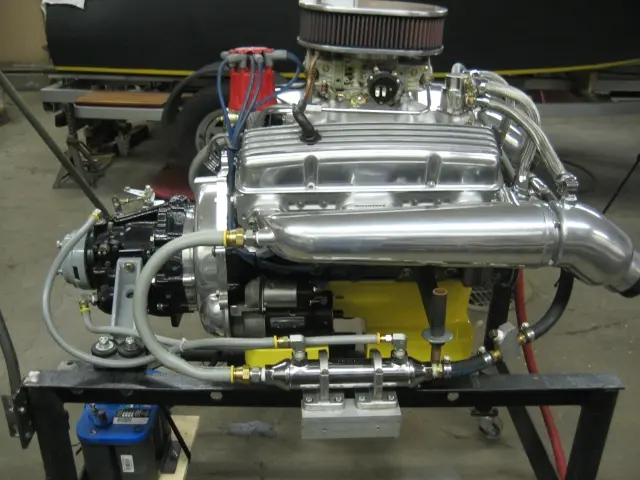
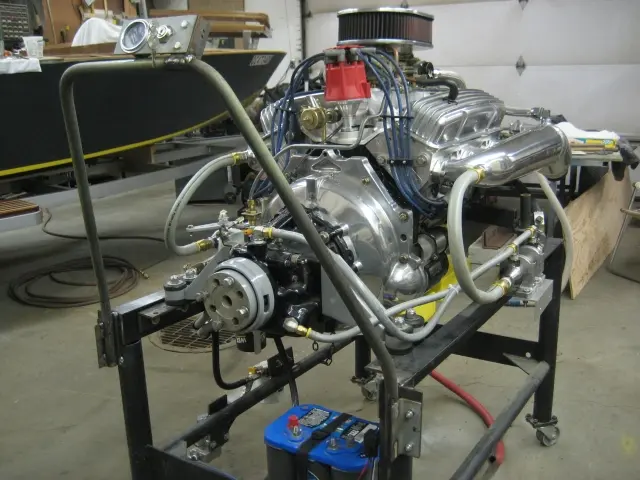
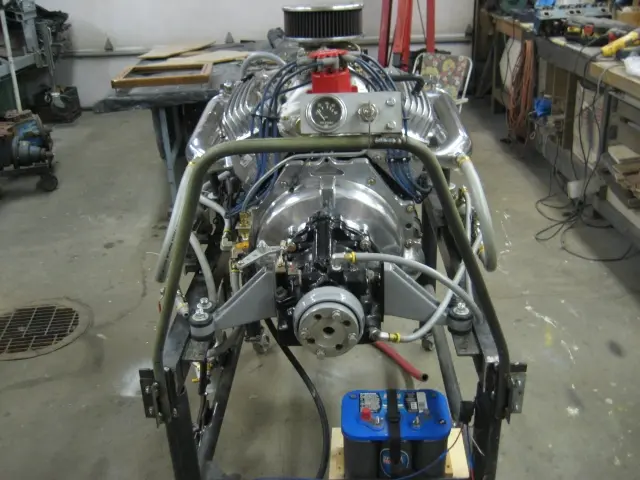
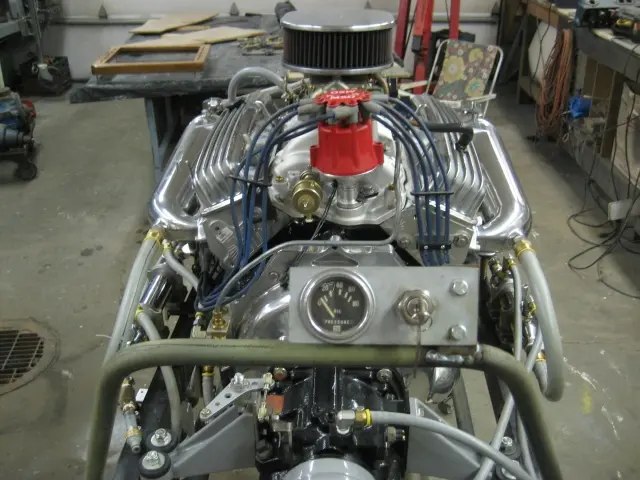
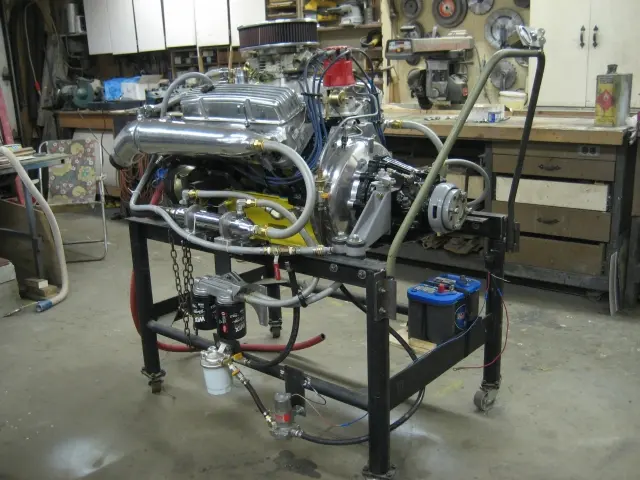
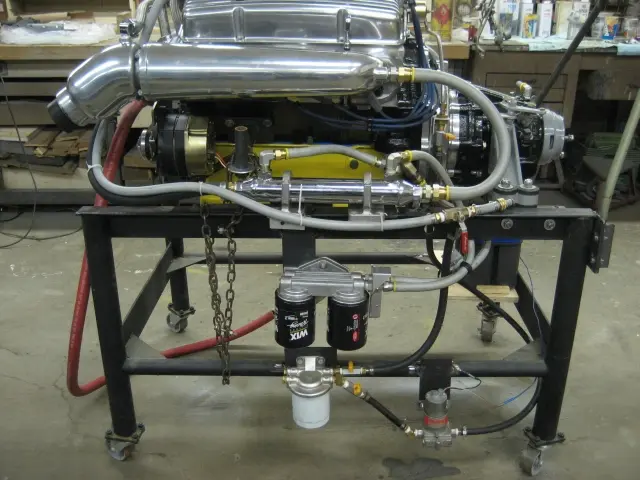
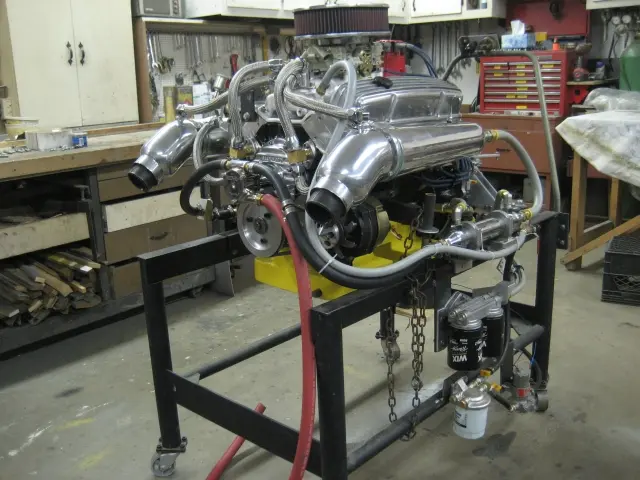
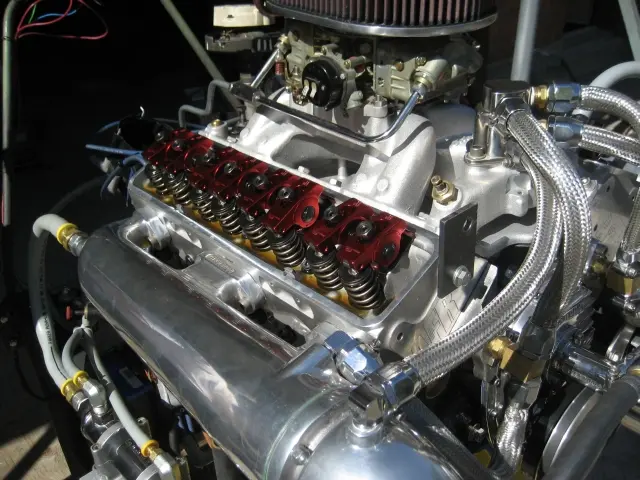
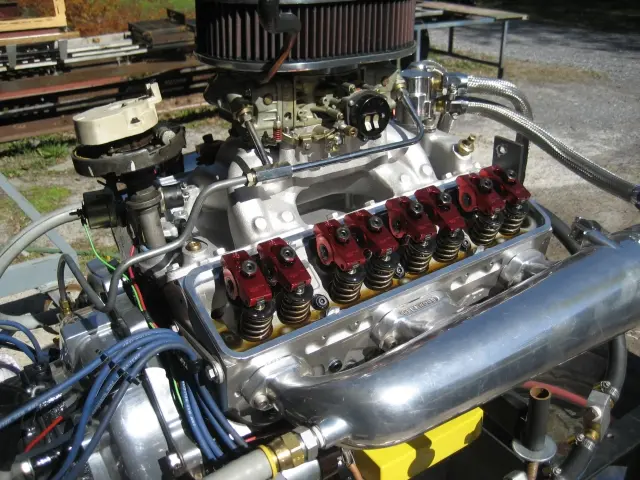
We've moved the engine from the assembly stand to the break-in stand. The new Edelbrock RPM Air Gap intake manifold adds several inches to the induction system's overall height. (Click the image for a higher resolution photo).

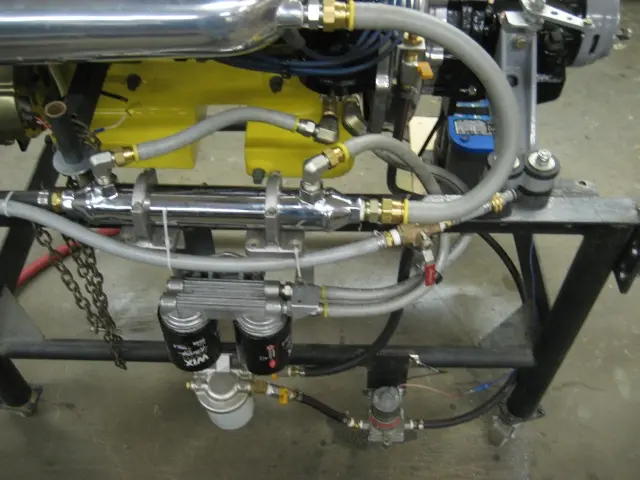
Transmission oil cooler is mounted on the Port side.

A compact Velvet Drive bellhousing mates the engine to Velvet Drive 71C 1:1 ratio hydraulic transmission.

Engine oil cooler and dual remote oil filters are installed on the Starboard side. We also had to plumb in a Holley marine electric fuel pump, relay and fuel filter.

Click the image for a higher resolution photo.

Click the image for a higher resolution photo.

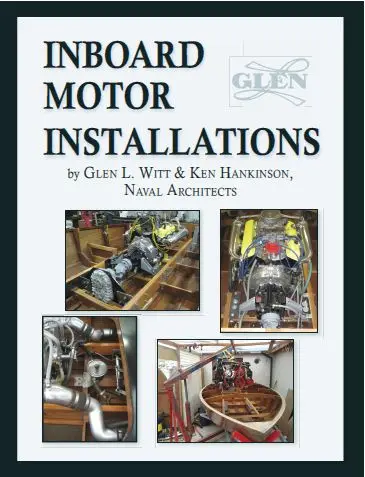
Inboard Motor Installations by Glen L. Witt and Ken Hankinson. It's a real honour to have photos of our engine installation on the cover of one of Glen's books. See the top row and bottom left corner of the book cover.

1 Hot Rod: 355 engine: The bottom portion of our custom built 12 quart oil pan received a coat of truck bed liner
2 Hot Rod: 355 engine: The bottom portion of our custom built 12 quart oil pan received a coat of truck bed liner
3 Hot Rod: 355 engine: The bottom portion of our custom built 12 quart oil pan received a coat of truck bed liner
4 Hot Rod: 355 engine: The bottom portion of our custom built 12 quart oil pan received a coat of truck bed liner
5 Hot Rod: 355 engine: The bottom portion of our custom built 12 quart oil pan received a coat of truck bed liner
6 Hot Rod: 355 engine: The bottom portion of our custom built 12 quart oil pan received a coat of truck bed liner
7 Hot Rod: 355 engine: The bottom portion of our custom built 12 quart oil pan received a coat of truck bed liner
8 Hot Rod: 355 engine: The bottom portion of our custom built 12 quart oil pan received a coat of truck bed liner
9 Hot Rod: 355 engine: The bottom portion of our custom built 12 quart oil pan received a coat of truck bed liner
10 Hot Rod: 355 engine: The bottom portion of our custom built 12 quart oil pan received a coat of truck bed liner
11 Hot Rod: 355 engine: The bottom portion of our custom built 12 quart oil pan received a coat of truck bed liner
12 Hot Rod: 355 engine: The bottom portion of our custom built 12 quart oil pan received a coat of truck bed liner
13 Hot Rod: 355 engine: The bottom portion of our custom built 12 quart oil pan received a coat of truck bed liner
14 Hot Rod: 355 engine: The bottom portion of our custom built 12 quart oil pan received a coat of truck bed liner
15 Hot Rod: 355 engine: The bottom portion of our custom built 12 quart oil pan received a coat of truck bed liner
16 Hot Rod: 355 engine: The bottom portion of our custom built 12 quart oil pan received a coat of truck bed liner
Paint & Finish Link

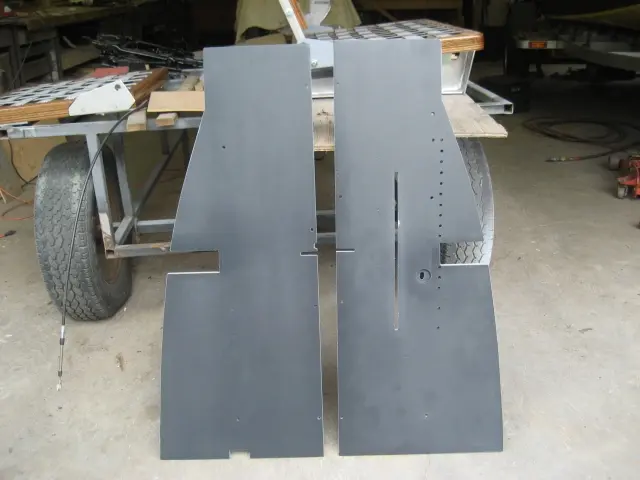
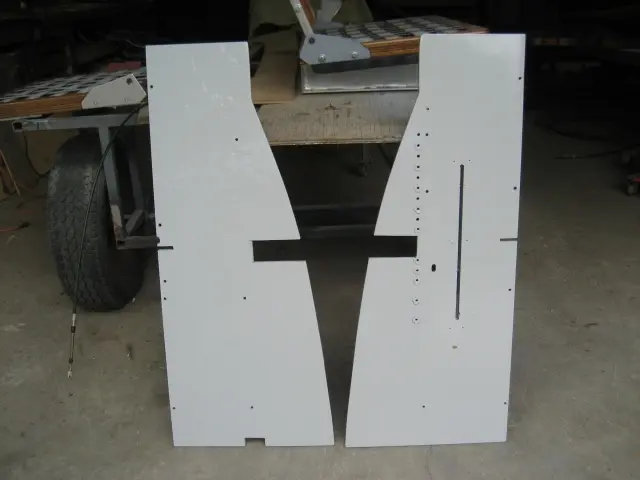
Seats: Soles were cut from 1/2" exterior grade fir plywood

Sole was covered with outdoor carpet. We'll upgrade to marine grade carpet when the boat is totally finished !

1. Soles were cut from 1/2" exterior grade fir plywood. Both sides were laminated with 10 ounce fiberglass cloth and West System epoxy. Once sanded, the parts were primed with DuPont Uro Prime urethane primer surfacer.

2. The 'down' side was topcoated with DuPont Imron single stage two-part urethane paint. Also visible is the adjustment slot for the foot pedal. We'll have more on the foot pedal soon !

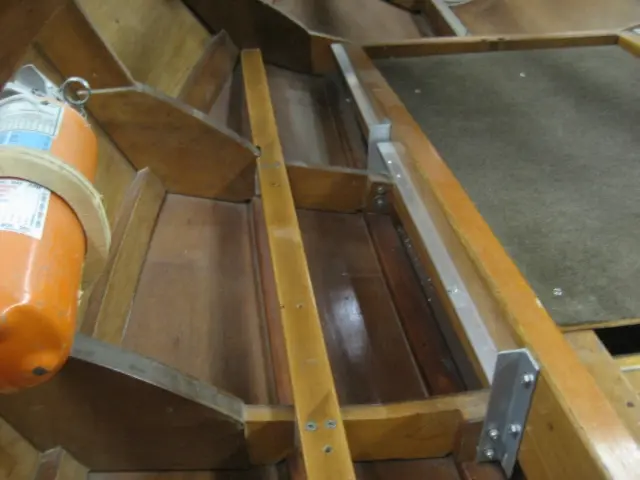
3. Soles rest on 1"x2" douglas fir battens. An aluminun angle ledger strip was fastened to the engine stringer.

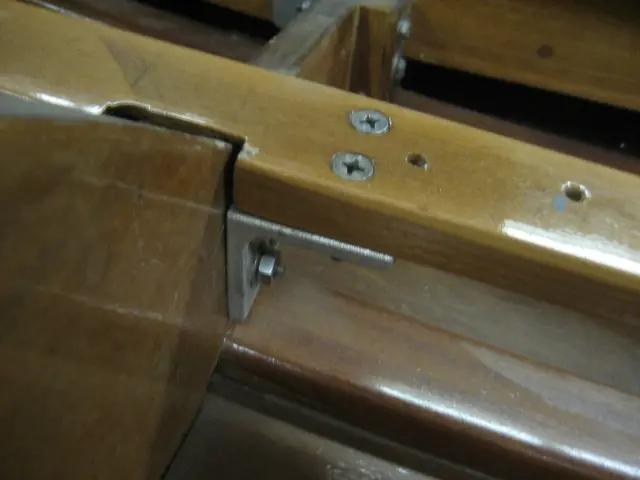
4. Battens are fastened to aluminum angles bolted to the side of each frame. Fastening the batten through the top of the frame would allow moisture to penetrate into the frame and eventually cause it to rot.

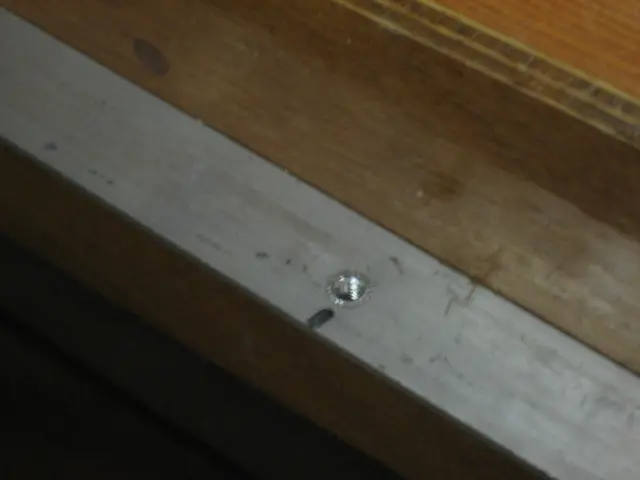
5. We installed Sert-a-Nuts so that the soles can be easily removed without compromising fastener thread holes. They're like a blind rivet with a built-in thread.

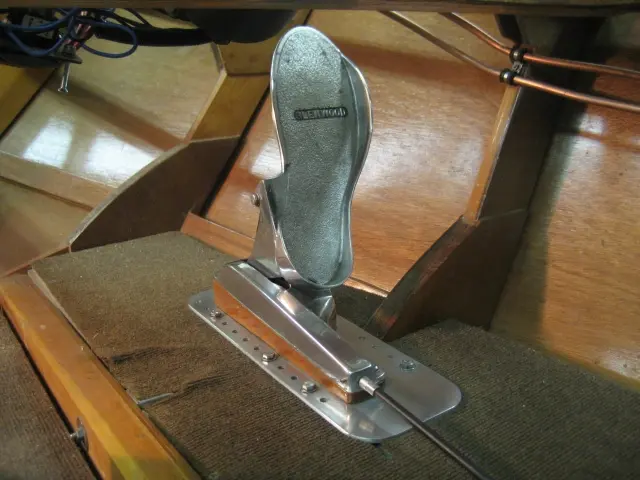
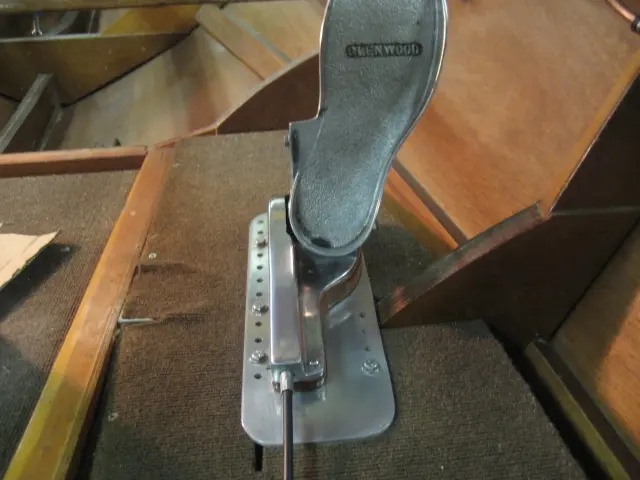
6. The driver's seat is adjustable (8" of horizontal travel) so the Glenwood foot pedal is also adjustable.

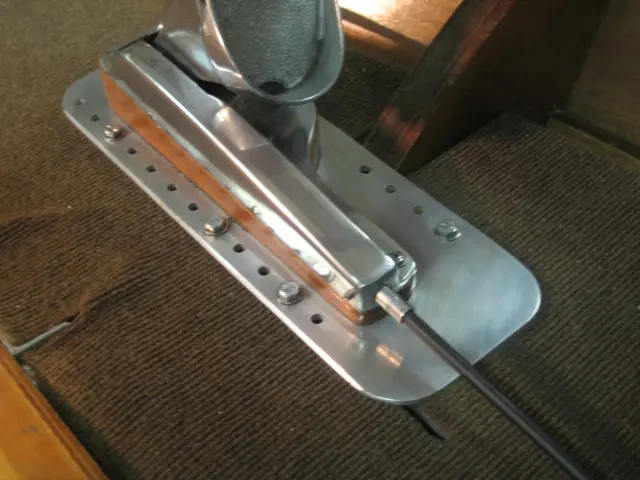
7. The pedal is mounted to an aluminum plate which can be moved by loosening the three bolts on the left and removing the bolt on the right.

8. Once the pedal has been repositioned, the bolt on the right is inserted into a new hole position and all bolts are tightened.

1 Hot Rod: Seats: Soles were cut from 1/2" exterior grade fir plywood
2 Hot Rod: Seats: Soles were cut from 1/2" exterior grade fir plywood
3 Hot Rod: Seats: Soles were cut from 1/2" exterior grade fir plywood
4 Hot Rod: Seats: Soles were cut from 1/2" exterior grade fir plywood
5 Hot Rod: Seats: Soles were cut from 1/2" exterior grade fir plywood
6 Hot Rod: Seats: Soles were cut from 1/2" exterior grade fir plywood
7 Hot Rod: Seats: Soles were cut from 1/2" exterior grade fir plywood
8 Hot Rod: Seats: Soles were cut from 1/2" exterior grade fir plywood

Nobody else here is logging a Hot Rod yet. See the boat.