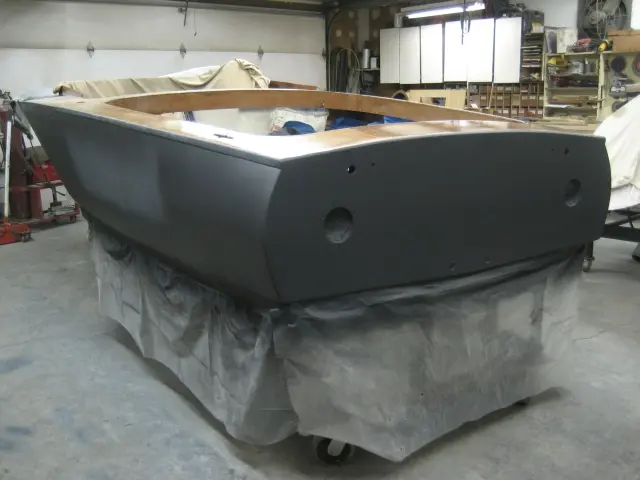
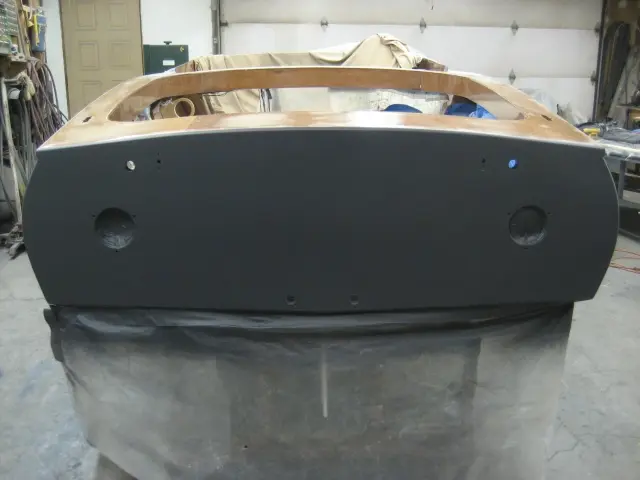
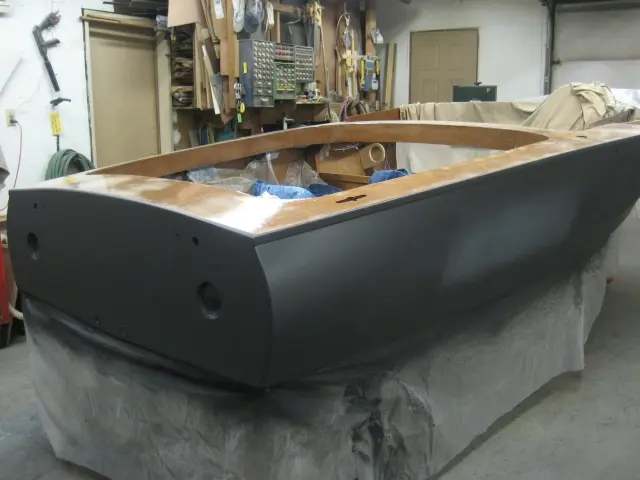
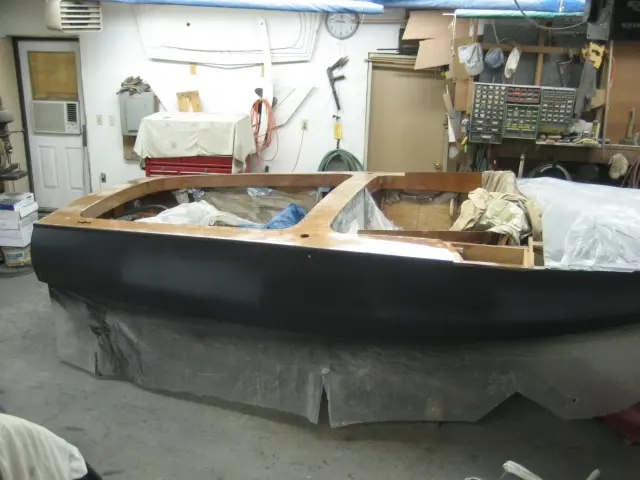
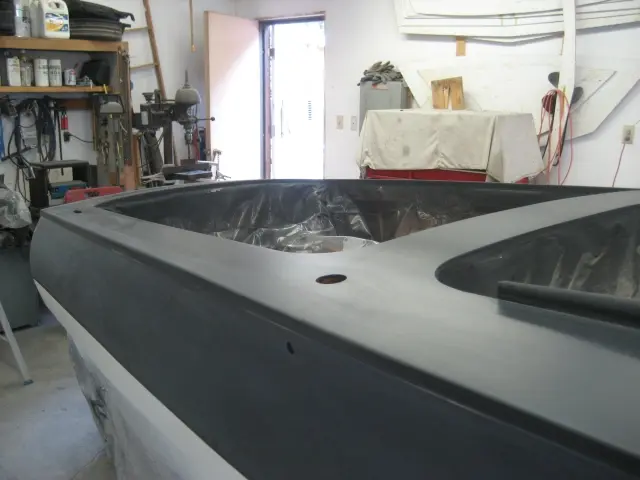
Deck: The rear deck was sanded with an inline air file with 40 grit sandpaper and blocked with a
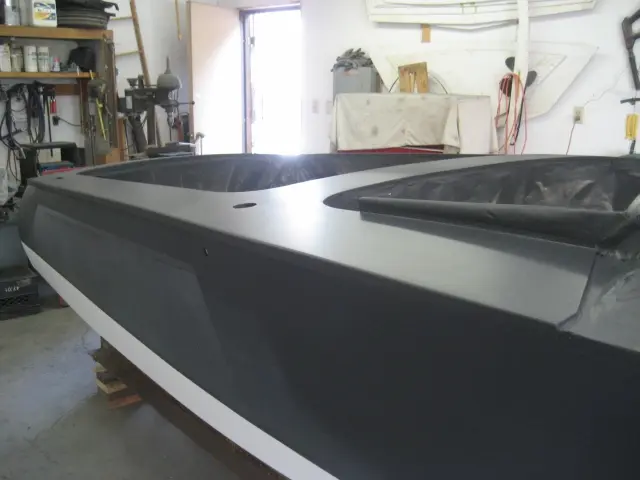
1. The rear deck was sanded with an inline air file with 40 grit sandpaper and blocked with a longboard. The initial sanding was followed up with two barrier coats of West System epoxy catalysed with 207 hardener spaced three hours apart. The extra coats provide a thick sanding base. The hull sides were also air filed and blocked with a longboard. Surface was wiped down with DuPont Wash & Wipe (wax, grease and silicone remover) prior to spraying several rounds of DuPont URO Prime urethane primer surfacer.
2. Transom deck to hull fiberglass was feathered, blocked and primed. Many of the DuPont industrial coatings we've used over the years have been phased out because they can't meet the strict environmental VOC regulations.
3. The whole side of the hull was blocked and primed to improve the surface quality.
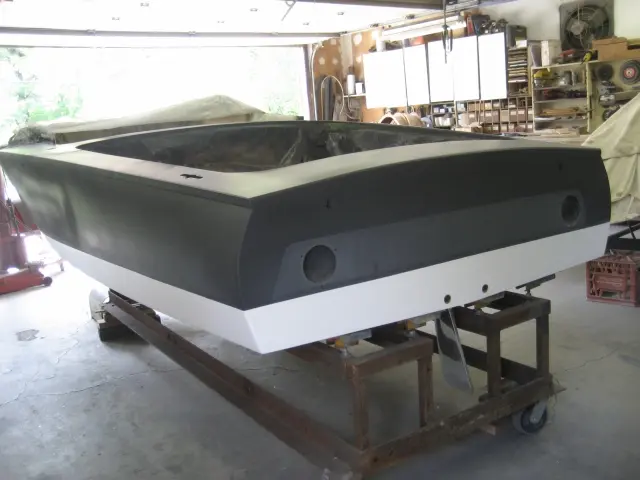
Deck: A transit level was used to mark a 6" waterline on the hull
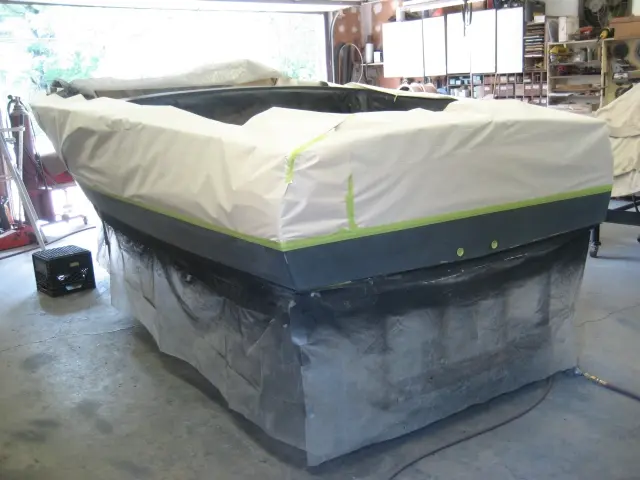
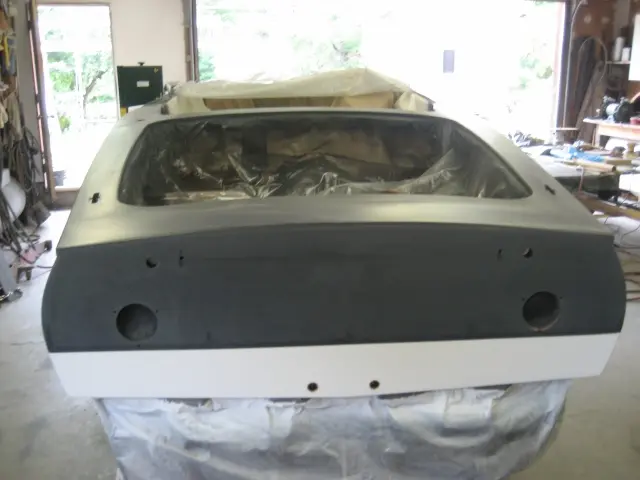
1. A transit level was used to mark a 6" waterline on the hull. It was taped, masked and prepped.
2. We applied two rounds of DuPont 1141S 2K urethane primer-filler. This is a very fine finish 3 part white primer we use as a sealer for light colored topcoats. We'll be shooting Corvette yellow over this base coat.
3. The deck is ready for blocking and a second round of primer-surfacer.
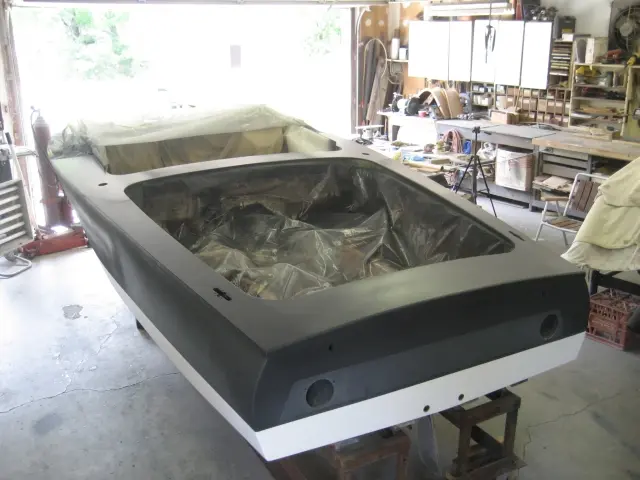
Deck: Not much new to see here, just more blocking and priming until the panels are flawless !
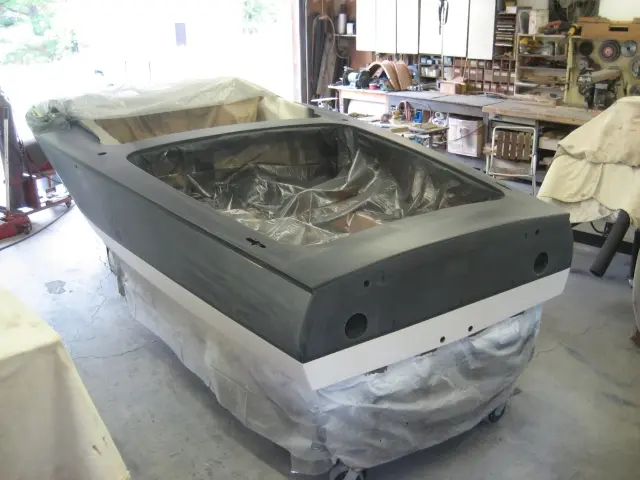
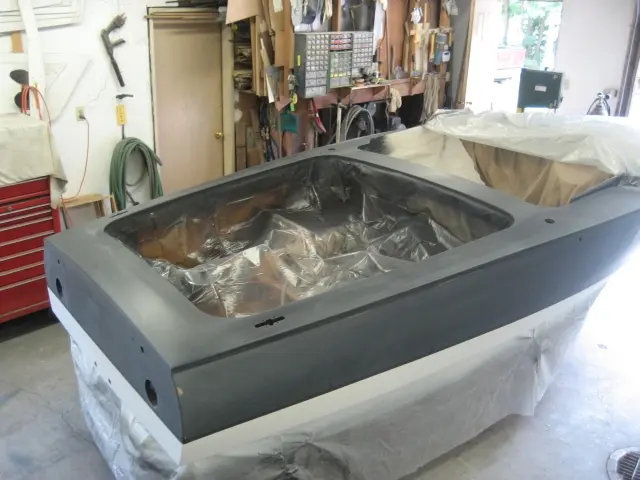
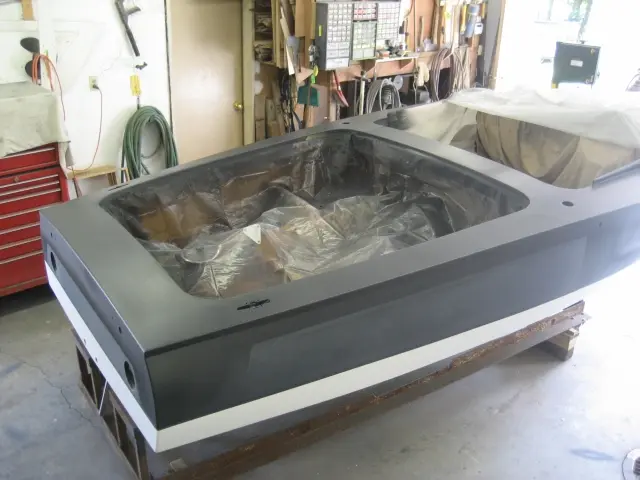
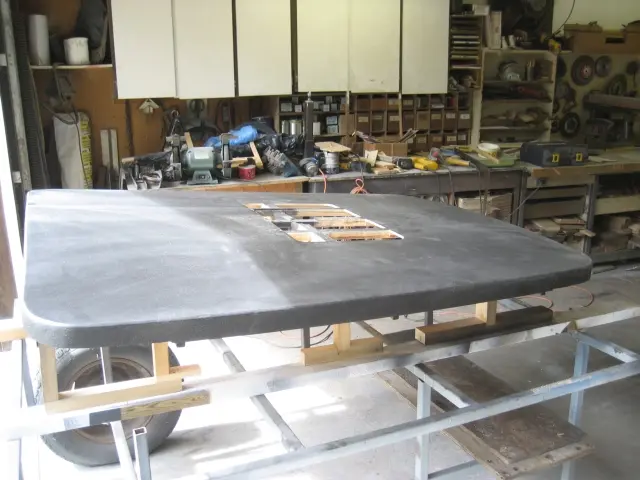
1. Not much new to see here, just more blocking and priming until the panels are flawless ! The deck was blocked with 40 and 100 grit paper on the inline air file. This was followed up with the longboard, by hand. A round of 3M Marine body filler was applied to fill pinholes and minor imperfections and sanded out. A second round of primer was applied.
2. If the second round of primer blocks out without any sanding break-throughs, a sealer coat will be applied. Normally this would be followed up with the final color topcoat, but we're anxious to hit the water, so the paint will be done once the boating season is over.
4. If you compare this photo to the same shot 5 photos back, you can see the surface has improved dramatically. We'll keep repeating the process until we're happy with the finish !
Deck: With the deck plywood installed, it's time to build up two layers of ten ounce fiberglass
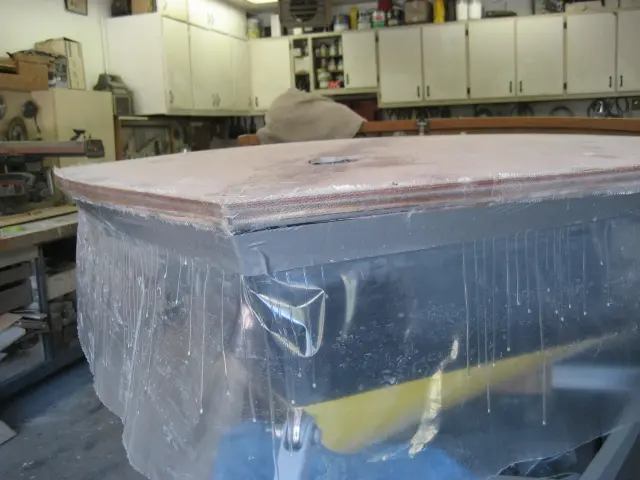
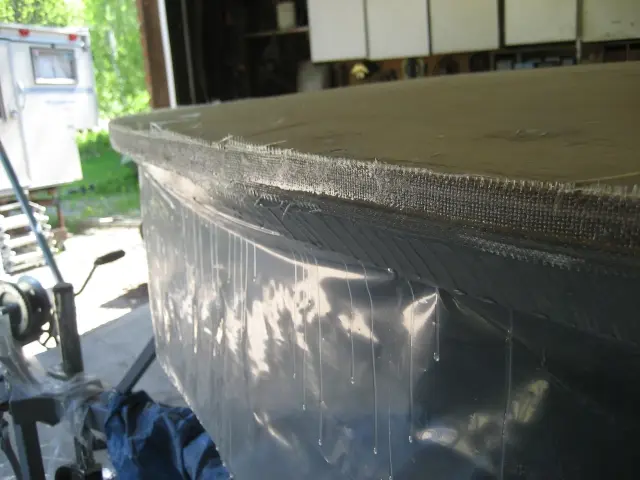
1. With the deck plywood installed, it's time to build up two layers of ten ounce fiberglass cloth to form a 'shoebox' joint along the sheer. This deck-to-hull joint is used in fiberglass boats and saves a lot of time as the deck cloth doesn't overlap the hull, only a 3/4" wide strip at the sheer.
2. The deck's underside will be encapsulated with two coats of West System resin catalyzed with 207 Special Coating hardener. The flotation billets are getting a few more rounds of body filler to get them ready for paint. We'll be fiberglassing the deck tomorrow...
12
Nobody else here is logging a Hot Rod yet.
See the boat.