Jim Norman's 20 foot houseboat, built in his northern New Jersey driveway from 2015 to 2021. The design started from Roy Schreyer's Dianne's Rose, stretched three feet and reworked into his own. Okoume plywood hull over sawn frames and bulkheads, a cabin of cedar posts and laminated roof beams sheathed in pine beadboard, and a fiberglassed arched roof with gull wing panels over the aft deck. Launched on the Hackensack River in May 2021, she now cruises Lake Hopatcong, where she took the Ladies' Choice award at the 2024 antique and classic boat show.
Make a book
Feed
The whole log, 191 entries and every photo,
laid out as a book to print, bind and keep.
On all days, but especially on this day, I feel fortunate to be alive and doing things...
Sept. 11, 2017: On all days, but especially on this day, I feel fortunate to be alive and doing things I love to do. I do not take that lightly or for granted. Here's the the new face of the transom, laminated over the old one. Much better, in my opinion. You can see a bit of the old one where I have not yet cut it away for the motor mount.
I've decided to experiment with sound-deadening materials in the area of the outboard...
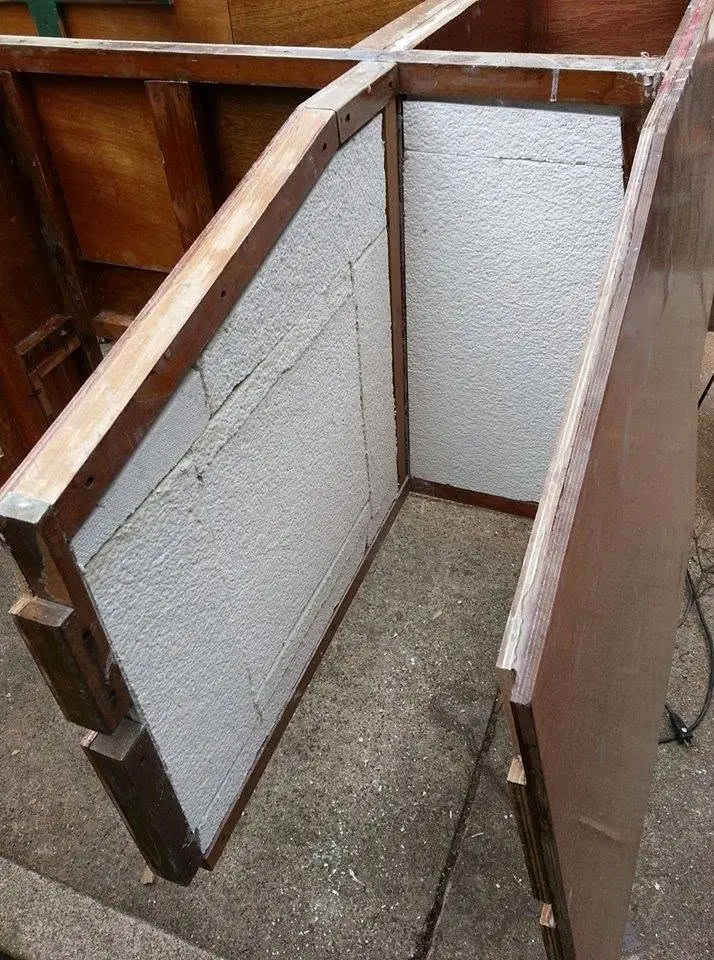
Sept. 18, 2017 -- I've decided to experiment with sound-deadening materials in the area of the outboard motor, although noise will not be a problem if I decide to go with electric power. A high school friend from (yikes!) 60 years ago, Rich Venza, suggested using acoustic ceiling tiles. Here are two thicknesses of tiles, for a total of 1-1/2 inches of sound attenuation. I have not yet covered them up with plywood, but when I knock on the other side, all I hear is a muffled thud instead of a sharply ringing rap. I have confidence that this will work quite well. Thanks, Rich!
It's time to close in the hull, starting with bottom panels.
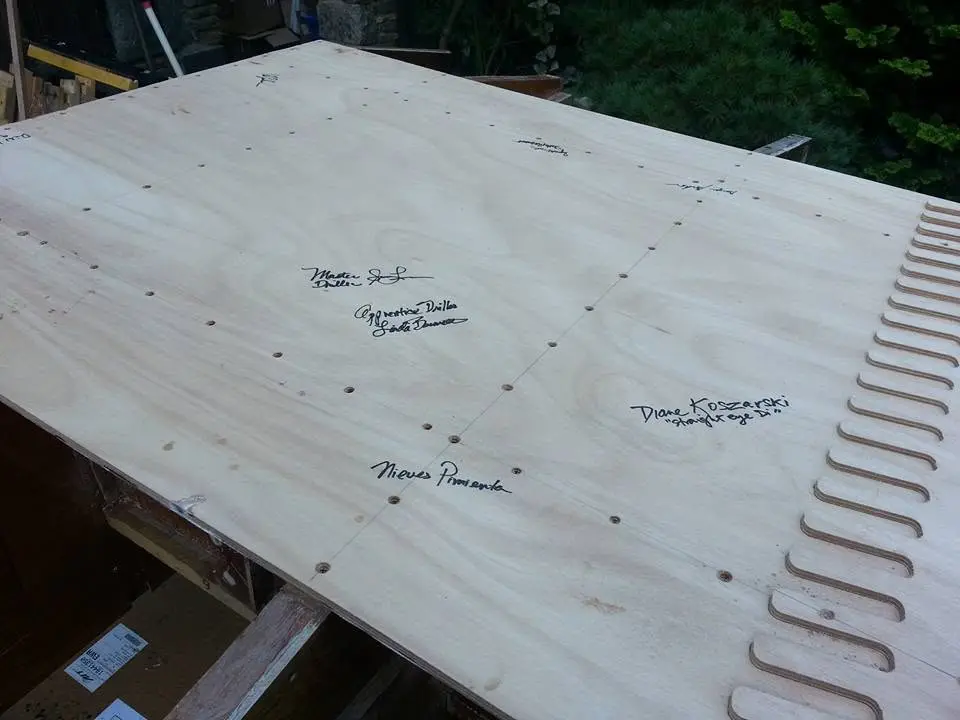
September 24, 2017. It's time to close in the hull, starting with bottom panels. I've decided to use the services of Chesapeake Light Craft, in Annapolis, Md., to deliver plywood panels that are pre-cut with finger joints, formed on their huge computer numerically controlled routing table. Traditionally, multiple sheets of plywood were joined to increase length by using "scarf" joints -- gradual tapers planed into the the edges of the plywood with an 8-to-1 ratio of length to thickness, then glued and clamped. But I think using CLC's finger joints will save me a lot of time and give me a more positive connection. You may notice those signatures on the piece of plywood near the stern. I celebrated the installation of the first hull panel by inviting friends to come over and participate in the drilling screwing and gluing. When we finished, they all signed their names to the work. Of course, they'll all eventually be covered over with paint, but we all know they're there.
Here's the inside surface of the second bottom panel, prepared for installation.
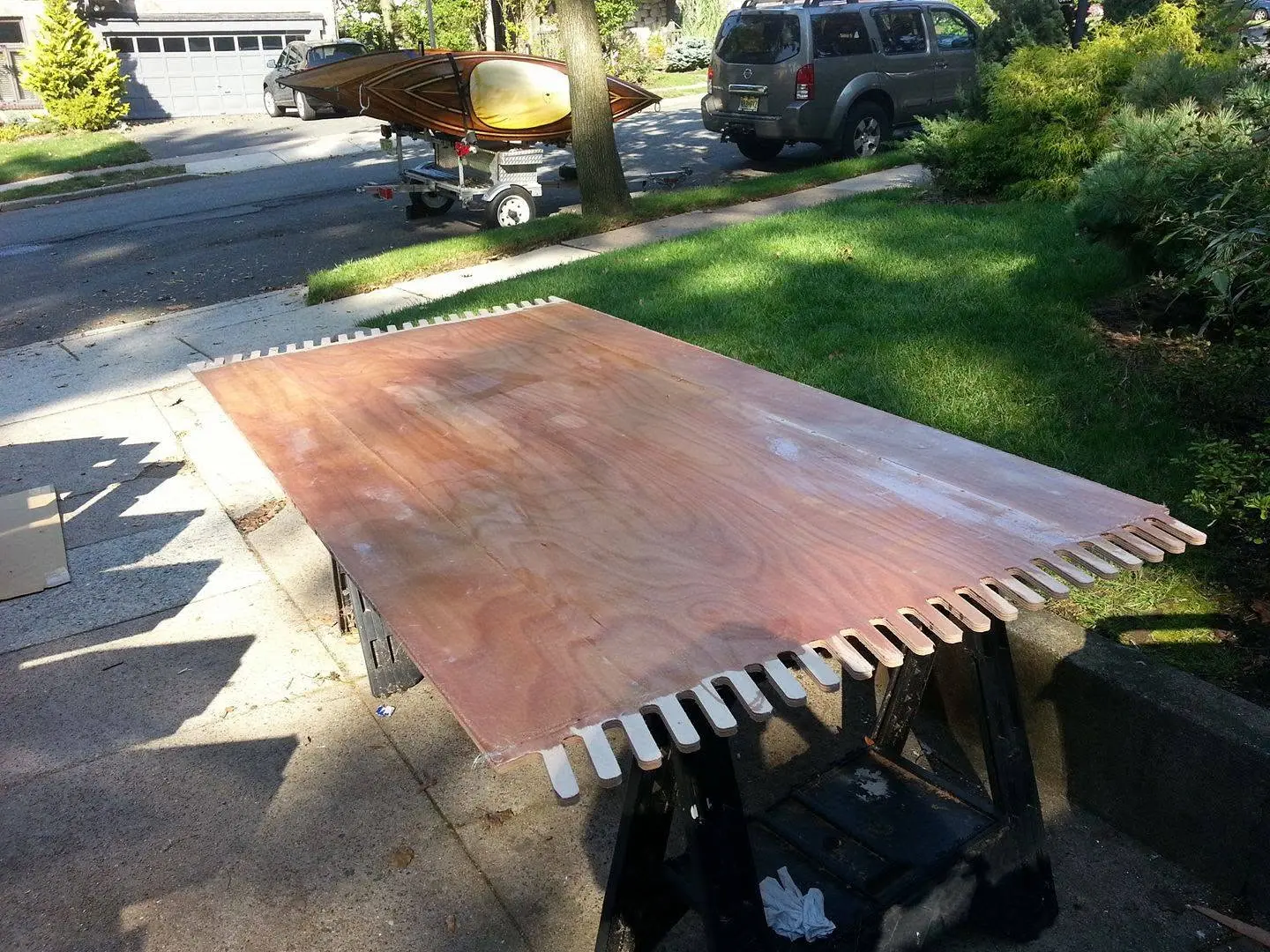
Sept. 25, 2017: Here's the inside surface of the second bottom panel, prepared for installation. Each of these hull panels will be sealed with epoxy and fiberglass fabric before being installed, because it's easier to do it on saw horses than working upside-down while lying on my back under the growing hull. It's still a little tacky so I'll wait until tomorrow to install that and then I'll get back to other fiberglassing jobs in the stern compartments. So that's it for today. Tomorrow is another day.
Some say that with a long enough lever and a well placed fulcrum, you can move the world.
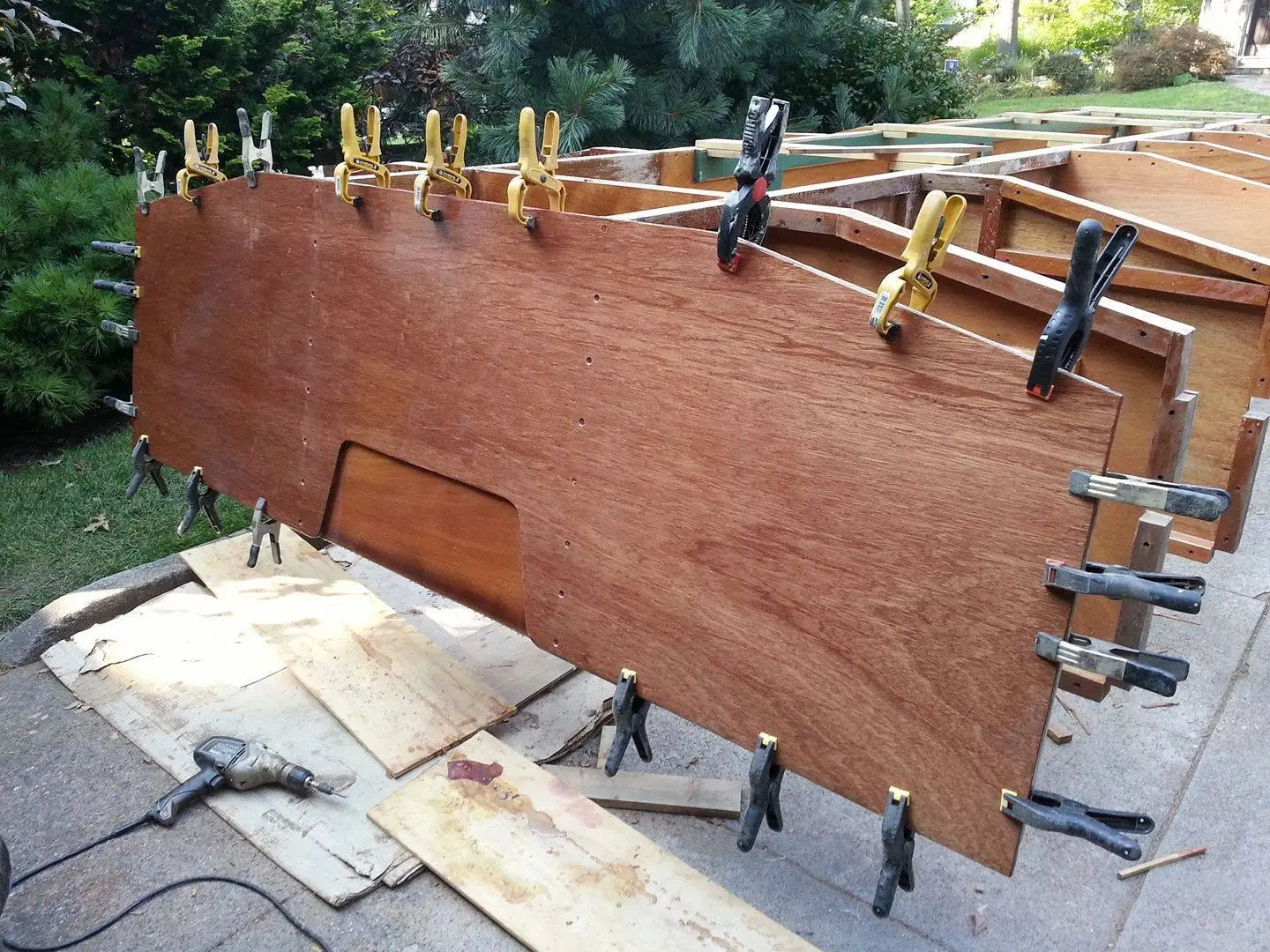
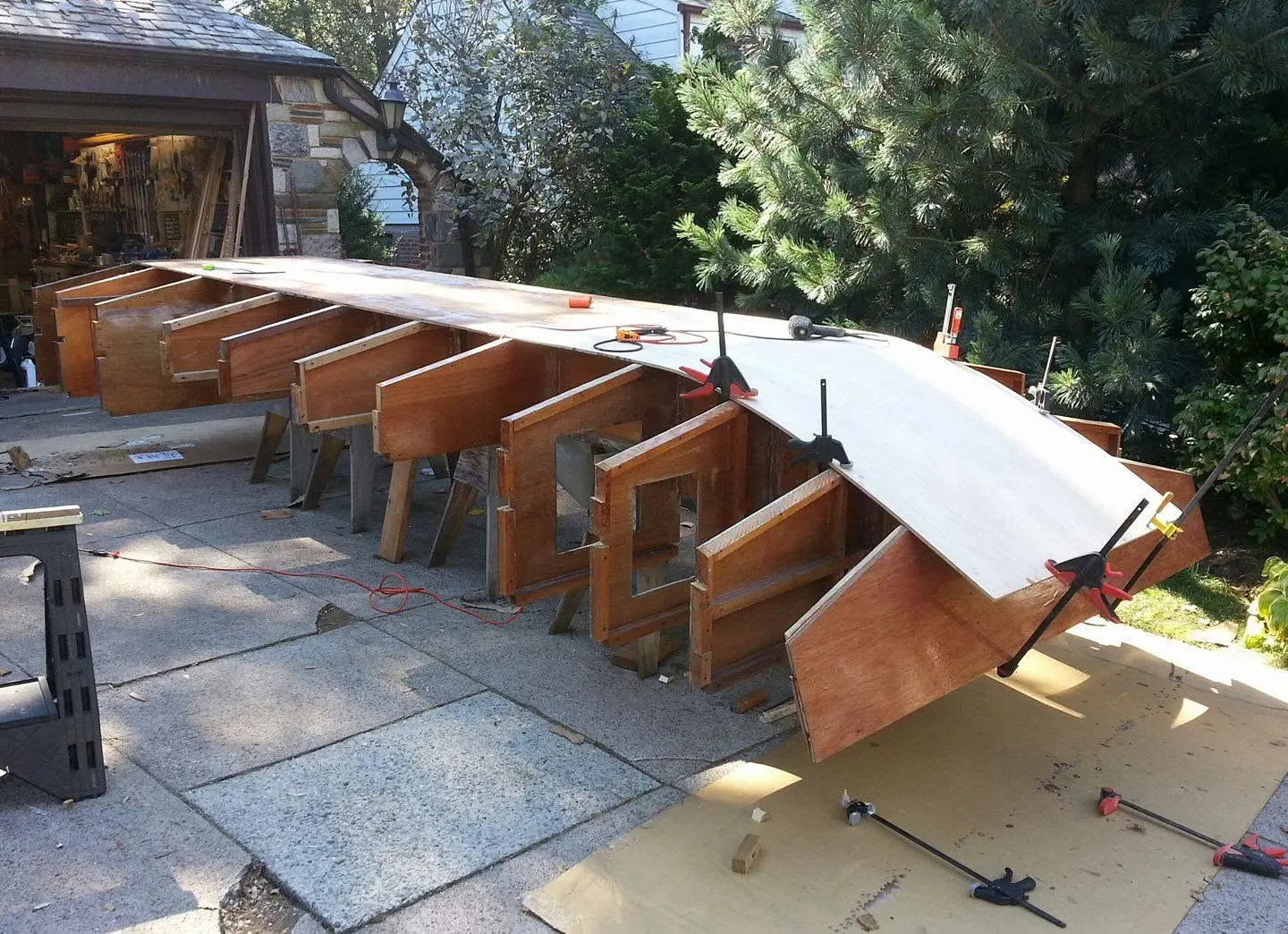
Sept. 28, 2017. Some say that with a long enough lever and a well placed fulcrum, you can move the world. That may be on my bucket list, but for now, I am satisfied with bending half-inch marine plywood around the curve of the bow of the hull of the houseboat-to-be. It might be easier with run-of-mill construction-grade plywood from the big box home center, but with this high quality seven-layer cake that's certified by Lloyd's of London to have no internal voids, bending seems not to be in its nature. "How can you possibly bend it?" asked an architect friend. "I'll bend it with my mind," I said. And so I did, with the help of six long bar clamps. By the way, I deliberately used an over-long sheet of plywood, knowing that I could use the extra length as a lever to help muscle it into position. Today the houseboat; tomorrow the world!
Nobody else here is logging a Jersey Girl yet.
See the boat.