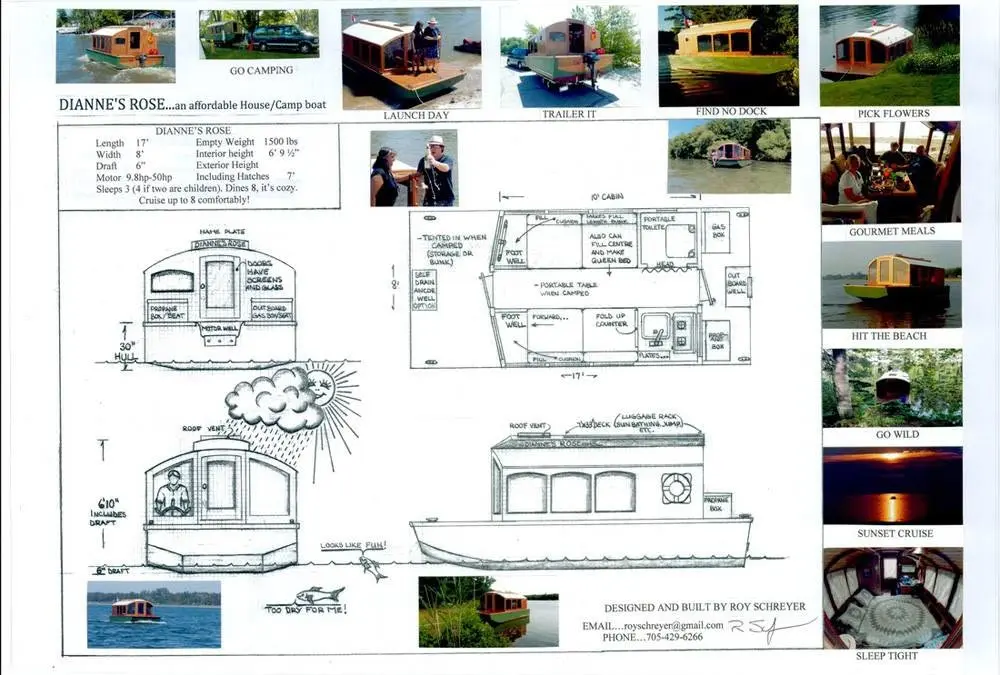
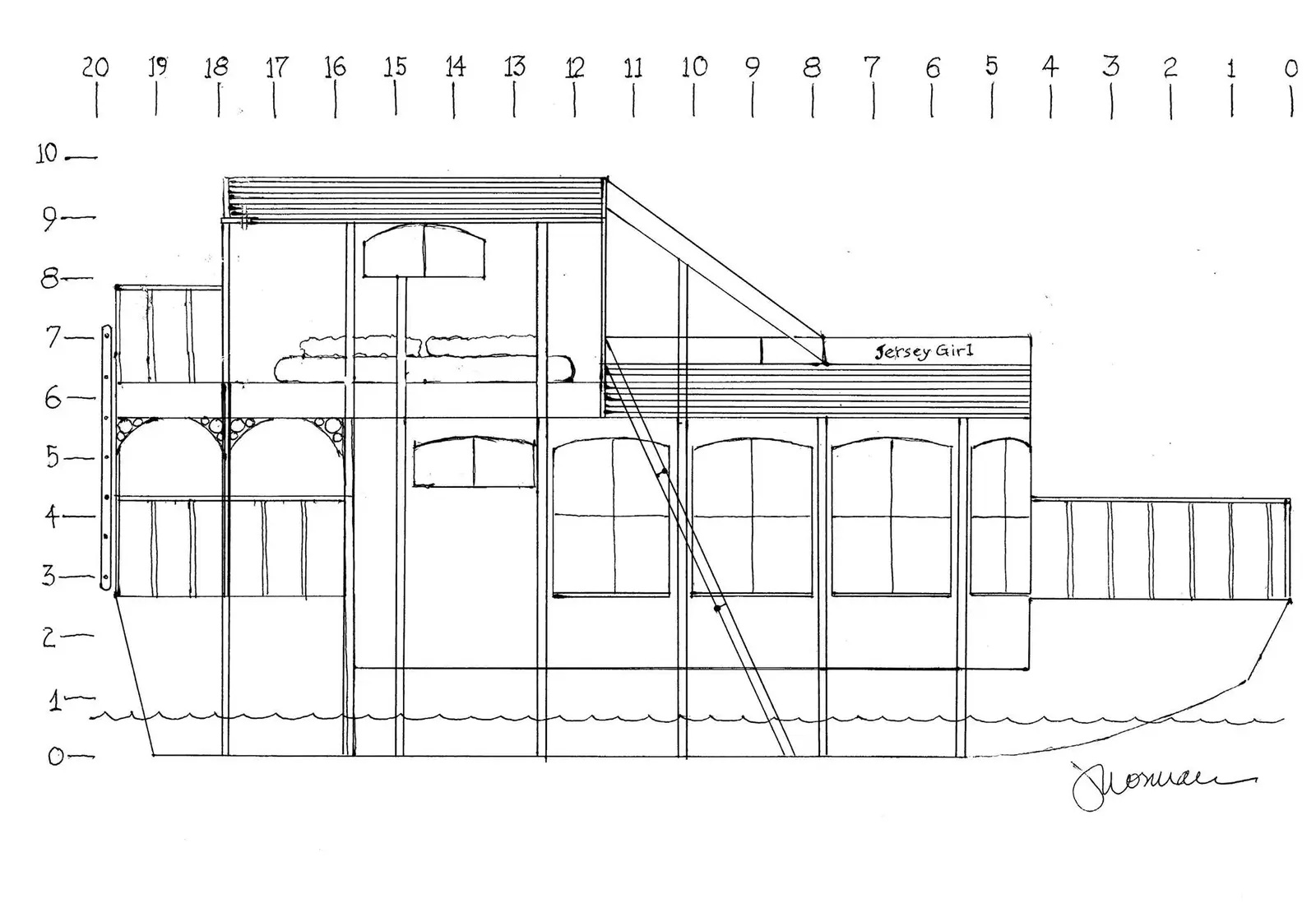
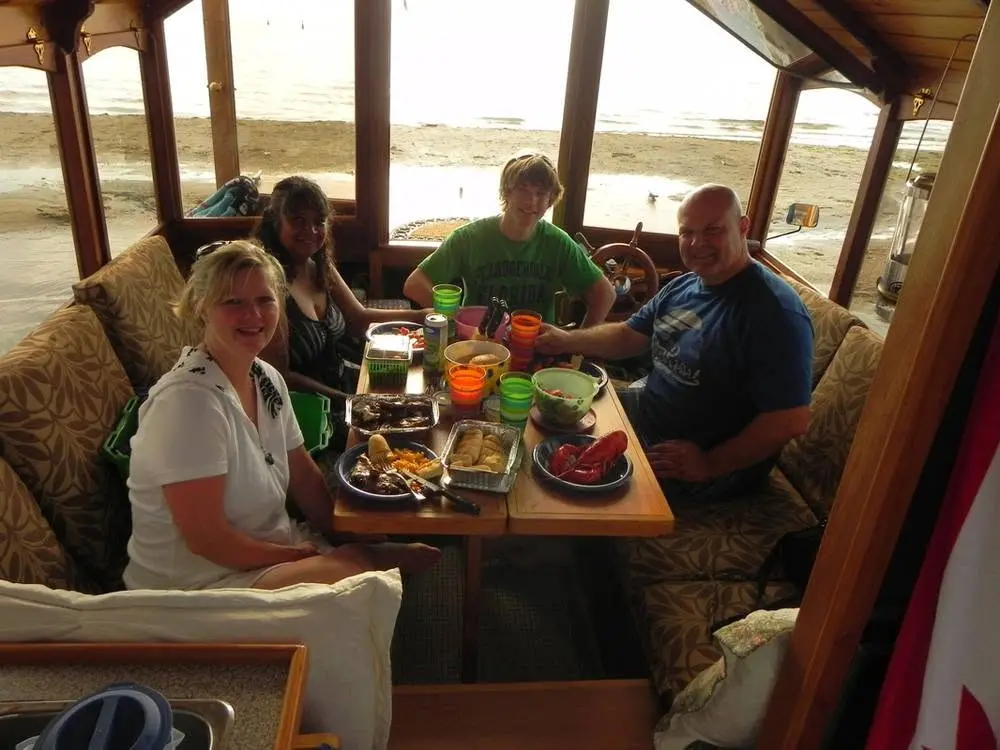
Intrigued by the "tiny house" phenomenon, I stumble across this plan for a tiny houseboat.
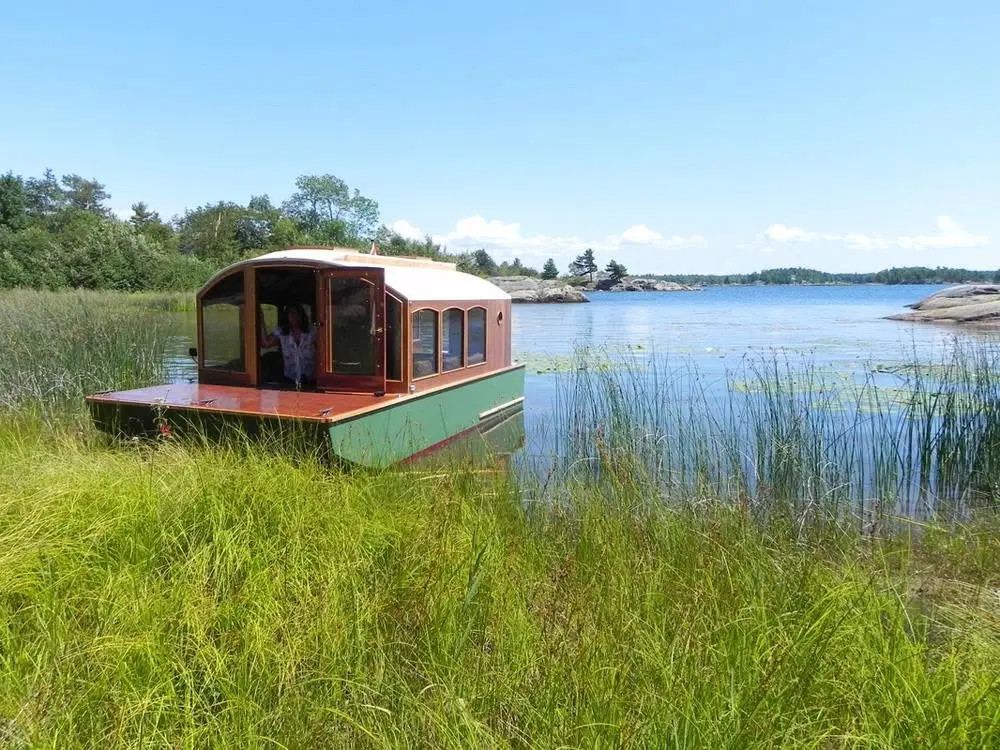
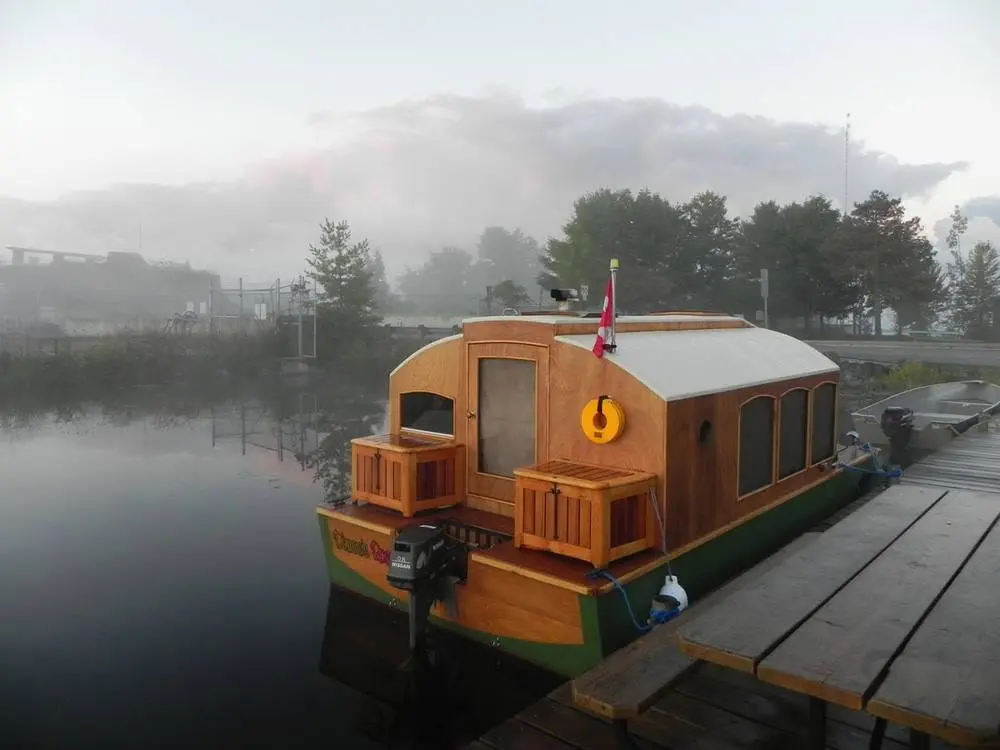
March 5, 2015. Intrigued by the "tiny house" phenomenon, I stumble across this plan for a tiny houseboat. It's 17 feet long overall, with a beam of just under eight feet (so it can be towed on a trailer anywhere) and a draft of just six inches. A few years earlier, I found it necessary to sell a beloved home in coastal Downeast Maine, and I've yearned for something to replace it ever since. Could this be the answer? Hmmm...
I'm still thinking about Dianne's Rose.
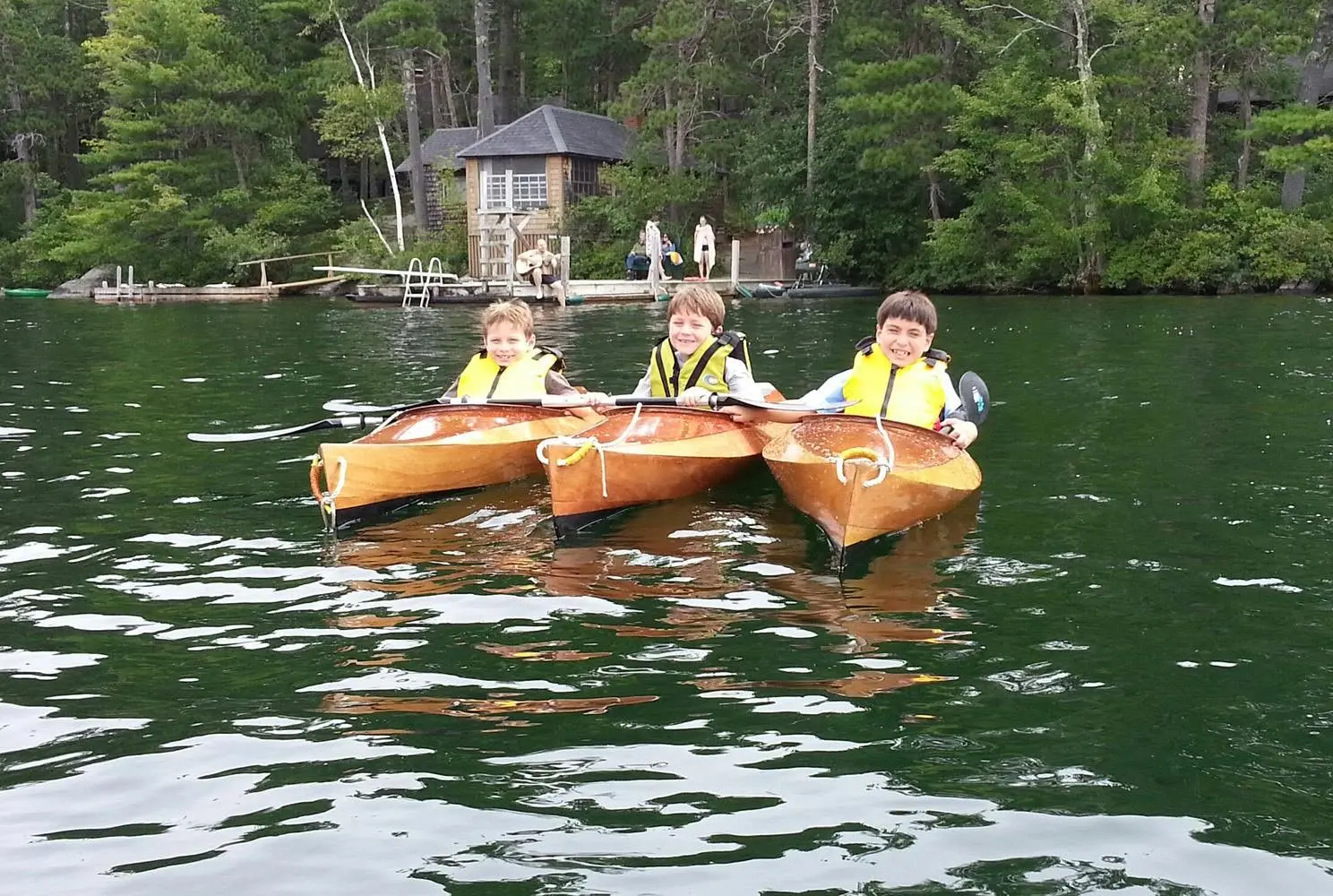
March 30, 2015. I'm still thinking about Dianne's Rose. I have not bought the plans yet, but the pull is getting stronger. I'm no stranger to boat construction, having built a family fleet of seven kayaks and a sailing dinghy so far, and they all turned out great. For instance, here's a shot of Noah, Taylor and Julio, my three grandsons, in the kayaks I built for them -- during a family vacation at Squam Lake in New Hampshire, in August of 2013.
This houseboat would be a project of far greater magnitude than anything I've ever done.
April 1, 2015. This houseboat would be a project of far greater magnitude than anything I've ever done. Each of those earlier boats took about three months of somewhat obsessive spare time. This would take years -- how many, I am not exactly sure. I keep going back to Roy Schreyer's web site to tease myself with some of the photos he has posted.
I buy enough okoume marine plywood to get started.
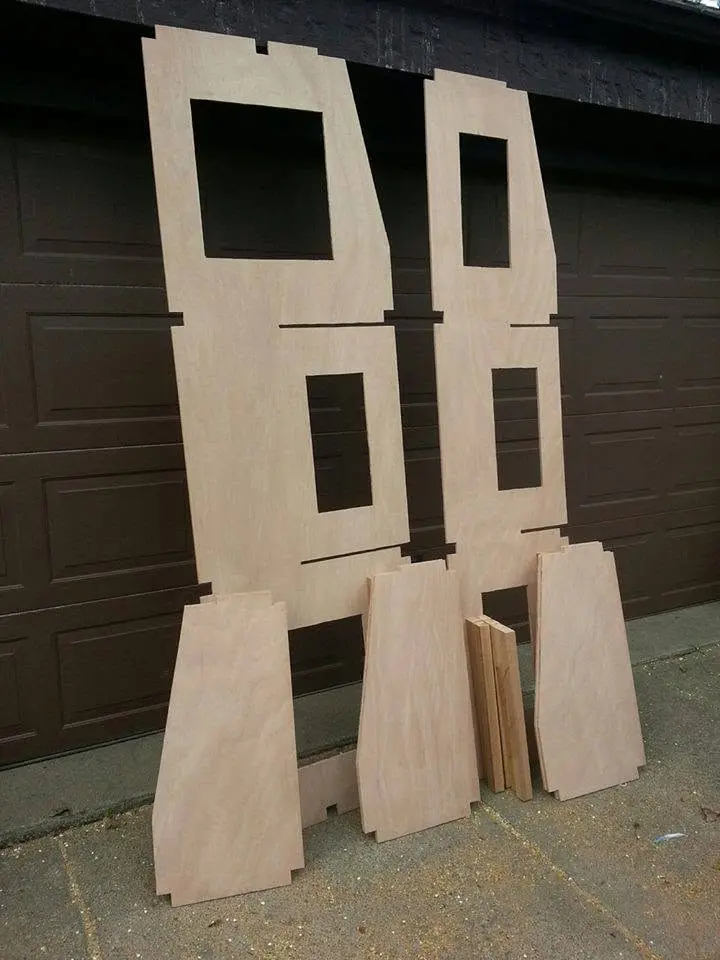
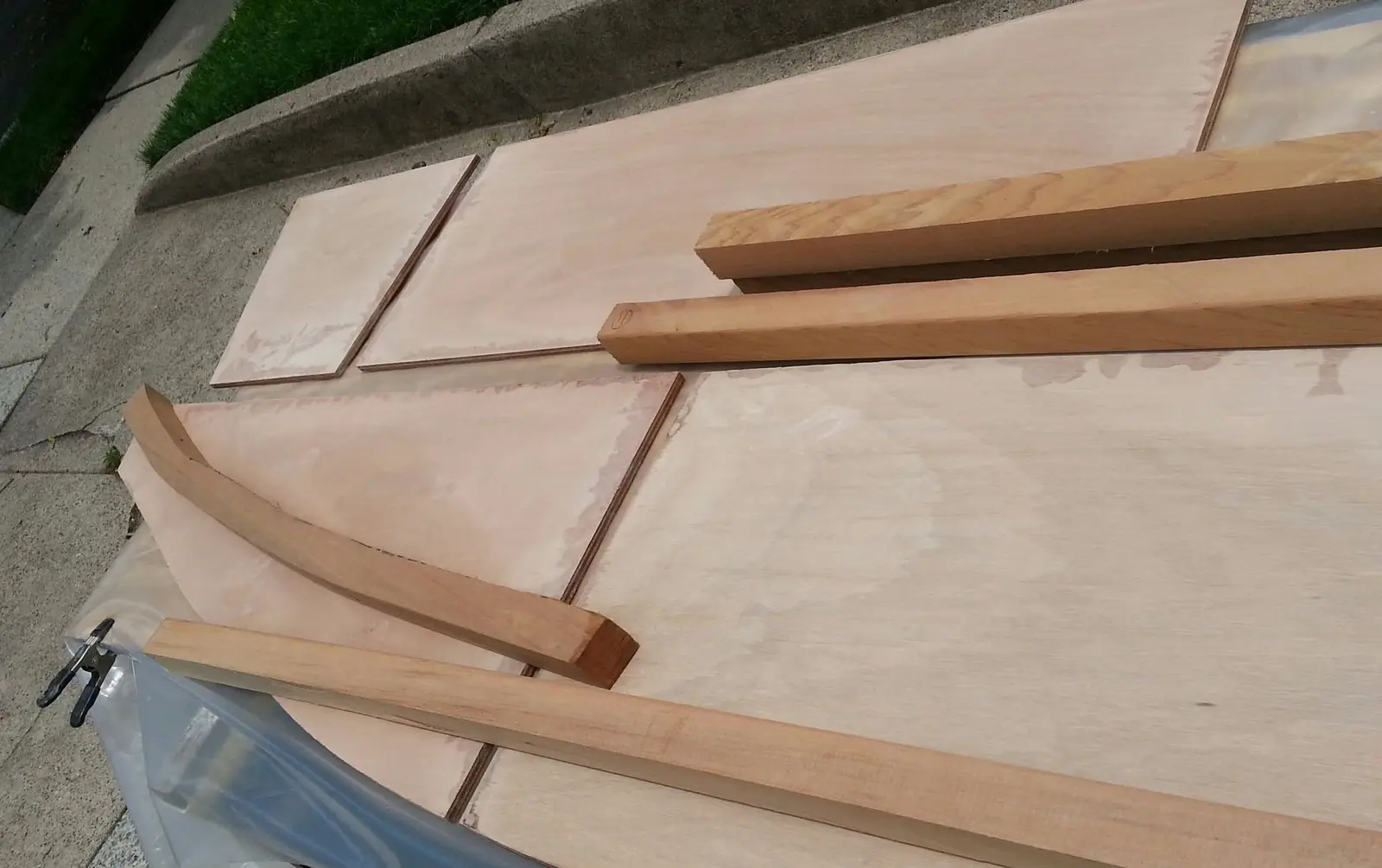
May 5, 2015. I buy enough okoume marine plywood to get started. This stuff is expensive, about $100 for a 4 x 8 sheet of 3/8-inch ply and $125 for the half-inch. But you can't expect to do a project like this with the kind of material you can get at the big-box home centers. The material I am buying has many more plies for a given thickness, and they are bonded with glues that are certified to be waterproof and boilproof. It is made of selected hardwood throughout, and it contains no inner voids or outer patches, which I have learned are called "dutchmen." I'll be learning a lot of new vocabulary as I go along. Within a few days, I have cut out many of the full and partial bulkheads, the transversal components that make up much of the egg-crate style frame and define the ultimate shape of the hull.
It's time to get to work on the longitudinal frames.
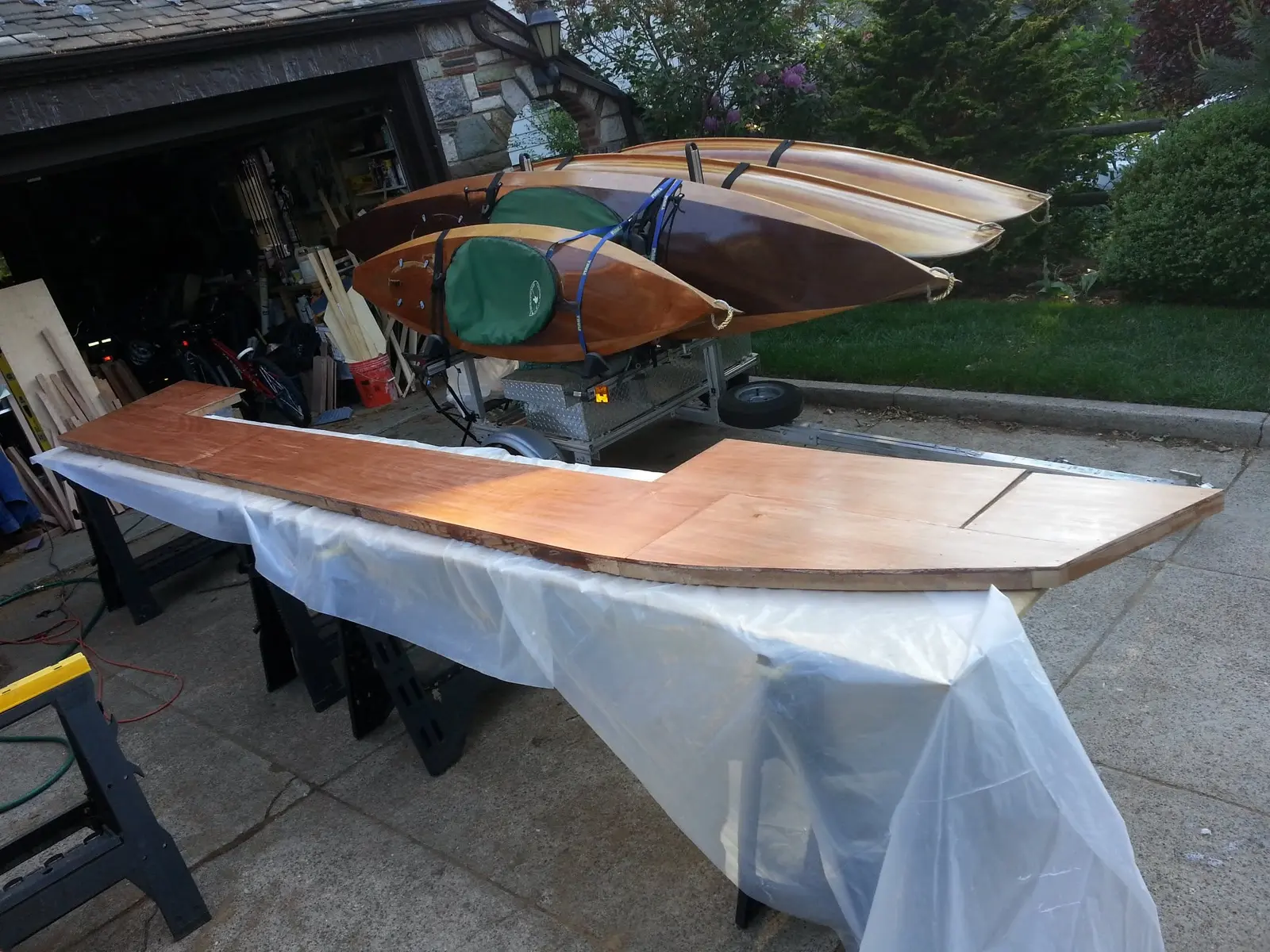
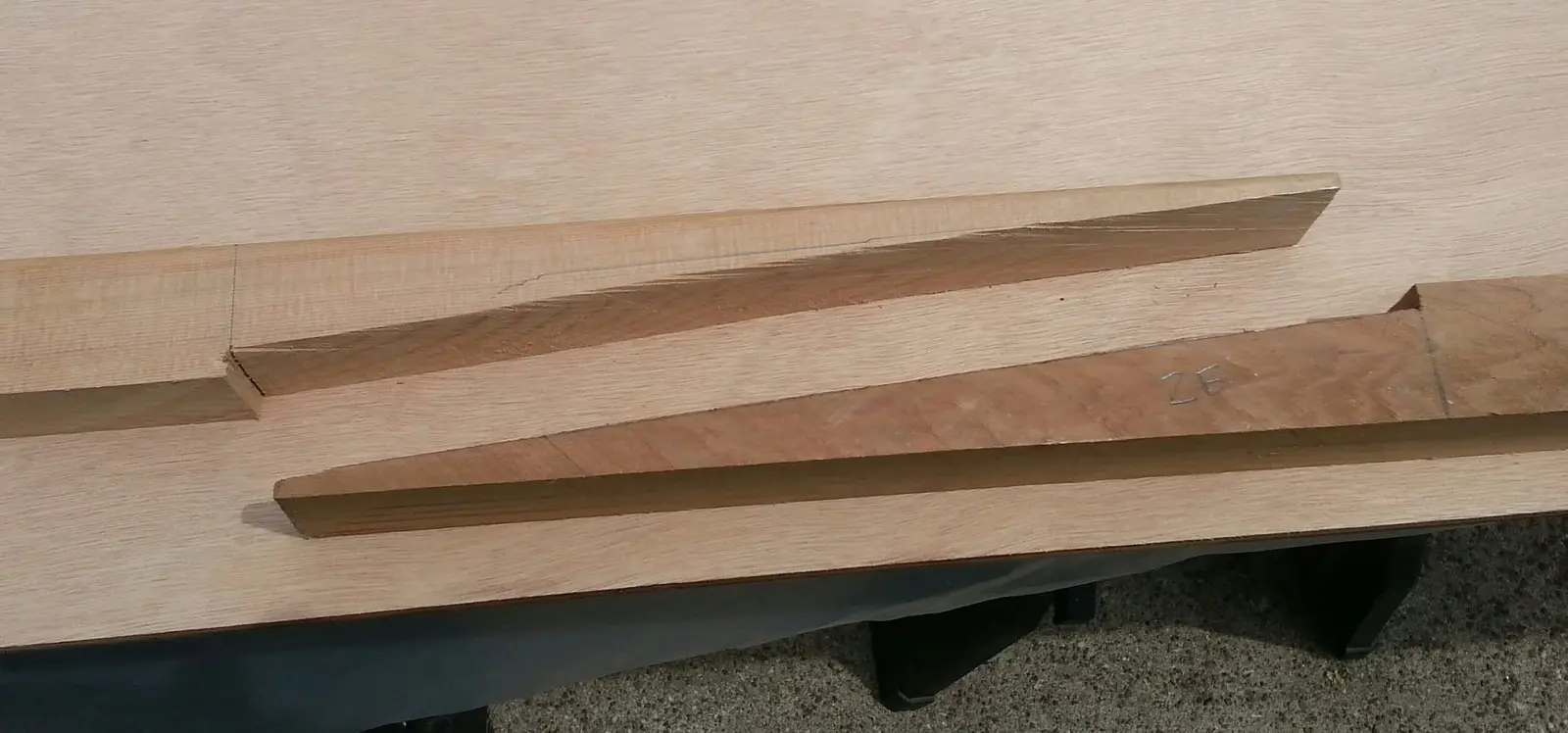
June 6, 2015. It's time to get to work on the longitudinal frames. These are the pieces that will interlock in slotted joints with the full-width bulkheads to create the basic backbone of the hull. The longitudinal frames will also support the partial bulkheads off to the port and starboard (left and right) sides. Reflecting the design length of the boat, they are 17 feet long. Because they are so long, each one has to be made of several smaller pieces of plywood, and they are supported at the joints by 2 x 2-inch timbers of clear red cedar. Red cedar is an exceptionally light-weight wood, and virtually rot resistant. It's a good choice for a boat. Since the full length required of these timbers is longer than I can reasonably obtain, I use a shouldered scarf joint to glue them together. The shoulders prevent the glued joint from slipping out position under clamping pressure before the glue dries.