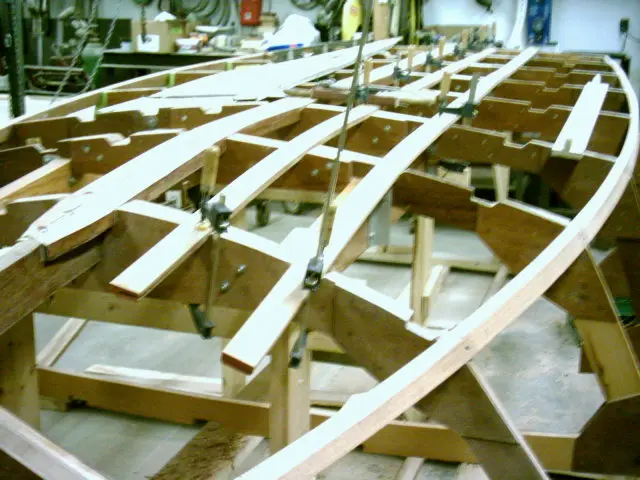
Installing the sheer clamps
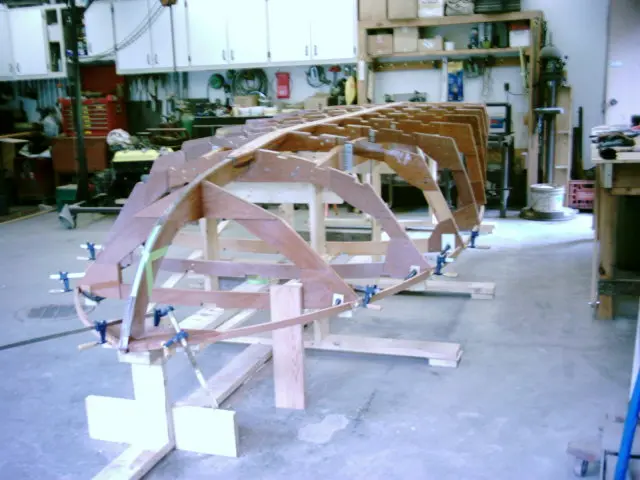
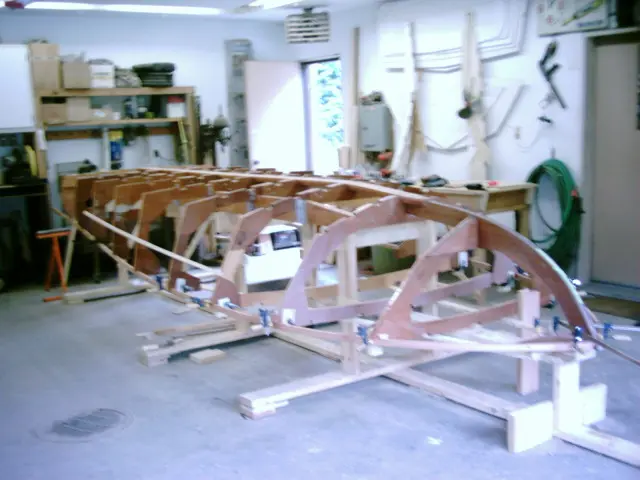
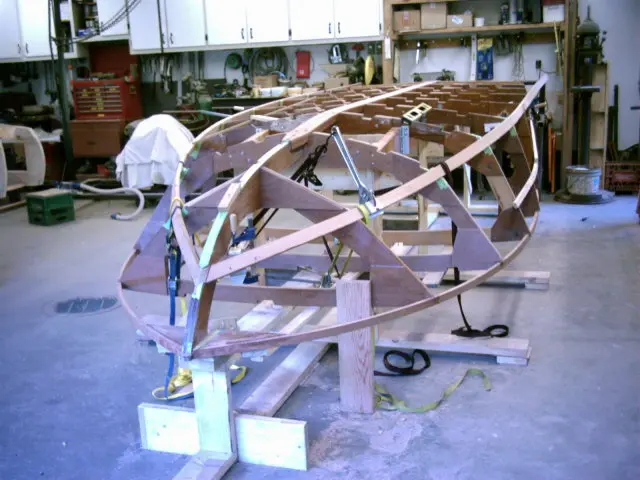
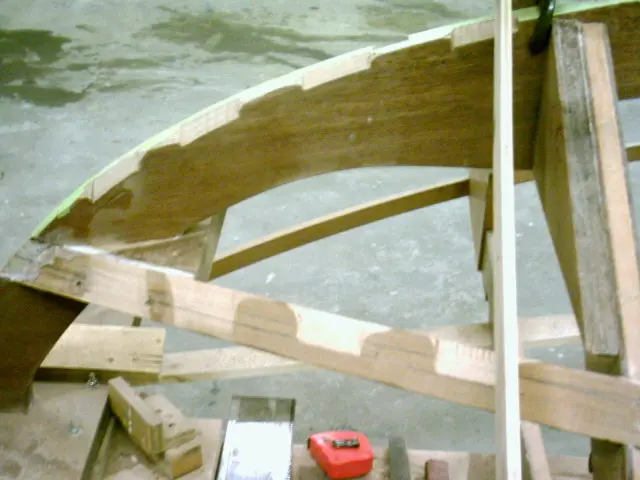
Installing the sheer clamps. Two strips of 5/8" x 1-1/4" mahogany will be used per side.
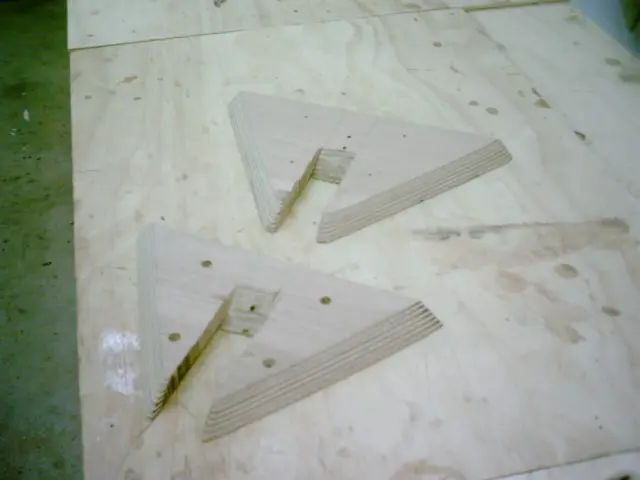
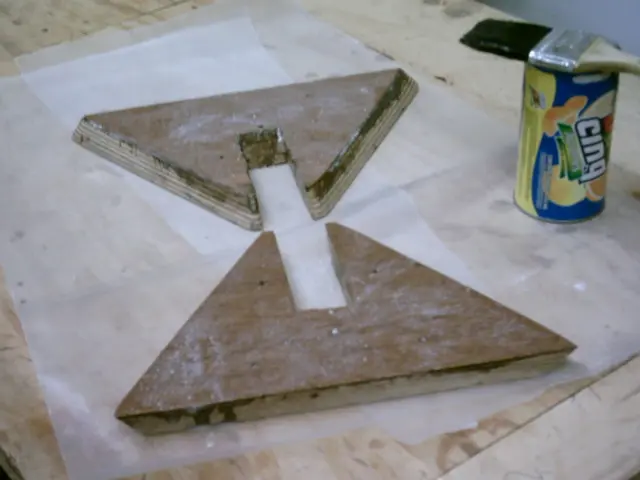
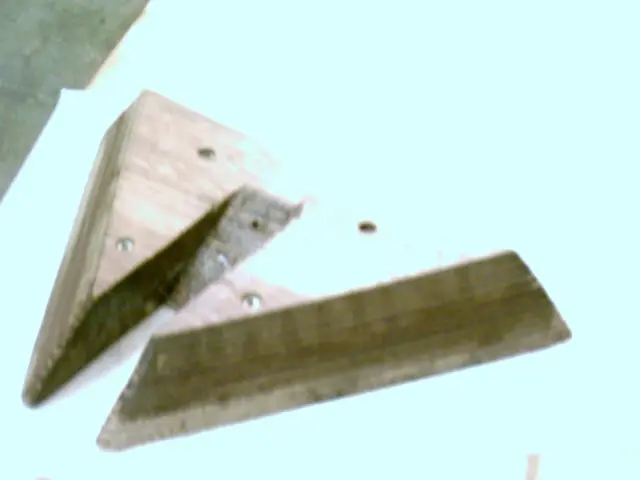
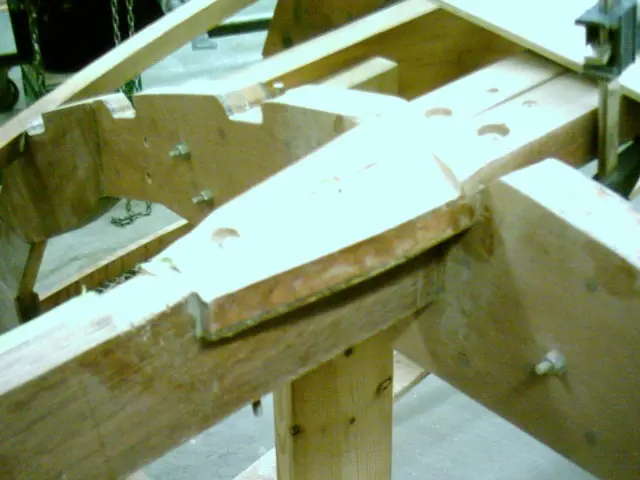
Although not detailed in the plans, the chine blocking was made from two pieces of 3/4" marine plywood. The sides were bevelled at 30 degrees and a notch was cut to fit around the stem. This is definitely a trial and error project. Much time will be saved when fitting the chine logs to the blocking.
Glued...
Screwed...
Installed.
The chine log was wrapped with waxed paper to prevent it from being glued to the blocking.
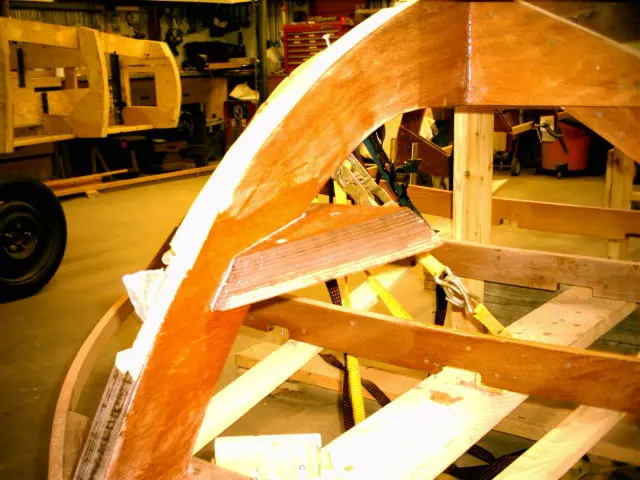
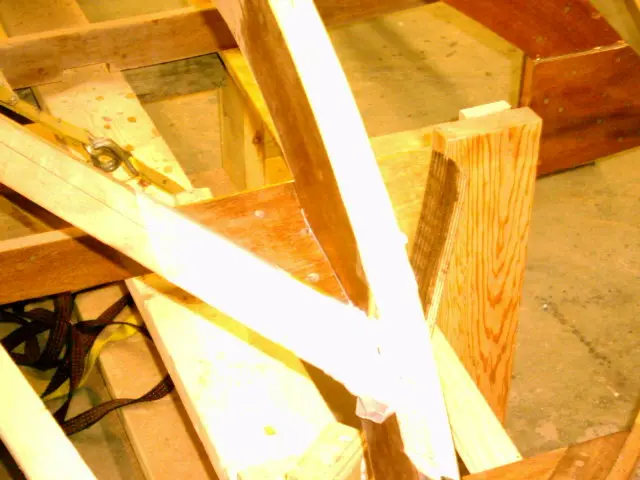
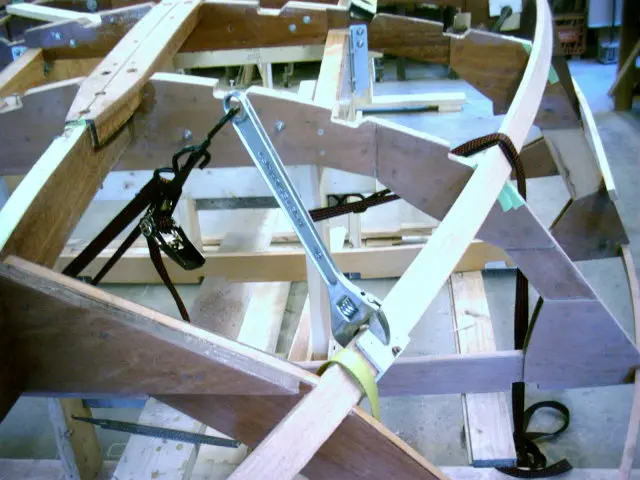
A large crescent wrench and a ratchet strap was used to twist the top of the chine inward towards the keel
A large crescent wrench and a ratchet strap was used to twist the top of the chine inward towards the keel. Laying a straightedge from the sheer to the chine will indicate when sufficient twist is attained.
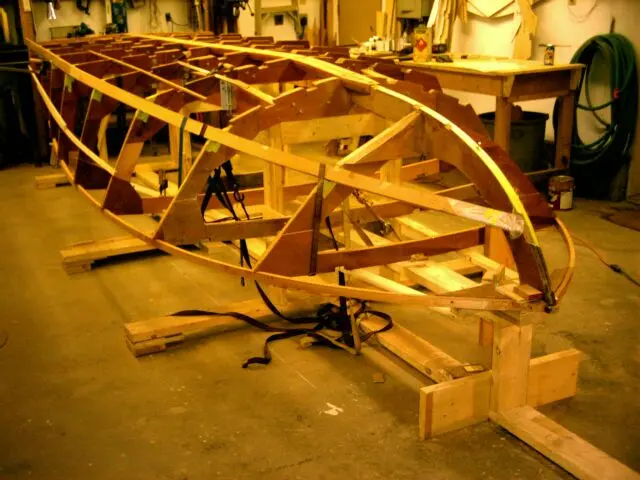
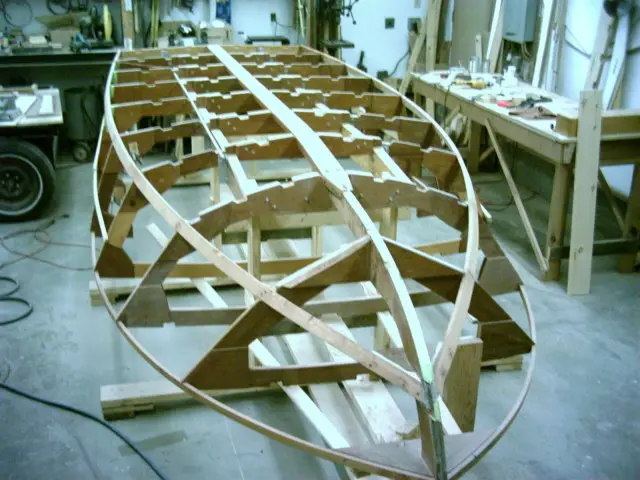
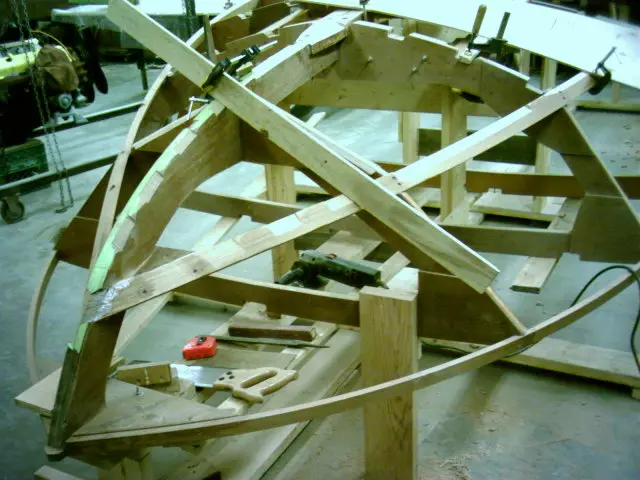
The second sheer clamp laminations are yet to be installed
The second sheer clamp laminations are yet to be installed. Notes on fitting the chine Photo courtesy of Glen-L Marine Designs The photo above illustrates a plywood fixture we have found helpful to determine the position of the chine on the stem side. Keep in mind what has been stated in the foregoing. The bottom and side must mate to the stem and chine on a continuous surface. The chine can't be located on the stem so that the stem/chine junction cannot be faired to a flat plane. Take small pieces of plywood and simulate the side and bottom joining on the stem to help visualize what the finished junction will look like. Source : Designer's Notebook: Fitting the chine - WebLetter 49
Fairing the stem and chine using the 'Rabl' method. The method is depicted in the following plate : From the book Boatbuilding with Plywood by Glen L. Witt For a complete description of the fairing method, follow the links below : Designer's Notebook : Fairing by the "Rabl Method" : Article by Glen L. Witt. Boatbuilding with Plywood : Book by Glen L. Witt.
Compare the unfaired side (left) to the faired side (right).
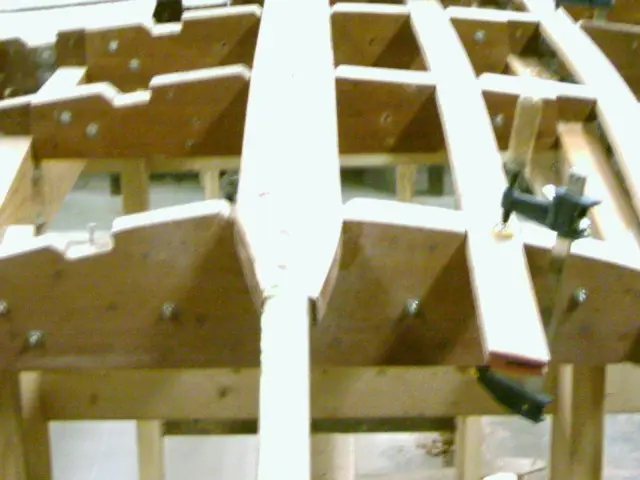
Here you can see unfaired frame # 7 (background) and the faired frame (foreground).
Installing the battens and fairing
Installing the battens and fairing.