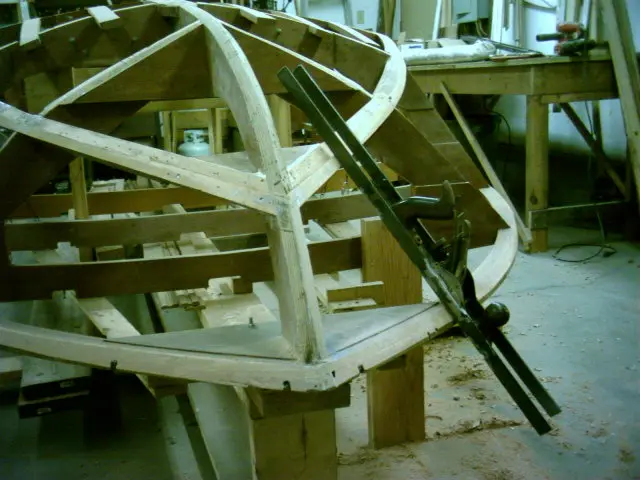
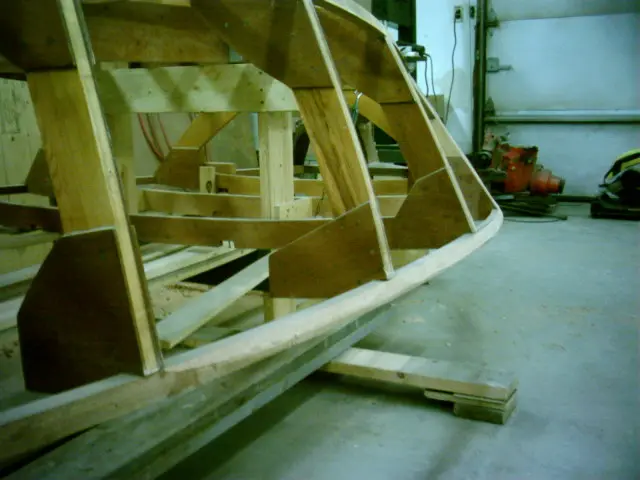
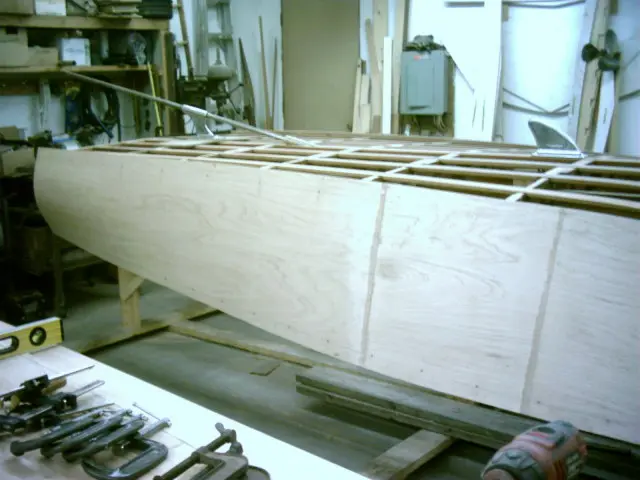
Sheer fairing nearing completion. To span from chine to sheer, we've welded two 30" long pieces of 1/8" by 1" flat steel bar to each side of an old jack plane. This speeds up the fairing process and is very accurate.
Since the Bill Of Materials call for a single layer of 1/4" sheeting for the sides, we'll be using 1/4" 5-Ply Meranti ma
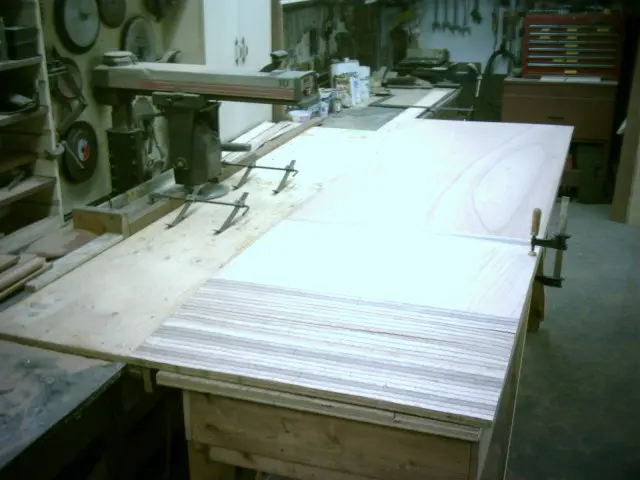
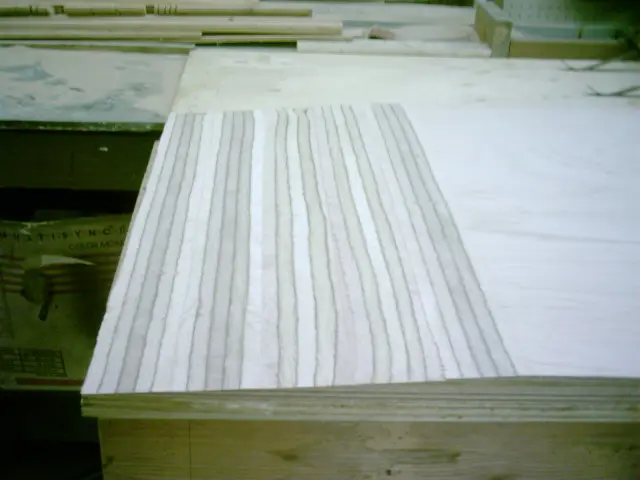
Since the Bill Of Materials call for a single layer of 1/4" sheeting for the sides, we'll be using 1/4" 5-Ply Meranti marine grade plywood. Five sheets were ripped into 31" wide strips and scarfed on the radial arm saw. Click here to see how the saw was set up to make the cut.
Scarfed sheeting was stacked and will be finished with an air file. This will roughen up the joint and provide a better bonding surface for the epoxy.
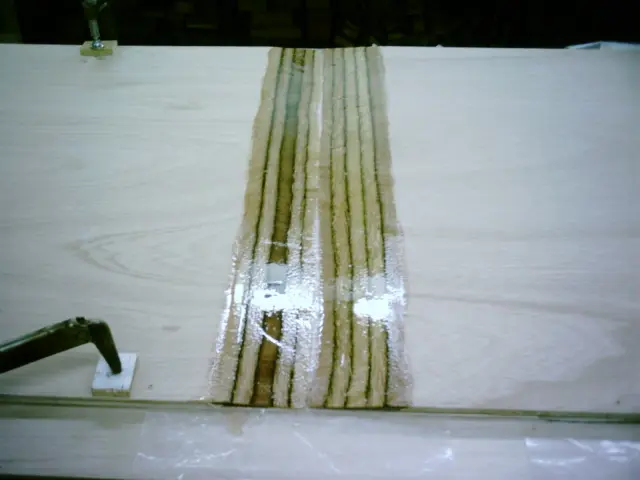
Here's a shot of the last side planking scarf joint being epoxied
Here's a shot of the last side planking scarf joint being epoxied.
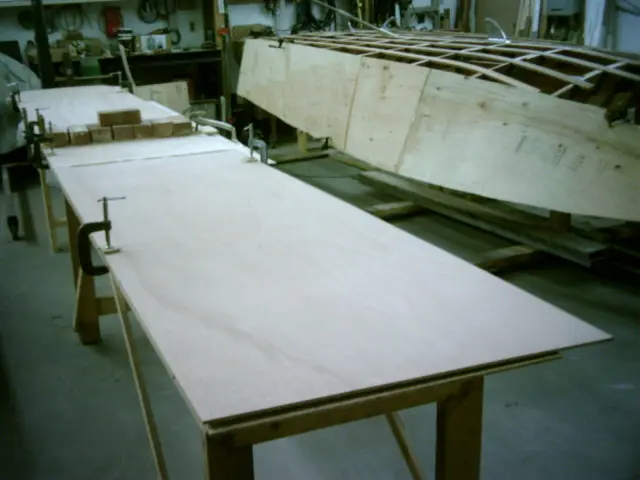
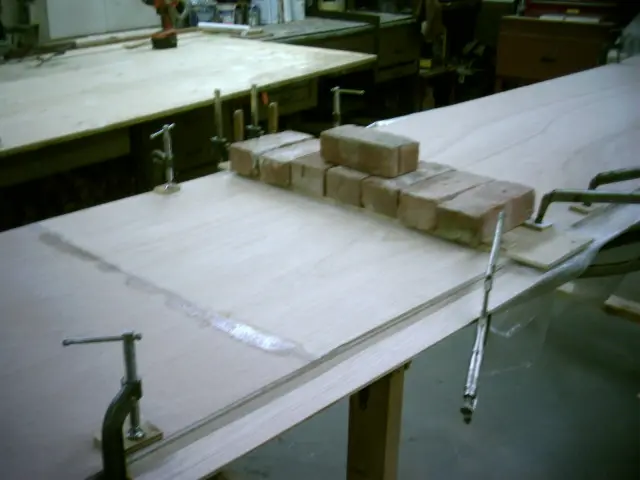
Several bricks are used to clamp the joint. Excessive weight will squeeze too much epoxy from the joint and lead to an unsound joint. In the background, we're fitting the douglas fir side planking template to the side of the boat.
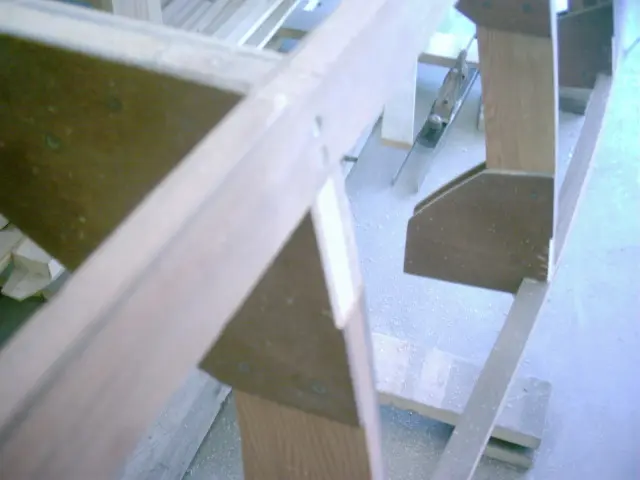
The frame sides must be faired so that they don't project against the plywood planking
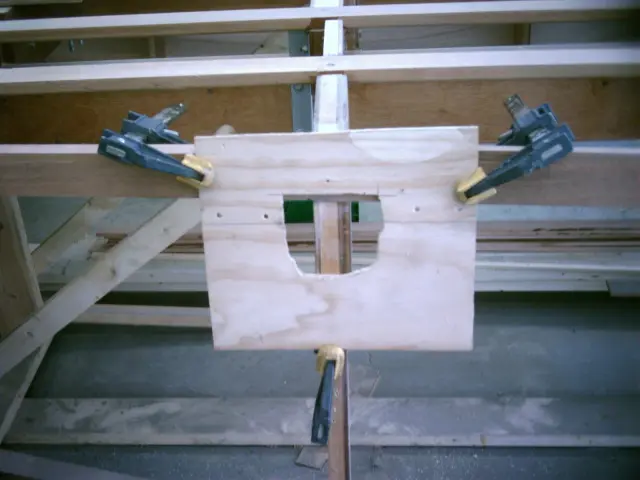
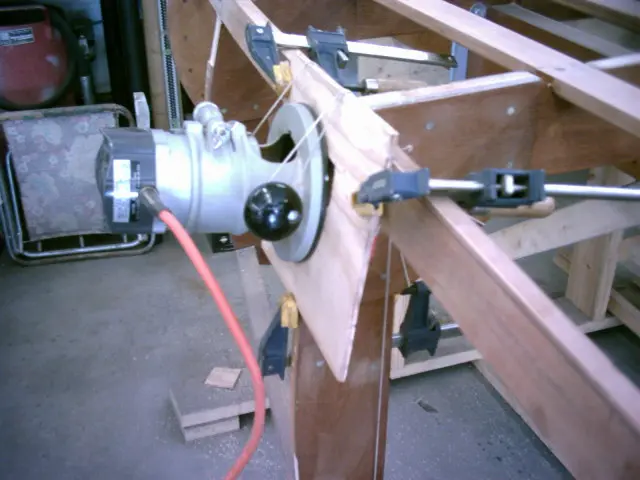
The frame sides must be faired so that they don't project against the plywood planking. This would cause a 'hard spot' which could cause the panel to fracture. Our trusty router jig was clamped to the side of the frame.
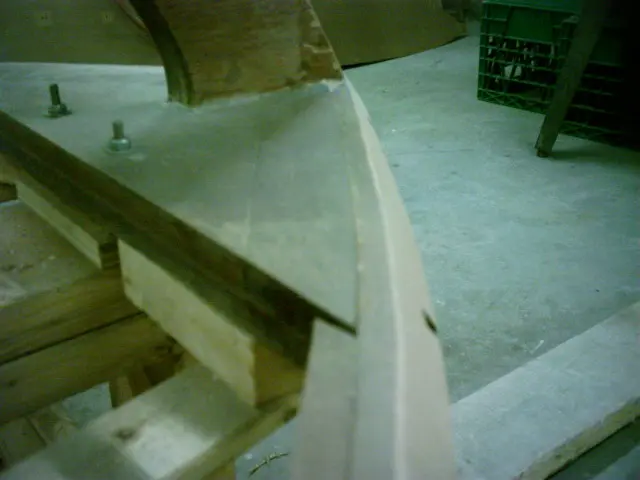
The router bit depth was set to cut 1/16" below the chine surface.
The operation was repeated at the sheer junction. A block plane was used to fair the remainder of the frame.
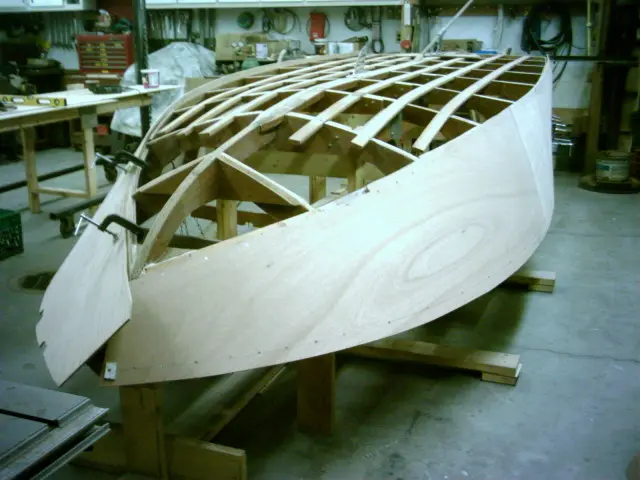
Starboard side planking installed. The port side is being fitted.
Two scarf joints fall between frames #4 and #6.
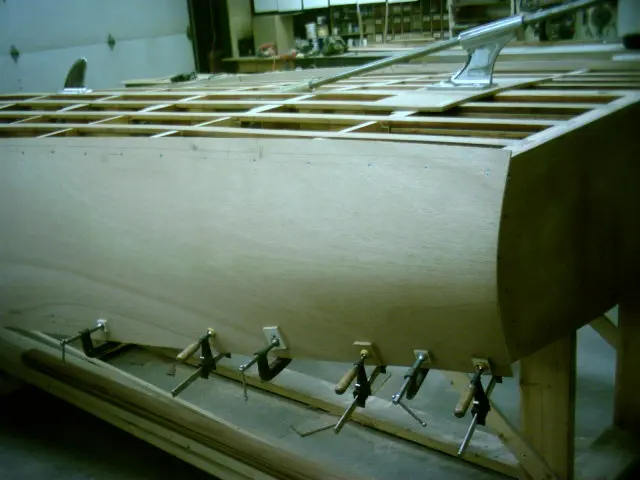
View from the starboard rear. The tumblehome is quite severe but the 5 ply marine plywood conforms to the radius quite easily.