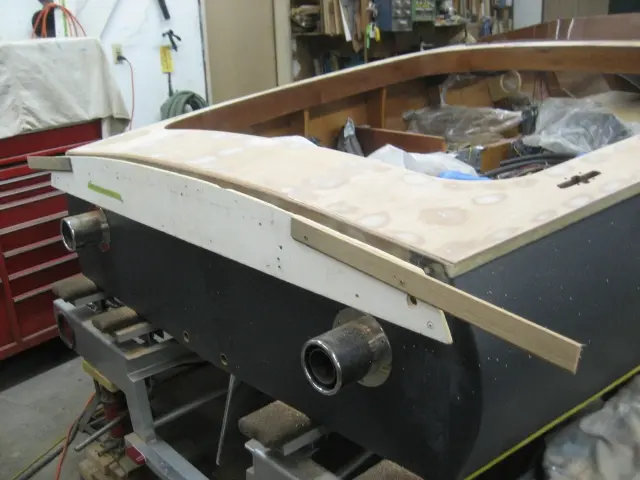
Deck: With the rear deck panels installed, it's time to put a 1/2" radius on the deck ply at the
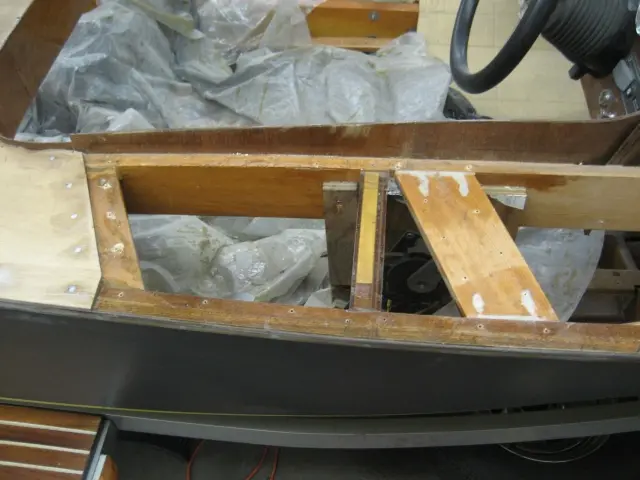
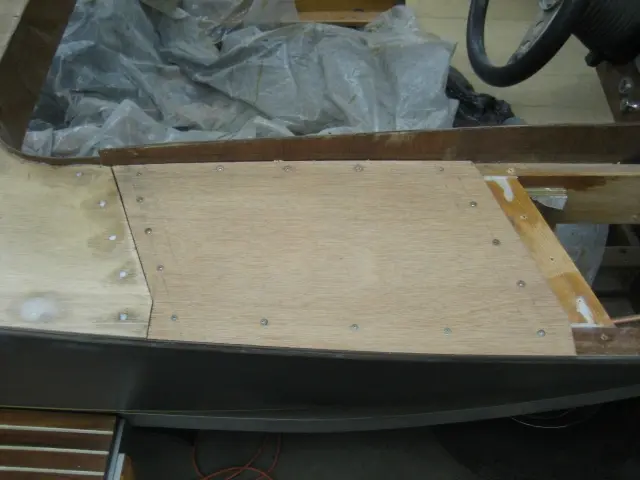
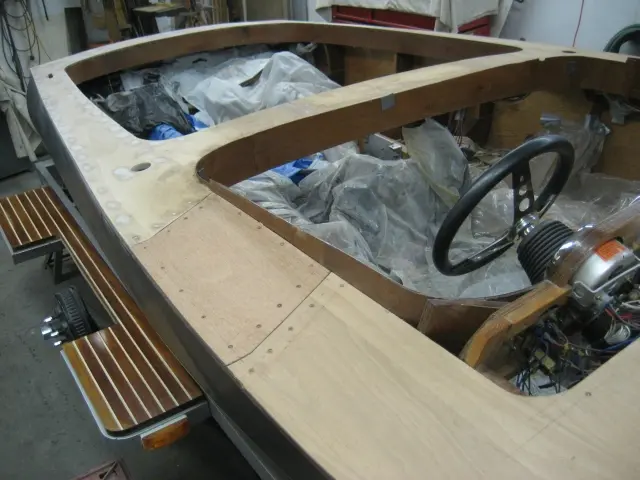
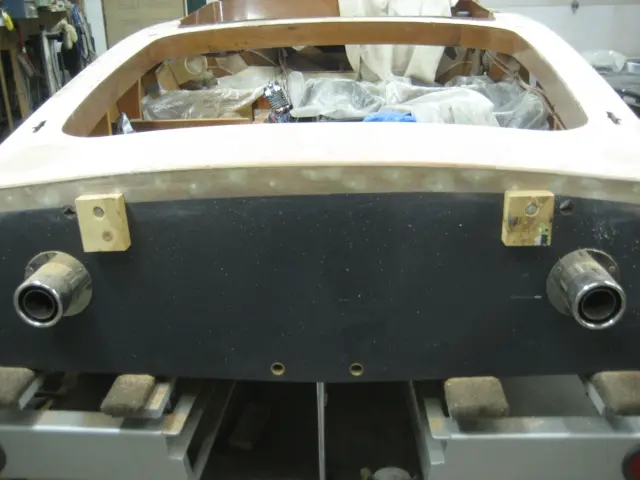
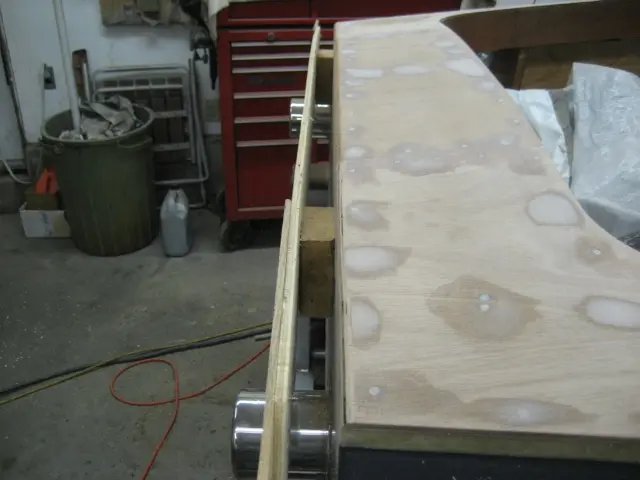
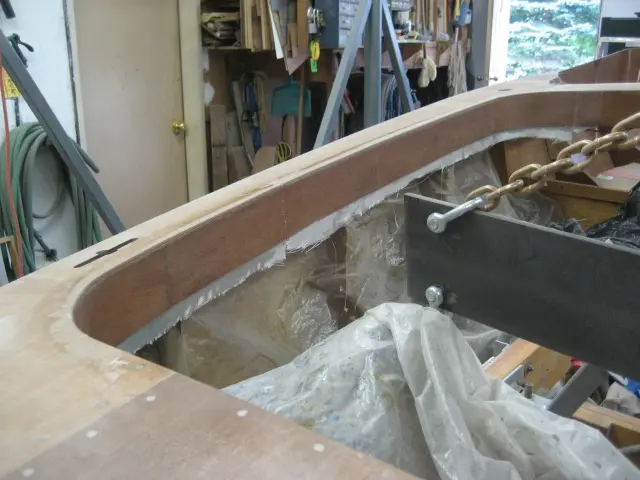
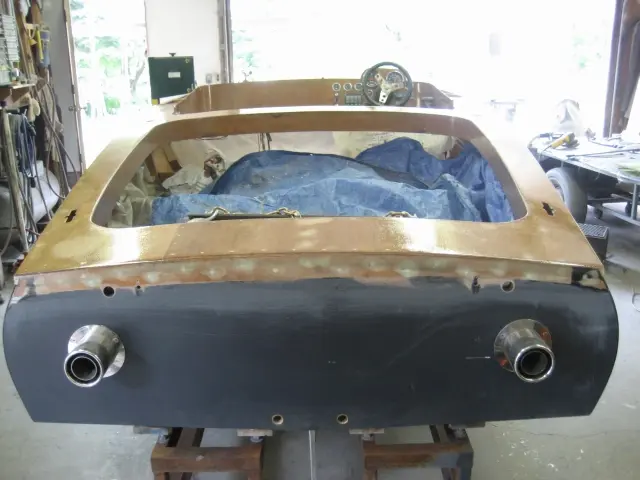
1. With the rear deck panels installed, it's time to put a 1/2" radius on the deck ply at the transom. We bolted two pieces of 2" x 4" through the transom tie down bolt holes.
2. We dug out the transom frame template (one of 160 templates we built for this boat !) and screwed it into the two pieces of 2" x 4".
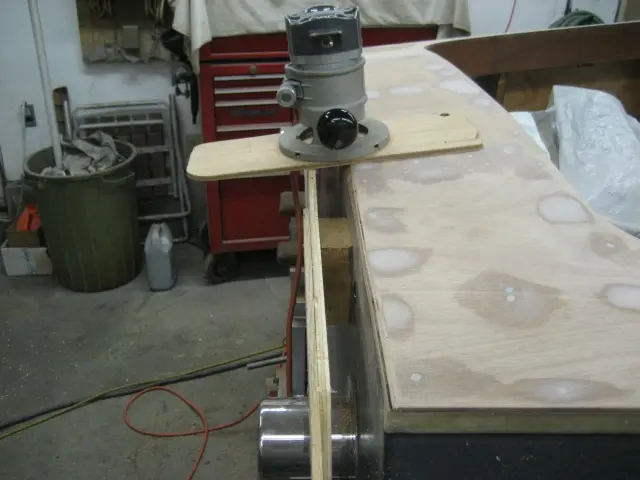
3. This will give us some support for the router.
4. A 1/2" round-over bit makes quick work of rounding the edge for applying fiberglass.
Deck: Deck was covered with 10 ounce fiberglass cloth
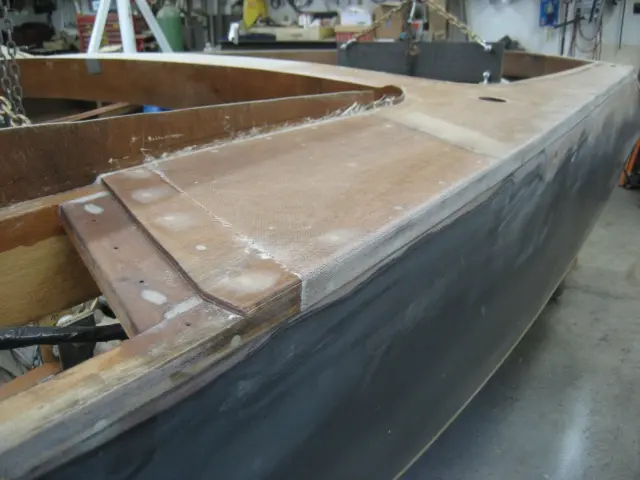
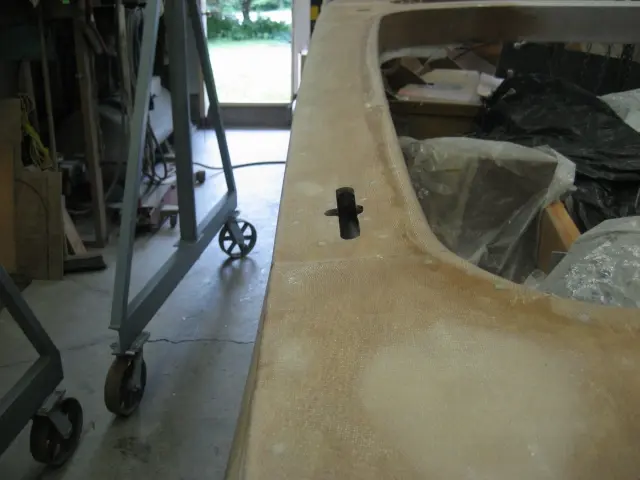
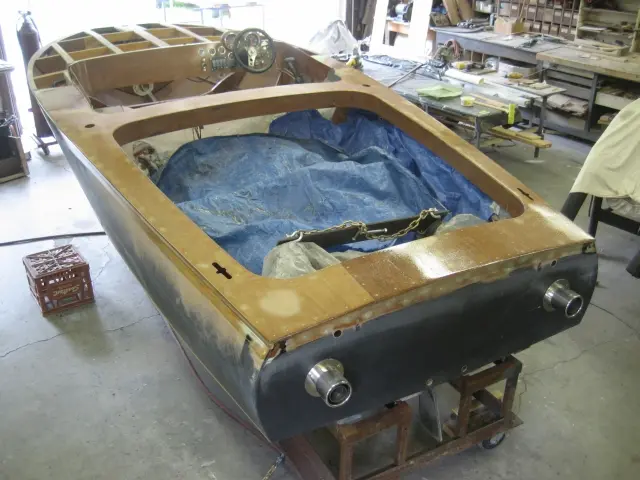
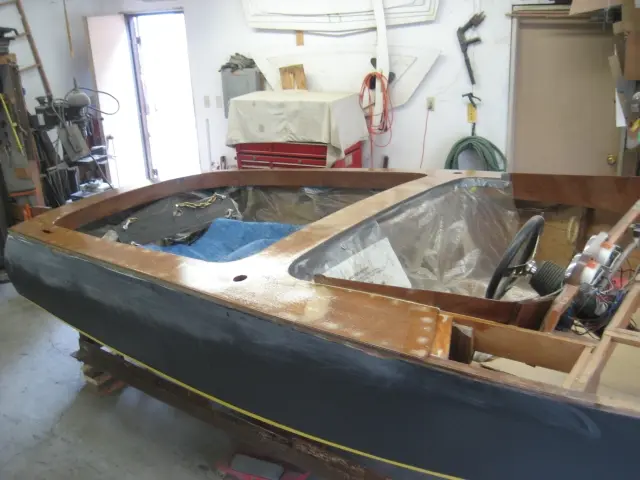
1. Deck was covered with 10 ounce fiberglass cloth. The cloth was draped around the radiused 'shoebox' edge. We had previously built up several layers of fiberglass mat and cloth along the sheer to form a 'shoebox' joint along the sheer. This deck-to-hull joint is used in fiberglass boats and saves a lot of time as the deck cloth doesn't overlap the hull, only a 3/4" wide strip at the sheer.
2. More cloth was applied to the rear cockpit carlings.
3. Cloth overlap will be ground down flush.
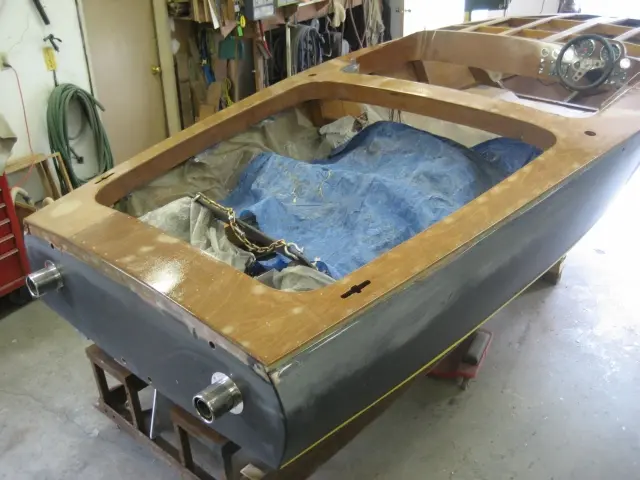
4. We've moved the boat from its trailer to our steel boat dolly. Much easier to work on the boat this way !
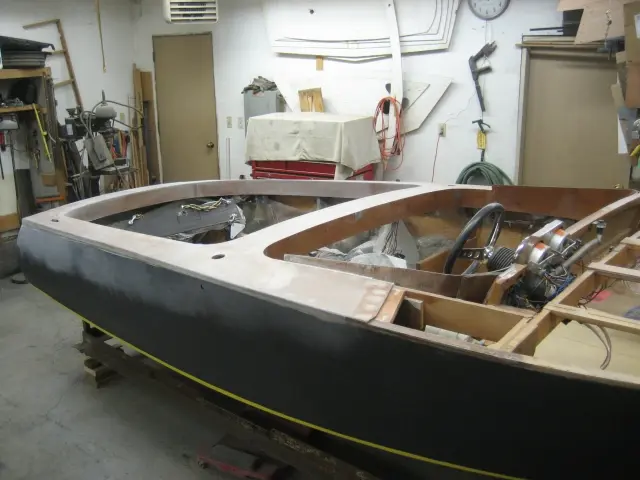
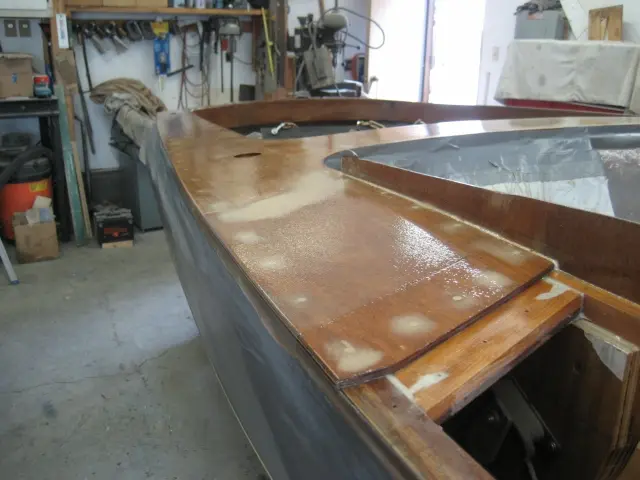
5. Fiberglass was blocked out with a straight-line air file fitted with 40 grit paper.
6. We'll be applying three coats of West epoxy resin before the first sanding.
7. Time spent tweaking the sheer line was well worth the effort ! You'll notice the frame outline templates hanging on the wall next to the clock.
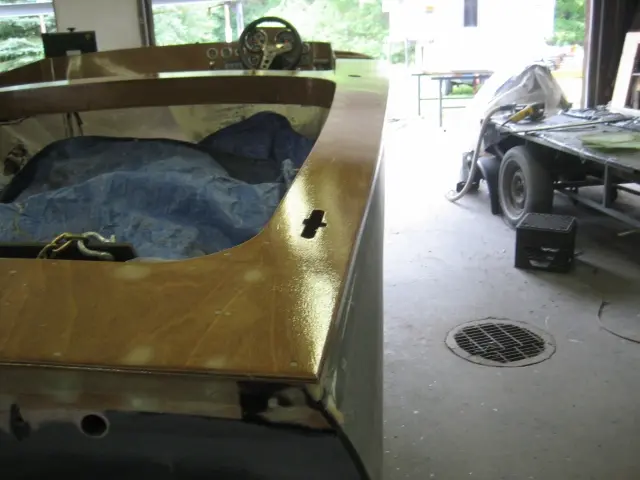
8. The deck will be painted, so to produce a solid base for sanding, we applied three rounds of West System epoxy catalysed with 207 hardener. Each coat was allowed to cure for three hours before applying the next coat.
9. A very light coat of epoxy was applied with a 6" foam roller...
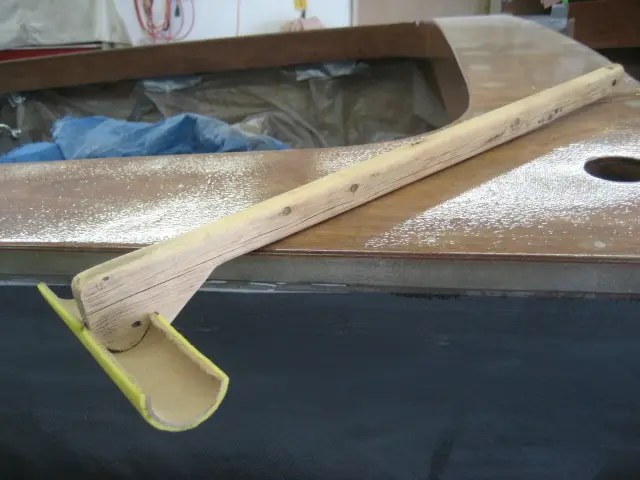
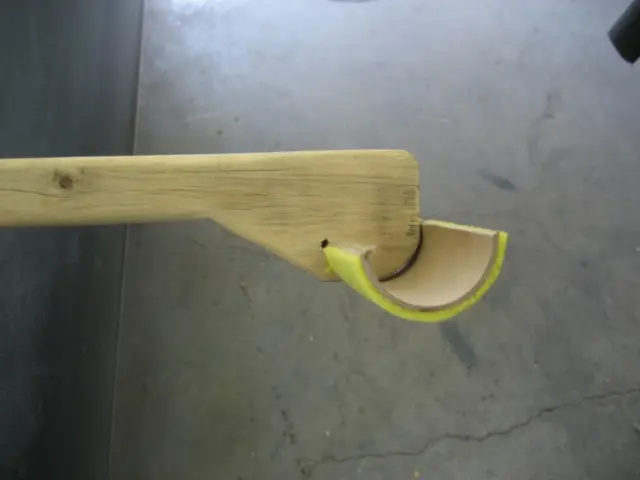
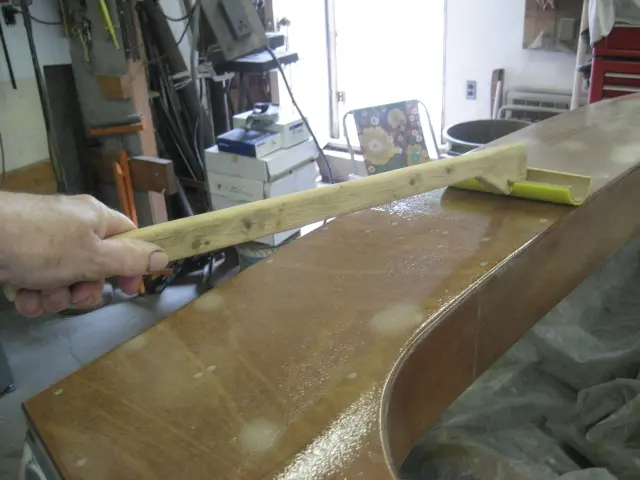
10–11. ... and tipped with a West 8" foam roller cut in half and affixed to the end of a 24" piece of 1" x 2".
12. The tipping tool is lightly dragged on the epoxy surface until the tool starts to stutter. This breaks up the air bubbles induced by rolling on the epoxy and distributes a very thin coat of epoxy. You'll save many hours of sanding if you can minimize surface texture and runs !
13. '
14–15. '
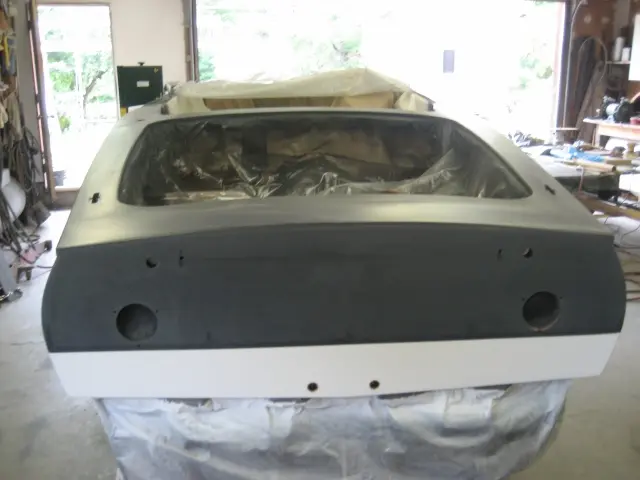
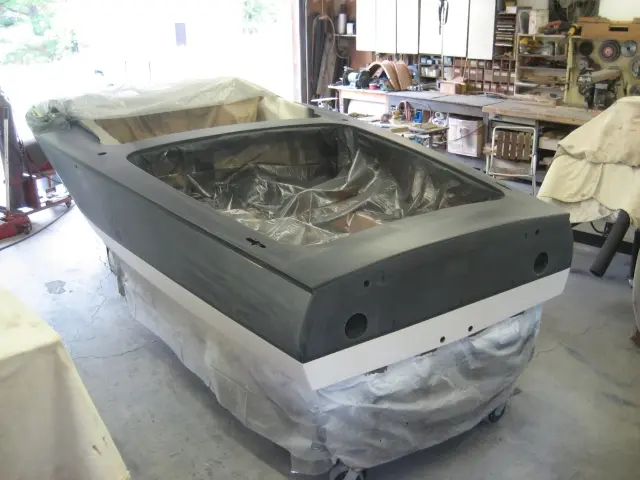
16. The rear deck was sanded with an inline air file with 40 grit sandpaper and blocked with a longboard. The initial sanding was followed up with two barrier coats of West System epoxy catalysed with 207 hardener spaced three hours apart. The extra coats provide a thick sanding base. The hull sides were also air filed and blocked with a longboard. Surface was wiped down with DuPont Wash & Wipe (wax, grease and silicone remover) prior to spraying several rounds of DuPont URO Prime urethane primer surfacer.
Deck: The rear deck was sanded with an inline air file with 40 grit sandpaper and blocked with a
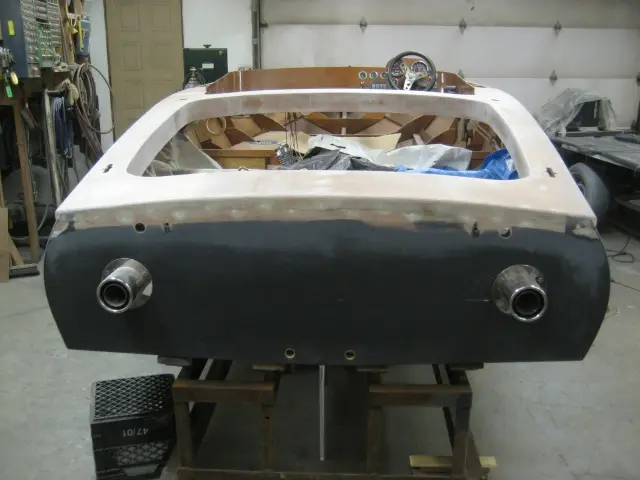
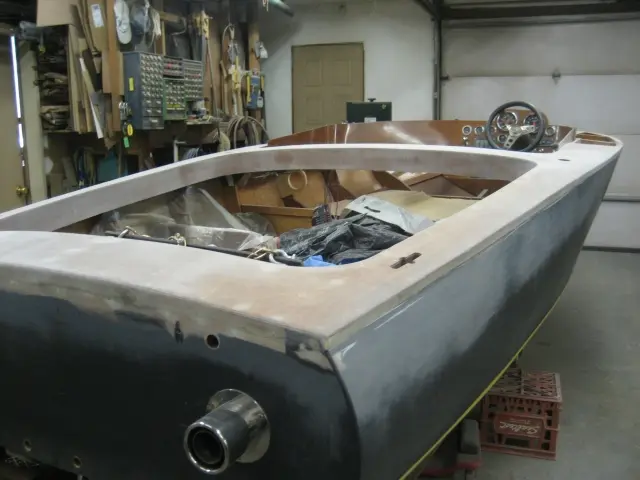
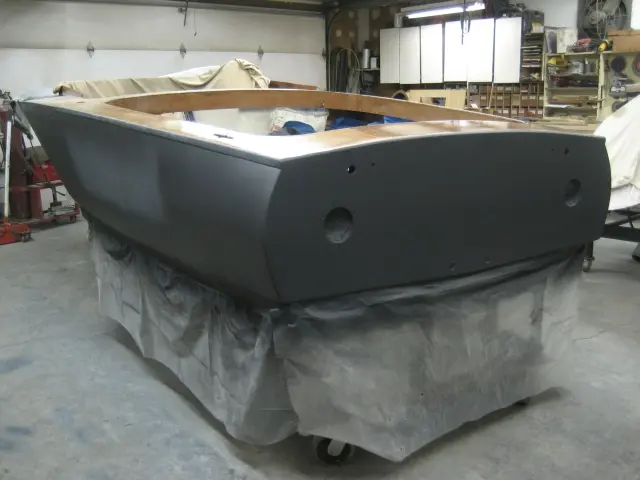
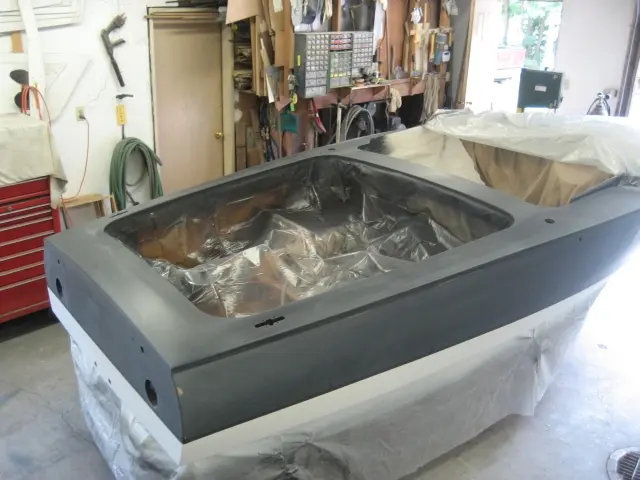
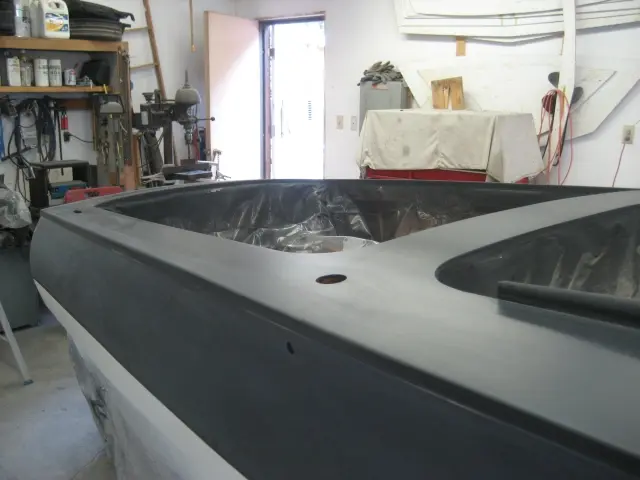
1. The rear deck was sanded with an inline air file with 40 grit sandpaper and blocked with a longboard. The initial sanding was followed up with two barrier coats of West System epoxy catalysed with 207 hardener spaced three hours apart. The extra coats provide a thick sanding base. The hull sides were also air filed and blocked with a longboard. Surface was wiped down with DuPont Wash & Wipe (wax, grease and silicone remover) prior to spraying several rounds of DuPont URO Prime urethane primer surfacer.
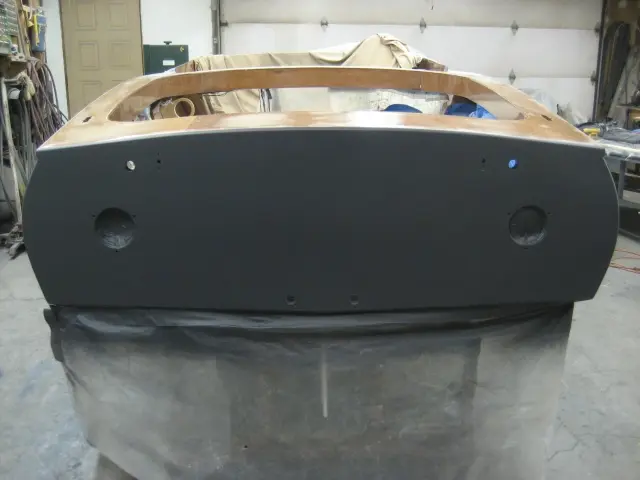
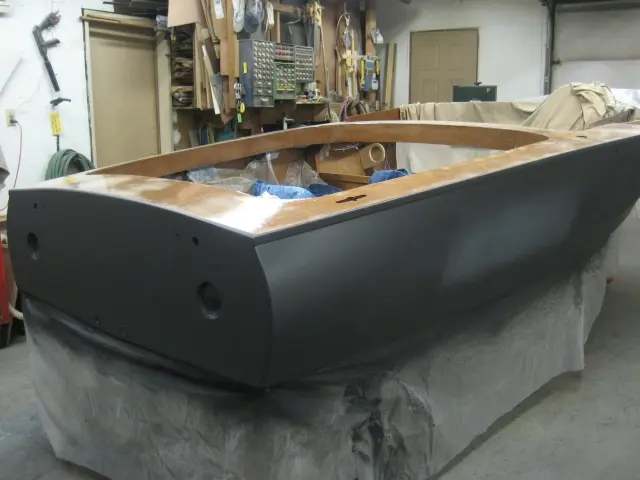
2. Transom deck to hull fiberglass was feathered, blocked and primed. Many of the DuPont industrial coatings we've used over the years have been phased out because they can't meet the strict environmental VOC regulations.
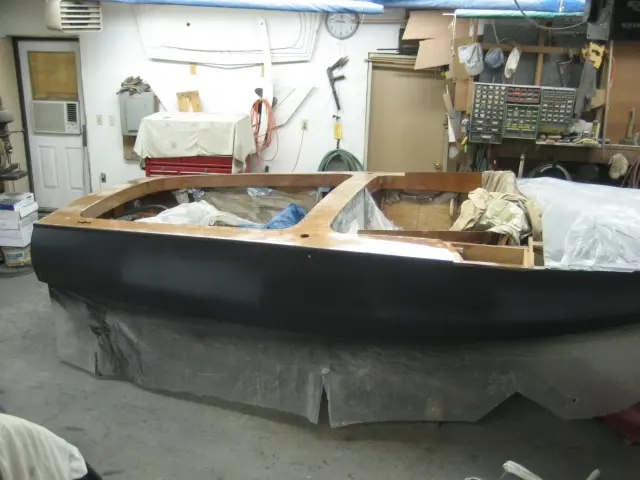
3. The whole side of the hull was blocked and primed to improve the surface quality.
Deck: A transit level was used to mark a 6" waterline on the hull
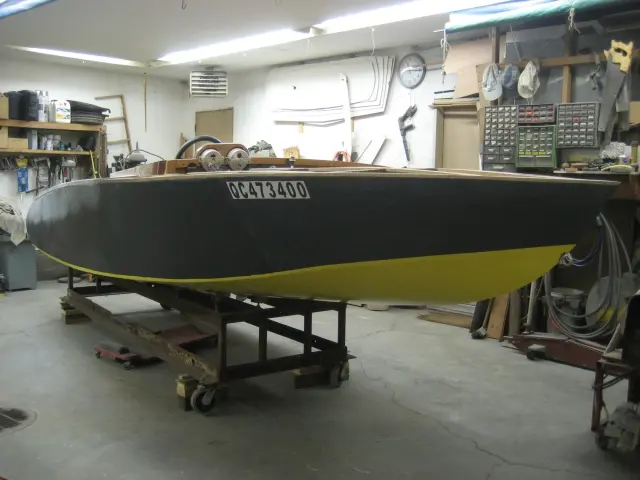
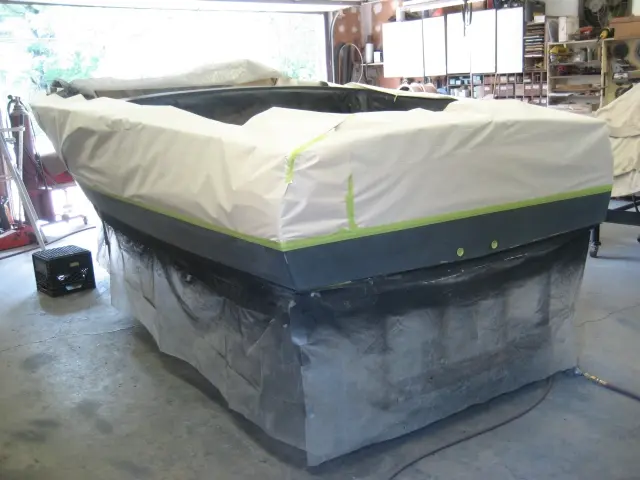
1. A transit level was used to mark a 6" waterline on the hull. It was taped, masked and prepped.
2. We applied two rounds of DuPont 1141S 2K urethane primer-filler. This is a very fine finish 3 part white primer we use as a sealer for light colored topcoats. We'll be shooting Corvette yellow over this base coat.
3. The deck is ready for blocking and a second round of primer-surfacer.
12345
Nobody else here is logging a Hot Rod yet.
See the boat.